
Why Solar Street Lighting SL-008 Stops Working at Night and How to Troubleshoot It
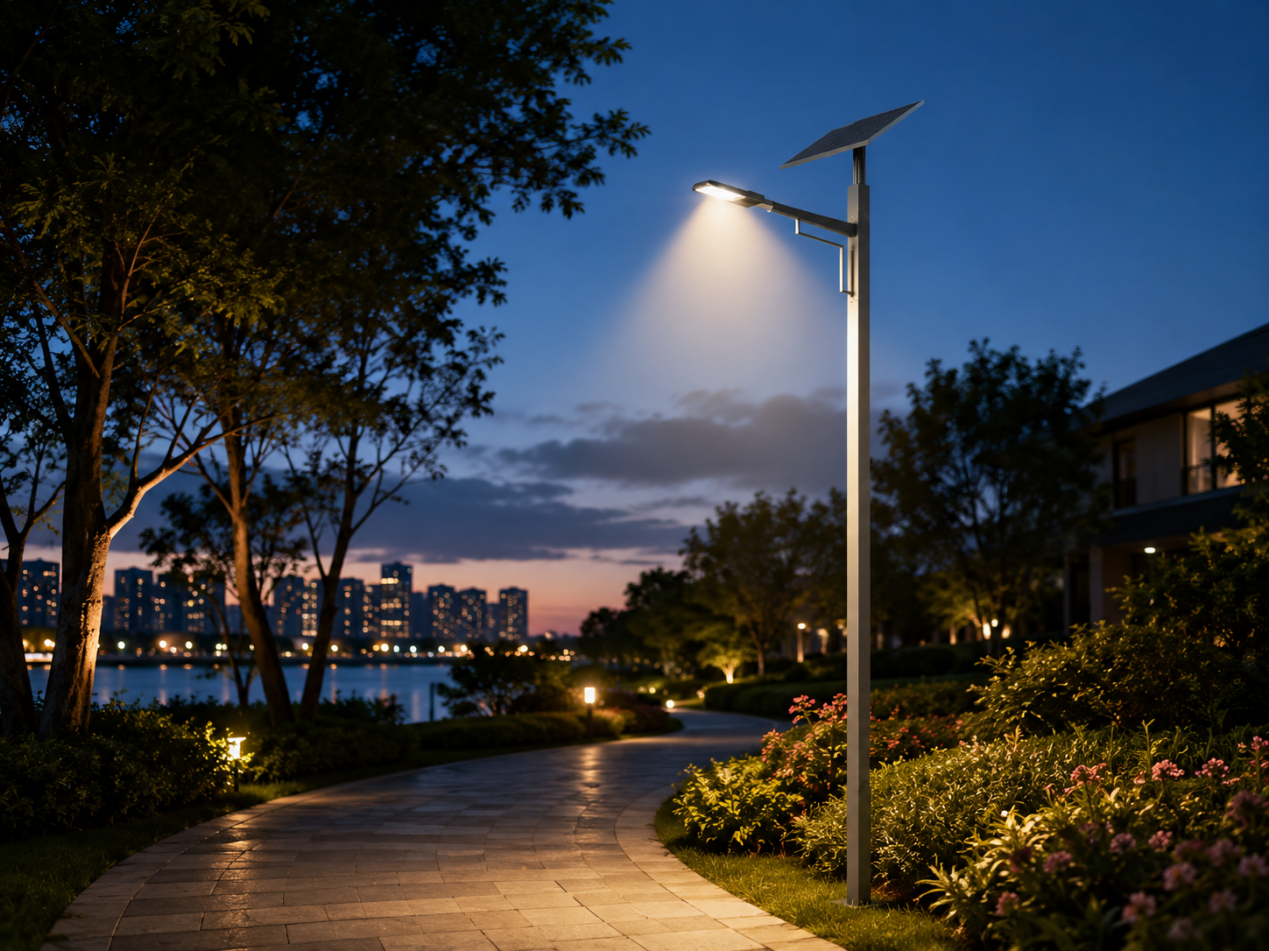
Why does Solar Street Lighting SL-008 fail only at night?
When Solar Street Lighting SL-008 works in daytime checks but stays dark at night, the fault is usually not random. It often points to battery storage, light sensing, controller logic, or load output.
In outdoor lighting projects, nighttime failure matters because it affects safety, inspection schedules, and overall system credibility. The fastest repair usually comes from isolating the fault path instead of replacing parts blindly.
A practical rule is simple: confirm whether the system can charge, detect darkness, switch correctly, and power the LED load for the expected runtime. That sequence saves time on site.
Is the battery the first thing to suspect?
Very often, yes. If Solar Street Lighting SL-008 charges weakly during the day, the lamp may still pass a short manual test but fail after sunset when continuous discharge is required.
Start with battery voltage at dusk and again after load activation. A sharp voltage drop usually suggests aging cells, insufficient capacity, or a battery protection cutoff.
It is also worth checking whether the battery compartment has moisture, corrosion, or loose terminals. In road and public space installations, these issues are more common than factory defects.
- Open-circuit voltage looks normal, but loaded voltage collapses.
- Battery reaches cutoff too early after sunset.
- Charging current stays low even in clear weather.
- Terminal oxidation creates hidden resistance.
If the site has several identical units, compare one failed lamp with one healthy lamp. That side-by-side check often reveals whether the issue is isolated or systemic.
Could the controller or sensor be misreading the environment?
That is another common reason. Solar Street Lighting SL-008 depends on the controller to interpret panel voltage or sensor input and decide when nighttime begins.
If nearby lighting, reflected glare, or wrong settings confuse the controller, the system may think it is still daytime. In that case, the lamp never enters discharge mode.
Check the controller program first. Look for dusk threshold settings, timing profiles, dimming schedules, and low-voltage protection values. A recent parameter change can create a failure that looks electrical.
Then inspect the sensor path. Dust on a sensor window, water ingress, damaged sealing, or unstable connectors can all cause wrong light detection.
What wiring faults are easy to miss during troubleshooting?
The hidden ones are usually connector fatigue, polarity mistakes after repair, and water-related insulation damage. These faults can appear only under nighttime load.
In large-scale outdoor lighting systems, wiring trouble often happens at transition points: battery to controller, controller to LED module, and panel input terminals.
A visual inspection is not enough. Use continuity checks, insulation checks where appropriate, and voltage measurements under load. A cable can look fine and still fail electrically.
If the pole or enclosure has experienced vibration, wind, or repeated maintenance access, recheck mechanical tightness. Similar durability thinking also applies across other outdoor fixtures, including LED Garden&Lawn Lighting | GLL-FQ, where long service life depends heavily on sealing, structural stability, and reliable connections.
When is the LED load itself the real problem?
Less often than battery or control faults, but it happens. If Solar Street Lighting SL-008 reaches the load output correctly and current is present, the LED module or driver path may be damaged.
Look for signs of overheating, lens discoloration, burnt driver components, or water ingress into the optical chamber. These are typical clues after long exposure cycles.
Another useful check is substitution. Connect a known-good load to the controller output, or test the suspect LED assembly on a verified source. This avoids unnecessary controller replacement.
In actual projects, reliable outdoor lighting depends on system matching, not just one component. That is why engineering-led support matters from product selection to long-term integration across roads, parks, and urban public spaces.
What is the most efficient troubleshooting order on site?
A good routine reduces repeat visits. Instead of guessing, move from the most probable fault to the most expensive replacement.
- Confirm whether the panel charged normally during the previous day.
- Measure battery voltage before and after load startup.
- Simulate darkness and verify controller switching behavior.
- Inspect terminals, polarity, seals, and cable joints.
- Test controller output with a known-good load.
- Replace the failed part only after confirming the fault path.
This method is especially useful where multiple units share the same environment. Patterns across several poles can reveal shading, programming, or installation quality issues.
Where projects include different fixture types, the same discipline applies. For example, a landscape area using LED Garden&Lawn Lighting | GLL-FQ still benefits from checking ingress protection, operating temperature suitability, and structural resistance before blaming the light source alone.
How can recurring nighttime failure be prevented?
Prevention starts with records. Log charging performance, battery age, controller settings, weather conditions, and replacement history. Repeat faults often become clear when data is compared over time.
It also helps to standardize inspection points across the project. Focus on battery health, waterproof integrity, sensor response, and output stability instead of relying on a quick on-off test.
For long-term outdoor lighting reliability, strong manufacturing consistency and engineering support make a difference. In complex urban environments, maintenance becomes easier when systems are selected with durability, integration, and service access in mind from the start.
If Solar Street Lighting SL-008 stops working at night, the best next step is to document the exact symptom, follow a fixed diagnosis sequence, and compare results across similar units. That approach shortens downtime and improves repair accuracy.
◉ MESSAGE
Blog
- How to Qualify a Wind-Solar Hybrid Street Light Supplier for Remote Sites
- Solar Security Light Placement Strategies to Eliminate Outdoor Blind Spots
- LED Street Luminaire Specifications That Matter for Roadway Projects
- What to Evaluate When Selecting a Smart Street Lamp Manufacturer
- How to Prepare a Compliant Solar Lighting Bid for Public Infrastructure Projects
- LED Street Lighting Solutions for Urban and Municipal Roads
- LED Street Light Installation Guide for Road Projects
Message