
What Gobo Size and Projection Distance Work Best for an LED Pattern Projector?
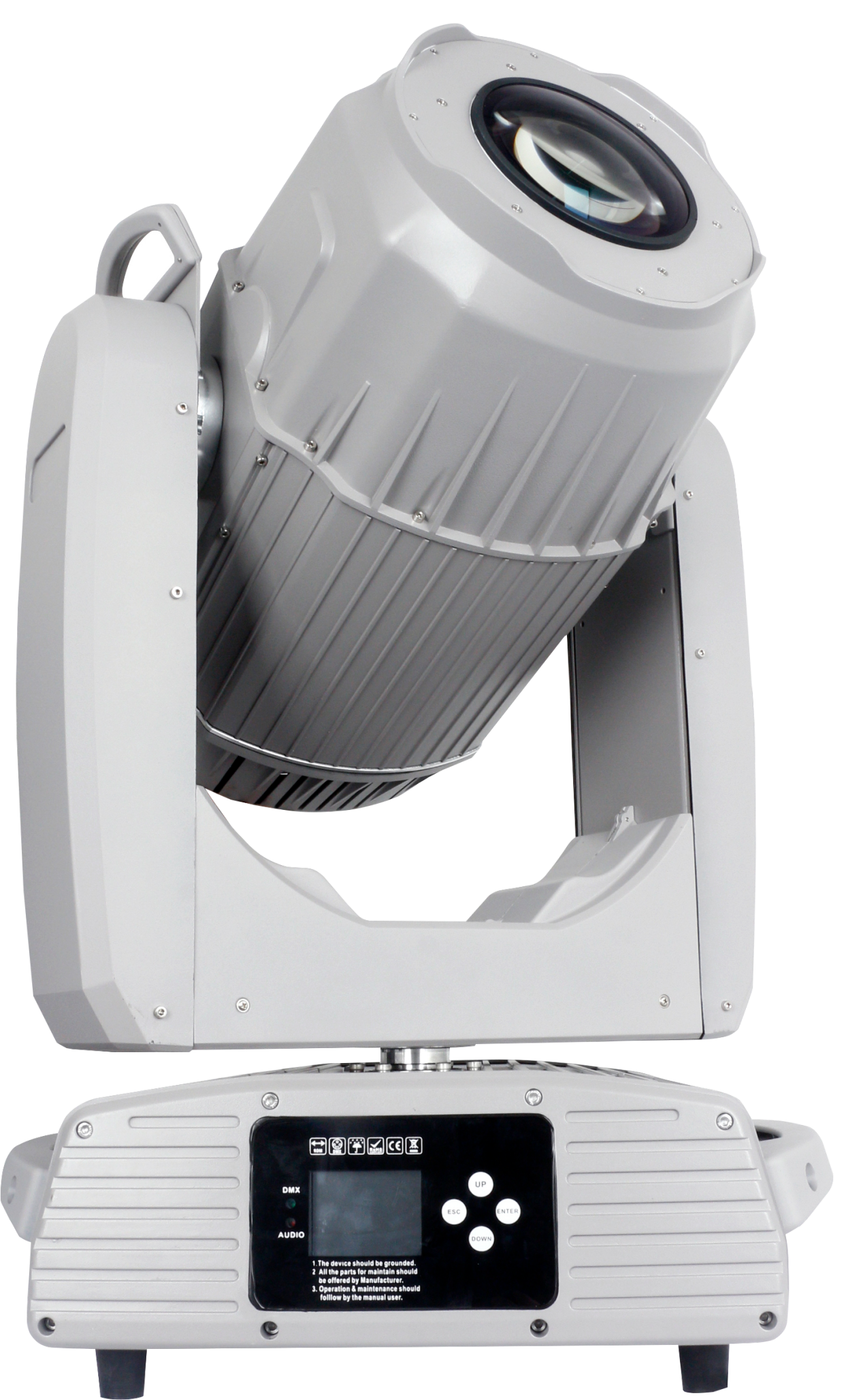
Start with the projected image size, not the projector body
Most people shopping for an LED pattern projector begin by comparing wattage or housing size. That is usually the wrong starting point. The useful question is simpler: how large should the logo, pattern, or walkway graphic appear on the surface?
If you need a small, crisp mark near an entry door, a large gobo can be unnecessary. If you want to cover a plaza, facade, or broad pedestrian zone, a tiny gobo paired with a long throw distance often leads to a weak, fuzzy result. In practice, the target image size tells you whether you need a short projection distance, a larger optical setup, or a more powerful fixture.
A quick first check helps:
- Small branding mark or decorative accent: usually works best at shorter distances.
- Mid-size pathway or entrance graphic: needs a balanced match between gobo size, lens angle, and mounting height.
- Large ground projection or wall wash pattern: often requires more throw planning and stronger light output than buyers expect.
That sounds obvious, but this is where many selection mistakes begin.
Check the projection distance before you choose the gobo
Projection distance changes everything. The farther the LED pattern projector sits from the target surface, the larger the image becomes, but brightness per area drops and edge sharpness becomes harder to hold. Outdoors, that tradeoff gets more severe because ambient light, surface texture, rain, dust, and mounting vibration all work against image quality.
Before comparing gobos, write down these four job-site numbers:
- The actual distance from fixture to projection surface.
- The available mounting height.
- Whether the image is going onto a wall, pavement, signage panel, or textured facade.
- How much competing light is present at night.
A projector that looks perfect in a showroom can perform poorly outside if the real installation distance is longer, or if the surface is rough concrete instead of a flat white wall.
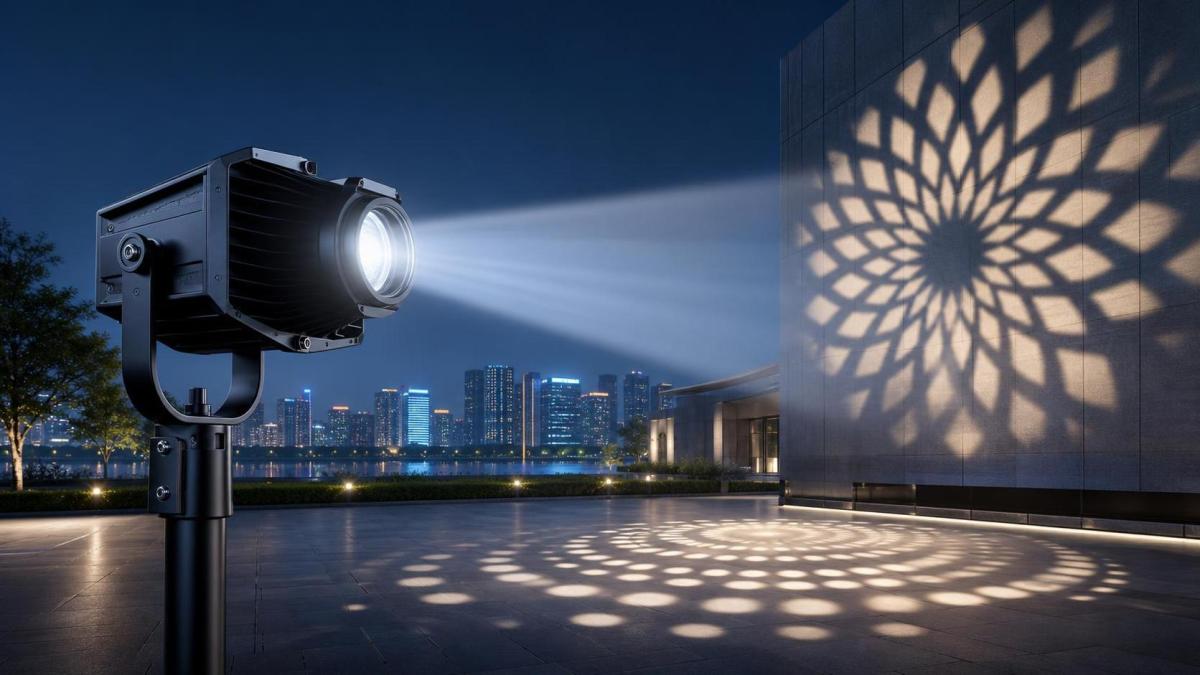
Use this practical rule when comparing gobo size options
Gobo size is not just about physical diameter. What matters is how much image detail the optical system can carry at the required distance. A larger gobo generally gives the projector more room to reproduce fine lines, small lettering, and layered shapes. That becomes more valuable as the throw distance increases.
Here is the field logic many buyers find useful:
If your design includes thin lines, small letters, or tight geometric detail, do not assume the pattern will still read well once projected across a wide outdoor area. Simplifying the artwork is often more effective than chasing a larger image size.
Decide whether sharpness or coverage matters more
Some buyers want the biggest projection possible. Others need a cleaner edge and stronger contrast. You usually do not get both without paying for a better optical setup and a more controlled installation environment.
For consumer use, this is the right way to choose:
- If the pattern is decorative and viewed from a distance, larger coverage can be acceptable even with softer edges.
- If the pattern includes branding, arrows, numbers, or readable text, protect sharpness first.
- If the image lands on paving, expect some detail loss because joints, texture, and dirt break up the projection.
That is why a walkway projection and an event logo may require different gobo choices even when the same LED pattern projector is being considered.
Do not separate the projector decision from the mounting environment
Outdoor projection quality depends heavily on where the fixture sits. A stable mount, correct aiming angle, and weather protection matter as much as the gobo itself. In street and public-space applications, the support structure can determine whether the image stays aligned over time.
Where the projector is integrated into broader site lighting, it helps to think about the mounting hardware early. For example, a lighting pole solution such as Modern Street Lighting|MSL-XY is built for street lighting conditions with features like IP67 protection, wind resistance of at least 150 km/h, and height options from 8 to 14 m. That does not automatically make it the right support for every projection job, but it shows the kind of installation factors worth checking when your projector will live outdoors for years, not just for a weekend event.
A good image on day one is easy. A stable image after weather, vibration, and daily operation is the real test.
Look at the surface before blaming the gobo
A common buying mistake is to judge projection quality without considering the target surface. Dark brick, uneven concrete, wet paving, and glossy finishes all change the result. If the surface is highly textured, increasing gobo size alone will not restore fine detail. You may need a shorter throw distance, a more contrast-friendly design, or a different projection location.
This matters especially when the goal is wayfinding. An arrow projected onto smooth concrete can read clearly. The same arrow on patterned stone may lose its edges and become less useful from only a few meters away.
A short checklist before you buy
- Measure the real throw distance, not the estimated one.
- Set the required image width or diameter on the target surface.
- Decide whether the pattern is decorative, directional, or text-based.
- Check the surface color and texture where the image will land.
- Review ambient light levels during the actual operating hours.
- Confirm the mounting height and whether the fixture can stay stable outdoors.
- Ask whether the artwork needs fine detail or can be simplified for better readability.
If two projector options seem close, choose the one that gives you more control over focus and lens matching rather than the one that only promises a larger projected area.
What usually works best
For most end users, the best result comes from matching a moderate gobo size to a realistic projection distance, then simplifying the artwork enough to stay readable outdoors. Shorter distances usually produce the cleanest image. Longer distances can work well, but only when the design is bold, the optics are suited to the throw, and the mounting setup is treated as part of the system.
If you are making a final selection, work in this order: target image size, real throw distance, surface condition, artwork complexity, then fixture and mounting choice. That sequence prevents most expensive mistakes and gives your LED pattern projector a much better chance of delivering the sharp, visible result you actually want.
◉ MESSAGE
Blog
- How to Qualify a Wind-Solar Hybrid Street Light Supplier for Remote Sites
- Solar Security Light Placement Strategies to Eliminate Outdoor Blind Spots
- LED Street Luminaire Specifications That Matter for Roadway Projects
- What to Evaluate When Selecting a Smart Street Lamp Manufacturer
- How to Prepare a Compliant Solar Lighting Bid for Public Infrastructure Projects
- LED Street Lighting Solutions for Urban and Municipal Roads
- LED Street Light Installation Guide for Road Projects
Message