
Where to place a solar garden light in a partially shaded garden
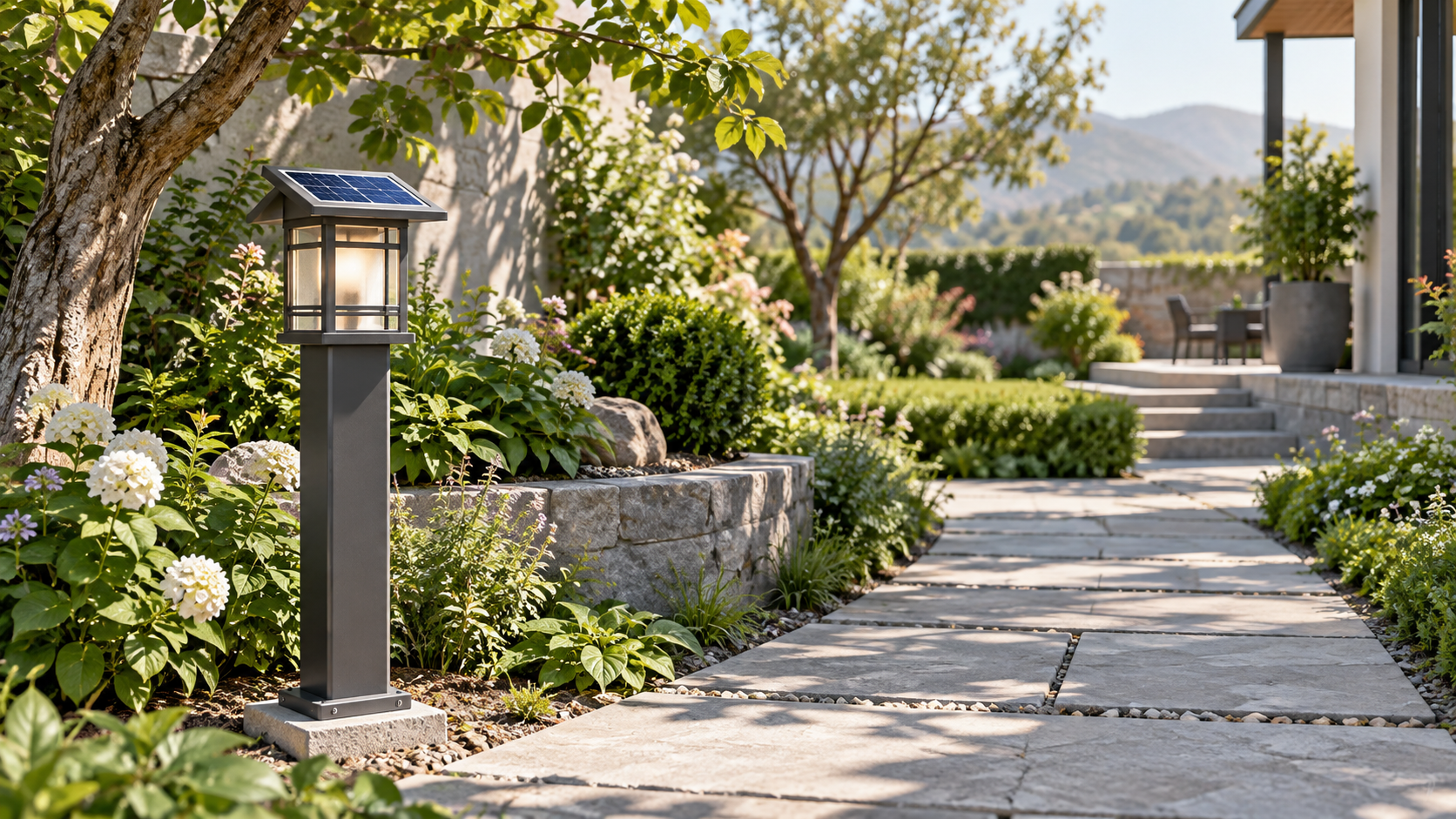
Place a solar garden light where its panel receives the longest available stretch of direct sunlight and its beam reaches the surface you need to see. In a partially shaded garden, that location is often the sunny edge of a path or planting bed. If the useful lighting position stays beneath trees or beside a shaded wall, choose a light with a separate solar panel so the panel can charge elsewhere.
A position that looks bright at midday can still provide poor charging across the day. Before fixing anything permanently, follow the shadows, try the light in position, and assess its performance after dark.
Find the sunniest usable position at panel height
Observe the garden in the morning, around midday, and later in the afternoon. Mark where direct sunlight actually reaches the intended panel position. Open sky above a lawn does not guarantee that a low-mounted panel beside it escapes the shadow of a hedge.
Look at the panel surface itself. A post, branch, or fence rail can cast a narrow shadow across it even when the surrounding ground looks sunny. Partial shading reduces output; the size of the reduction depends on the panel’s cell layout and electrical design, so the visible shaded area alone is an unreliable guide to charging loss.
Compare potential locations using these distinctions:
- Open sun: Direct sunlight reaches the panel without foliage or structures interrupting it. This is the strongest starting point for reliable charging.
- Moving tree shade: Bright patches shift across the panel. Record when it receives uninterrupted sunlight rather than counting the entire period as sunny.
- Bright, continuous shade: A sheltered position can look well lit to your eyes while providing too little solar energy for the desired evening runtime.
Follow the charging guidance for the particular light. A stated sunlight requirement assumes certain conditions; several hours of weak winter sun or intermittent light through leaves are not automatically equivalent to the same period of clear, direct sun.
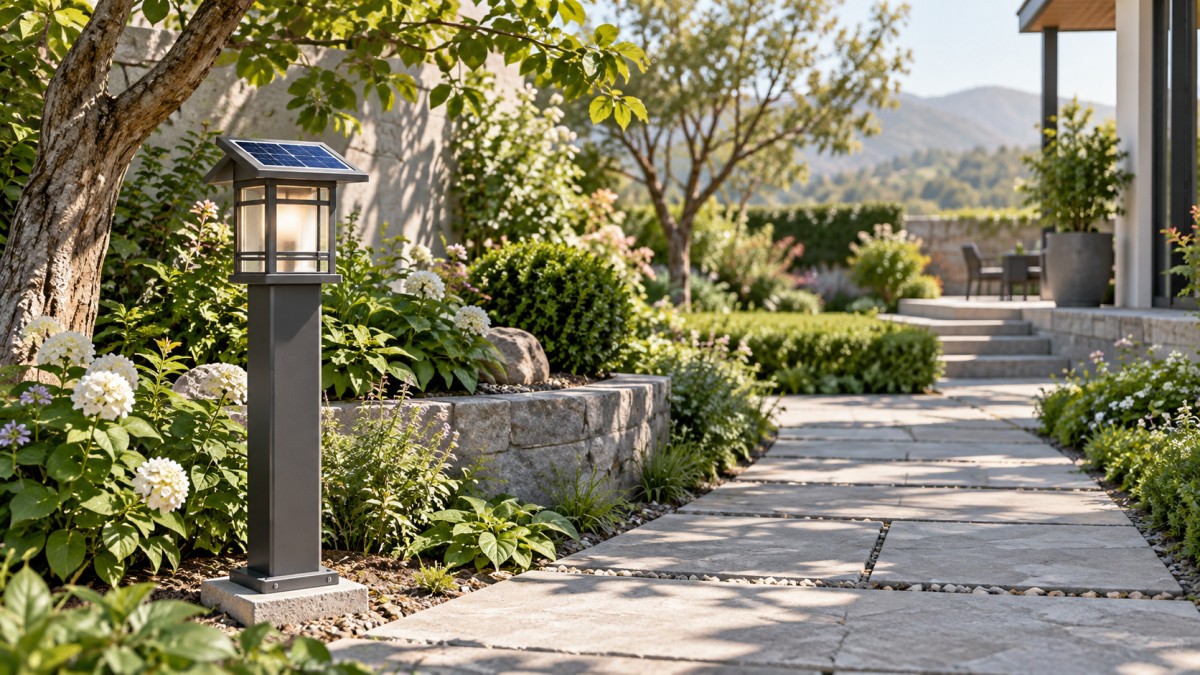
Account for seasonal changes before choosing a permanent mounting point. A spot beneath a deciduous tree may receive excellent sunlight before the leaves emerge and much less afterward. Lower winter sun also lengthens shadows from fences and buildings. If lighting matters during winter, assess the winter exposure rather than relying on a summer trial.
Match the mounting position to the surface being lit
Once you have identified the charging opportunities, position the lamp so its light reaches the intended surface without shining directly into nearby eyes. Moving a fixture into sunshine is useful only if it still illuminates the path, seat, or planting feature.
Along a garden path
Try the sunny side of the path first, with the fitting outside the walking line. Keep low panels clear of border plants, including their expected mature growth. A light that charges successfully when installed can become shaded as nearby foliage spreads.
Judge spacing after dark. Decorative points of light can mark a route while leaving the ground between them difficult to see. Where there are steps, uneven paving, or a sharp turn, aim illumination at those features and assess visibility from the direction of approach. Do not assume identical spacing will suit every part of the route.
Beside seating or planting
For a seating area, place the lamp where its beam reaches the table edge, adjacent paving, or entrance to the space without glaring at seated eye level. A panel mounted on top of the light needs clearance from parasols and overhanging branches during charging hours.
In a flower bed, place an integrated solar light near an open edge rather than deep beneath leaves. Aim toward the feature from there. If the desired beam direction forces the panel into shade, a separate panel gives more freedom than repeatedly adjusting a combined fitting.
Use a separate panel when sunlight and useful light are far apart
A remote-panel solar garden light suits a shaded path beside a sunny fence, or a covered seating area near an open bed. The lamp stays where illumination is needed, while the panel mounts where sunlight is available.
Measure the actual cable route before choosing a mounting point. Include the distance up posts, around corners, and along protected edges. A straight-line measurement across the garden can underestimate the cable needed for a tidy installation.
Route the cable away from mowing, edging, foot traffic, and digging areas. Use the manufacturer’s instructions for fixing, connector protection, and any permitted burial. Do not assume that a cable or connection is suitable for underground installation simply because the light is intended for outdoor use. Extensions also need manufacturer approval because added cable can affect electrical performance and weather resistance.
For an adjustable panel, start with an unobstructed orientation toward the equator: generally south-facing in the Northern Hemisphere and north-facing in the Southern Hemisphere. Nearby obstructions still matter. A different orientation with a longer clear exposure can outperform an equator-facing panel shaded by a building. Secure the bracket so wind cannot change the angle, and leave access for cleaning.
Test charging and evening performance before fixing the light
Place or temporarily secure the light according to its installation instructions, complete any specified initial charge, and compare performance over several days. Use the same brightness setting during the trial. Changing location and operating mode together makes the results harder to interpret.
Observe both the light level after dusk and whether useful illumination lasts until the time you need it. A short decorative display and an illuminated route used late at night place different demands on the battery. Advertised maximum runtime does not establish how long the light will run in your garden’s shade.
If performance disappoints, move the panel or integrated fitting to a clearly sunnier position and repeat the trial under reasonably comparable weather. Better runtime supports a placement-related explanation. If the result barely changes, examine the panel for dirt, confirm the selected mode, and follow the instructions for battery inspection or replacement.
A larger battery alone does not solve inadequate charging. It stores energy but cannot replace sunlight that never reaches the panel. Likewise, a brighter mode increases demand and can shorten runtime when the daily energy supply is limited.
Separate charging problems from nighttime switching problems
A lamp that fades or stops early after shaded days suggests an energy shortage. A lamp that stays off near a porch light presents a different possibility: many solar lights use the panel or a separate sensor to detect darkness. Nearby artificial light can prevent switching on or cause unexpected operation.
Test this by temporarily switching off the nearby light after dark. If the solar fitting responds, reposition it or adjust the sensor location where the design permits. Keep the sensor clear of the lamp’s own reflected light as well.
Remove fallen leaves and clean the panel using the manufacturer’s method. Avoid placing it beneath roof runoff or irrigation spray that repeatedly deposits dirt. An outdoor protection rating describes resistance to specified exposure; it does not establish charging capability in shade.
Recognize when the shaded position needs another power source
If no reachable panel position receives adequate sunlight, relocation or a wired garden fitting offers a more dependable route to sustained illumination. This matters especially at steps or entrances where early shutdown would leave a hazard difficult to see.
Match any alternative to the garden’s scale. The LED Tunnel & High-Power Floodlight, for example, uses AC90–305V input and is specified for tunnels and critical infrastructure; those characteristics distinguish it from a small solar path light and do not make it a suitable substitute for a shaded flower bed.
Leave permanent fixing until the chosen arrangement has demonstrated useful light at the required time. Keep the panel accessible afterward: seasonal growth and accumulated debris can change a successful installation’s charging conditions.
◉ MESSAGE

Blog
- How to avoid vendor lock-in in a government smart lighting project
- Sizing the communications power budget for smart city solar street lights
- How energy-saving mode affects solar bollard light operating time
- Comparing lead times from LED street light luminaire suppliers in Europe
- What spare parts support should a smart street light exporter offer?
- Where to place a solar garden light in a partially shaded garden
- Which battery alerts matter in remotely monitored solar street lighting?
Message