
What Is Solar Street Lighting SL-008 and How Is It Different from Grid-Powered Lights?
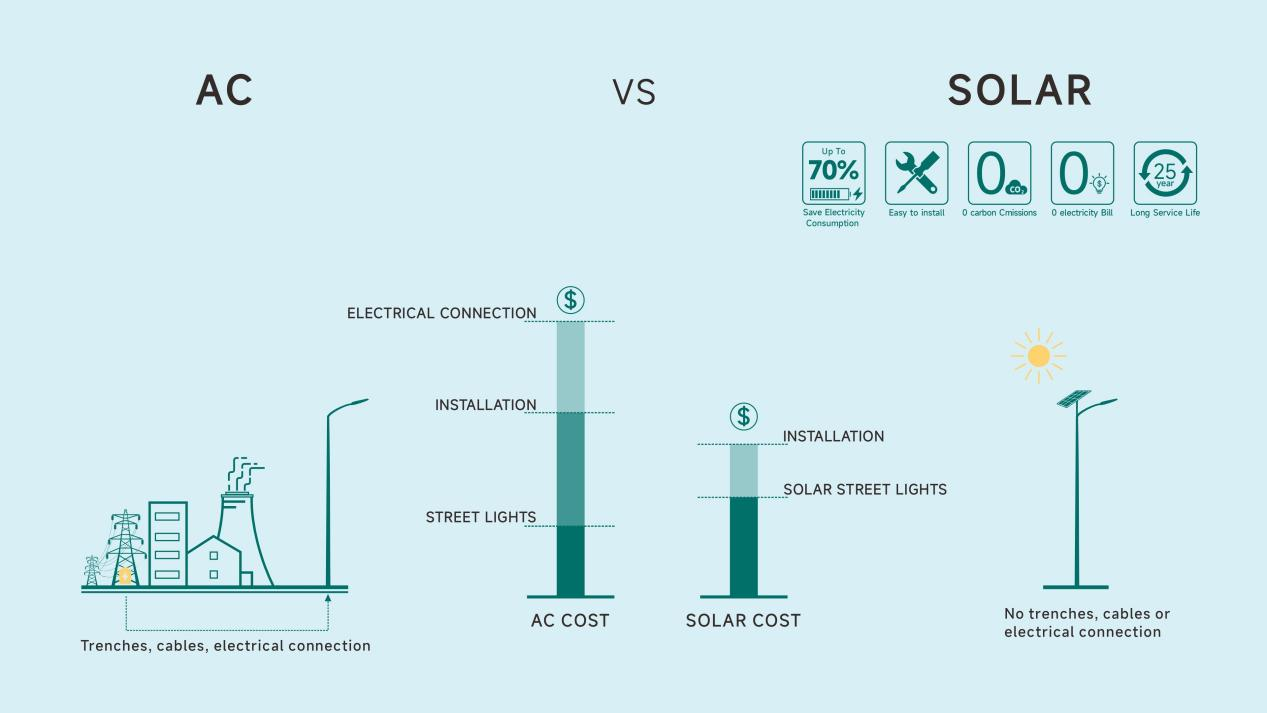
Solar Street Lighting | SL-008 is drawing attention because it offers lighting without daily dependence on the power grid. In outdoor lighting projects, that changes more than energy supply. It affects installation planning, maintenance routines, resilience, and long-term operating risk.
The comparison with grid-powered lights matters most in roads, parks, public spaces, and developing urban zones. In these settings, lighting performance is not only about brightness. It is also about delivery speed, cable work, system reliability, and lifecycle cost.
That is why Solar Street Lighting | SL-008 has become part of a wider project discussion. Teams are looking for solutions that reduce infrastructure pressure while still meeting practical requirements on safety, consistency, and service life.
A practical way to understand Solar Street Lighting SL-008
At its core, Solar Street Lighting SL-008 is a self-contained outdoor lighting system. It typically combines a solar panel, battery, LED fixture, controller, and pole structure into one coordinated solution.
During the day, the panel collects solar energy. At night, stored power runs the LED light through an intelligent control system. This setup reduces dependence on trenching, grid connection, and local power availability.
Grid-powered lights work differently. They rely on utility electricity, underground cabling, distribution equipment, and a stable external power source. In many urban areas, that remains a proven and efficient approach.
So the real question is not which technology is universally better. It is which one fits the project environment, budget structure, and operating conditions more effectively.
Where the biggest differences appear
The most visible difference is energy source, but project decisions usually go further than that. Installation method, maintenance access, environmental conditions, and system design all influence the final choice.
In remote or newly developed areas, these differences can be decisive. In dense city districts with established infrastructure, the balance may shift toward grid systems or hybrid strategies.
Why the market is paying closer attention
Outdoor lighting projects now face pressure from several directions. Energy efficiency targets are stricter. Construction timelines are tighter. Maintenance teams also need systems that are easier to manage over many years.
Solar Street Lighting | SL-008 fits this conversation because it can reduce civil work and energy dependence. That makes it relevant for roads, public pathways, industrial parks, municipal upgrades, and temporary development phases.
Another reason is resilience. When a lighting system can continue operating without direct grid supply, it adds value in areas where power stability is uncertain or expansion plans are still evolving.
For large-scale projects, this is rarely just a product issue. It becomes a system issue involving pole design, light distribution, control logic, weather resistance, and lifecycle coordination across many installation points.
How the choice affects real project execution
In practice, the difference between solar and grid-powered lighting often appears first in project delivery. Solar systems may simplify deployment where trenching is expensive, disruptive, or slow to approve.
Grid-powered systems may still offer stronger consistency in sites with heavy nighttime demand, limited sun exposure, or strict illumination requirements over long operating hours.
This is where integrated project support matters. Lishida Smart Lighting works with large-scale outdoor lighting needs across roads, public spaces, and complex urban environments, combining lighting products, smart controls, and project-based solutions.
That experience is especially useful when the decision is not binary. Some projects benefit from a solar layout in outer zones and conventional systems in core corridors, depending on reliability targets and construction conditions.
The hardware behind long-term stability
A lighting decision should also consider the structural side of the system. Pole quality, corrosion protection, wind resistance, and fixture durability directly affect maintenance intervals and safety performance.
In projects that need a strong conventional street lighting reference, Modern Street Lighting|MSL-HCH shows what decision-makers often evaluate: Q235 steel construction, 8-14 m pole height, 4-8 mm thickness, hot-dip galvanizing, powder coating, and wind resistance of at least 150 Km/h.
Those specifications matter because the comparison between Solar Street Lighting SL-008 and grid-powered lights should never stop at the energy source. The supporting structure and LED performance also shape total project value.
When solar makes more sense, and when it does not
- Solar Street Lighting | SL-008 is often suitable where grid access is difficult or expensive.
- It is useful in rural roads, park trails, border zones, and phased developments.
- It is attractive where lower operating energy cost is a major target.
- It needs careful review in shaded areas, dense high-rise districts, or sites with very long nightly demand.
- Grid-powered lights remain strong where power supply is stable and lighting levels must be highly consistent.
Simple comparisons can be misleading. A solar solution may reduce utility cost but still require accurate battery sizing. A grid solution may deliver stable output but involve longer construction schedules and higher infrastructure work.
What to review before making a decision
A sound evaluation starts with site reality. Solar availability, autonomy days, illumination target, pole spacing, and local weather conditions should be reviewed together, not separately.
- Check sun exposure across seasons, not only at one visit.
- Compare installation cost with full lifecycle cost.
- Review maintenance capacity for batteries, controllers, and cleaning.
- Confirm structural durability, IP rating, LED lifespan, and corrosion protection.
- Consider whether smart controls or hybrid layouts improve reliability.
For example, in a broader urban street program, a reference product such as Modern Street Lighting|MSL-HCH highlights useful benchmarks, including CREE or OSRAM chips, 150-250W output, efficacy of at least 140 lm/W, IP67 protection, and service life expectations above 30 years.
These are the kinds of parameters that help turn a general comparison into a workable specification path.
A useful next step
Solar Street Lighting SL-008 is best understood as a project solution, not just a standalone fixture. Its difference from grid-powered lighting lies in power independence, installation logic, and operational trade-offs.
The next step is to map the site conditions, operating hours, and maintenance expectations against both options. Once those factors are clear, it becomes much easier to judge whether Solar Street Lighting | SL-008, a grid-powered system, or a mixed approach will deliver the most reliable result.
◉ MESSAGE
Blog
- How to Qualify a Wind-Solar Hybrid Street Light Supplier for Remote Sites
- Solar Security Light Placement Strategies to Eliminate Outdoor Blind Spots
- LED Street Luminaire Specifications That Matter for Roadway Projects
- What to Evaluate When Selecting a Smart Street Lamp Manufacturer
- How to Prepare a Compliant Solar Lighting Bid for Public Infrastructure Projects
- LED Street Lighting Solutions for Urban and Municipal Roads
- LED Street Light Installation Guide for Road Projects
Message