
LED Pattern Projector for Outdoor Branding: What to Consider Before Installation
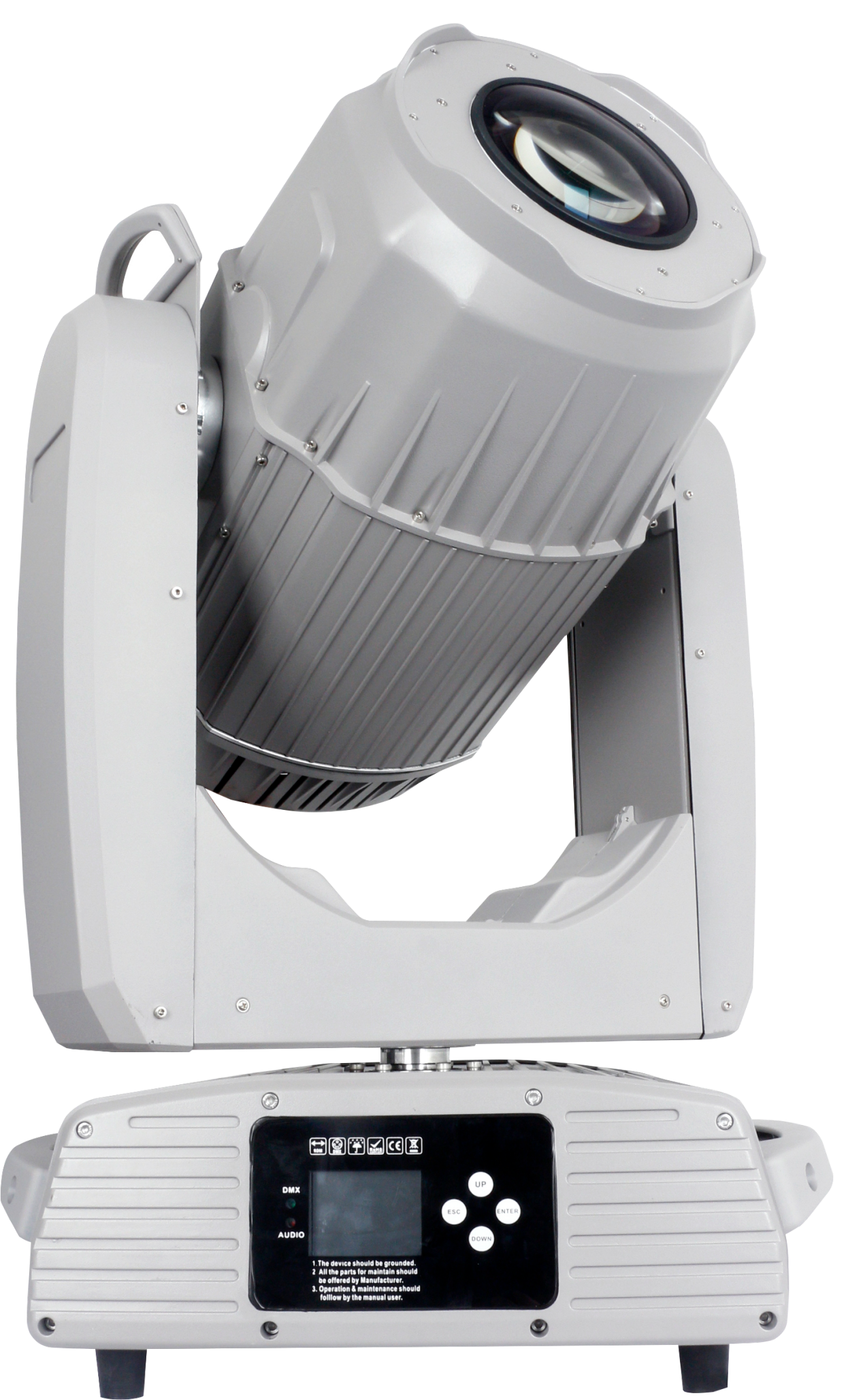
Choosing an LED pattern projector for outdoor branding looks simple until you get into the details. A fixture can be bright on paper and still fail on site because the logo stretches across textured walls, the beam washes out under street lighting, or the housing cannot handle year-round weather. If the goal is clean brand visibility instead of a short-lived visual effect, the checks need to start before you buy the unit, not after installation crews arrive.
The most common mistake is treating projection as a decorative add-on. Outdoor branding works only when the image stays readable at the real viewing angle, in the real ambient light, and through the actual operating schedule. That means looking at the installation environment, projection surface, mounting position, control method, and service access as one system.
Start with the surface, not the fixture
Before comparing products, stand where the projector will actually be installed and inspect what the light will hit. A smooth, light-colored wall gives you far more usable detail than rough stone, dark paint, mesh, or uneven cladding. If the branding needs fine lines, text, or sharp logo edges, surface quality matters as much as lumen output.
Check three things on site:
- Surface color and reflectivity
- Flatness across the full projected area
- Obstructions such as trees, signs, cables, or seasonal decorations
If the projection surface is inconsistent, the image may look acceptable in a mockup and weak in reality. In that case, either reduce the projected graphic size, simplify the artwork, or move the projection target to a cleaner facade.
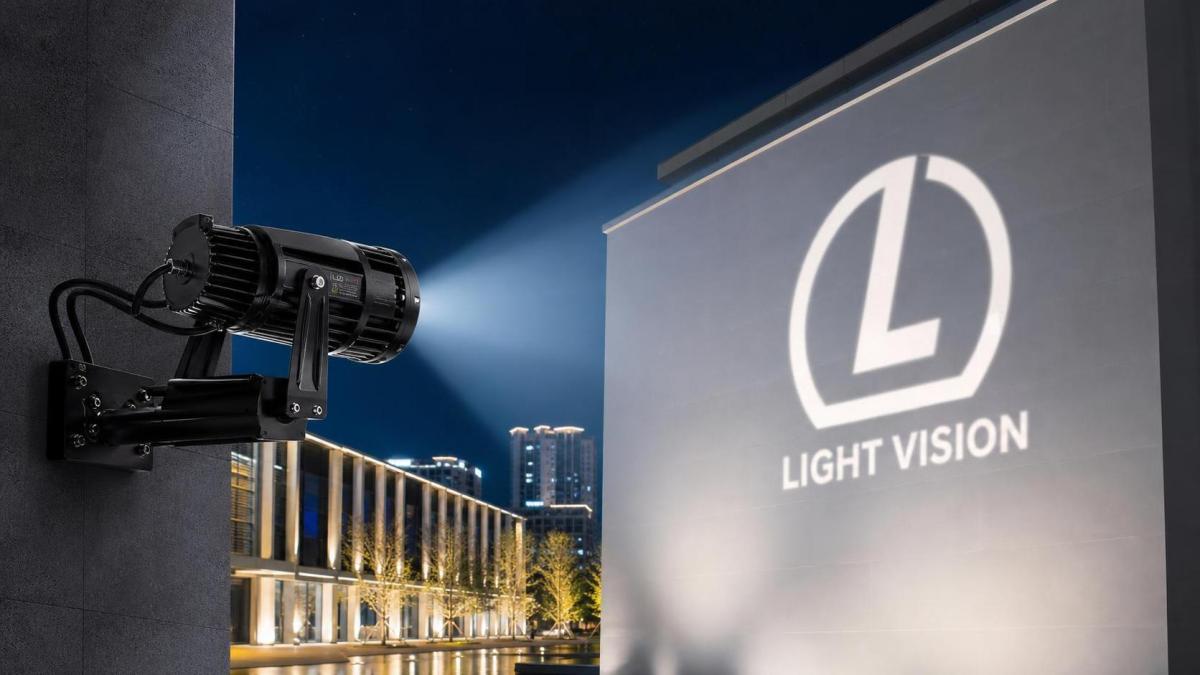
Measure projection distance the practical way
Distance changes almost everything: image size, edge sharpness, fixture selection, and mounting difficulty. People often estimate this too loosely. Do not measure from the base of the pole or the edge of the building. Measure from the planned lens position to the center of the target area.
Then work backward from the result you need. If your brand mark must be legible from a street crossing or plaza entrance, define the viewing distance first. A large projected logo that looks soft and low-contrast is usually less effective than a smaller, sharper image. For outdoor branding, clarity wins over size more often than buyers expect.
At this stage, ask for the beam angle or lens options and compare them with your target width and throw distance. If those numbers are not matched properly, no amount of later adjustment will fix a distorted image.
Check ambient light before judging brightness
Outdoor branding projection competes with storefront lighting, road lighting, digital signage, and vehicle headlights. This is why a projector that looks strong during a nighttime test in an empty area can disappear in a live commercial setting.
What matters is not “maximum brightness” in isolation, but whether the projected graphic remains distinct during the hours you plan to use it. If the site is already heavily lit, you may need tighter beam control, a different mounting angle, or a more selective projection window rather than simply choosing a higher-power unit.
Weather protection is not a side detail
For permanent or long-season outdoor use, weather resistance needs to be reviewed the same way you would review optical performance. Rain ingress, dust buildup, freezing temperatures, and summer heat all affect long-term output. If the fixture is installed on exposed poles or building corners, wind load and vibration also become part of the decision.
This is where the surrounding infrastructure matters. On projects that already use outdoor smart poles or integrated control points, mounting can be cleaner and maintenance easier. For example, Smart Street Lighting | SSL-CH is designed for outdoor environments with IP67 protection, operating temperature from -40℃ to +70℃, wind resistance of at least 150km/H, and remote control capability. That kind of support structure can make sense when branding projection is part of a broader urban lighting setup rather than a standalone fixture attached as an afterthought.
The point is not to overbuild every project. It is to match the fixture and mounting system to the actual exposure level of the site.
Do not ignore mounting height and service access
A projector installed too low may be easy to aim but vulnerable to tampering and accidental impact. Too high, and focusing, cleaning, or replacing the gobo becomes inconvenient and expensive. You need a mounting point that protects the fixture while still allowing technicians to reach it without turning every service visit into a lift-rental job.
This is especially relevant for seasonal campaigns. If graphics change several times a year, simple access matters more than people think. A good installation is not only secure on day one; it is manageable on the fifth adjustment.
Look closely at control and scheduling
A lot of end users focus on optics and forget operation. Yet many complaints start after commissioning: the projector stays on when the venue closes, manual switching is inconsistent, or multiple fixtures drift out of sync.
For a single storefront, a basic timer may be enough. For larger properties, streetscapes, or public-facing installations, remote control and centralized scheduling save time and cut down on preventable service calls. If the site already includes connected outdoor lighting infrastructure, integration can be smoother than adding a separate unmanaged device. That is one reason some project owners review systems such as Smart Street Lighting | SSL-CH when planning multi-point outdoor lighting and branding visibility together.
Keep the graphic realistic for outdoor viewing
Not every brand asset translates well into projection. Thin outlines, dense text, and low-contrast color combinations often break down outdoors. If you want a logo projection people can recognize quickly, simplify it for distance viewing. Bold shapes and clean separation usually perform better than detailed artwork.
Ask one direct question during design review: can a passing pedestrian or driver understand this image in one glance? If the answer depends on stopping, staring, or standing in one exact spot, the design is too fragile for outdoor branding.
Run through the failure points before approval
A short pre-installation checklist catches most avoidable problems:
- Confirm the exact projection surface and photograph it at operating hours.
- Measure lens-to-surface distance from the real mounting point.
- Check competing light sources after dark, not during daytime planning.
- Verify the fixture housing and mounting arrangement suit the site exposure.
- Review access for aiming, cleaning, and graphic replacement.
- Decide who controls scheduling and how faults will be noticed.
If you only have time to prioritize a few decisions, do them in this order: projection surface, distance, ambient light, then weather and maintenance. That sequence usually tells you whether an LED pattern projector will deliver a sharp branding result or become another fixture that looked promising in the catalog and disappointing on the wall.
◉ MESSAGE
Blog
- How to Qualify a Wind-Solar Hybrid Street Light Supplier for Remote Sites
- Solar Security Light Placement Strategies to Eliminate Outdoor Blind Spots
- LED Street Luminaire Specifications That Matter for Roadway Projects
- What to Evaluate When Selecting a Smart Street Lamp Manufacturer
- How to Prepare a Compliant Solar Lighting Bid for Public Infrastructure Projects
- LED Street Lighting Solutions for Urban and Municipal Roads
- LED Street Light Installation Guide for Road Projects
Message