
Common Deployment Issues with Smart StreetLightingIssL-CC and Practical Fixes
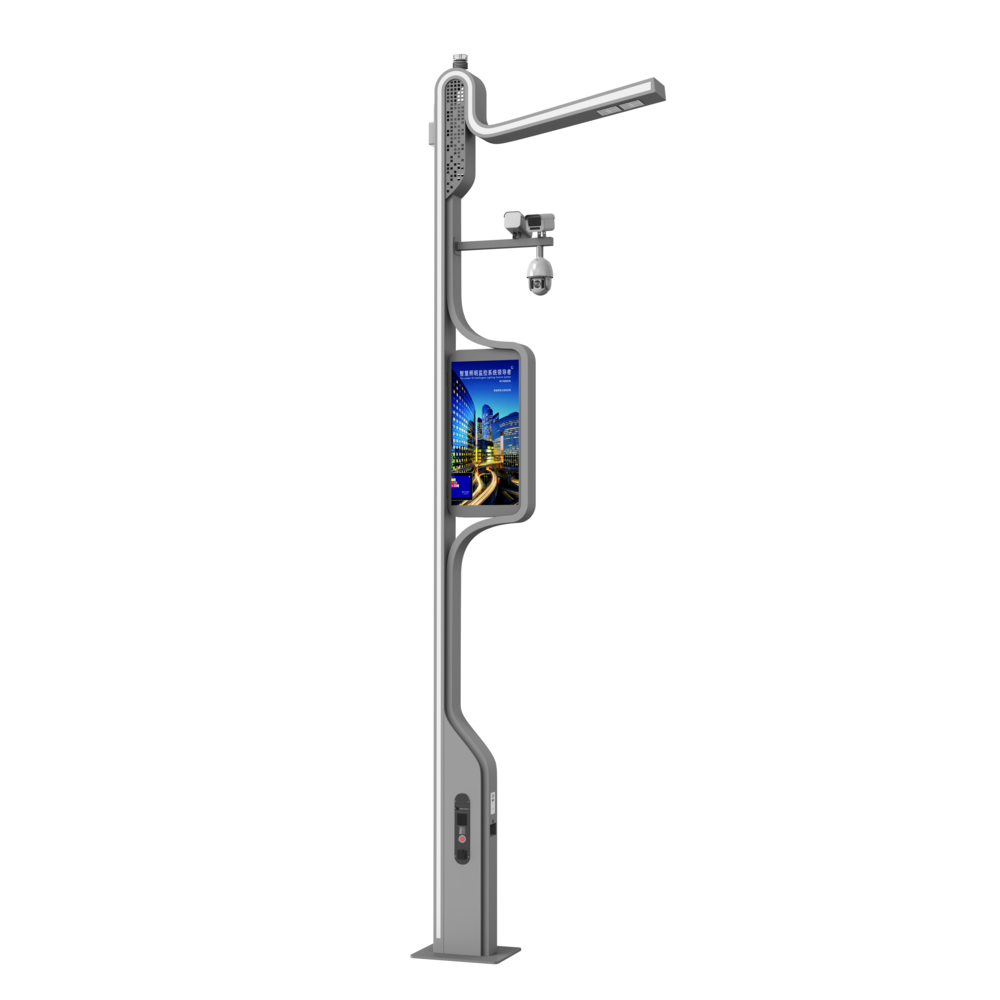
Common Deployment Issues with Smart StreetLightingIssL-CC and Practical Fixes
The hardest part of deploying Smart StreetLightingIssL-CC is usually not the lighting hardware itself. It is the point where poles, controllers, power distribution, communications, and site conditions all meet each other in the field. On paper, a smart street lighting system can look straightforward: luminaires, control nodes, gateway, software platform, and a commissioning plan. On site, problems begin when those elements come from different suppliers, are installed by different teams, and are expected to work together under weather, voltage fluctuation, and construction schedule pressure.
That is why the early warning signs in large outdoor lighting projects are often small. A cabinet layout that leaves no room for later expansion. A control protocol that is technically supported but unstable when mixed with another subsystem. A luminaire position adjusted by the civil team without updating the control address map. These are the kinds of issues that delay handover and create long-term maintenance trouble, especially on roads, municipal corridors, public squares, and mixed-use urban zones.
System compatibility is usually the first practical barrier. Many project teams assume that if the luminaire, controller, and platform all mention open interfaces, integration will be smooth. In reality, compatibility problems often appear in dimming response, fault reporting logic, or group control behavior rather than in basic on/off functions. A system may pass a bench test and still behave inconsistently once hundreds of nodes are online. The practical fix is simple but often skipped: lock the control architecture early, define protocol responsibility clearly, and test one complete chain before bulk delivery. That means driver, node, gateway, platform, and reporting logic should be verified as one working set, not as separate compliant parts.
Communication performance is another common weak point, especially in long road sections and dense urban sites. Signal planning that works in a clean drawing can fail when the installed environment includes trees, building reflection, utility interference, and uneven pole spacing. Wireless control networks are sensitive to real site geometry. Cable-based control can avoid some communication instability, but it introduces its own routing and protection requirements. Where the lighting layout crosses intersections, underpasses, or landscaped areas, the network design should follow physical obstacles rather than only electrical zoning. Projects that treat communications as an afterthought usually pay for it during commissioning.
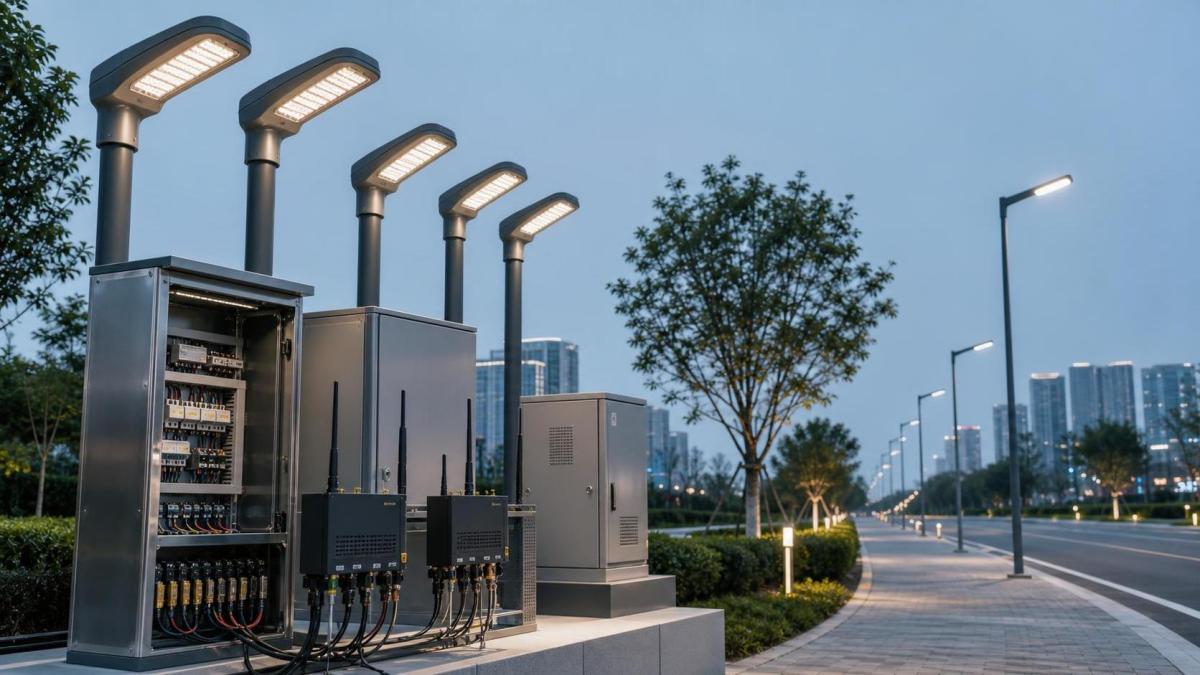
Power quality is less visible, but it affects smart lighting performance more than many buyers expect. In outdoor projects, voltage variation, poor grounding, and transient surges are not rare. A control system may be blamed for random node loss when the real issue sits upstream in the electrical environment. This becomes more likely in older municipal circuits, mixed infrastructure zones, or sites where lighting shares power conditions with other outdoor equipment. Before replacing controllers or rewriting software parameters, it is worth checking the basics: grounding continuity, surge protection coordination, cabinet workmanship, and whether the actual input voltage is staying within the operating range of the installed devices.
Installation errors also tend to compound in smart projects because every physical mistake has a digital consequence. A mislabeled pole number, swapped node, or unrecorded wiring change can turn a simple lighting issue into a software diagnosis problem. This is common when civil progress is tight and multiple subcontractors work in parallel. The most reliable fix is not more software complexity. It is field discipline: stable tagging rules, as-built updates during installation rather than after, and commissioning records that match the final pole position and circuit arrangement. If the digital map does not reflect the physical site, maintenance efficiency drops immediately.
One area that deserves more attention is mixed-scene lighting inside the same project. Smart street lighting is often discussed as if every pole serves the same purpose, but that is rarely true. A road corridor may connect to pedestrian pockets, landscaped setbacks, or small public gathering areas that need different light distribution, mounting height, and visual comfort. In those locations, a decorative or low-height complementary fixture may be more appropriate than extending the main road-lighting logic. For example, in parks, commercial landscapes, or residential-facing public spaces, lower mounting heights and softer color temperatures can reduce glare and improve nighttime perception. A product such as LED Garden&Lawn Lighting | GLL-LGYC fits this kind of transition zone because its 3-4 m pole height, IP67 protection, and wind resistance of at least 150 km/h suit exposed outdoor conditions while keeping the scale more appropriate for pedestrian environments than a standard roadway pole.
This matters because control strategy should follow the use of space, not only the electrical circuit. A boulevard edge, a plaza entrance, and a landscape path may sit on the same project drawing, but they do not need identical dimming schedules or visual output. Trying to force all areas into one control profile often creates complaints later: overlit pedestrian zones, insufficient wayfinding in side spaces, or wasted energy where activity drops sharply after certain hours.
Where Deployment Decisions Usually Go Wrong
A recurring mistake is choosing components by isolated specification instead of by system behavior. High efficacy, a known LED chip brand, or a long rated life are useful indicators, but they do not solve integration problems by themselves. The same applies to landscape and auxiliary fixtures. If a project includes lower-height fittings in public green areas, their optical effect, control method, and maintenance access should be considered alongside the main street lighting network. In some projects, separate local control for these secondary zones is easier to manage than forcing every fixture into one centralized logic.
Another issue is underestimating environmental stress. Outdoor lighting systems have to survive moisture, heat, cold, dust, vibration, and periodic electrical disturbance over many years. That is why fixture selection cannot be separated from location. A protected urban plaza and an exposed roadside edge do not put the same pressure on seals, drivers, pole structures, or anchor details. Where climate swings are large or maintenance access is difficult, products with defined operating temperature range and solid ingress protection become more than a specification line. They directly affect service continuity.
Lishida Smart Lighting has spent years supporting large-scale outdoor projects where these details decide whether commissioning stays on schedule. The practical lesson is consistent: simplify interfaces where possible, keep responsibility boundaries clear, and avoid mixing too many unproven combinations in the same phase of deployment. Strong manufacturing and engineering support help, but the site still needs a disciplined decision path from product selection to control integration and maintenance planning.
Practical Checks Before Handover
Before a Smart StreetLightingIssL-CC project is considered ready, the most useful checks are not always the most advanced ones. Confirm that grouping logic matches the real use zones. Verify that fault alarms are meaningful and not just technically active. Check whether replacement access is realistic for both the luminaire and the control device. Review whether special areas such as gardens or commercial landscape belts need a different fixture family or different dimming curve. If a site uses a lower-height solution like LED Garden&Lawn Lighting | GLL-LGYC, details such as AC220V±20% input tolerance, 3000K or 4000K main light options, and visual comfort characteristics can be helpful, but only when they are matched to the actual nighttime use of the space.
A well-deployed smart lighting project is rarely the one with the longest feature list. It is the one that stays understandable after installation, stable after weather exposure, and maintainable after the original project team has left. If those three conditions are met, the system usually performs as intended. If they are ignored, the trouble starts long after the commissioning report says the job is complete.
◉ MESSAGE
Blog
- LED Tree Ring Light Design Considerations for Public Landscape Safety
- Where Modern Street Lighting MSL-XM Fits in Urban Road Renewal Plans
- How to Qualify a Wind-Solar Hybrid Street Light Supplier for Remote Sites
- Solar Security Light Placement Strategies to Eliminate Outdoor Blind Spots
- LED Street Luminaire Specifications That Matter for Roadway Projects
- What to Evaluate When Selecting a Smart Street Lamp Manufacturer
- How to Prepare a Compliant Solar Lighting Bid for Public Infrastructure Projects
Message