
How Smart StreetLightingIssL-CC Improves Streetlight Management Efficiency
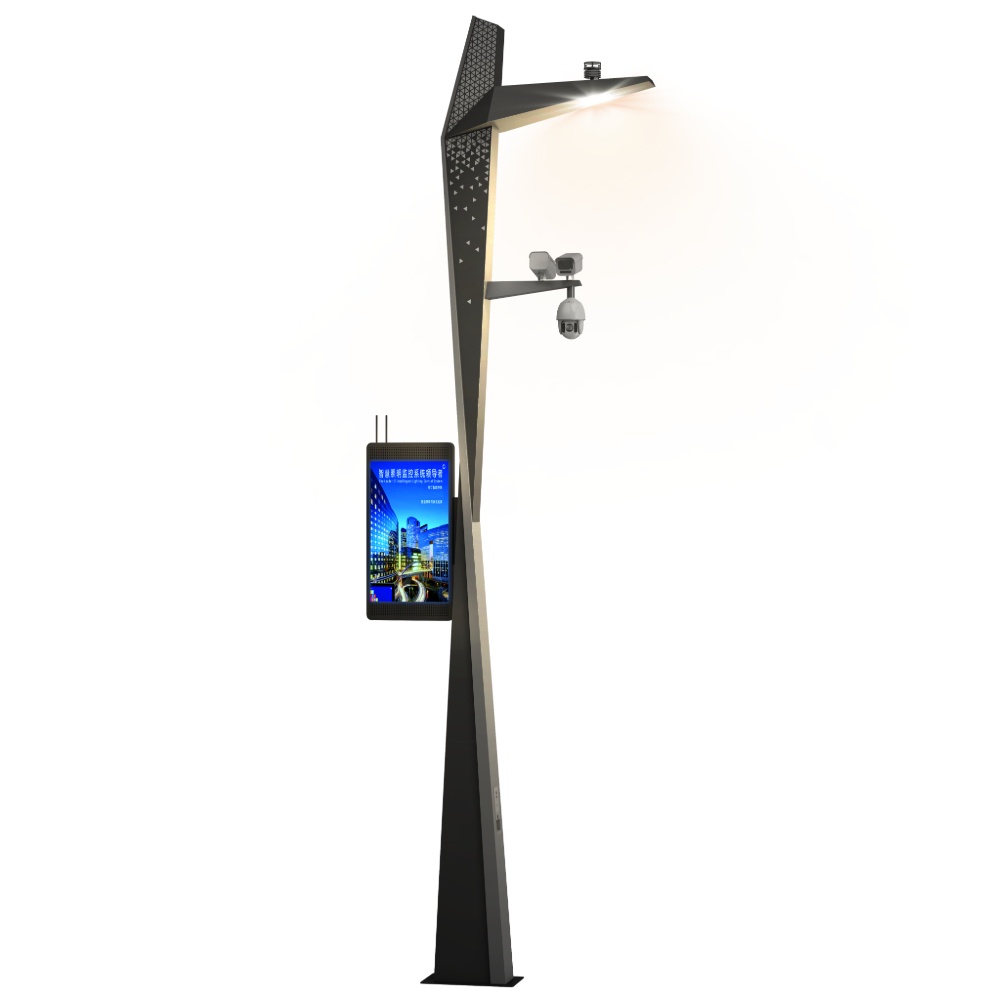
How Smart StreetLightingIssL-CC Improves Streetlight Management Efficiency
Streetlight management usually becomes difficult long before a city or contractor notices obvious failures. The real pressure shows up when a road project expands from one corridor to several districts, when lamp types vary by zone, or when maintenance teams are expected to respond quickly without clear fault visibility. That is where Smart StreetLightingIssL-CC becomes useful. Its value is not just remote switching. It lies in making a mixed outdoor lighting network easier to control, easier to check, and less dependent on manual inspection across roads, public spaces, and dense urban environments.
For procurement teams, this matters because management efficiency is rarely a single-device issue. It is a system issue. A luminaire may perform well on paper, but if the control platform, communication method, and maintenance workflow do not align with the site, operating cost stays high. In large outdoor lighting projects, the question is usually not whether smart control is useful. The question is where it genuinely reduces complexity, and where poor matching between equipment and site conditions creates new problems.
On municipal roads, the biggest gain often comes from visibility. Conventional streetlight management still depends heavily on periodic night patrols or resident complaints. That approach may be acceptable on a short road section, but it becomes inefficient across arterial roads, secondary streets, intersections, and service lanes managed under one contract. Smart StreetLightingIssL-CC helps by centralizing status monitoring and control, so operators can identify abnormal circuits, inconsistent switching behavior, or localized outages earlier. That reduces wasted maintenance trips and helps teams assign work based on actual faults rather than routine guessing.
The difference is even clearer in projects where road classes are mixed. Main roads often require stable illumination and predictable switching schedules, while adjacent pedestrian areas, landscape zones, or low-traffic connectors may need different operating logic. A smart control layer allows these areas to be managed as distinct lighting groups instead of one rigid network. In practice, that means fewer compromises between safety, energy use, and maintenance simplicity. It also helps when local authorities want lighting behavior adjusted for seasons, traffic patterns, or public events without physically reworking control cabinets.
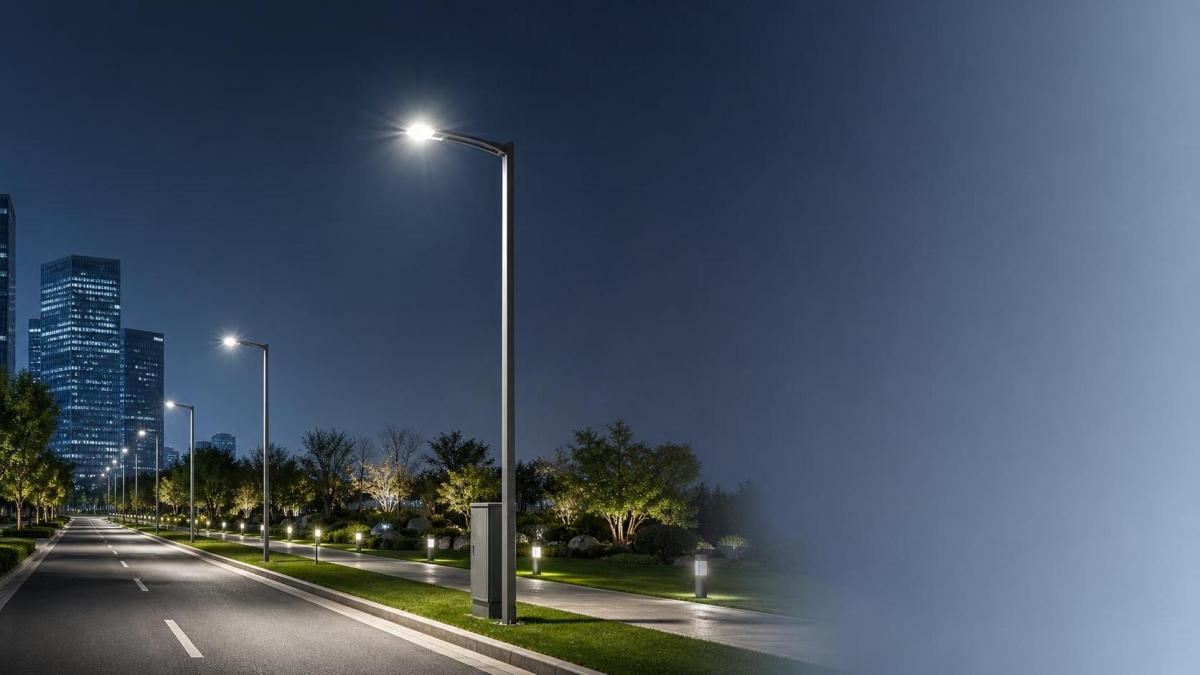
Urban public spaces create a different set of conditions. Parks, plazas, waterfront walkways, and commercial landscapes are not managed like road corridors. The lighting load is often more fragmented, the fixtures are more visible to the public, and visual comfort matters as much as basic brightness. In these areas, management efficiency is not only about knowing whether a lamp is on or off. It is about keeping appearance, timing, and reliability consistent across different fixture types.
This is where project teams often need to think beyond standard roadway luminaires. A landscape area may combine poles, bollards, lawn lights, and decorative fixtures under the same control strategy. For example, a project using LED Garden&Lawn Lighting | GLL-TY in gardens, parks, or commercial landscapes would not be judged only by wattage. Installation conditions, corrosion resistance, pole treatment, ingress protection, and long-term maintenance access all affect whether the smart management plan actually works. A fixture built with Q235 material, hot-dip galvanizing and powder coating, IP67 protection, and operating tolerance from -40℃ to +70℃ is more likely to remain stable in exposed outdoor conditions, which is important because a smart system cannot compensate for weak hardware in the field.
Another common misunderstanding is to treat smart control as a purely software decision. It is not. On site, wiring quality, pole spacing, control cabinet layout, power stability, and communication interference all influence performance. In older districts or phased urban developments, compatibility becomes one of the first things procurement teams should test. If the project includes existing poles, mixed luminaires, or partial retrofits, the efficiency of Smart StreetLightingIssL-CC will depend on how cleanly it integrates with the current electrical and control architecture. If that assessment is skipped, the system may look capable during specification review but become difficult to commission.
Contractors also run into a practical issue during delivery: not every outdoor zone needs the same level of smart functionality. Over-design can be just as wasteful as under-design. A high-traffic road, a public square, and a low-use greenbelt do not always need identical monitoring granularity or control logic. Efficient management comes from matching the control strategy to the importance of the area, the maintenance burden, and the consequences of failure. In some projects, remote group control is enough. In others, especially where access is difficult or fault response must be fast, more detailed monitoring is justified.
Where Efficiency Is Usually Won or Lost
From an execution standpoint, one of the more valuable outcomes is predictability. Lishida Smart Lighting has worked on large-scale projects across China, and that kind of experience matters because outdoor lighting projects rarely fail for dramatic reasons. More often, they lose efficiency through small coordination problems: unsuitable product selection for the environment, control systems that are difficult to integrate, or maintenance planning that ignores long-term access and replacement cycles. A smarter streetlight platform helps, but only when it is paired with fixtures and project decisions that reflect actual site conditions.
Take landscaped pedestrian zones near road networks as an example. These are often treated as secondary areas during procurement, yet they can create disproportionate maintenance effort if the selected fixtures are not robust enough. A lawn or garden light with a 3.5-4.5 m pole height, 3-4 mm pole thickness, wind resistance of at least 150 km/h, and a rated power range of 45-75W may fit well in exposed commercial landscapes or park paths, especially when visual comfort and service life are part of the decision. In that context, Smart StreetLightingIssL-CC supports the management side, but fixture reliability still determines how often teams need to visit the site.
Procurement teams usually ask a practical question: will the smart system reduce labor, or simply move the workload from the field to the control room? The answer depends on whether the project is organized around usable information. If alarms are too frequent, device categories are inconsistent, or the control structure does not match the maintenance structure, efficiency gains can be diluted. Good streetlight management is selective. It highlights what needs action, separates critical faults from minor deviations, and allows different outdoor zones to be managed according to their role.
That is why product and system selection should be reviewed together. In a park or commercial landscape, for instance, the second and final appearance of LED Garden&Lawn Lighting | GLL-TY in the bill of materials is less important than whether its protection level, surface treatment, and LED configuration align with the intended control strategy and maintenance interval. The same logic applies to roadway luminaires, poles, cabinets, and communication devices. Smart control improves management efficiency most when each part of the outdoor lighting system is chosen with the site, not just the specification sheet, in mind.
For large deployments, the soundest decision is usually the one that starts with the operating environment: road hierarchy, public exposure, maintenance access, electrical conditions, and compatibility with the wider project. Once those variables are clear, Smart StreetLightingIssL-CC becomes easier to evaluate as a practical management tool rather than a generic smart feature. That is the point where procurement decisions tend to become more confident, and project delivery tends to become more controlled.
◉ MESSAGE
Blog
- How to Assess a Solar Street Light Manufacturer in China Before Ordering
- LED Tree Ring Light Design Considerations for Public Landscape Safety
- Where Modern Street Lighting MSL-XM Fits in Urban Road Renewal Plans
- How to Qualify a Wind-Solar Hybrid Street Light Supplier for Remote Sites
- Solar Security Light Placement Strategies to Eliminate Outdoor Blind Spots
- LED Street Luminaire Specifications That Matter for Roadway Projects
- What to Evaluate When Selecting a Smart Street Lamp Manufacturer
Message