
How Smart Street Lighting Cuts Energy and Maintenance Costs
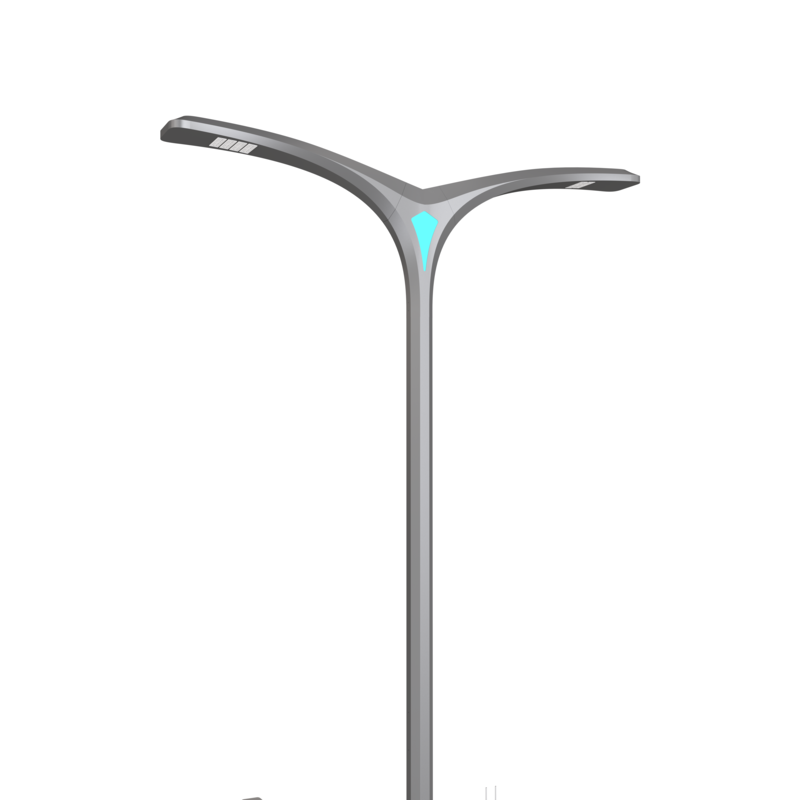
How Smart Street Lighting Cuts Energy and Maintenance Costs
For outdoor infrastructure planning, cost pressure rarely comes from purchase price alone.
Energy bills, fault response, spare parts, and system downtime shape the real financial outcome.
That is why smart street lighting is gaining attention in roads, parks, campuses, and urban corridors.
It combines efficient LED fixtures with connected controls and remote visibility.
The result is lower operating cost, better maintenance planning, and more predictable long-term performance.
For large projects, that mix matters because small inefficiencies scale very quickly.
Why smart street lighting changes the cost model
Traditional street lighting is often managed in a reactive way.
Lights run at fixed output, inspections are manual, and failures may stay unnoticed for too long.
Smart street lighting shifts that model toward measured use and visible asset status.
Each lighting point can be monitored, controlled, and adjusted from a central platform.
This makes energy use more precise and maintenance work less wasteful.
- Dimming schedules reduce unnecessary burn time.
- Real-time alerts shorten fault detection.
- Remote control lowers site visit frequency.
- Usage data supports better replacement planning.
Where the energy savings usually come from
The first savings layer comes from LED efficiency.
Many modern systems deliver high lumen output with much lower wattage than legacy sodium or metal halide fixtures.
The second layer comes from control logic, which is often more valuable over time.
Smart street lighting can dim during low-traffic hours and return to full output when needed.
That means the system uses power according to real conditions, not fixed assumptions.
In practical terms, projects often see savings from both fixture efficiency and runtime optimization.
Key indicators to compare
How maintenance costs come down
Maintenance is often underestimated during procurement review.
Yet in large outdoor networks, labor, traffic control, lifts, and repeat visits become expensive fast.
Smart street lighting reduces these costs by improving visibility before crews are dispatched.
A connected system can flag abnormal voltage, communication loss, or fixture failure in real time.
That allows teams to send the right parts and the right technicians on the first visit.
Long component life also matters.
When fixtures reach 50,000 hours or more, replacement cycles become easier to forecast and budget.
What to check in a smart street lighting solution
Not every connected lighting product delivers the same project value.
The real question is whether the system performs reliably across the full project lifecycle.
- Check environmental durability, especially wind resistance, temperature range, and IP protection.
- Review communication options such as 4G, 5G, NB-IoT, PLC, or LoRa.
- Confirm protocol compatibility for platform integration, including MQTT, TCP/IP, or HTTP.
- Assess whether configurations can match different road classes and operating strategies.
- Look at supplier support for execution, commissioning, and long-term service coordination.
One example is Smart Street Lighting | SSL-CH.
Its specifications reflect what many urban projects need from smart street lighting.
These include 50-100W rated power, at least 140 lm/W luminous efficiency, and IP67 protection.
A 6m stainless steel smart pole, operating from -40℃ to +70℃, also supports harsh outdoor environments.
Features like remote control and real-time alerts directly support cost reduction and service efficiency.
How to evaluate total cost, not just unit price
A lower fixture price can look attractive during early comparison.
But the stronger decision usually comes from total cost of ownership.
For smart street lighting, that means reviewing five cost areas together.
- Initial equipment and installation cost.
- Annual electricity consumption.
- Routine inspection and fault response cost.
- Platform integration and communication stability.
- Expected service life and replacement frequency.
This approach gives a more honest view of payback.
It also highlights whether a supplier can support complex delivery, not just ship hardware.
A practical decision framework for large projects
In actual business review, the most useful path is simple.
Start with project conditions, then test whether the smart street lighting system fits those realities.
- Define road type, lighting goals, and operating hours.
- Estimate energy savings from wattage and dimming strategy.
- Map maintenance processes and likely labor reductions.
- Verify integration with the existing smart city platform.
- Review supplier execution experience for large-scale deployment.
Lishida Smart Lighting works in this project-focused way.
Its support covers lighting products, smart control systems, and project-based solutions for complex urban environments.
That matters when procurement decisions must balance performance, integration, and delivery risk.
In the end, smart street lighting is not only about connected fixtures.
It is about building a lighting system that consumes less, fails less, and stays manageable over time.
When that is the evaluation standard, the cost advantages become much clearer.
◉ MESSAGE
Blog
- LED Street Luminaire Specifications That Matter for Roadway Projects
- What to Evaluate When Selecting a Smart Street Lamp Manufacturer
- How to Prepare a Compliant Solar Lighting Bid for Public Infrastructure Projects
- LED Street Lighting Solutions for Urban and Municipal Roads
- LED Street Light Installation Guide for Road Projects
- LED Street Light Lifespan: How Long Do LED Road Lights Last?
- LED Street Light IP Rating: What Should Buyers Choose?
Message