
What Is an LED Beam Projector Used For in Architectural and Outdoor Lighting?
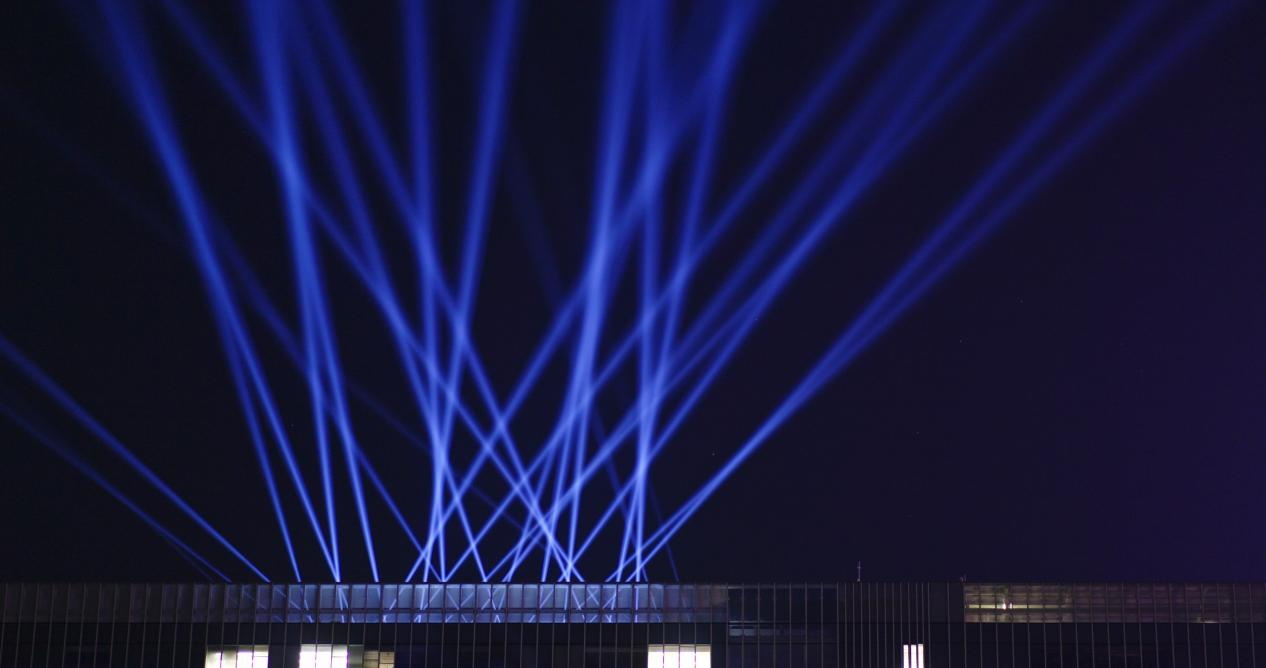
An LED Beam Projector is widely used in architectural and outdoor lighting to highlight facades, monuments, bridges, landscapes, and public spaces with precise, long-distance illumination. For contractors and project owners, it offers a practical solution for creating visual impact while supporting durability, energy efficiency, and reliable performance in demanding large-scale environments.
What does an LED Beam Projector actually do in outdoor lighting projects?
In practical terms, an LED Beam Projector is a directional luminaire designed to send controlled light over distance. Unlike broad floodlighting, it concentrates output into a tighter beam, making it suitable for visual emphasis rather than general area illumination.
This matters in outdoor lighting because large-scale projects rarely need the same light distribution everywhere. A bridge pylon, a stone facade, a gateway, or a public sculpture often needs focused illumination that adds depth, hierarchy, and nighttime identity.
For information-stage buyers, the main value is not only appearance. A well-selected LED Beam Projector can also reduce spill light, improve visual control, support energy targets, and simplify maintenance planning across public and commercial environments.
- Highlight architectural details such as columns, textures, edges, and rooflines.
- Create long-throw illumination for monuments, towers, and bridge structures.
- Improve nighttime orientation in plazas, parks, and civic spaces.
- Support color-changing effects in event-driven or identity-focused installations.
Why focused lighting is often preferred
In urban outdoor lighting, uncontrolled brightness can cause glare, wasted energy, and uneven visual results. Focused beam projection helps designers direct light where it adds value, which is especially important in dense city environments and multi-use public spaces.
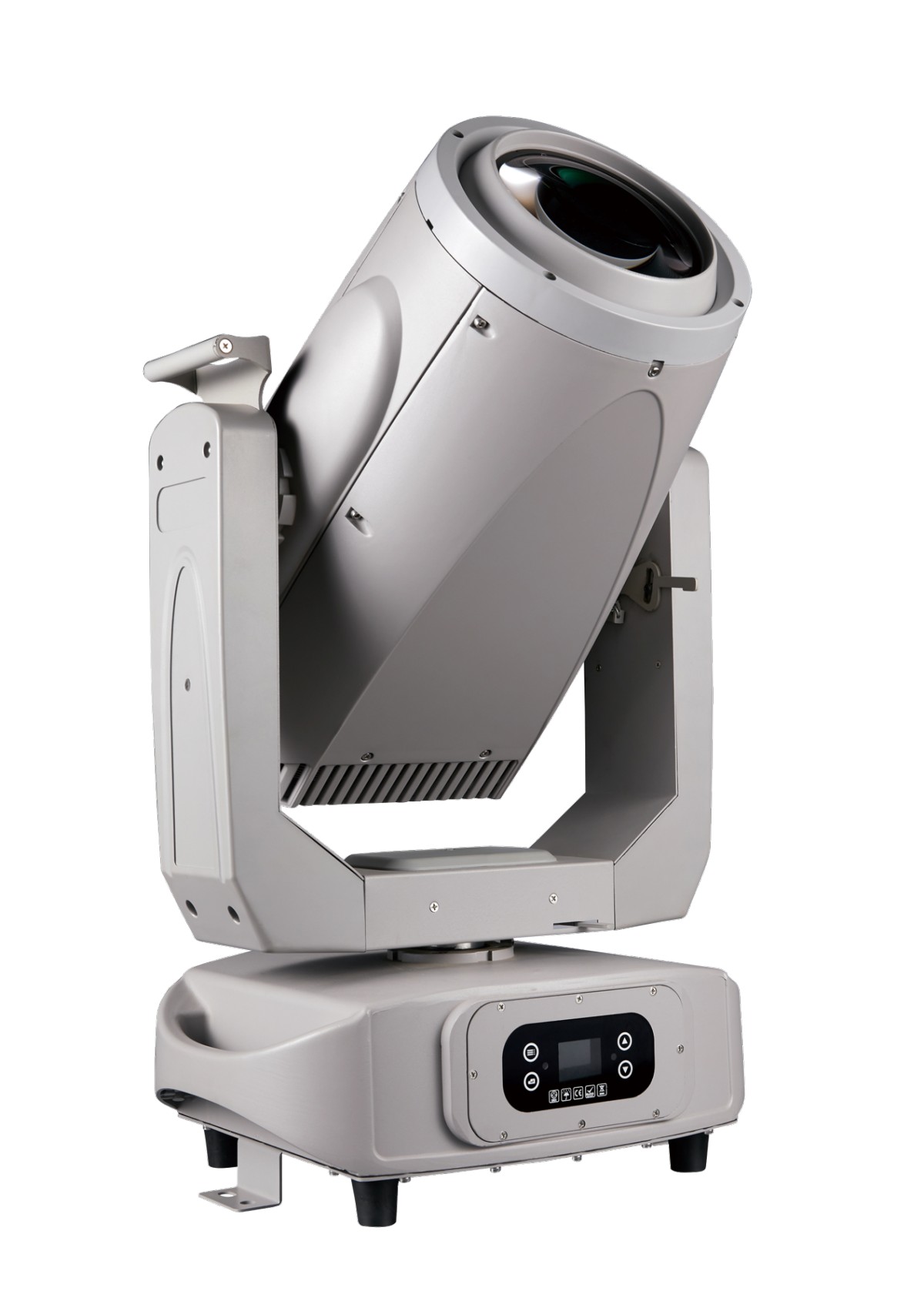
Which application scenarios are best suited to an LED Beam Projector?
The most common use cases share one requirement: precise light placement. When the goal is to emphasize a vertical or distant target, a beam projector is often a stronger choice than conventional floodlights.
The table below helps compare typical outdoor lighting scenarios where an LED Beam Projector is frequently specified.
The key takeaway is simple: if the project needs visual emphasis, distance, and controlled direction, an LED Beam Projector is often the more strategic tool. It is less about lighting everything and more about lighting the right thing.
Architectural and public-space value
For municipalities, developers, and contractors, focused exterior lighting can improve place identity without over-lighting the site. This is especially useful for mixed-use urban environments where aesthetics, safety, and operating cost must be balanced together.
LED Beam Projector vs floodlight vs wall washer: how should buyers compare them?
Many procurement teams start with the wrong comparison. They ask which fixture is better overall, when the real question is which fixture is better for the lighting task. Beam projectors, floodlights, and wall washers serve different functions.
The comparison below can help clarify specification choices during early planning.
In many architectural projects, these fixtures are combined. For example, a facade may use wall washers for overall surface brightness and an LED Beam Projector for crown details, columns, or logo zones that need stronger emphasis.
A related option for linear facade illumination is the LED Wall Washer. In building facades and landscapes, solutions such as model XQD-017 may support seamless architectural lighting, flexible RGB or DMX control, and IP66 protection where uniform grazing or washing effects are required.
Which technical factors matter most before specifying an LED Beam Projector?
Buyers often focus first on wattage, but performance in outdoor lighting depends on a wider set of criteria. Beam angle, optical control, ingress protection, material quality, and control compatibility usually have a greater impact on project success.
Use the following checklist when evaluating whether an LED Beam Projector can perform reliably in a demanding exterior application.
- Beam angle should match the target size and mounting distance. A narrow beam works for towers and columns, while a wider optic may fit larger facade elements.
- Ingress protection is essential outdoors. IP-rated construction helps resist rain, dust, and changing environmental conditions.
- LED source quality affects color consistency, lumen maintenance, and long-term maintenance cost.
- Control options matter when projects require dimming, scene changes, or integration with smart systems.
- Housing durability and thermal management influence service life in large-scale installations.
A practical example from facade lighting
For some vertical architectural applications, buyers also compare beam projectors with linear fixtures. A specification such as CREE or OSRAM LEDs, DC24V or AC220V input, Ra>80, beam angles like 10°×40°, 15°×60°, or 30°×60°, and a lifespan of at least 50,000 hours can be useful reference points when reviewing comparable outdoor products.
These parameters do not mean every project needs the same solution. They show why experienced technical review is important, especially when lighting must work across facades, landscapes, and public spaces with different visual and environmental demands.
How do contractors and project owners choose the right solution?
Selection becomes easier when the project is evaluated as a system, not as a single fixture purchase. In large outdoor lighting works, the wrong optic, control method, or installation detail can increase rework and maintenance later.
The table below outlines a practical procurement view for LED Beam Projector planning.
This kind of structured review is where integrated support makes a difference. Large projects often require coordination across fixtures, controls, installation conditions, and long-term operation, not just a product list.
Common mistakes in early-stage selection
- Choosing by wattage alone without checking beam performance at actual mounting distances.
- Ignoring glare and spill light in public-facing or mixed-use urban locations.
- Overlooking system integration when color control or remote management is required.
- Focusing only on unit price instead of maintenance access and lifecycle reliability.
What implementation issues should be considered in large outdoor lighting projects?
In real projects, lighting performance is closely tied to execution. Even a suitable LED Beam Projector can underperform if the aiming, bracket selection, power configuration, or control setup is not properly coordinated on site.
- Confirm the visual objective first, such as feature highlighting, landmark recognition, or façade rhythm.
- Review installation constraints, including structure access, cable routing, weather exposure, and maintenance clearance.
- Validate optics and control logic before bulk purchase, especially for RGB or scene-based applications.
- Plan commissioning time because nighttime aiming and programming usually require adjustment after installation.
This is why many contractors and project owners prefer suppliers that can support both hardware and project-based coordination. Lishida Smart Lighting works with large-scale outdoor lighting needs across roads, public spaces, and complex urban environments, helping partners address product selection, system integration, and long-term reliability together.
FAQ about LED Beam Projector selection and use
Is an LED Beam Projector suitable for every facade project?
No. It is best for accenting specific elements or projecting controlled light over distance. If the goal is smooth, even brightness across a large wall, linear washers or other wide-distribution luminaires may be more appropriate.
What should buyers ask for during specification review?
Ask for beam angle options, LED source details, voltage configuration, IP rating, control compatibility, housing material, and expected maintenance conditions. For larger projects, it is also useful to confirm support for integration with smart control systems.
Does a tighter beam always mean better performance?
Not necessarily. A narrow beam increases focus, but if the target is wide or the aiming tolerance is small, the result may look patchy. The correct beam depends on distance, surface size, texture, and the intended visual effect.
How important is long-term reliability in outdoor lighting?
It is critical. Outdoor fixtures face heat, rain, dust, voltage variation, and difficult maintenance access. In large-scale projects, reliability affects not only replacement cost but also public appearance, project reputation, and operating continuity.
Why choose us for architectural and outdoor lighting support?
For contractors and project owners, the challenge is rarely just finding a fixture. The real task is choosing a workable lighting solution that fits site conditions, control requirements, delivery schedules, and long-term operating goals. That is where Lishida Smart Lighting adds practical value.
We support large-scale outdoor lighting projects with integrated product supply, smart control system coordination, and project-based solution planning. Our experience in complex urban and public-space applications helps partners reduce uncertainty from early selection through implementation.
- Confirm whether an LED Beam Projector or another fixture type better fits your facade, bridge, landscape, or public-space objective.
- Review parameters such as beam angle, voltage, color temperature, control mode, and protection level.
- Discuss delivery timing, sample support, and project-specific customization requirements.
- Check solution compatibility for smart control integration, maintenance planning, and large-scale deployment.
If you are comparing options for an upcoming outdoor lighting project, contact us to discuss product selection, parameter confirmation, certification-related questions, solution matching, or quotation planning based on your actual site and project goals.
◉ MESSAGE
Blog
- LED Street Luminaire Specifications That Matter for Roadway Projects
- What to Evaluate When Selecting a Smart Street Lamp Manufacturer
- How to Prepare a Compliant Solar Lighting Bid for Public Infrastructure Projects
- LED Street Lighting Solutions for Urban and Municipal Roads
- LED Street Light Installation Guide for Road Projects
- LED Street Light Lifespan: How Long Do LED Road Lights Last?
- LED Street Light IP Rating: What Should Buyers Choose?
Message