
What Quality Tests Should You Request Before Buying an LED Floodlight?
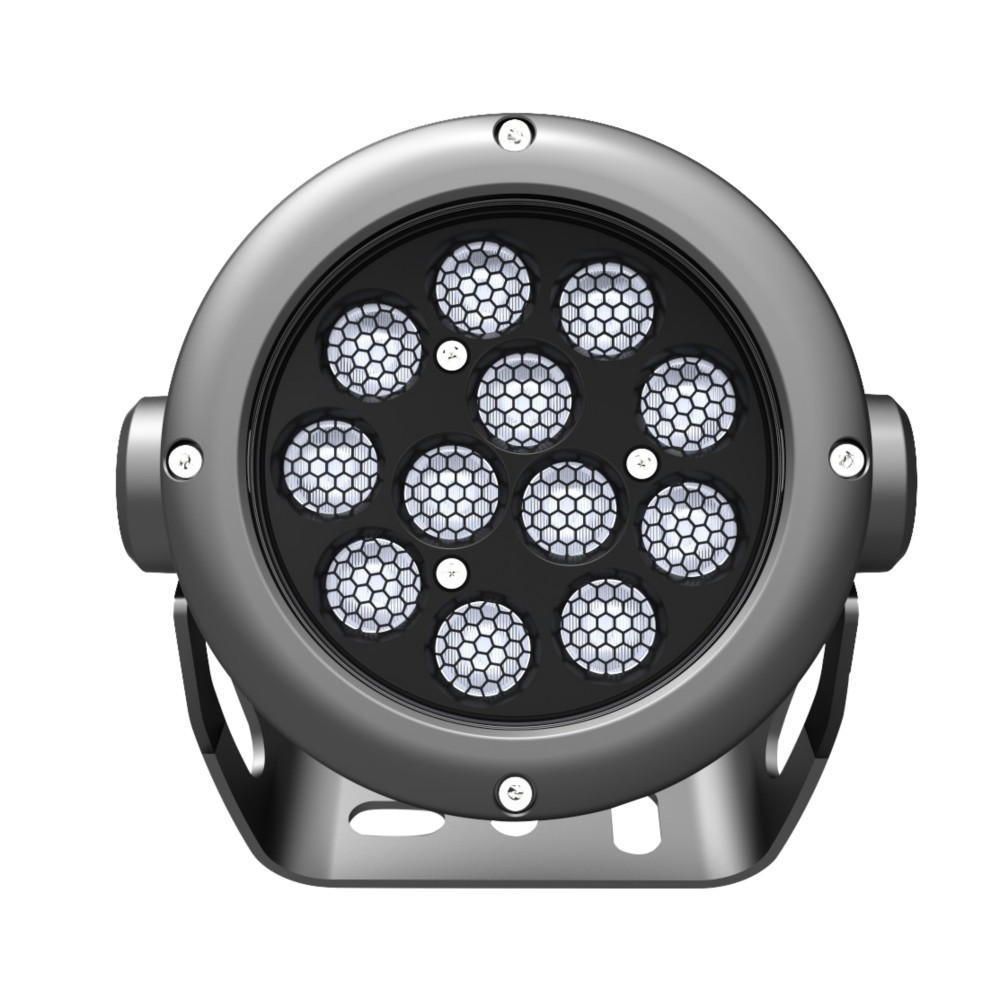
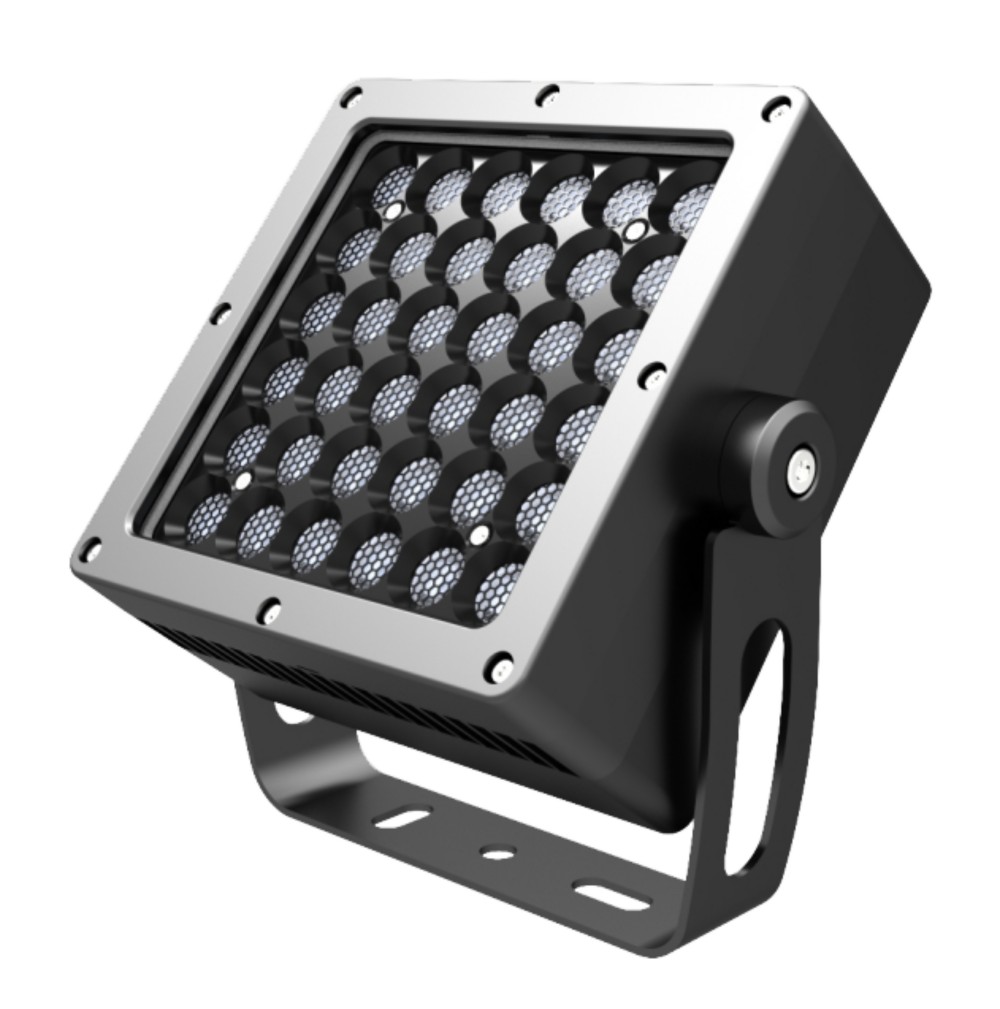
Before purchasing an LED Floodlight for roads, public spaces, or demanding urban projects, quality and safety checks should never be overlooked. For quality control and safety managers, requesting the right tests is essential to verify performance, durability, electrical safety, and long-term reliability. Understanding these key inspections can help reduce project risks, prevent failures, and ensure the lighting solution meets real-world application standards.
Which Tests Matter Most Before You Approve an LED Floodlight?
For quality and safety teams, the core search intent is clear: identify which tests truly prove whether a floodlight is safe, durable, and fit for demanding outdoor use.
The most useful answer is not a generic list. Buyers need to know which reports to request, what each test verifies, and how results affect project risk.
In practice, the most important categories are photometric performance, ingress protection, electrical safety, surge resistance, thermal management, corrosion resistance, and lifetime validation.
If a supplier cannot provide credible evidence in these areas, the product may still look acceptable on paper while creating failures after installation.
Start With Photometric Testing, Because Output Claims Are Often Overstated
One of the first tests to request is a photometric test report, typically based on integrating sphere or goniophotometer measurement.
This report helps verify actual lumen output, beam angle, color temperature, color rendering index, and light distribution consistency. These values directly affect visibility, safety, and design compliance.
For plazas, stadiums, and landscapes, beam control is especially important. A product offering options such as 3°, 8°, 10°, 15°, 30°, or 60° must demonstrate real optical accuracy.
Quality managers should compare the measured data against the specification sheet rather than accepting nominal marketing values. A meaningful deviation may indicate unstable production control.
If the project requires pleasant visual quality, confirm the CRI result as well. For many outdoor applications, Ra≥80 is a practical baseline.
Request IP Testing to Confirm Outdoor Protection, Not Just a Printed Rating
Many outdoor luminaires are labeled with IP grades, but quality teams should ask for the actual ingress protection test report rather than relying on the marking alone.
For an outdoor floodlight, IP66 is a strong and common requirement. It indicates protection against powerful water jets and complete dust ingress prevention.
This matters because water penetration is one of the fastest ways to trigger driver failure, insulation breakdown, corrosion, and optical degradation in harsh environments.
Ask whether the tested sample matches the delivered structure, including gasket materials, cable entry design, housing assembly, and pressure balance features.
A test report is only meaningful if it reflects the current production version. Any structural change after testing should trigger revalidation.
Electrical Safety Testing Should Never Be Optional
Safety managers should pay close attention to electrical test documentation, especially for products installed in public areas or large-scale urban environments.
At minimum, request reports covering dielectric strength, insulation resistance, grounding continuity, and touch safety. These checks reduce the risk of electric shock and fire.
If the product supports DC24V or AC220V input, verify that the test conditions match the voltage version you intend to purchase. Do not assume both variants share the same safety status.
You should also confirm component traceability for key electrical parts such as drivers, terminals, cables, and connectors. Weak subcomponents often cause field failure before the luminaire body does.
For public infrastructure projects, missing or incomplete electrical safety validation should be treated as a serious procurement warning.
Ask for Surge Protection and EMC Test Results for Real Urban Conditions
Outdoor lighting in cities, roads, and open public spaces is exposed to switching disturbances, unstable grids, and lightning-induced surges.
That is why surge immunity and electromagnetic compatibility testing are essential, not secondary. Without them, nuisance failures may appear even when basic operation seems fine.
Request surge test data for the complete luminaire, not only for the driver in isolation. System-level protection is what matters after installation.
EMC reports help confirm that the luminaire will not create unacceptable interference and can continue operating reliably in electrically noisy environments.
For project owners and contractors, this is especially relevant because repeated driver replacement creates maintenance cost, safety exposure, and reputation damage.
Thermal Testing Is One of the Best Predictors of Lifetime
Many LED floodlights fail early not because of the LED chip itself, but because heat is not controlled well enough inside the luminaire.
Request a temperature rise or thermal test report showing critical point temperatures for LEDs, driver housing, and other heat-sensitive components under steady operation.
This is particularly important when suppliers claim long service life such as 50,000 hours or more. Lifetime claims without thermal evidence are weak.
Reliable thermal design supports lumen maintenance, color stability, driver survival, and sealing durability. It is one of the clearest indicators of engineering maturity.
For example, a compact 16W unit with dimensions such as L150×W150×H96mm should still demonstrate effective heat dissipation rather than relying on theoretical assumptions.
Corrosion and Material Durability Tests Matter in Outdoor Projects
Floodlights installed outdoors are exposed to rain, dust, pollution, UV radiation, and in many regions, corrosive atmospheres.
Ask for salt spray testing, coating adhesion data, and material information for the housing, fasteners, brackets, and external hardware.
This is especially important in coastal cities, industrial zones, and stadium or plaza projects where appearance and structural stability must be maintained for years.
Corrosion failure does not only affect aesthetics. It can weaken mounting parts, damage seals, and increase the chance of water ingress or mechanical instability.
Strong suppliers should be able to explain not just the test result, but also the coating system, alloy selection, and protective design behind it.
Do Not Ignore Mechanical and Installation-Related Testing
Safety managers often focus on electrical risks, but mechanical reliability is equally important in overhead or exposed installations.
Request bracket strength, vibration resistance, impact resistance, and fastening reliability data where relevant to the application.
In large public projects, even minor structural weaknesses can turn into falling-object hazards, frequent maintenance, or fixture misalignment over time.
If the luminaire will be used in landscapes, plazas, or stadiums, installation angle retention and bracket durability should be reviewed carefully.
Where adjustable optics or aiming mechanisms are used, ask whether the tested product maintained its position after vibration or repeated adjustment cycles.
Lifetime Claims Should Be Backed by LM Maintenance or Equivalent Evidence
Many buyers see a lifespan claim and assume it is proven. Quality teams should instead ask how that number was derived.
Useful evidence may include LED lumen maintenance data, accelerated aging, driver endurance validation, and long-duration operating tests on the assembled luminaire.
A claim of at least 50,000 hours should be supported by a combination of component-level and product-level validation, not only chip brand reputation.
If the product uses well-known LED sources such as CREE or OSRAM, that is helpful, but it does not replace complete luminaire reliability testing.
System integration quality still determines whether the final product performs reliably in the field.
How to Evaluate Supplier Credibility Alongside Test Reports
Reports alone are not enough if the supplier lacks stable production control. Quality assurance should include process capability and manufacturing consistency checks.
Ask whether the tested sample came from mass production, whether incoming inspection exists for critical components, and how design changes are controlled.
For large-scale outdoor projects, suppliers with engineering support and project experience can usually respond more effectively to application-specific risks.
Lishida Smart Lighting, for example, supports contractors and project owners with integrated outdoor lighting solutions, smart controls, and project-based technical coordination for complex environments.
When reviewing a product such as the LED Floodlight, it is useful to assess not only the technical sheet but also the supplier’s ability to support execution and long-term reliability.
A Practical Test Request Checklist for QC and Safety Teams
Before approval, ask for a complete package rather than isolated certificates. This improves comparison across vendors and speeds internal evaluation.
Your checklist should include photometric test data, IP test reports, electrical safety results, surge and EMC reports, thermal validation, corrosion testing, and lifetime evidence.
Also request key component information, production version confirmation, warranty terms, and clarification on whether the tested sample matches the supplied configuration.
If tailored configurations are offered, such as different wattages, optics, color temperatures from 2000K to 4000K, or RGB and RGBW options, verify which variants were actually tested.
This step is critical because performance and safety can change when optical, electrical, or structural configurations differ.
Final Decision: Buy Based on Verified Risk Reduction, Not Only Price
For quality control and safety managers, the best purchasing decision is the one that minimizes operational risk over the product’s full service life.
A lower initial price can quickly become expensive if the luminaire suffers water ingress, thermal failure, unstable output, or repeated electrical faults after installation.
The right test package gives you evidence, not assumptions. It helps confirm whether the product can deliver brighter, uniform, and longer-lasting illumination under real project conditions.
Before buying any LED Floodlight, request proof in the areas that matter most: light performance, safety, sealing, thermal control, durability, and manufacturing consistency.
That approach leads to better project outcomes, fewer site issues, and greater confidence for everyone responsible for public safety and product quality.
◉ MESSAGE
Blog
- LED Street Luminaire Specifications That Matter for Roadway Projects
- What to Evaluate When Selecting a Smart Street Lamp Manufacturer
- How to Prepare a Compliant Solar Lighting Bid for Public Infrastructure Projects
- LED Street Lighting Solutions for Urban and Municipal Roads
- LED Street Light Installation Guide for Road Projects
- LED Street Light Lifespan: How Long Do LED Road Lights Last?
- LED Street Light IP Rating: What Should Buyers Choose?
Message