
Common LED Floodlight Failures Outdoors and How to Prevent Them
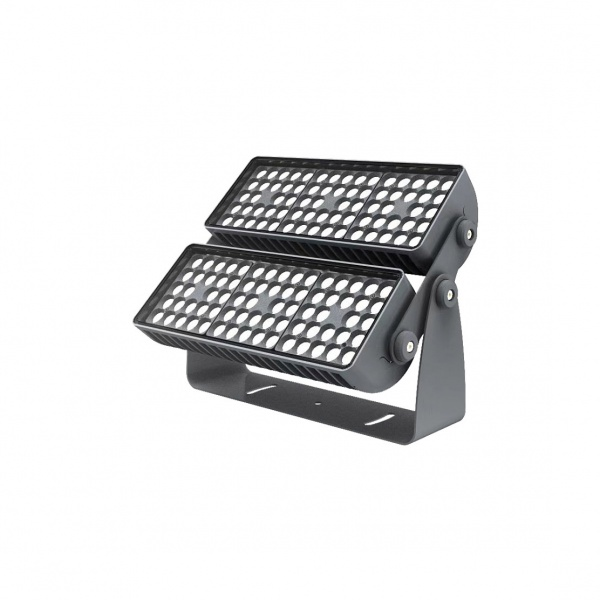
Outdoor LED floodlight failures rarely start as sudden “dead fixtures.” In most outdoor projects, the real problem begins earlier: moisture slowly enters the housing, heat builds up around the driver, connectors loosen, or control signals become unstable. For after-sales maintenance teams, the fastest way to reduce repeat callouts is to identify these predictable failure patterns early and standardize how they are inspected and prevented.
This guide focuses on the most common LED Floodlight failures seen outdoors, why they happen in real operating conditions, and what maintenance teams can do to extend service life. Instead of generic theory, the emphasis is on practical fault symptoms, inspection priorities, and prevention methods that support long-term reliability in roads, public spaces, and large project environments.
Why outdoor LED floodlights fail more often than expected
Many maintenance teams assume LED floodlights are “low maintenance” and therefore unlikely to fail often. In reality, outdoor conditions create a combination of stress factors: rain, dust, UV exposure, temperature swings, vibration, unstable grid quality, and installation errors. Even a well-designed luminaire can fail early if one weak point is overlooked during installation or routine maintenance.
The most important point is that failures are usually system-related, not only component-related. A burned driver may be linked to heat retention inside the housing. Water ingress may be caused by poor cable gland sealing rather than a bad enclosure. Flicker may come from unstable input voltage or from control-system interference. Good troubleshooting starts by looking beyond the failed part itself.
The most common outdoor LED Floodlight failures maintenance teams see
1. Water ingress and internal condensation. This is one of the most frequent causes of outdoor failure. Technicians may notice fogging inside the lens, corrosion on terminals, rust around fasteners, tripping protection devices, or complete driver failure after heavy rain. Water does not always enter through a cracked lens. It often enters through cable glands, aging gaskets, poorly sealed access points, or pressure differences caused by temperature changes.
2. Driver burnout. The LED driver is typically the first electrical component to fail in harsh outdoor use. Symptoms include complete outage, intermittent restarting, dim output, or random shutdown after several minutes of operation. Driver burnout is often accelerated by overheating, voltage surges, poor-quality components, or insufficient protection against lightning and grid instability.
3. Overheating and thermal degradation. LED floodlights do not “burn out” like traditional lamps, but heat remains their biggest long-term enemy. Dirt buildup on heat sinks, blocked airflow, high ambient temperatures, incorrect mounting angles, and overdriven power settings can push temperatures beyond safe limits. Over time, this leads to lumen depreciation, color shift, driver stress, and shortened LED lifespan.
4. Wiring and connector failure. Outdoor cable joints, terminal blocks, and connectors are common weak points, especially where installation quality varies. Signs include flickering, intermittent operation during wind or vibration, localized scorching, or sudden outages affecting only selected fixtures. Loose torque, incompatible connectors, and low-grade insulation often create failures that appear random but are actually predictable.
5. Control signal instability. In smart or centrally controlled projects, not every “light failure” is a luminaire failure. A fixture may remain on, fail to dim, switch erratically, or lose communication because of control line interference, addressing issues, power quality problems, or controller faults. For maintenance teams, separating fixture faults from system-control faults is essential for efficient troubleshooting.
6. Optical and mechanical aging. Outdoor fixtures also fail gradually through yellowed lenses, degraded seals, corroded brackets, and weakened mounting hardware. The light may still turn on, but optical performance, beam accuracy, and safety can already be compromised. This matters in floodlighting because output quality and aiming consistency are often as important as simple on/off operation.
How to recognize early warning signs before total failure
After-sales maintenance work becomes much easier when teams look for patterns before a fixture goes dark. The earliest field signs are usually subtle: slight flicker at startup, delayed illumination, water mist inside the cover, abnormal heat on the driver compartment, discolored wiring, or recurring nuisance trips after rain. These symptoms should trigger preventive inspection rather than waiting for complete failure.
Another strong warning sign is clustered failure. If several LED Floodlight units in the same zone show similar symptoms, the cause is often external: poor drainage, repeated surge exposure, an installation error, or a control issue shared across the circuit. When failures appear in clusters, replacing one fixture at a time usually wastes labor and does not solve the root cause.
Maintenance records are also valuable. Repeated driver replacements in the same area, frequent seal-related complaints, or recurring communication loss often reveal a design or environmental mismatch. Teams that log failure mode, weather condition, operating hours, and location can identify patterns much faster than teams that only record “replaced light.”
What causes these failures outdoors in real project conditions
Outdoor failures usually come from the interaction between environment, product quality, and installation practice. For example, an IP-rated fixture can still suffer moisture problems if the cable gland is poorly tightened or if the cable entry faces upward in a water-exposed position. Similarly, a high-performance driver can still fail if enclosed heat cannot dissipate under local ambient conditions.
In large-scale projects, one overlooked issue is mismatch between product selection and site reality. A floodlight suitable for a sheltered façade may not be suitable for an exposed transport corridor, coastal site, or high-vibration public structure. Wind-driven rain, airborne contaminants, and high summer surface temperatures can create conditions much harsher than standard assumptions.
Electrical quality is another major factor. Surge events, unstable voltage, and inadequate grounding are still common in outdoor infrastructure. A fixture may meet expected performance in factory testing but fail early on-site if surge protection, earthing continuity, and distribution quality are poor. Maintenance teams should never assess the luminaire in isolation from the power environment.
Mechanical stress also deserves more attention. Vibration from traffic, pole movement, poor bracket rigidity, and repeated thermal expansion can loosen components over time. This is why robust structural design matters, not only for safety but also for long-term electrical reliability. In urban and roadway applications, integrated system durability often determines actual maintenance cost.
Prevention measures that reduce repeat failures
Inspect sealing points, not just housings. During routine maintenance, check cable glands, gasket compression, lens seating, drain design, and any maintenance access covers. If condensation appears repeatedly, do not only replace the fixture; find out how moisture is entering or accumulating. Correct cable orientation and proper gland tightening can prevent many repeat failures.
Control heat through cleaning and installation review. Heat sink surfaces should remain clean enough for airflow and heat transfer. Dust, leaves, and pollution deposits reduce cooling efficiency. Verify whether fixtures are mounted in ways that trap heat near walls or enclosed surfaces. In hot regions, even small improvements in ventilation can extend driver life significantly.
Check electrical protection as part of luminaire maintenance. Surge protective devices, grounding continuity, terminal torque, and distribution stability should be included in inspection routines. Replacing failed floodlights without checking the electrical environment often leads to repeated burnout. In exposed outdoor circuits, surge events may be the real cause behind repeated driver complaints.
Standardize connector and cable practices. Use outdoor-rated connectors, correct torque values, and compatible insulation materials. Avoid improvised joints in exposed positions. If a project has many field connections, audit a sample section regularly. In large installations, connector quality and workmanship often affect reliability as much as the luminaire itself.
Separate control faults from fixture faults. For smart lighting projects, train technicians to verify power input, local driver output, and control communication separately. This avoids unnecessary luminaire replacement when the real problem lies in the controller, node, addressing, or signal path.
Why product selection matters for maintenance outcomes
After-sales teams often inherit problems created much earlier during specification or procurement. Choosing fixtures and support structures designed for harsh outdoor service makes maintenance more predictable and lowers lifecycle cost. Protection level, thermal design, surge resistance, structural strength, and material durability all affect how often teams must return to site.
For projects connected with roads and public environments, long-term reliability also depends on the surrounding lighting infrastructure. For example, durable street lighting systems with strong structural resistance and outdoor-grade protection can reduce maintenance pressure across the whole site. One example is Modern Street Lighting|MSL-HCH, designed for street lighting applications with IP67 protection, hot-dip galvanized and powder-coated surfaces, wind resistance of at least 150 km/h, and LED lifespan rated at 50,000 hours or more.
Features such as Q235 steel construction, 8–14 m pole options, 4–8 mm pole thickness, and high-efficacy LED configurations are not just specification details. They influence how well the system withstands weather, vibration, corrosion, and long service cycles. For maintenance teams, robust product selection reduces unplanned intervention and supports safer, more consistent field performance.
A practical inspection checklist for after-sales maintenance teams
When responding to outdoor LED Floodlight issues, use a repeatable sequence. First, confirm whether the fault is isolated or grouped. Second, inspect for visible moisture, gasket damage, corrosion, and cable-entry problems. Third, check input voltage, grounding, and surge history. Fourth, test driver output and thermal condition. Fifth, review connectors, torque, and control signal status if applicable.
For preventive rounds, focus on high-risk periods: after heavy rain, during peak summer heat, after thunderstorms, and in the first months following installation. Newly installed systems often reveal workmanship issues early. Seasonal inspections are especially useful in sites with exposed poles, public-space vibration, dust accumulation, or changing operating schedules.
Document every intervention by failure type rather than only by replaced part. Categories such as “water ingress,” “driver thermal shutdown,” “connector looseness,” and “control communication loss” help teams identify recurring causes. Over time, this creates better maintenance planning, stronger supplier feedback, and more accurate spare-parts management.
Conclusion
The most common outdoor LED floodlight failures are not mysterious. Water ingress, driver burnout, overheating, connector weakness, and unstable control signals account for a large share of field issues. For after-sales maintenance personnel, the priority is not only to replace failed parts quickly, but to recognize the patterns that cause repeat failures.
Better prevention comes from combining inspection discipline, proper electrical checks, good sealing practice, thermal management, and more suitable product selection. When maintenance teams treat the LED Floodlight as part of a larger outdoor system rather than a standalone fixture, troubleshooting becomes faster, downtime decreases, and long-term project reliability improves.
◉ MESSAGE
Blog
- LED Street Luminaire Specifications That Matter for Roadway Projects
- What to Evaluate When Selecting a Smart Street Lamp Manufacturer
- How to Prepare a Compliant Solar Lighting Bid for Public Infrastructure Projects
- LED Street Lighting Solutions for Urban and Municipal Roads
- LED Street Light Installation Guide for Road Projects
- LED Street Light Lifespan: How Long Do LED Road Lights Last?
- LED Street Light IP Rating: What Should Buyers Choose?
Message