
How Many LED Floodlights Do You Need for a Sports Court or Large Outdoor Area?
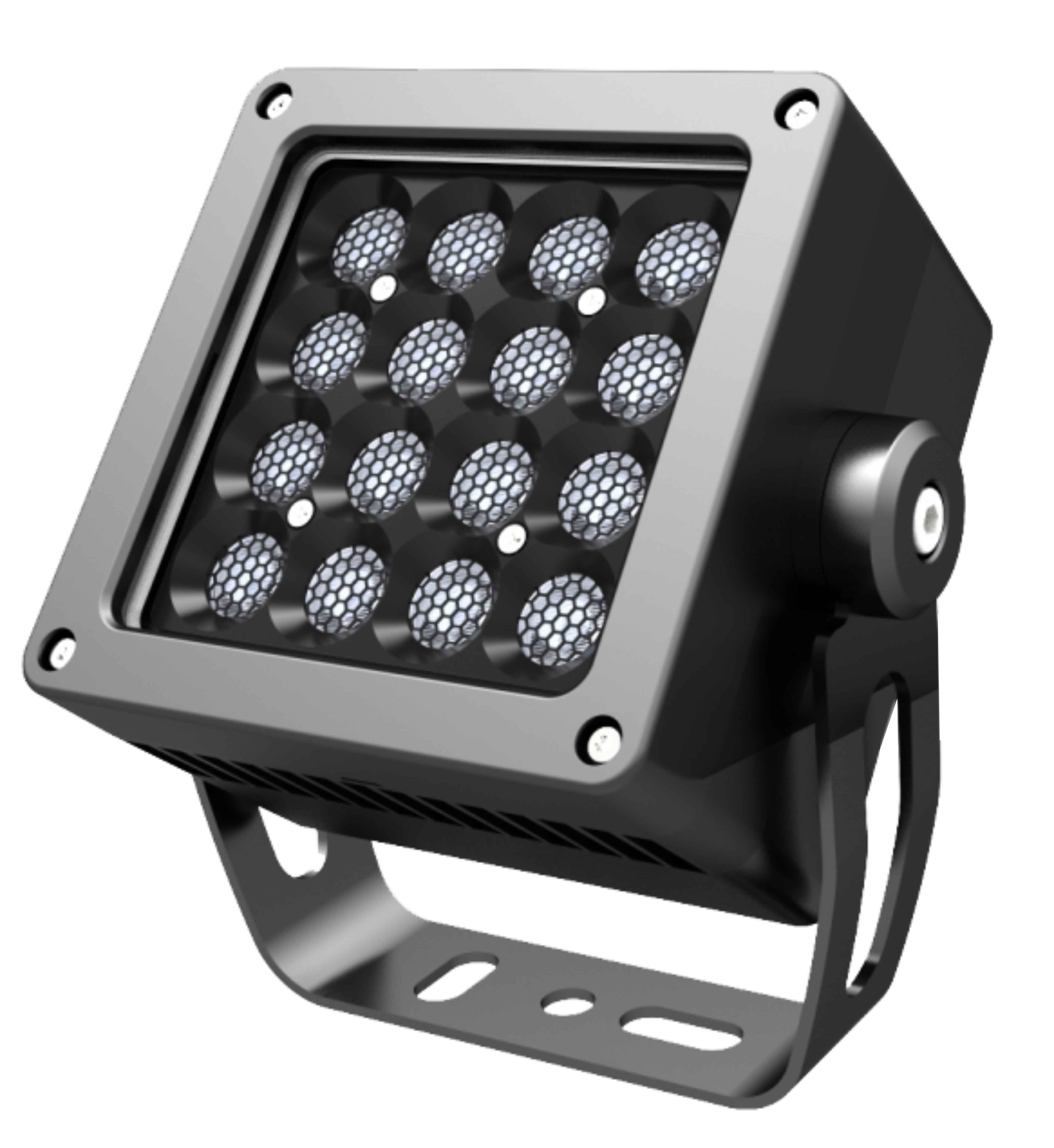
How fixture count changes from one outdoor space to another
Planning an LED Floodlight layout starts with a simple question, but the answer is rarely simple on site.
A basketball court, tennis court, training ground, plaza, or logistics yard may share similar dimensions, yet require very different lighting strategies.
Fixture quantity affects more than brightness.
It also shapes glare control, uniformity, pole spacing, power load, maintenance access, and long-term operating cost.
In large-scale outdoor lighting projects, the better question is not only how many LED Floodlight units are needed, but why that number makes sense for the space.
That is where project-based planning matters.
Teams working across roads, public spaces, and urban environments usually learn that product selection must align with layout, control logic, and future maintenance conditions.
The same area does not always need the same LED Floodlight plan
Actual demand changes with activity level, required visibility, mounting height, and how users move through the space.
A recreational court may tolerate moderate illuminance.
A competitive court usually needs tighter uniformity and stronger edge visibility.
A parking apron or open yard may need fewer fixtures than a sports court of equal size, because the visual task is less demanding.
This is why counting fixtures only by square meters often causes problems.
In practice, more useful inputs include target lux, beam angle, pole placement, surrounding spill limits, and whether dimming or zoning will be used later.
Key variables that change the number
- Court type and level of play
- Pole height and available installation points
- Required horizontal and vertical illuminance
- Glare limits for players, drivers, or nearby residents
- Maintenance strategy and access equipment
- Control system needs, including scheduling and zoning
Sports courts usually need more than a brightness estimate
On a basketball or tennis court, fixture count depends heavily on uniformity.
If the center is bright but corners fall off sharply, the LED Floodlight layout will feel underdesigned, even when average lux looks acceptable.
Football training fields introduce a wider spread issue.
Here, beam overlap and pole height often matter more than adding extra fixtures at random.
Too many low-mounted luminaires can increase glare and maintenance complexity without improving usable visibility.
A more balanced design often uses fewer, better-positioned LED Floodlight units with optics matched to the field geometry.
Where planning usually shifts by court type
Large outdoor areas follow a different logic
Plazas, transport edges, storage yards, and pedestrian zones often need layered lighting rather than one repeated floodlight pattern.
In these spaces, the LED Floodlight may handle focal zones, circulation edges, or security coverage.
General ambient lighting can come from other fixture types.
That mix usually reduces energy waste and improves visual comfort.
For landscaped paths, parks, or commercial open areas, lower mounting fixtures may complement floodlighting better than simply increasing wattage overhead.
In some projects, a product such as LED Garden&Lawn Lighting | GLL-WJ helps define pedestrian edges or softer zones.
With IP67 protection, 120 lm/W efficiency, and a 3.5-4.5 m pole option, it fits areas where flood coverage alone would feel harsh.
Common mistakes when estimating LED Floodlight quantity
One frequent mistake is choosing fixture count from wattage alone.
Higher wattage does not guarantee better distribution.
Another mistake is treating similar sites as identical.
Two courts of the same size may differ because of surrounding buildings, pole restrictions, or local spill-light limits.
Maintenance is often underestimated too.
A layout with too many fixtures may raise future replacement time, access equipment cost, and control complexity.
Long-term reliability matters most on large projects, especially where lighting, controls, and civil installation must work together over many years.
That is why integrated support, engineering review, and system coordination often produce more stable results than isolated fixture selection.
A better way to narrow the number
- Define the actual activity and visibility target first
- Confirm pole height, setbacks, and mounting limitations
- Check whether one LED Floodlight type can cover all zones
- Review glare, spill light, and neighbor impact early
- Compare initial count against maintenance and control plans
What usually works before finalizing a layout
Start with lighting goals, not fixture totals.
Then test how many LED Floodlight units are needed to reach those goals under real site conditions.
For courts, focus on uniform play visibility and glare control.
For larger open areas, check whether floodlights should be combined with lower-level luminaires for guidance and comfort.
In landscaped public zones, durable auxiliary fixtures can support that layered approach.
The GLL-WJ, built in Stainless steel 201 with wind resistance up to 150 km/h and service life above 50000 hours, is one example for those secondary zones.
Before moving forward, map the site by activity area, compare lighting levels by zone, and confirm maintenance access, controls, and environmental exposure.
That process usually gives a far more accurate LED Floodlight count than any quick rule of thumb.
◉ MESSAGE
Blog
- LED Street Luminaire Specifications That Matter for Roadway Projects
- What to Evaluate When Selecting a Smart Street Lamp Manufacturer
- How to Prepare a Compliant Solar Lighting Bid for Public Infrastructure Projects
- LED Street Lighting Solutions for Urban and Municipal Roads
- LED Street Light Installation Guide for Road Projects
- LED Street Light Lifespan: How Long Do LED Road Lights Last?
- LED Street Light IP Rating: What Should Buyers Choose?
Message