
Modern Street Lighting | MSL-GH Selection Guide: Wattage, Optics, Pole Height, and Spacing
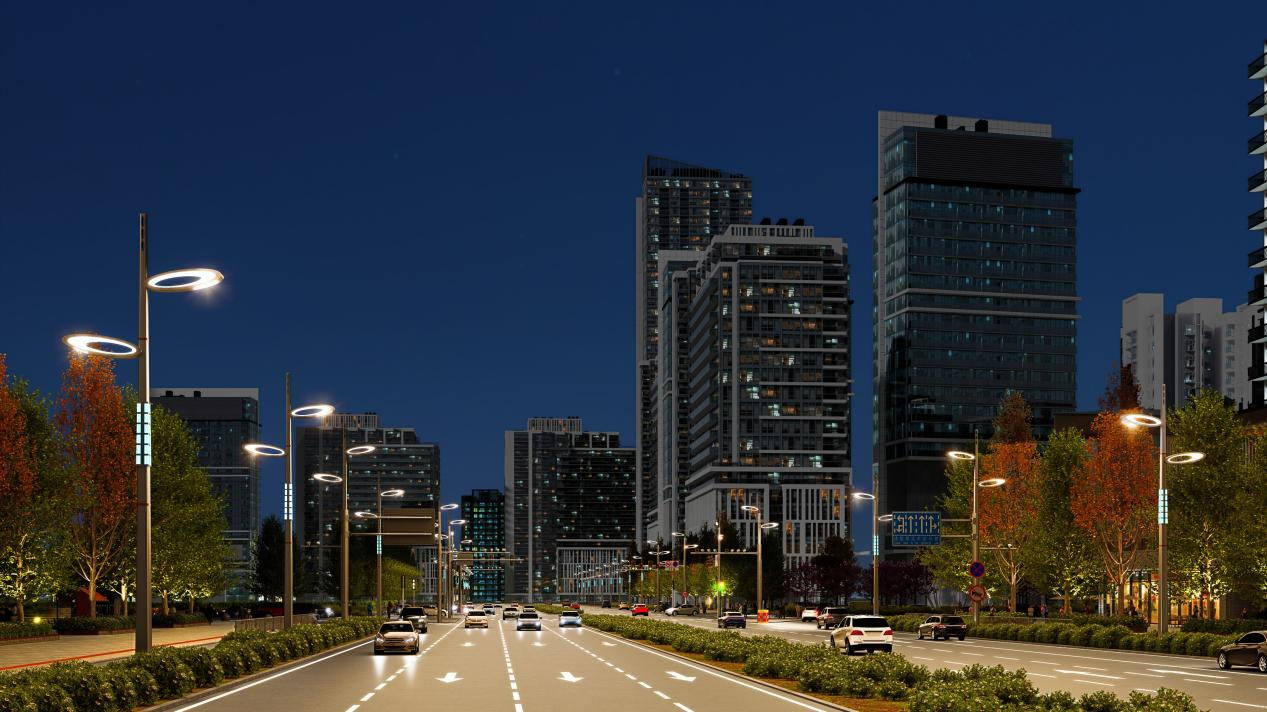
Choosing a Modern Street Lighting | MSL-GH configuration is rarely just about brightness. In outdoor lighting projects, wattage, optics, pole height, and spacing shape visibility, energy use, installation cost, and long-term maintenance at the same time.
That is why Modern Street Lighting | MSL-GH matters in real project delivery. A balanced scheme reduces rework, supports safety targets, and helps large-scale roads and public spaces perform consistently over years, not only at commissioning.
Why selection decisions matter early
In many projects, lighting problems do not start with product failure. They start with mismatched design assumptions. A fixture may be efficient on paper, yet still produce poor uniformity or unnecessary glare on site.
For urban roads, residential streets, parks, and mixed public areas, the right Modern Street Lighting | MSL-GH setup depends on traffic type, road width, adjacent buildings, and visual comfort requirements.
This is also where integrated support becomes valuable. Large outdoor lighting projects often involve product selection, smart controls, installation coordination, and later system reliability. Those elements should be considered together.
Start with the lighting objective, not only wattage
Wattage is important, but it is not the final indicator of performance. A higher wattage luminaire does not automatically mean better road lighting. Output, efficacy, beam control, and mounting conditions affect the result more directly.
How wattage should be understood
In Modern Street Lighting | MSL-GH planning, wattage should match the application class. Narrow internal roads may need far less power than arterial roads, intersections, or wider carriageways.
- Lower wattage often works well for walkways, branch roads, and low-speed zones.
- Mid-range wattage suits collector roads and general public spaces.
- Higher wattage is usually reserved for wider roads, higher poles, or demanding uniformity targets.
A practical review should compare target illuminance, uniformity, and energy budget together. That approach prevents oversizing and usually makes later spacing decisions more accurate.
Optics often determine whether a design succeeds
Optics control where the light goes. In street projects, this matters as much as raw lumen output. Good optics improve road coverage, reduce spill light, and help avoid dark gaps between poles.
For example, a narrow road with one-sided pole placement needs a different beam distribution from a wide avenue with median poles. Using the wrong lens can increase glare and waste usable light.
Typical optical considerations
This is one reason modern project teams increasingly ask for photometric review instead of relying only on catalog values.
Pole height and spacing must be designed as a pair
Pole height affects coverage, glare, structural cost, and visual scale. Spacing affects quantity, uniformity, and cable routing. Treating them separately usually leads to inefficient layouts.
With Modern Street Lighting | MSL-GH, higher poles can allow wider spacing, but only if the optics support that geometry. Otherwise, the design may meet average lux while failing uniformity and comfort requirements.
What to review before freezing the layout
- Road width and number of lanes
- Pole arrangement, including single-side, staggered, opposite, or median
- Mounting height against beam type
- Target uniformity and glare limits
- Maintenance access and civil constraints
In practice, spacing should be validated through simulation and adjusted for real obstacles, not copied from a previous project with different site conditions.
Different environments call for different decisions
Not every outdoor lighting project is grid-connected or built under the same infrastructure conditions. Some remote roads, temporary zones, and peripheral public areas benefit from off-grid solutions.
In those cases, it can be useful to compare conventional Modern Street Lighting | MSL-GH planning with solar-ready alternatives such as Solar Street Lighting | SL-008.
That option is designed for off-grid lighting and supports 30–100W configurations, luminous efficacy of at least 140 lm/W, and 6m pole applications. No wiring and no trenching can simplify installation where civil work is difficult.
Its Q235 steel structure, hot-dip galvanized and powder-coated finish, and wind resistance of at least 150 km/h show how durability should be evaluated alongside optical and electrical performance.
What the market is paying closer attention to
Current outdoor lighting decisions are increasingly shaped by more than fixture specifications. Energy accountability, digital control, maintenance predictability, and lifecycle cost now influence selection from the early design stage.
That shift explains why suppliers with manufacturing depth and engineering support are playing a larger role. Across large projects in China, execution challenges usually include coordination between luminaires, poles, controls, and site realities.
A solution that looks efficient in isolation may still create delays if it complicates installation, control integration, or long-term replacement planning.
A practical checklist before final selection
- Define the lighting class and actual site priority.
- Check wattage against pole height, not alone.
- Confirm optical distribution with a real layout.
- Review spacing using photometric simulation.
- Compare grid and off-grid options when trenching is costly.
- Include reliability, corrosion protection, and maintenance access in the decision.
- Consider whether smart controls will be added later.
A strong Modern Street Lighting | MSL-GH plan is usually the result of coordinated decisions, not a single parameter choice. When the project brief is clear, the next step is to test layout assumptions against actual site conditions and performance targets before procurement moves forward.
◉ MESSAGE
Blog
- LED Street Luminaire Specifications That Matter for Roadway Projects
- What to Evaluate When Selecting a Smart Street Lamp Manufacturer
- How to Prepare a Compliant Solar Lighting Bid for Public Infrastructure Projects
- LED Street Lighting Solutions for Urban and Municipal Roads
- LED Street Light Installation Guide for Road Projects
- LED Street Light Lifespan: How Long Do LED Road Lights Last?
- LED Street Light IP Rating: What Should Buyers Choose?
Message