
Modern Street Lighting | MSL-GH vs Conventional Streetlights: What Changes in Performance?
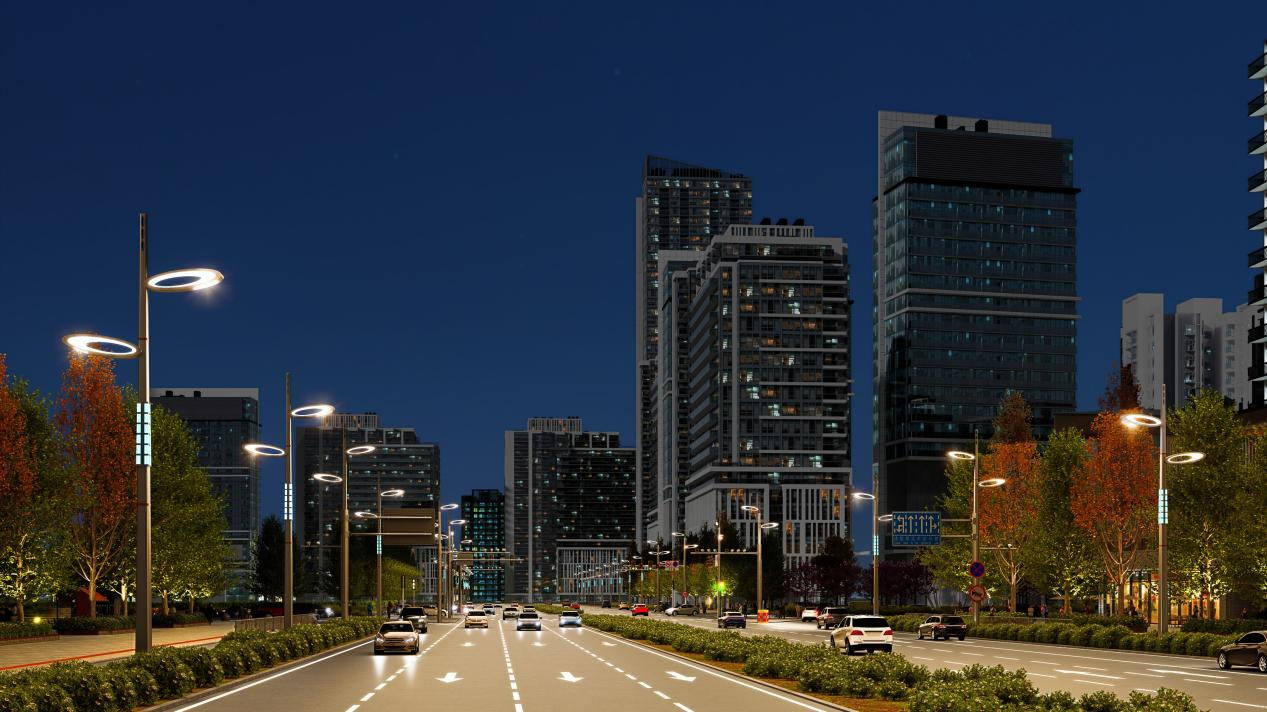
Modern Street Lighting | MSL-GH changes more than brightness
Modern Street Lighting projects are no longer judged by lumen output alone.
When Modern Street Lighting | MSL-GH is compared with conventional streetlights, the real shift appears in operating logic, maintenance planning, and project reliability.
That matters on roads, public spaces, and mixed urban environments where lighting must remain stable for years, not just pass initial inspection.
In actual delivery, the better option often depends on site conditions, control expectations, and how much disruption a future replacement would create.
Why the same streetlight decision behaves differently across sites
A straight urban road, a park perimeter, and a dense public square may all use outdoor lighting, but they do not fail in the same way.
Conventional streetlights can still meet basic visibility needs in simple installations with limited control requirements.
However, once a project needs dimming schedules, fault monitoring, energy reporting, or coordinated operation, Modern Street Lighting | MSL-GH starts changing the evaluation model.
The question is not only which fixture is brighter.
The better question is which system fits the long-term use pattern, maintenance resources, and integration level of the site.
On traffic roads, performance is tied to consistency and control
For arterial roads and municipal corridors, lighting uniformity is often more important than peak brightness.
Conventional streetlights may create acceptable illumination at installation, yet performance can drift faster as components age and maintenance becomes uneven.
Modern Street Lighting | MSL-GH usually improves this by combining efficient light output with better control over operating hours and dimming profiles.
That helps reduce wasted energy during low-traffic periods without sacrificing road safety.
In large road packages, remote fault visibility also changes maintenance behavior.
Instead of waiting for dark spots to be reported, teams can identify driver or node issues earlier and organize service routes more efficiently.
In parks and public spaces, visual comfort matters more than many expect
Public spaces often expose a common mistake: treating them like simplified road projects.
They are not.
Pedestrian areas usually need softer light, better color perception, and less glare, especially near seating, pathways, and landscaped edges.
This is where a supporting product type can matter.
In gardens, parks, and commercial landscapes, LED Garden&Lawn Lighting | GLL-FQ fits spaces where lower mounting heights and visual comfort are more relevant than roadway throw.
With 40W to 60W power, 120 lm/W efficiency, IP67 protection, and 3000K or 4000K options, it addresses the softer side of outdoor lighting without giving up durability.
That kind of distinction matters when a wider Modern Street Lighting strategy must also connect plazas, green belts, and walking routes into one coherent nighttime environment.
Complex urban environments change the value of Modern Street Lighting | MSL-GH
The biggest performance gap appears in environments with mixed functions.
Think intersections near public transit, commercial frontage, side streets, and civic areas running under one management framework.
Here, conventional streetlights often create fragmented operation.
Each section may work, but the overall system becomes harder to coordinate, monitor, and upgrade.
Modern Street Lighting | MSL-GH is stronger when integration matters.
Smart control, product compatibility, and project-based engineering support make a difference when lighting is part of a broader urban infrastructure plan.
This is also why delivery experience matters.
Large projects rarely fail because of one specification line.
They fail when product selection, system integration, and long-term field conditions were never aligned at the beginning.
Where the performance differences show up most clearly
What gets misjudged before installation
One common error is comparing only fixture price.
That ignores wiring access, future maintenance visits, traffic control during repairs, and the cost of replacing inconsistent components later.
Another mistake is assuming similar spaces need the same lighting logic.
A boulevard edge, a community pathway, and a landscaped commercial frontage may look related on plan drawings, yet their mounting height, color temperature, and user expectations differ.
Environmental exposure is also underestimated.
In coastal, windy, or high-temperature areas, material quality, enclosure protection, and structural strength affect whether performance stays stable after handover.
For example, a landscape fitting with Q235 and die-casting aluminum construction, wind resistance of at least 150 km/h, and service life above 50000 hours is not simply a style decision.
It is part of risk control.
A practical way to choose the right fit
- Map the site by function, not only by road category or drawing zone.
- Separate areas needing basic illumination from areas needing coordinated control.
- Check maintenance access, outage tolerance, and replacement difficulty.
- Review local climate, corrosion exposure, and expected operating temperature.
- Confirm whether the project will expand into smart management later.
This is where integrated support becomes useful.
Projects across China have shown that successful outdoor lighting depends on more than fixture supply.
Engineering coordination, control compatibility, and dependable manufacturing all influence whether the installed system performs as intended over time.
What to review before moving forward
Modern Street Lighting | MSL-GH changes performance most clearly where energy management, remote control, and lifecycle stability matter.
Conventional streetlights still have a place in simpler applications, but they become less convincing when the site is larger, more complex, or harder to maintain.
Before final selection, it is worth sorting the project into real operating scenes, comparing control needs, and checking which conditions could create hidden maintenance pressure later.
That review usually leads to better decisions than comparing specifications in isolation.
◉ MESSAGE
Blog
- LED Street Luminaire Specifications That Matter for Roadway Projects
- What to Evaluate When Selecting a Smart Street Lamp Manufacturer
- How to Prepare a Compliant Solar Lighting Bid for Public Infrastructure Projects
- LED Street Lighting Solutions for Urban and Municipal Roads
- LED Street Light Installation Guide for Road Projects
- LED Street Light Lifespan: How Long Do LED Road Lights Last?
- LED Street Light IP Rating: What Should Buyers Choose?
Message