
Is an LED Beam Projector Worth the Investment for Premium Outdoor Lighting Projects?
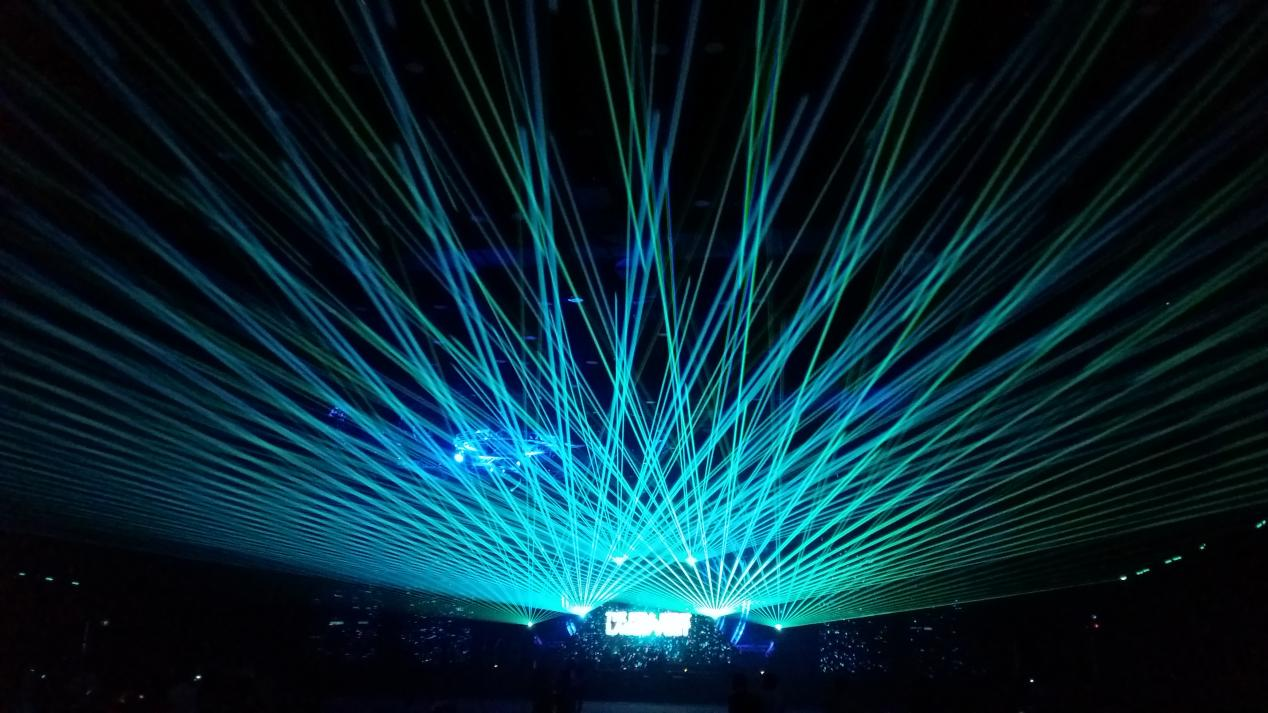
Is an LED Beam Projector really worth it for premium outdoor lighting?
In high-end outdoor lighting, brightness alone rarely decides project value. Beam accuracy, visual consistency, durability, and control integration usually matter more over time.
That is why the LED Beam Projector keeps appearing in project discussions. It can shape light precisely, highlight architecture, and reduce spill where visual discipline is essential.
Still, the investment only makes sense when the fixture matches the project goal. A premium road gateway, façade, plaza, or landmark may justify it. A basic area-lighting task may not.
In practice, long-term value depends on more than the luminaire itself. Product selection, smart controls, installation conditions, and maintenance planning all affect the final result.
What makes an LED Beam Projector different from standard flood lighting?
The main difference is control. A standard floodlight spreads light broadly. An LED Beam Projector is designed to direct light with tighter, cleaner, and more intentional beam distribution.
That difference changes the visual effect immediately. Edges look sharper, focal points become clearer, and unwanted glare or light trespass can be easier to manage.
For premium outdoor lighting, this matters in places where image and night identity are part of the project brief. Think civic buildings, cultural zones, bridges, monuments, and signature landscapes.
A good LED Beam Projector also supports optical consistency across multiple fixtures. That becomes important when a large-scale site needs a unified look instead of patchy illumination.
Where does this investment usually pay off fastest?
The return is strongest where precision creates measurable value. That value may be visual impact, reduced rework, lower operating waste, or easier control over the nighttime environment.
- Architectural façades that need focused highlighting without washing out surface details.
- Public squares and landmarks where the lighting becomes part of the city image.
- Bridges, towers, and gateways requiring visible structure, rhythm, and depth.
- Complex urban environments where glare control and zoning are critical.
More common project mistakes happen when the fixture is chosen for prestige rather than need. If the site only needs broad functional coverage, simpler luminaires may deliver better budget efficiency.
Teams handling large public projects often evaluate the LED Beam Projector alongside system integration, aiming quality, reliability, and maintenance simplicity at the same time.
How should you judge performance beyond lumen output?
Lumen figures are useful, but they do not tell the full story. In premium outdoor lighting, the useful question is how much of that light reaches the right surface, at the right angle.
A practical evaluation usually includes optical quality, housing durability, thermal control, driver reliability, and control compatibility. These factors shape lifecycle performance far more than headline brightness.
Experienced project teams usually review these points early. That helps avoid expensive adjustments after installation, especially in large urban sites with strict visual standards.
Are there hidden costs or risks with an LED Beam Projector?
Yes, and most of them come from poor planning rather than from the fixture category itself. Tight beams demand careful aiming, mounting stability, and realistic maintenance access.
If optics are selected incorrectly, the result may look uneven or overly theatrical. If controls are ignored, the site can lose flexibility and consume more energy than expected.
Another risk appears when project delivery is fragmented. Product, controls, and application design need to work together. Integrated support often reduces that coordination burden significantly.
This is especially true in roads, public spaces, and mixed urban zones, where lighting quality must align with reliability and system compatibility over many years.
In some projects, the better answer is not one fixture type everywhere. A beam projector may handle focal lighting, while other zones use street, pathway, or off-grid solutions.
For example, remote perimeters or infrastructure extensions may be better served by Wind-Solar Hybrid Street Lighting | SHL-007, especially where wiring is difficult and all-weather operation matters.
How does the LED Beam Projector compare with alternative outdoor lighting options?
The LED Beam Projector is rarely a universal replacement. It is a strategic tool. The smarter comparison is based on project intent, not just fixture category.
- Choose it when visual focus, beam discipline, and architectural effect are central.
- Choose standard floodlighting when broad, economical area coverage is the priority.
- Choose hybrid or solar street solutions when grid access, trenching cost, or site remoteness creates implementation pressure.
A good example is a coastal road or mining approach route. Decorative focal points may benefit from beam projection, while functional roadside coverage may fit a hybrid system better.
Solutions such as Wind-Solar Hybrid Street Lighting | SHL-007 are often considered in remote or high-wind areas because they combine no wiring, hybrid power, and smart energy management.
So, when is the investment justified?
It is justified when light precision directly supports project goals. That may include brand image, public experience, landmark identity, visual comfort, or reduced operating inefficiency.
It is less justified when the task is simple uniform lighting and the site gains little from focused optics. In those cases, premium beam control may be underused.
The more reliable way to decide is to review four things together: lighting purpose, environmental conditions, control strategy, and lifecycle maintenance expectations.
Projects supported by strong engineering and manufacturing coordination usually make better fixture decisions early. That reduces risk from selection through installation and long-term operation.
If the next step is evaluation, build a short comparison list. Check beam performance, integration needs, maintenance access, and whether each zone truly needs an LED Beam Projector.
That approach leads to a clearer answer than price alone, and it usually delivers better outdoor lighting results across the full project lifecycle.
◉ MESSAGE
Blog
- LED Street Luminaire Specifications That Matter for Roadway Projects
- What to Evaluate When Selecting a Smart Street Lamp Manufacturer
- How to Prepare a Compliant Solar Lighting Bid for Public Infrastructure Projects
- LED Street Lighting Solutions for Urban and Municipal Roads
- LED Street Light Installation Guide for Road Projects
- LED Street Light Lifespan: How Long Do LED Road Lights Last?
- LED Street Light IP Rating: What Should Buyers Choose?
Message