
How to Choose an LED Floodlight for Parking Lots, Yards, and Building Exteriors
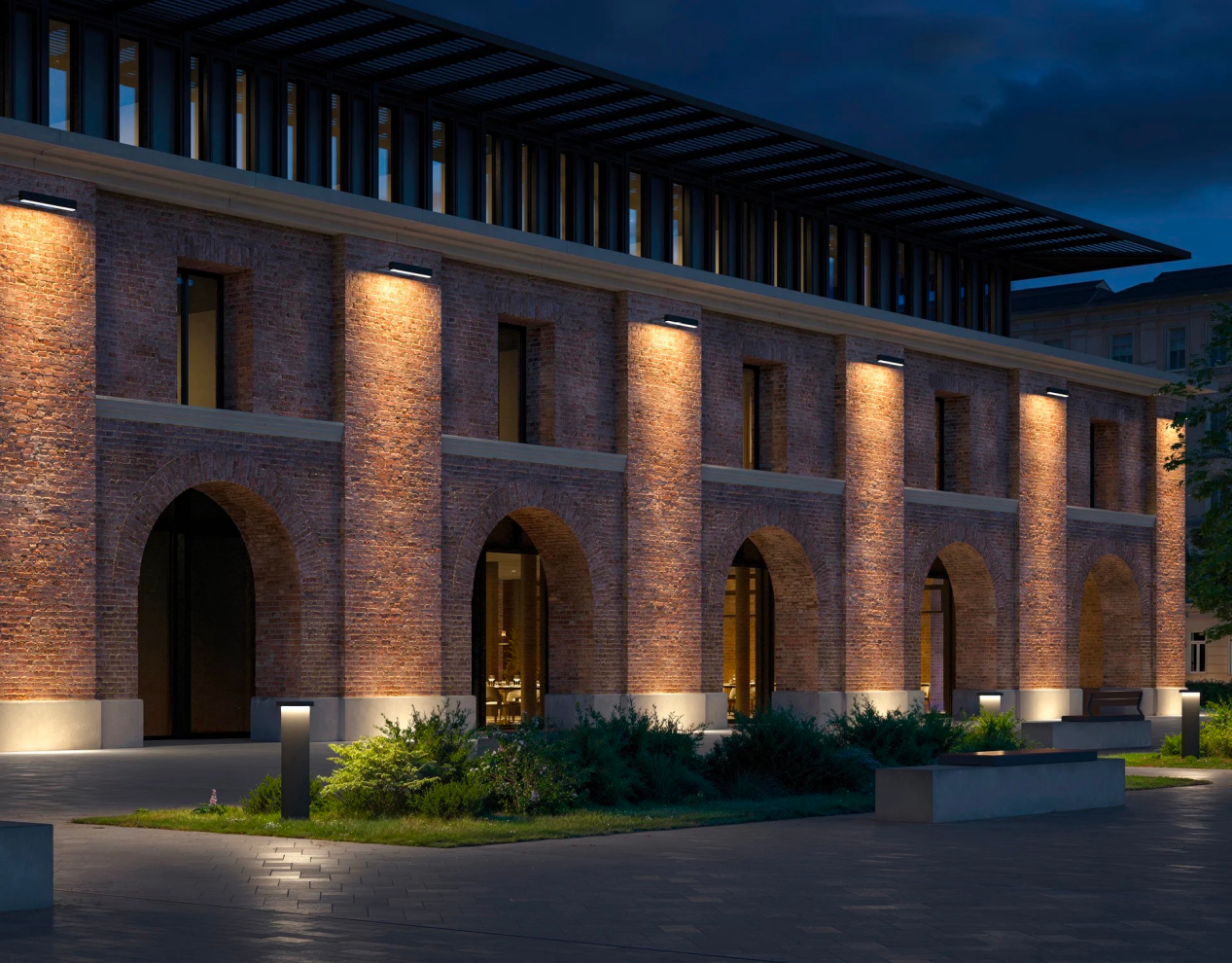
Choosing the right LED Floodlight for parking lots, yards, and building exteriors directly affects safety, visibility, energy costs, and long-term maintenance. For procurement teams managing large-scale outdoor lighting projects, the decision goes beyond brightness alone — it requires balancing performance, durability, smart control compatibility, and project reliability. This guide explains the key factors to help you select an LED Floodlight solution that supports efficient installation and consistent results.
In large outdoor projects, a poor fixture choice can create uneven lighting, frequent replacements, or unnecessary power consumption over a 3–5 year operating period. Procurement managers therefore need a practical framework that connects optical performance, site conditions, installation method, and long-term serviceability.
Understand the Application Before Comparing Specifications
An LED Floodlight that performs well on a building facade may not be suitable for a parking area or a service yard. The first step is to define the operating environment, mounting height, target coverage, and expected illumination result before requesting quotations from suppliers.
Three common outdoor use cases
Parking lots typically require broad, uniform distribution with controlled glare. In many projects, mounting heights fall between 6 m and 12 m, and fixture spacing must be planned to avoid dark zones between poles or wall-mounted points.
Yards often face mixed use conditions. Loading activity, vehicle turning, storage zones, and perimeter security may all exist in one site. This usually means a combination of wider beams for general coverage and narrower optics for critical pathways or gate areas.
Building exteriors focus more on visibility, security, and facade illumination. Here, the LED Floodlight must balance aesthetics and function, especially where light trespass, upward spill, or nearby residential sensitivity is a concern.
Key site questions procurement teams should ask
- What is the mounting height: 4 m, 8 m, or above 12 m?
- Is the priority security lighting, operational lighting, or architectural lighting?
- Will the site run 10–12 hours per night or require dusk-to-dawn operation?
- Is the project grid-connected, or does it include off-grid or hybrid sections?
The table below shows how application type changes procurement priorities. It helps narrow product selection before comparing wattage or price alone.
For procurement teams, this comparison reduces the risk of using one standard LED Floodlight specification across very different environments. A better match at the planning stage usually lowers rework, redesign, and on-site adjustment costs later.
Evaluate the Core Technical Factors of an LED Floodlight
After defining the application, buyers should move to the technical review. In outdoor lighting, 6 specification groups usually have the greatest impact on real project performance: lumen output, beam angle, color temperature, ingress protection, housing quality, and control compatibility.
1. Brightness should be based on lighting goals, not wattage alone
Many tenders still compare fixtures mainly by wattage, but wattage is only power input. What matters more is effective lumen output and how those lumens are distributed on the ground. For example, a 100 W LED Floodlight with better optics may outperform a 150 W unit with poor beam control.
For open outdoor areas, procurement teams often review lumen packages in ranges such as 5,000–15,000 lm for medium coverage and 20,000 lm or more for larger mounting heights or broader zones. Final selection should always align with layout calculations.
2. Beam angle determines usable coverage
A narrow beam works well for long throw or vertical surfaces, while a wider beam supports area lighting. Common optical options may include 30°, 60°, 90°, or asymmetric distributions. Choosing the wrong beam often causes over-lighting in one section and shadowing in another.
3. Color temperature affects safety and visual comfort
For practical outdoor lighting, 3000K, 4000K, and 5000K–6500K are common choices. Parking lots and industrial yards often use 4000K or 5000K for a balanced mix of visibility and comfort, while warmer 3000K may be preferred around building exteriors where a softer appearance is needed.
4. Outdoor durability is not optional
For parking lots, yards, and exterior walls, the LED Floodlight should be reviewed for IP65 or higher in many exposed environments. In harsher conditions such as coastal, dusty, or high-vibration sites, corrosion resistance, sealing quality, and heat dissipation design become even more important over a 5–8 year service cycle.
The following table organizes the most common technical review points used during outdoor lighting procurement and bid comparison.
A structured technical review makes it easier to compare suppliers on meaningful performance criteria rather than only on catalog wattage. This is especially important when the project includes dozens or hundreds of fixtures across different outdoor zones.
Consider Control Systems, Maintenance, and Project Delivery
A procurement decision should also account for how the LED Floodlight will be managed after installation. In larger projects, controls, spare parts planning, and installation coordination can influence total cost as much as fixture price.
Smart control compatibility
If the site uses timers, photocells, motion sensors, or centralized smart control, compatibility should be checked early. Dimming interfaces, communication architecture, and grouping capability all affect energy strategy. For example, reducing output by 30% during low-traffic hours can help lower running costs without compromising baseline visibility.
Maintenance planning for multi-site projects
For contractors and project owners, maintenance is not just about product lifespan. It includes driver replacement access, bracket stability, spare unit consistency, and response time for after-sales support. Even a reliable LED Floodlight becomes expensive if servicing requires repeated lifting equipment or inconsistent replacement components.
A practical 5-point procurement checklist
- Confirm lighting goals for each area instead of using one universal specification.
- Request optical data and application-specific recommendations.
- Check protection level, housing material, and thermal design for the local climate.
- Verify smart control interfaces if the project includes central management.
- Review delivery consistency, spare parts planning, and long-term technical support.
In some outdoor developments, buyers also need to combine standard area lighting with off-grid sections where cabling is difficult or costly. In such cases, a hybrid solution like Wind-Solar Hybrid Street Lighting | SHL-007 can be relevant for remote roads, industrial edges, or high-wind zones. With LED power options from 30W to 150W, solar panels from 100W to 300W, and wind turbines from 200W to 600W, it supports 24/7 hybrid power where conventional wiring is not ideal.
This kind of integration is useful when a project includes parking access roads, perimeter routes, or remote service areas beyond the main building exterior. For procurement teams, the key advantage is system-level planning rather than sourcing isolated fixtures for each condition.
Common Procurement Mistakes and How to Avoid Them
Several recurring mistakes increase cost and delay during outdoor lighting delivery. Most of them happen when specification review is rushed or when site conditions are not translated into a clear purchasing standard.
Mistake 1: Selecting by unit price only
A lower upfront price may lead to higher installation adjustment, more frequent replacement, or inconsistent light performance. Procurement should compare total project impact over 3–5 years, including energy use, labor access, and replacement intervals.
Mistake 2: Ignoring environmental exposure
Coastal humidity, dust, and temperature variation can shorten fixture life if the housing and sealing are not suitable. This is especially relevant for yards, external wall installations, and open parking areas with little shelter.
Mistake 3: Overlooking system integration
When lighting is part of a broader smart city, campus, or industrial project, the LED Floodlight should fit the control strategy from day one. Retrofitting controls later can increase cost and complicate commissioning schedules by 2–4 weeks.
For contractors and project owners handling large outdoor developments, supplier support matters as much as product specification. Lishida Smart Lighting works with project teams on product selection, smart control alignment, and project-based outdoor lighting solutions, helping reduce technical mismatch across roads, public spaces, and urban environments.
The right LED Floodlight is the one that fits the site, performs reliably in local conditions, integrates with the control plan, and remains practical to maintain over time. If you are sourcing for parking lots, yards, or building exteriors, a structured specification process will improve installation efficiency and long-term lighting consistency. Contact us to discuss your project, get a tailored solution, or review the best outdoor lighting configuration for your procurement plan.
◉ MESSAGE
Blog
- LED Street Luminaire Specifications That Matter for Roadway Projects
- What to Evaluate When Selecting a Smart Street Lamp Manufacturer
- How to Prepare a Compliant Solar Lighting Bid for Public Infrastructure Projects
- LED Street Lighting Solutions for Urban and Municipal Roads
- LED Street Light Installation Guide for Road Projects
- LED Street Light Lifespan: How Long Do LED Road Lights Last?
- LED Street Light IP Rating: What Should Buyers Choose?
Message