
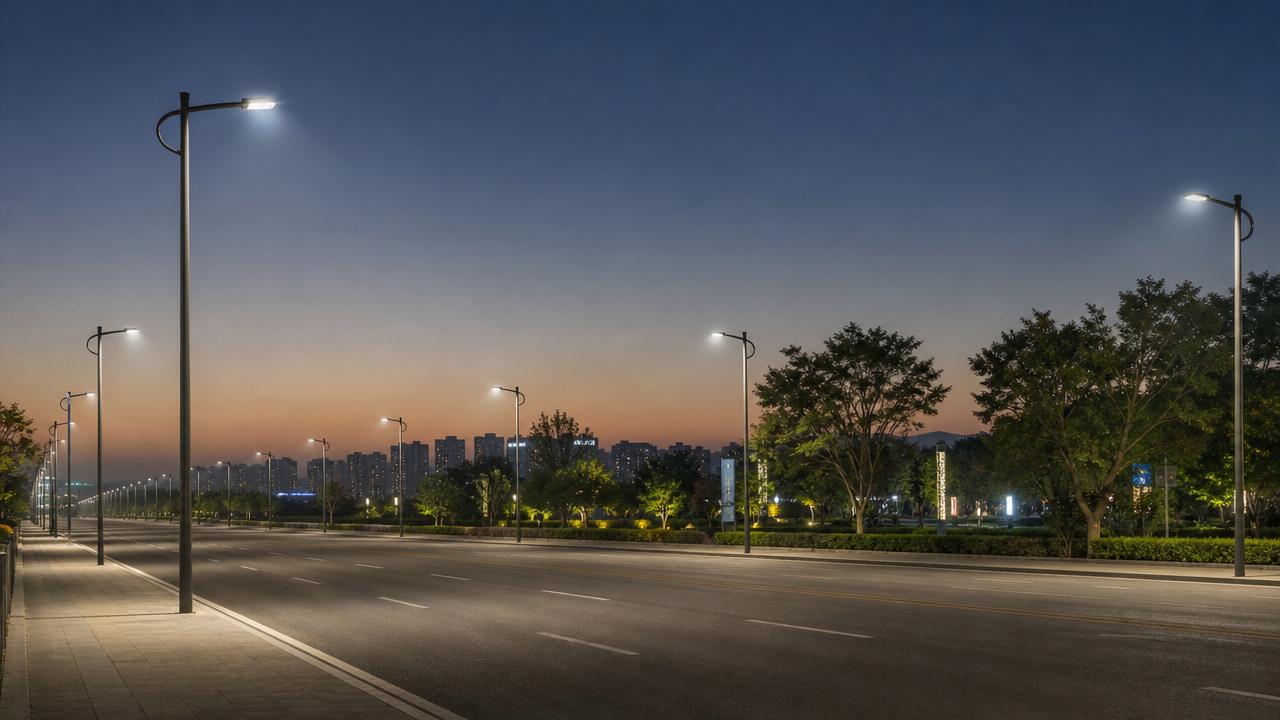
Modern Street Lighting Specs That Matter in Real Projects
Choosing the right Modern Street Lighting specs can determine whether a project runs smoothly or faces costly setbacks later.
For MSL-HC evaluations, brightness is only one part of the decision.
Real project success depends on reliability, control compatibility, maintenance efficiency, and stable long-term outdoor performance.
In large-scale road, urban, and public space projects, specification gaps often appear after installation, not during bidding.
That is why a checklist approach helps reduce technical risk and improve execution quality.
Why Modern Street Lighting Needs a Practical Spec Checklist
Modern Street Lighting affects safety, traffic visibility, energy use, maintenance cycles, and smart city integration.
A fixture that looks acceptable on paper may still fail under wind load, unstable power conditions, or control system mismatch.
Using a structured checklist keeps decisions focused on field performance instead of isolated product claims.
Core Modern Street Lighting Checklist for MSL-HC Projects
- Verify luminous efficacy and road illumination targets first, then confirm uniformity, glare control, and spacing logic for the actual road width and pole layout.
- Check ingress protection, corrosion resistance, and housing durability to ensure Modern Street Lighting performs reliably in rain, dust, coastal air, and polluted urban zones.
- Confirm driver quality, surge protection, and voltage tolerance so the system can handle unstable grids, lightning exposure, and frequent switching without premature failures.
- Review smart control compatibility, including dimming protocol, remote monitoring, fault reporting, and integration with wider city platforms or project management systems.
- Assess maintenance access, modular replacement options, and spare parts planning to reduce downtime and simplify future service across large installation zones.
- Validate thermal management and operating temperature range, especially where high ambient heat or cold winters can shorten LED and driver life.
- Match optical distribution to the site instead of using one lens type everywhere, because intersections, pedestrian edges, and highways need different lighting patterns.
- Examine pole and foundation coordination early, including wind resistance, bracket load, anchor bolt details, and cable routing to avoid installation-stage redesign.
Key Specs That Often Influence Long-Term Results
Optical Performance
For Modern Street Lighting, lumen output alone does not guarantee good road visibility.
Beam angle, cut-off design, and uniformity determine how safely drivers and pedestrians read the space.
Electrical Stability
MSL-HC projects should prioritize surge resistance, driver efficiency, and predictable dimming behavior.
Poor electrical components often create the most expensive failures after handover.
Mechanical Durability
Wind load, housing material, and protective finishing matter as much as LEDs.
In connected public areas, complementary products can support visual consistency, such as LED Garden&Lawn Lighting | GLL-FQ for parks and landscaped edges.
Its 120 lm/W efficiency, IP67 protection, and wind resistance of at least 150 Km/h fit projects needing durable secondary outdoor lighting.
How Specs Change by Application
Urban Roads and Main Streets
Urban corridors need balanced Modern Street Lighting with strong uniformity and reduced glare.
Smart control readiness is also important because dimming schedules and fault alerts improve operating efficiency.
Residential Streets and Public Spaces
Here, visual comfort and lower color temperature often matter more than maximum output.
Supporting elements like LED Garden&Lawn Lighting | GLL-FQ can extend lighting quality into gardens, parks, and commercial landscapes with 3000K or 4000K options.
Industrial Roads and Harsh Environments
Harsh sites require stronger corrosion control, wider operating temperature tolerance, and easier maintenance access.
In these locations, every Modern Street Lighting component should be specified for resilience, not minimum compliance.
Commonly Overlooked Risks
Ignoring control protocol details can block commissioning even when fixtures and poles are already installed.
Underestimating surge exposure can sharply reduce driver life in open-road applications.
Using one specification across every road type often creates overlighting in some zones and weak coverage in others.
Failing to align luminaire, bracket, pole, and foundation details early can delay civil and electrical work.
Skipping service-life review may hide future replacement costs, especially when spare part access is limited.
Execution Tips for Better Project Outcomes
- Start with road class, mounting height, spacing, and control goals before comparing fixture catalogs.
- Request photometric files, material details, and electrical protection data for each Modern Street Lighting option.
- Check compatibility between luminaires, poles, foundations, and smart control architecture during design review.
- Plan maintenance routes, spare quantities, and replacement procedures before final procurement approval.
Reliable project delivery depends on more than selecting a bright luminaire.
The right Modern Street Lighting specification should support performance, integration, durability, and manageable maintenance over time.
With integrated product support, smart control capabilities, and project-based engineering experience, Lishida Smart Lighting helps outdoor lighting projects move from specification to dependable field results.
As a practical next step, review MSL-HC requirements against this checklist and identify any gaps before final design freeze or procurement.
◉ MESSAGE
Blog
- What Is an LED Beam Projector Used For in Architectural and Outdoor Lighting?
- LED Beam Projector Buying Guide: Beam Angle, Power, IP Rating, and Control Options
- How to Maintain an LED Beam Projector for Stable Outdoor Performance
- What Safety and Quality Checks Matter Most for LED Beam Projector Selection?
- Is an LED Beam Projector Worth the Investment for Premium Outdoor Lighting Projects?
- Modern Street Lighting | MSL-GH Selection Guide: Wattage, Optics, Pole Height, and Spacing
- Modern Street Lighting | MSL-GH vs Conventional Streetlights: What Changes in Performance?
Message