
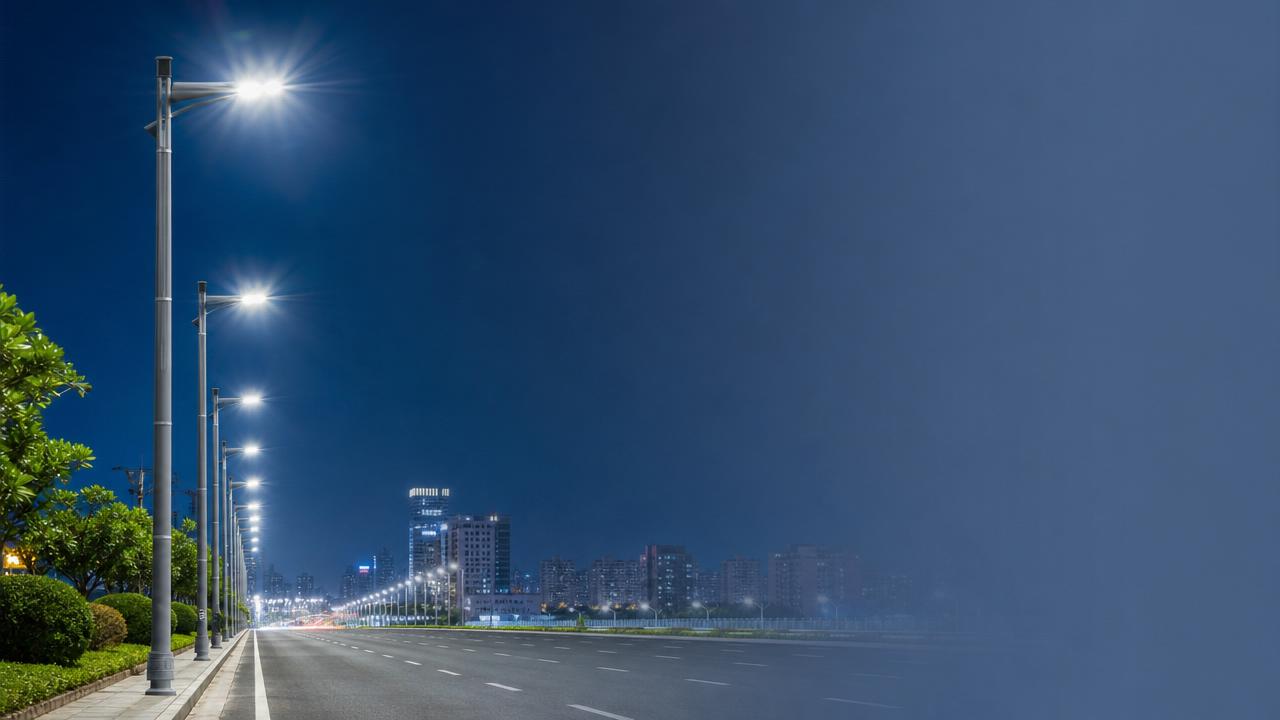
For business evaluators comparing project ROI, Modern Street Lighting is no longer just about illumination—it is a measurable path to faster energy payback, lower maintenance costs, and smarter asset performance. With solutions like MSL-HC, large-scale outdoor lighting projects can achieve stronger long-term value through reliable hardware, intelligent controls, and better system integration from planning to operation.
Why does modern street lighting pay back energy investment faster?
In outdoor lighting procurement, the key question is no longer whether LED systems save energy. The real question is how quickly those savings convert into financial payback under real project conditions such as operating hours, maintenance access, asset life, and control integration.
For business evaluators, modern street lighting becomes attractive when it reduces total cost over years, not just power consumption on paper. A strong solution should combine efficient luminaires, durable structural materials, weather resistance, and compatibility with smart control systems.
That is especially important in roads, municipal corridors, public spaces, and mixed urban environments where failure costs are high. A low purchase price can quickly become expensive when replacement cycles, traffic disruption, and inconsistent system performance are included in the evaluation.
- Energy payback improves when luminous efficacy is high and lighting output is matched to actual roadway demand.
- Maintenance payback improves when pole corrosion resistance, ingress protection, and component lifespan reduce field intervention.
- Operational payback improves when smart controls allow dimming, scheduling, fault visibility, and better asset management.
What business evaluators should measure first
A useful review starts with baseline energy consumption, annual operating hours, local electricity tariffs, expected maintenance intervals, and site constraints. On large projects, these variables often matter more than the nominal wattage listed in a quotation.
Which performance indicators matter most in outdoor lighting ROI?
The table below highlights the evaluation factors that most directly affect payback in modern street lighting projects. These indicators help separate short-term price comparisons from long-term asset value.
For business evaluation teams, these indicators create a more realistic model of return. They also reduce the risk of selecting a product that looks efficient in a brochure but performs weakly in harsh outdoor conditions.
How does MSL-HC fit large-scale project requirements?
In project-based outdoor lighting, value often comes from balanced engineering rather than a single headline feature. Modern Street Lighting|MSL-HC is relevant to evaluators because it combines energy-saving performance with structural durability and deployment flexibility.
The lighting pole uses Q235 steel, equivalent to ASTM A36 or EN S235JR in common specification discussions, with pole heights from 8 to 14 meters and thickness from 4 to 8 mm. For municipal and roadway use, this supports adaptation to different road widths, mounting heights, and project standards.
Its hot-dip galvanized and powder-coated finish is important for lifecycle value. In coastal, rainy, or polluted urban settings, corrosion resistance directly affects replacement timing and maintenance planning. For evaluators, that means fewer hidden costs across the operating life of the asset.
- Main light power range of 150–250W supports roadway and public-space lighting needs.
- Color temperature options of 3000K and 4000K allow adaptation to visual comfort, municipal preference, and site character.
- Luminous efficacy of at least 140 lm/W supports strong energy performance for cost-sensitive projects.
- IP67 protection helps reduce performance loss in demanding outdoor environments.
- Wind resistance of at least 150 km/h is relevant for exposed corridors and elevated urban roads.
Why integrated support changes the financial outcome
Lishida Smart Lighting supports contractors and project owners with more than product supply. For business evaluators, integrated support across lighting products, smart control systems, and project-based solutions can lower coordination risk, reduce redesign, and improve delivery consistency.
This matters in large-scale outdoor lighting because project success depends on system fit: pole design, luminaire performance, anchor bolt interface, maintenance access, and control architecture must work together. Gaps between suppliers often lead to delays, rework, and weaker long-term performance.
Modern Street Lighting vs conventional alternatives: where is the cost difference?
A procurement team should compare more than fixture price. The table below shows how modern street lighting typically performs against older or less integrated alternatives when evaluated on a lifecycle basis.
This comparison is why many evaluators now prioritize lifecycle cost models. Faster energy payback is valuable, but it becomes significantly stronger when combined with lower maintenance burden and fewer operational disruptions.
How should business evaluators choose the right specification?
Specification should start with application needs, not only budget limits. Street classification, pole spacing, local weather, visual comfort requirements, and maintenance resources all influence the right choice for modern street lighting.
A practical selection checklist
- Confirm road type and target illumination levels before selecting wattage or mounting height.
- Check whether 3000K or 4000K better fits municipal preference, pedestrian comfort, and environmental context.
- Review corrosion exposure, especially for industrial, coastal, or high-humidity sites.
- Evaluate whether smart controls are required now or should remain available for future upgrade.
- Assess long-term access costs for maintenance vehicles, lane closures, and spare parts planning.
When these items are reviewed early, procurement becomes more accurate and change orders become less likely. This is one reason project owners and contractors often benefit from suppliers that understand both manufacturing and execution realities.
What procurement risks are often missed in large outdoor lighting projects?
Many business evaluators focus heavily on unit cost and overlook delivery risk. In practice, a project may lose time and money because of mismatched base flange details, unclear anchor bolt coordination, inconsistent coating quality, or control system compatibility issues.
Another common mistake is treating LED life alone as proof of low maintenance. Real maintenance performance also depends on enclosure protection, local climate, installation quality, and whether the full system has been designed for long-term outdoor exposure.
- Do not compare proposals without checking pole structure, finish, and wind resistance.
- Do not assume smart control savings are automatic without confirming actual operating strategy.
- Do not separate lighting hardware from project execution planning in complex urban environments.
FAQ: common questions from procurement and evaluation teams
How fast can modern street lighting recover its energy investment?
The answer depends on baseline energy use, operating hours, electricity cost, and whether controls are included. In projects replacing older high-consumption systems, payback can improve meaningfully when high-efficacy LED fixtures and dimming strategies are combined. The most accurate approach is a project-specific lifecycle calculation.
Which scenes are best suited for MSL-HC?
It is suitable for street lighting applications requiring durable poles, weather-resistant finishes, and reliable LED performance. Typical evaluation scenarios include municipal roads, public spaces, urban corridors, and infrastructure projects where long service life and maintenance reduction matter.
What should evaluators focus on besides wattage?
Look at luminous efficacy, ingress protection, pole material, coating process, wind resistance, mounting height, smart control integration, and expected maintenance burden. These factors often have greater financial impact than wattage alone.
Is lower color temperature always better for street projects?
Not always. A 3000K option may support warmer visual comfort in some public spaces, while 4000K may fit visibility goals on certain roads. Selection should follow project standards, local preference, and the intended user environment rather than a one-size-fits-all rule.
Why choose us for project-based outdoor lighting evaluation and delivery?
Lishida Smart Lighting works with contractors and project owners that need reliable outdoor lighting for large-scale delivery, not just standalone product supply. Our support covers lighting products, smart control systems, and project-based coordination shaped by practical experience in roads, public spaces, and complex urban environments.
If you are assessing Modern Street Lighting|MSL-HC or comparing alternative outdoor lighting solutions, you can consult us on parameter confirmation, product selection, pole height and thickness matching, color temperature choice, delivery schedule, smart control compatibility, customization options, and quotation planning.
For business evaluators, the goal is clear: reduce uncertainty before procurement, control lifecycle cost after installation, and ensure the system performs as expected in the field. That is where experienced engineering support and coordinated project delivery make a measurable difference.
◉ MESSAGE
Blog
- What Is an LED Beam Projector Used For in Architectural and Outdoor Lighting?
- LED Beam Projector Buying Guide: Beam Angle, Power, IP Rating, and Control Options
- How to Maintain an LED Beam Projector for Stable Outdoor Performance
- What Safety and Quality Checks Matter Most for LED Beam Projector Selection?
- Is an LED Beam Projector Worth the Investment for Premium Outdoor Lighting Projects?
- Modern Street Lighting | MSL-GH Selection Guide: Wattage, Optics, Pole Height, and Spacing
- Modern Street Lighting | MSL-GH vs Conventional Streetlights: What Changes in Performance?
Message