
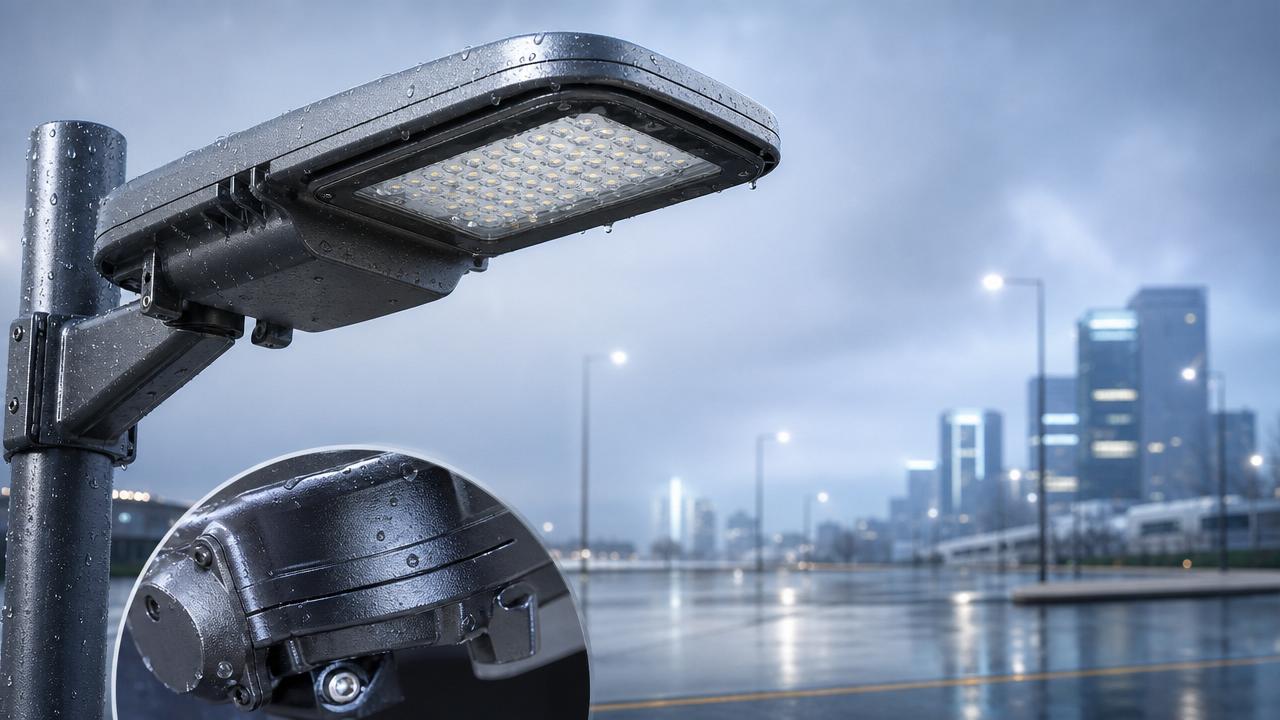
Choosing the right protection level is critical when evaluating Modern Street Lighting for demanding outdoor projects. This guide explains how to read IP ratings clearly, helping technical evaluators assess whether MSL-HC and similar street lighting products can withstand dust, rain, and long-term exposure while supporting reliable performance, easier project selection, and better system durability in real-world urban applications.
Why IP Ratings Matter in Modern Street Lighting
Modern Street Lighting operates in dust, moisture, heat, vibration, and pollution. A clear reading of IP ratings reduces failure risk and supports longer service life in outdoor lighting systems.
For roads, plazas, and public areas, enclosure protection affects maintenance cycles, electrical safety, optical stability, and overall project reliability. That makes IP ratings a practical selection tool, not just a specification line.
Lishida Smart Lighting supports large-scale outdoor lighting delivery with integrated products, smart controls, and project-based engineering support. In complex urban work, correct protection grading helps simplify product selection and system integration.
How to Read an IP Rating Correctly
IP means Ingress Protection. The first digit shows resistance to solid objects and dust. The second digit shows resistance to water exposure under defined test conditions.
- Check the first digit first. A 6 means the housing is dust-tight, which is highly valuable for Modern Street Lighting used near roads, construction zones, and polluted city corridors.
- Read the second digit next. A 5 or 6 usually suits outdoor lighting, because it indicates resistance to water jets, wind-driven rain, and frequent wet weather exposure.
- Confirm the full rating instead of one number alone. IP66 is very different from IP65 in some washdown or storm-prone sites, especially where water pressure is stronger.
- Match the rating to installation height and orientation. A pole-top luminaire, façade fixture, and recessed ground light face different water paths and contamination patterns.
- Review test standards and product construction together. Gaskets, cable glands, driver compartments, and lens sealing all influence whether the stated IP rating remains reliable over time.
Quick Reference for Common Ratings
IP54 offers limited dust and splash protection. IP65 handles dust and water jets. IP66 gives stronger water-jet protection. For most Modern Street Lighting applications, IP65 or IP66 is the practical baseline.
Checklist for Evaluating MSL-HC and Similar Fixtures
- Verify the stated IP rating on the datasheet, housing label, and certification documents. Any mismatch should be clarified before the fixture enters a project approval process.
- Inspect sealing points around lenses, driver covers, connectors, and cable entries. Weak sealing often causes early water ingress even when the rated enclosure looks robust externally.
- Compare the rating with the local environment, including coastal mist, traffic dust, monsoon rain, and seasonal temperature swings common in urban outdoor lighting installations.
- Ask whether the rating applies to the complete assembled luminaire. Component-level protection alone does not confirm the final performance of Modern Street Lighting products.
- Check maintenance access design. Frequent opening of the housing can reduce long-term sealing performance if gaskets, fasteners, and reassembly methods are not well engineered.
- Review life-cycle value, not only initial compliance. Strong enclosure protection helps reduce corrosion, driver damage, optical contamination, and unplanned service interruptions across the project term.
Application Notes for Different Outdoor Lighting Scenarios
Roads and Urban Corridors
Road lighting faces constant dust, exhaust residue, and weather exposure. In these conditions, Modern Street Lighting with strong dust-tight sealing helps protect optics and electronics from gradual performance loss.
Water resistance also matters because pole height increases exposure to driven rain. MSL-HC evaluations should include enclosure durability, not only luminous performance and control compatibility.
Plazas, Stadiums, and Landscapes
Open public spaces often combine decorative and functional lighting. In these projects, auxiliary fixtures such as LED Floodlight units may complement Modern Street Lighting layouts.
For example, model TGD-031 offers IP66 protection, 6-60W power options, CREE or OSRAM chips, multiple beam angles, and a lifespan of at least 50,000 hours for plazas, stadiums, and landscapes.
Complex Urban Environments
Tunnels approaches, transport hubs, and mixed-use districts demand more than standard weather resistance. Dirt accumulation, cleaning cycles, and system integration all influence how well Modern Street Lighting performs over time.
In these settings, enclosure protection should be reviewed together with smart control systems, mounting details, and maintenance planning to avoid hidden long-term reliability issues.
Commonly Overlooked Risks
Ignoring connector protection is a frequent mistake. A luminaire body may meet IP66, but poor external connectors can still allow moisture intrusion and trigger electrical faults.
Assuming all IP66 products perform equally is another risk. Material quality, gasket aging, and manufacturing consistency directly affect how long the protection level remains effective.
Overlooking installation quality can also undermine Modern Street Lighting performance. Incorrect cable routing, damaged seals, or over-tightened covers may compromise the intended enclosure protection.
Practical Execution Tips
- Request datasheets, test references, and assembly details before final selection.
- Compare IP ratings with actual site conditions rather than general outdoor assumptions.
- Inspect sealing components during sample review and pilot installation.
- Include connector, driver compartment, and maintenance method in technical checks.
- Use complementary fixtures carefully when combining street, flood, and landscape lighting systems.
Conclusion and Next Step
Reading IP ratings correctly helps teams select Modern Street Lighting that can survive real outdoor conditions, protect long-term system performance, and reduce maintenance uncertainty across large projects.
Start with the environment, verify the full rating, inspect sealing details, and confirm how the product performs after installation and during maintenance. This checklist-based approach makes MSL-HC evaluation more accurate and more dependable.
◉ MESSAGE
Blog
- What Is an LED Beam Projector Used For in Architectural and Outdoor Lighting?
- LED Beam Projector Buying Guide: Beam Angle, Power, IP Rating, and Control Options
- How to Maintain an LED Beam Projector for Stable Outdoor Performance
- What Safety and Quality Checks Matter Most for LED Beam Projector Selection?
- Is an LED Beam Projector Worth the Investment for Premium Outdoor Lighting Projects?
- Modern Street Lighting | MSL-GH Selection Guide: Wattage, Optics, Pole Height, and Spacing
- Modern Street Lighting | MSL-GH vs Conventional Streetlights: What Changes in Performance?
Message