
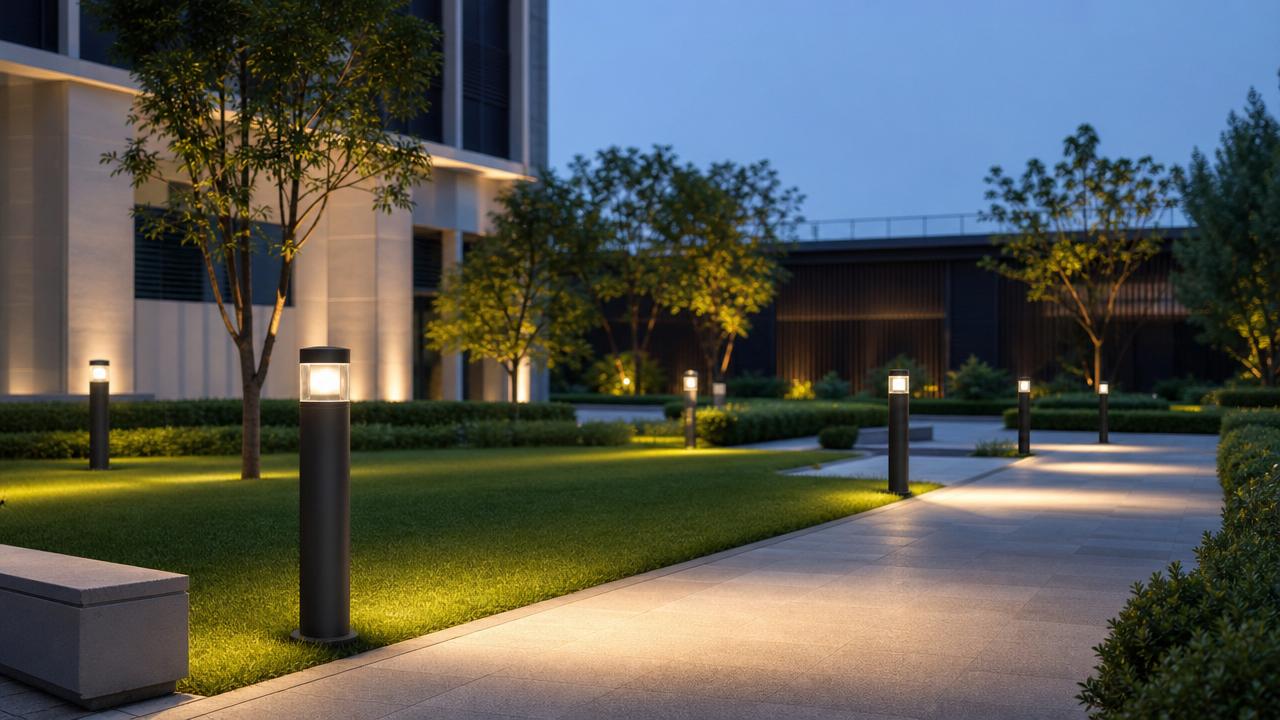
When buyers compare LED Garden&Lawn Lighting, many focus only on appearance, wattage, or upfront price—while missing factors that directly affect project performance.
For business evaluators reviewing GLL-FQ options, long-term reliability, control compatibility, installation efficiency, and lifecycle cost usually matter far more than basic brochure specifications.
In large outdoor projects, the wrong fixture choice rarely fails on day one. Problems appear later through uneven lighting, premature driver failure, difficult maintenance, or poor system integration.
This is why comparing LED Garden&Lawn Lighting should not stop at style or lumen output. The better question is whether the product will protect project value over years of operation.
What is the real search intent behind comparing LED Garden&Lawn Lighting?
Most business evaluators are not simply looking for a prettier fixture. They want to avoid procurement mistakes and identify which product is truly suitable for commercial or public outdoor use.
In other words, the search intent is practical: how to compare options beyond surface specifications, reduce risk, and choose lighting that performs reliably in real project conditions.
For procurement teams, contractors, and project owners, this means looking at LED Garden&Lawn Lighting as part of a wider delivery system, not as an isolated decorative product.
Why appearance and wattage are not enough
Design matters, especially in parks, pathways, landscaped public areas, and mixed-use developments. But a good-looking fixture can still become a poor investment if the engineering is weak.
Wattage alone is also misleading. Two products with similar power ratings may deliver very different optical performance, thermal stability, and maintenance outcomes over their service life.
Buyers often miss how fixture design influences light distribution, glare control, weather resistance, and actual energy efficiency. These factors affect user experience, compliance, and operating cost.
For example, a low-cost unit may look competitive on paper but require more fixtures to achieve the same coverage, increasing installation cost and future maintenance workload.
What business evaluators care about most in real projects
Commercial buyers usually care about four issues: reliability, installation efficiency, compatibility with controls, and total lifecycle cost. These decide whether the project stays on budget after handover.
Reliability is critical because garden and lawn lighting often operates continuously in exposed environments. Moisture, dust, temperature swings, and unstable power conditions can quickly reveal weak components.
Installation efficiency matters because labor, cable routing, foundation work, and commissioning can significantly change project economics. A cheaper luminaire may cost more once field work is included.
Control compatibility matters when outdoor spaces are managed as part of a broader smart lighting or energy system. Standalone fixtures may create operational limitations later.
Lifecycle cost matters most of all. A product with a slightly higher purchase price may still deliver better value if it reduces failures, site visits, spare inventory, and energy use.
Reliability is more than an IP rating
Many buyers treat IP rating as the main reliability indicator. It is important, but it does not tell the full story of whether the fixture will remain stable for years.
To judge long-term reliability, evaluators should look at housing material, sealing quality, heat dissipation design, driver quality, surge protection, and LED chip consistency.
Thermal management is especially important in LED Garden&Lawn Lighting. Poor heat control reduces lumen maintenance, shortens driver life, and causes faster color shift across the site.
Component sourcing also matters. A fixture built with stable chips and dependable drivers usually performs more consistently than a low-cost alternative assembled from mixed-grade components.
Outdoor projects in public areas cannot rely on best-case laboratory numbers. The real question is whether the product can withstand site conditions over time with predictable maintenance intervals.
Light quality and optics affect project success more than buyers expect
Business evaluators often compare lumen output but overlook how that light is distributed. In pathways and landscaped zones, optics determine visual comfort, safety, and fixture spacing.
Too much brightness in the wrong direction creates glare and visual disorder. Too little uniformity creates dark patches that reduce safety and make the site look poorly planned.
Color temperature also influences the project result. Warmer tones may suit hospitality, parks, and residential landscapes, while neutral white may work better in functional public circulation zones.
The best LED Garden&Lawn Lighting comparison therefore includes beam control, spacing logic, visual comfort, and consistency across the installation—not just raw lumen figures.
Control compatibility is often missed until late in the project
One of the most common selection mistakes is choosing fixtures first and asking about controls later. That approach creates integration issues once the project moves into implementation.
Many outdoor developments now expect dimming, scheduling, grouped control, fault alerts, or future smart upgrades. If the lighting product cannot support this, operational value is reduced.
For projects moving toward connected infrastructure, buyers should verify whether garden and lawn lighting can fit into a broader control architecture rather than remain permanently isolated.
In larger municipal or mixed-use environments, this matters even more. Some project teams align smaller landscape fixtures with wider smart lighting frameworks, similar to how solutions such as Smart Street Lighting | SSL-CH support remote control, real-time alerts, and multi-protocol connectivity in urban systems.
The lesson is not that every lawn light needs advanced intelligence. It is that compatibility planning should happen early, especially when long-term digital management is part of the project vision.
Installation and maintenance costs can outweigh the unit price
Procurement comparisons often emphasize fixture cost because it is easy to measure. In practice, however, installation and maintenance can represent a much larger share of total project cost.
Evaluators should ask practical questions. Is the fixture easy to mount and wire? Are spare parts accessible? Can drivers or light engines be serviced without replacing the entire unit?
If maintenance requires extensive disassembly, special tools, or frequent site visits, costs rise quickly. This is particularly relevant for public spaces where access windows are limited.
It is also worth checking consistency across batches. Product variation can complicate installation and create visible differences in finish, color temperature, or performance across one project.
When assessing GLL-FQ options, a structured maintenance review can reveal hidden costs that are not obvious in quotations or catalog comparisons.
How to compare lifecycle value instead of purchase price
A smarter evaluation method compares total cost of ownership over several years. This includes energy consumption, expected failures, replacement frequency, labor cost, and operational disruption.
Even small differences in luminous efficiency, service life, and failure rate can significantly change long-term cost when projects involve many fixtures across large outdoor areas.
Evaluators should also consider warranty credibility, supplier responsiveness, and technical support. A strong supplier can help solve site issues faster and protect delivery schedules.
This is especially important in complex outdoor projects, where lighting products may need to align with broader infrastructure requirements, environmental exposure, and phased implementation.
Experienced partners often bring added value by helping teams compare products based on real execution conditions rather than purely on catalog data.
Questions buyers should ask before approving LED Garden&Lawn Lighting
Before final selection, business evaluators should ask a focused set of questions. What are the actual environmental conditions? How will the product be controlled, maintained, and serviced?
They should also ask whether the optical performance supports the intended space, whether component quality is traceable, and whether the supplier has experience with comparable project types.
Another useful question is whether the product fits future expansion plans. In some projects, landscape lighting later connects to broader smart infrastructure or centralized management platforms.
That is why capable outdoor lighting suppliers tend to think beyond individual fixtures. In adjacent categories, products like Smart Street Lighting | SSL-CH show how durability, communication options, and remote management are increasingly part of outdoor project planning.
Even when selecting simpler landscape luminaires, the same buying discipline applies: evaluate the product in the context of the whole project lifecycle.
Final takeaway for GLL-FQ comparison
What buyers miss when comparing LED Garden&Lawn Lighting is usually not a minor technical detail. It is the broader set of factors that determine whether the project performs well over time.
For business evaluators, the best choice is rarely the one with the lowest price or the most attractive appearance alone. It is the one that balances reliability, optics, controls, serviceability, and lifecycle value.
If you evaluate GLL-FQ options through that lens, you will make stronger decisions, reduce long-term risk, and support better outcomes for contractors, owners, and public users alike.
In outdoor lighting, smart comparison is not about buying a fixture. It is about protecting project performance for years after installation.
◉ MESSAGE
Blog
- What Is an LED Beam Projector Used For in Architectural and Outdoor Lighting?
- LED Beam Projector Buying Guide: Beam Angle, Power, IP Rating, and Control Options
- How to Maintain an LED Beam Projector for Stable Outdoor Performance
- What Safety and Quality Checks Matter Most for LED Beam Projector Selection?
- Is an LED Beam Projector Worth the Investment for Premium Outdoor Lighting Projects?
- Modern Street Lighting | MSL-GH Selection Guide: Wattage, Optics, Pole Height, and Spacing
- Modern Street Lighting | MSL-GH vs Conventional Streetlights: What Changes in Performance?
Message