
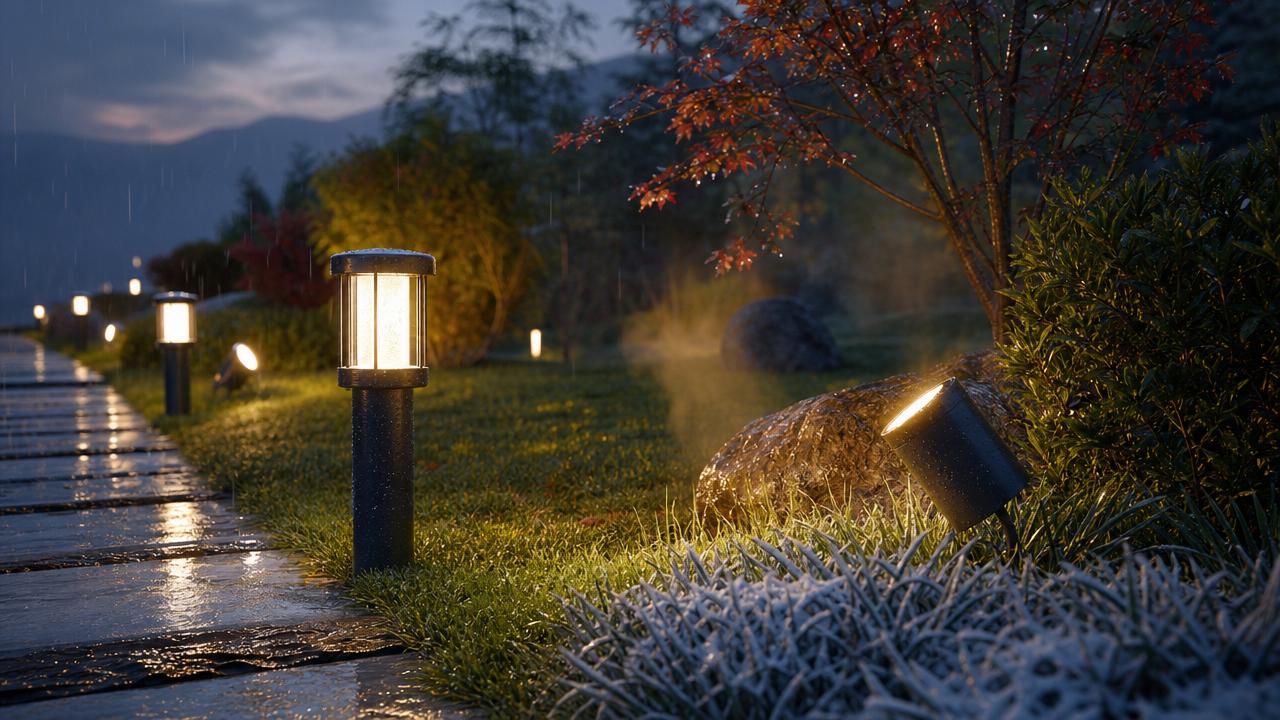
Seasonal weather can significantly affect the performance, durability, and maintenance needs of LED Garden&Lawn Lighting, especially in large outdoor projects. From heavy rain and humidity to heat, frost, and falling debris, understanding these impacts helps planners make smarter decisions. This article explores how GLL-WJ solutions respond to changing conditions and what project teams should consider for reliable year-round outdoor lighting.
For contractors, consultants, and project owners, weather is not a secondary issue. It directly influences lumen output stability, sealing performance, corrosion resistance, installation scheduling, and long-term maintenance cost over 12 to 36 months of operation.
In large outdoor lighting projects, a fixture that performs well in a controlled product test may still face real-world stress from wind-driven rain, dust, UV exposure, freeze-thaw cycles, and organic debris. That is why LED Garden&Lawn Lighting selection should go beyond wattage and appearance.
Lishida Smart Lighting works with project teams that need reliable outdoor lighting across roads, public spaces, landscaped areas, and complex urban environments. In these settings, GLL-WJ planning must connect product choice with site conditions, control logic, and service access.
Why Seasonal Weather Has a Measurable Impact on LED Garden&Lawn Lighting
Outdoor luminaires operate through 4 seasons, not 1 test condition. A garden or lawn light may face summer surface temperatures above 50°C, winter lows below 0°C, and humidity swings from 40% to 95%, depending on the region.
Heat, UV, and Thermal Stress
High ambient temperatures reduce heat dissipation efficiency. When internal heat builds up, LED drivers, seals, and optical components may age faster. In landscaped zones with long nightly operation, even a 10°C rise can shorten component life if thermal management is weak.
UV exposure also affects external materials. Lower-grade housings, coatings, or diffuser materials may discolor, crack, or become brittle after 1 to 3 summers. For LED Garden&Lawn Lighting in open plazas and park edges, material stability matters as much as luminous performance.
Rain, Humidity, and Water Ingress
Rain is not only about direct water exposure. In real projects, water enters through cable joints, mounting interfaces, damaged gaskets, or pressure differences caused by daytime heating and nighttime cooling. Repeated cycles increase the risk of condensation inside the fixture.
For GLL-WJ systems installed near lawns, irrigation spray is another common issue. Unlike occasional rainfall, irrigation may hit the luminaire 2 to 6 times per week during peak watering months, making sealing quality and drain design especially important.
Typical weather-related failure points
- Lens fogging caused by trapped moisture
- Driver instability after repeated temperature cycling
- Corrosion on fasteners, brackets, or internal terminals
- Reduced illumination due to dirt, algae, or mineral buildup
- Cable degradation in exposed or poorly protected runs
The table below shows how major seasonal factors typically affect outdoor lighting performance and which parts of LED Garden&Lawn Lighting deserve closer attention during specification and inspection.
The key takeaway is simple: weather affects more than brightness. It changes service intervals, component stability, and maintenance planning. For information-stage buyers, that means the right evaluation framework should start before procurement, not after installation.
How GLL-WJ Solutions Can Be Evaluated for Year-Round Outdoor Reliability
A reliable GLL-WJ solution should be assessed as a system. Fixture body, LED source, driver, mounting detail, cable protection, control strategy, and maintenance access all influence whether the installation can maintain stable output across 365 days.
Key specification priorities for outdoor projects
In most municipal, commercial, and landscape applications, project teams should review at least 6 points: ingress protection level, corrosion resistance, thermal management, optical control, driver suitability, and maintenance accessibility. Missing even 1 of these can increase lifecycle cost.
- Check the sealing design for wet environments and irrigation-prone zones.
- Confirm material suitability for coastal, humid, or polluted areas.
- Match color temperature, often 3000K to 4000K, to the visual goal and site use.
- Review mounting height and spacing to avoid over-lighting or dark patches.
- Evaluate driver stability during high-temperature and low-temperature operation.
- Plan service access so maintenance crews can inspect or replace units efficiently.
Why environment-specific planning matters
A sheltered residential path and an exposed urban greenbelt do not need the same configuration. Wind load, soil moisture, nearby traffic dust, and cleaning frequency can vary by 2 to 5 times between sites, even within one city district.
This is also where integrated outdoor lighting expertise becomes useful. In broader infrastructure projects, teams may combine decorative landscape lighting with road or perimeter lighting. For remote or exposed corridors, planners sometimes compare conventional grid-based solutions with hybrid options such as Wind-Solar Hybrid Street Lighting | SHL-003 when wiring complexity, unstable power access, or all-weather energy continuity is a concern.
The following table summarizes practical selection criteria for LED Garden&Lawn Lighting under different seasonal pressures and project conditions.
For example, hybrid lighting equipment used in roads or remote applications may include LED power ranges of 30W to 150W, solar panels from 100W to 300W, wind turbines from 200W to 600W, and lithium battery capacities from 12Ah to 200Ah. Those numbers are not direct specifications for every lawn fixture, but they show how weather-resilient project planning often depends on energy strategy as well as luminaire durability.
Season-by-Season Maintenance Planning for Lower Lifecycle Cost
Many outdoor lighting problems are maintenance problems in disguise. The fixture may be properly specified, but if inspections are delayed for 6 to 12 months, seasonal stress can accumulate into reduced output, water damage, or mechanical looseness.
A practical 4-season maintenance approach
For medium and large projects, a quarterly routine is usually more effective than waiting for visible failures. This is especially true for LED Garden&Lawn Lighting near trees, lawns, pedestrian routes, and irrigation systems.
- Spring: inspect seals, clean lenses, and check water accumulation after rainy periods.
- Summer: review heat exposure, verify nighttime output, and remove insect or dust buildup.
- Autumn: clear fallen leaves and debris that block optics or trap moisture around fixtures.
- Winter: check bracket tightness, housing condition, and frost-related damage around the base.
Common maintenance mistakes to avoid
One common mistake is treating all outdoor luminaires the same. Garden lights placed at low height often face more splash water, soil contact, and accidental impact than pole-mounted fixtures. Another mistake is ignoring control system coordination in mixed lighting projects.
Where the project includes road, pathway, and landscape lighting together, support from an engineering-focused supplier can reduce interface risk. That may include fixture selection, smart control planning, replacement compatibility, and long-term system integration rather than isolated product supply.
Procurement Questions Information-Stage Buyers Should Ask Early
Before comparing quotations, buyers should clarify operating conditions and project priorities. Early technical questions often prevent costly changes later, particularly when installation teams, lighting designers, and asset managers are different stakeholders.
Checklist for evaluating suppliers and solutions
- What weather conditions define the site for at least 8 to 10 months each year?
- How will the GLL-WJ fixtures be cleaned, inspected, and accessed after commissioning?
- Is the proposed configuration aligned with spacing, mounting height, and visual comfort goals?
- Can the supplier support system integration for large-scale outdoor projects?
- Are product choices practical for future replacement cycles and maintenance inventory?
Looking beyond unit price
The lowest initial fixture cost does not always produce the best project result. If the design increases cleaning frequency from 2 times per year to 6 times per year, or if sealing issues require early replacements, total operating cost rises quickly.
In some broader site plans, teams also evaluate complementary resilient lighting solutions such as Wind-Solar Hybrid Street Lighting | SHL-003 for remote roads, industrial edges, or off-grid zones. This kind of comparison helps decision-makers build a more complete outdoor lighting strategy across different application layers.
Seasonal weather affects LED Garden&Lawn Lighting through heat, moisture, frost, debris, and maintenance pressure. For project teams, the right response is not a single feature but a complete decision process covering specification, installation detail, inspection frequency, and long-term reliability.
Lishida Smart Lighting supports contractors and project owners with integrated outdoor lighting products, smart control systems, and project-based technical coordination for large-scale applications. If you are evaluating GLL-WJ options for year-round performance, contact us to get a tailored solution, discuss product details, or explore a more reliable outdoor lighting plan for your project.
◉ MESSAGE
Blog
- What Is an LED Beam Projector Used For in Architectural and Outdoor Lighting?
- LED Beam Projector Buying Guide: Beam Angle, Power, IP Rating, and Control Options
- How to Maintain an LED Beam Projector for Stable Outdoor Performance
- What Safety and Quality Checks Matter Most for LED Beam Projector Selection?
- Is an LED Beam Projector Worth the Investment for Premium Outdoor Lighting Projects?
- Modern Street Lighting | MSL-GH Selection Guide: Wattage, Optics, Pole Height, and Spacing
- Modern Street Lighting | MSL-GH vs Conventional Streetlights: What Changes in Performance?
Message