
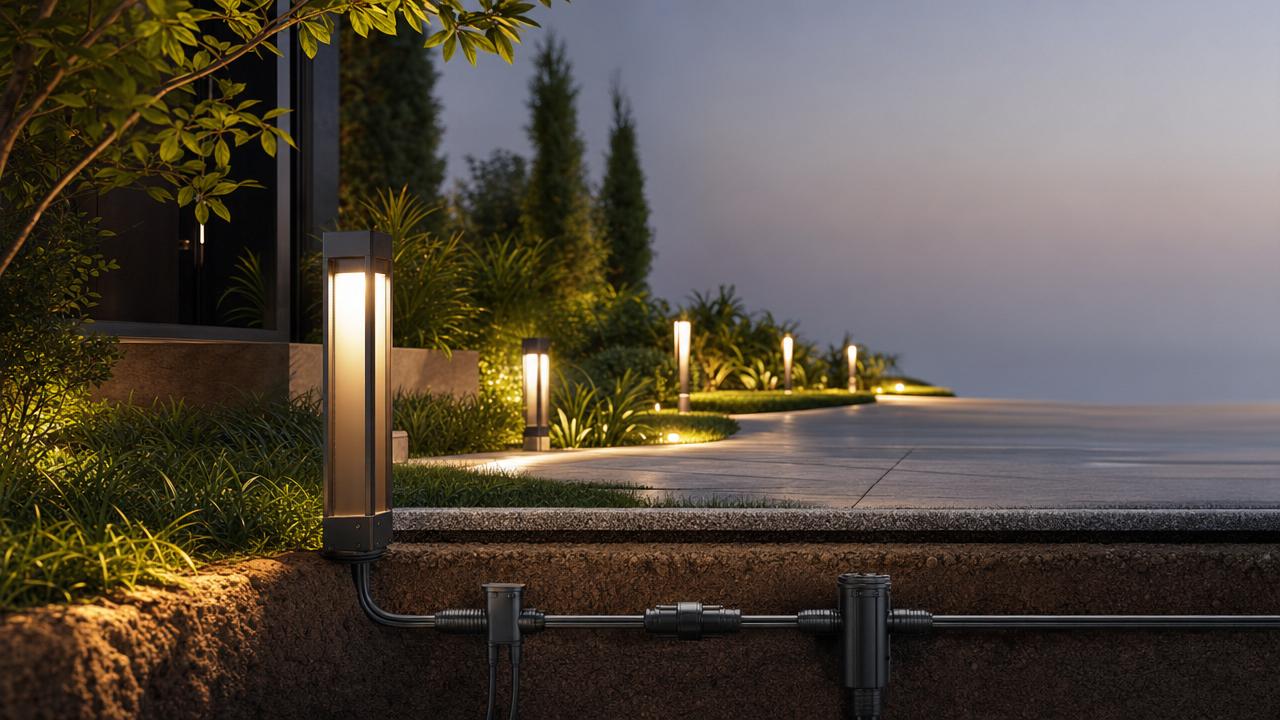
Installing LED Garden&Lawn Lighting may look easy at first. In practice, small errors often create dark zones, unstable circuits, water ingress, and repeated maintenance. For outdoor lighting projects, these issues directly affect safety, appearance, and lifecycle cost.
This guide explains the most common installation mistakes in LED Garden&Lawn Lighting|GLL-FQ. It also shows how better planning, proper hardware selection, and integrated support improve long-term project performance.
What is the most common planning mistake in LED Garden&Lawn Lighting|GLL-FQ installation?
The biggest mistake happens before installation begins. Many projects skip detailed lighting layout design and rely only on fixture spacing by eye.
This often causes uneven brightness, glare near pathways, and weak illumination in planting areas. In public spaces, poor planning may also reduce visual comfort and guidance.
A better approach includes site survey, beam angle review, mounting height confirmation, and cable route planning. These steps help LED Garden&Lawn Lighting|GLL-FQ perform consistently across lawns, walkways, and landscape edges.
- Check terrain changes and planting density
- Match fixture output to functional zones
- Prevent over-lighting and under-lighting
- Reserve access space for future maintenance
Why do wiring and power issues often shorten system life?
Incorrect wiring is one of the most expensive mistakes in LED Garden&Lawn Lighting|GLL-FQ projects. Problems include loose terminals, overloaded circuits, mismatched voltage, and poor cable protection.
When voltage drop is ignored, fixtures at the far end may appear dimmer. In larger outdoor sites, this problem becomes more visible at night and harder to troubleshoot later.
Underground joints also fail when connectors are not sealed correctly. Moisture then enters the line, causing flicker, corrosion, and random outages.
For supporting accent lighting in nearby landscapes, some projects combine lawn fixtures with focused units such as LED Floodlight options. Proper voltage matching and circuit zoning are essential when mixed fixture types are used.
Key wiring checks
- Confirm DC24V or AC220V compatibility before installation
- Size cables according to distance and load
- Use waterproof connectors rated for outdoor use
- Separate lighting zones for easier fault isolation
How does poor waterproofing create hidden failures?
Outdoor lighting faces rain, irrigation, humidity, and temperature shifts. Even quality fixtures can fail early if waterproofing is handled carelessly during installation.
Common errors include damaged seals, improperly tightened cable glands, exposed connections, and shallow fixture bases in wet soil areas.
Waterproofing problems usually appear slowly. First comes occasional flicker. Then corrosion develops inside the housing or connector. Finally, the fixture stops working and needs replacement.
For outdoor projects, IP rating must be matched with real site conditions, not only product labels. Areas near fountains, open lawns, and heavy irrigation lines need stricter installation control.
Are brightness, beam angle, and color temperature often chosen incorrectly?
Yes. Many installations focus only on fixture quantity, not optical effect. This leads to bright hotspots, poor path guidance, and uncomfortable visual contrast.
LED Garden&Lawn Lighting|GLL-FQ works best when brightness, beam spread, and color temperature are selected by scene. Warm tones often suit gardens. Neutral light may fit mixed-use public spaces.
Narrow beams highlight features, while wider beams support area coverage. For nearby plazas, stadium edges, or large landscapes, complementary products with beam options from 3° to 60° may be helpful.
One example is the TGD-031 configuration, designed for brighter and more uniform outdoor lighting, with IP66 protection and a lifespan of at least 50,000 hours.
Selection reminders
- Choose output based on actual target distance
- Use consistent color temperature across connected zones
- Avoid excessive brightness near pedestrian sightlines
- Review beam angle before fixing installation positions
How do installation details affect maintenance cost and reliability?
Small construction details often decide whether a system stays reliable. Poor bracket alignment, unstable foundations, and difficult access points increase maintenance time and operating cost.
Another common problem is ignoring future service needs. If fixtures are blocked by dense planting or hardscape elements, routine inspection becomes slow and expensive.
Reliable LED Garden&Lawn Lighting|GLL-FQ installation should include clear zoning, maintenance access, spare capacity, and documented wiring maps. These measures reduce downtime and simplify future expansion.
What should be checked before final project handover?
Final inspection should never be limited to switching the lights on once. A proper handover confirms performance, safety, and long-term stability.
- Test every lighting zone at night
- Measure uniformity and verify dark spots
- Inspect waterproof points and cable entries
- Confirm control logic and switching response
- Record fixture models, loads, and circuit routes
For complex outdoor environments, integrated support matters. Lishida Smart Lighting helps improve product selection, smart control coordination, and project execution reliability across large-scale applications.
Quick FAQ summary table
Avoiding common mistakes in LED Garden&Lawn Lighting|GLL-FQ is not just about installation quality. It directly improves safety, visual effect, and lifecycle value.
Before starting the next outdoor lighting project, review layout, power supply, waterproofing, optics, and maintenance access together. A complete system approach delivers more stable and cost-effective results over time.
◉ MESSAGE
Blog
- What Is an LED Beam Projector Used For in Architectural and Outdoor Lighting?
- LED Beam Projector Buying Guide: Beam Angle, Power, IP Rating, and Control Options
- How to Maintain an LED Beam Projector for Stable Outdoor Performance
- What Safety and Quality Checks Matter Most for LED Beam Projector Selection?
- Is an LED Beam Projector Worth the Investment for Premium Outdoor Lighting Projects?
- Modern Street Lighting | MSL-GH Selection Guide: Wattage, Optics, Pole Height, and Spacing
- Modern Street Lighting | MSL-GH vs Conventional Streetlights: What Changes in Performance?
Message