
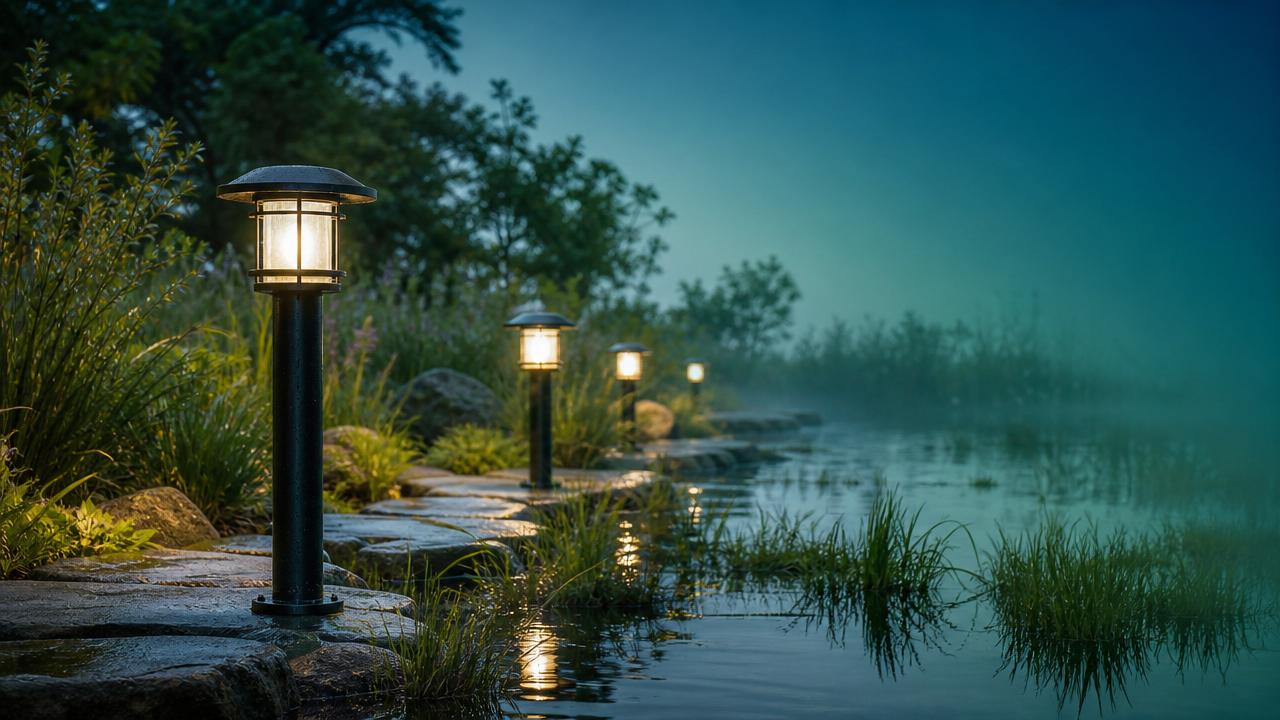
Choosing the right LED Garden&Lawn Lighting for wet landscapes is critical to project safety, durability, and long-term performance. For project managers and engineering leaders, solutions like GLL-WJ help address moisture resistance, stable operation, and easier system integration in demanding outdoor environments. This guide explores how to evaluate reliable lighting options that support efficient delivery and consistent results in large-scale landscape projects.
Why wet landscapes create higher risk for LED Garden&Lawn Lighting projects
Wet landscape zones look simple on drawings, but they are usually the most failure-prone parts of an outdoor lighting plan. Soil saturation, standing water, irrigation overspray, condensation, and unstable cable trenches can all shorten fixture life if the product selection is too generic.
For project managers, the issue is not only fixture replacement. It also affects construction sequencing, waterproof connector selection, maintenance access, safety inspections, and the long-term operating cost of the entire site. That is why LED Garden&Lawn Lighting in wet areas must be evaluated as part of a broader delivery system.
- Moisture ingress can damage drivers, LEDs, seals, and cable joints.
- Poor drainage increases corrosion risk around mounting points and underground connections.
- Frequent temperature swings may create internal condensation even when there is no visible flooding.
- Maintenance becomes more costly when fixtures are distributed across lawns, pathways, water edges, and planting zones.
What project teams often underestimate
Many teams focus first on wattage or appearance, while overlooking sealing structure, operating temperature range, cable protection, and control compatibility. In real-world delivery, these details usually determine whether the lighting system remains stable after one rainy season, not just at the handover stage.
How to evaluate GLL-WJ and similar LED Garden&Lawn Lighting options
When comparing GLL-WJ with other LED Garden&Lawn Lighting products, decision makers should use a practical evaluation framework. The goal is to reduce rework, avoid unclear specifications, and match product capability to the actual site environment.
The table below highlights the most relevant selection dimensions for wet landscapes, especially in municipal, park, residential, and mixed-use public projects.
This comparison shows that LED Garden&Lawn Lighting should not be selected by catalog image alone. GLL-WJ or equivalent solutions should be screened based on environmental fit, not just initial fixture cost. That approach is especially important for large-scale projects with tight acceptance schedules.
A practical selection checklist
- Map the wettest areas, including low points, irrigation overlap zones, and edges near ponds or drainage channels.
- Define whether the lighting is decorative, navigational, security-related, or mixed-use.
- Check if the site requires centralized control, timed dimming, or future smart upgrades.
- Confirm maintenance expectations before finalizing fixture spacing and mounting density.
Which technical specifications matter most in wet outdoor environments
For engineering teams, a specification sheet is useful only when it connects directly to site risk. In wet landscapes, the most important technical points are not isolated numbers. They are indicators of long-term reliability under moisture, temperature fluctuation, and outdoor exposure.
Key performance indicators to review
- Protection level: A higher protection level helps reduce water and dust intrusion into sensitive electrical components.
- Service life: Longer service life lowers replacement frequency across dispersed lawn and garden layouts.
- Operating temperature range: This matters when the site experiences strong seasonal change or exposed sun after rainfall.
- Luminous efficiency and light distribution: These affect both energy use and uniformity along paths, lawns, and public edges.
In some integrated landscape projects, garden and lawn lighting is also coordinated with road or smart public-space lighting. In such cases, project teams may benefit from compatible system planning with products such as Smart Street Lighting | SSL-CH, which supports smart-city style control logic, remote management, and IP67 protection for broader outdoor network consistency.
The table below connects common wet-landscape requirements with technical review points that can support procurement decisions.
For project leaders, the value of these parameters is clear: they reduce uncertainty. Better technical clarity means fewer site disputes, more accurate procurement, and stronger alignment between design intent and actual field performance.
How to balance cost, durability, and system integration
Budget pressure often pushes teams toward lower-cost fixtures, but wet landscapes punish weak products quickly. A lower purchase price can become expensive when fixture replacement, repeated sealing work, and nighttime maintenance labor are added back into the project lifecycle.
A better approach is to compare lifecycle impact rather than unit price only. This is where experienced project support becomes valuable. Lishida Smart Lighting works with contractors and project owners on large-scale outdoor lighting delivery, helping teams review product fit, control requirements, and long-term reliability from the start.
Where cost savings are real
- Reducing maintenance visits through more durable LED Garden&Lawn Lighting selection.
- Avoiding rework caused by mismatched connectors, poor trench coordination, or inadequate sealing details.
- Improving system consistency when landscape lighting must align with roads, public squares, or smart urban nodes.
- Simplifying future upgrades by choosing solutions compatible with broader control strategies.
When integrated planning matters
In parks, campuses, municipal developments, and mixed-use districts, garden lighting rarely exists alone. Path lights, lawn lights, road lights, and control systems often intersect. That is why some projects combine focused landscape products like GLL-WJ with complementary infrastructure solutions such as Smart Street Lighting | SSL-CH for consistent control architecture across larger outdoor assets.
What standards and compliance questions should procurement teams ask
Even when local requirements differ, procurement teams should still request structured documentation. For LED Garden&Lawn Lighting in wet landscapes, compliance is not only a paperwork issue. It affects acceptance, safety review, and long-term liability.
- Confirm protection level suitability for the installation environment.
- Review electrical safety and wiring compatibility for the planned voltage and control method.
- Check material suitability for outdoor exposure, especially in humid or chemically active landscapes.
- Request installation, maintenance, and replacement guidance before purchase approval.
For large public projects, these checks also support coordination between design consultants, contractors, operators, and owners. Better documentation reduces approval delays and limits disputes once the system moves from installation to operation.
FAQ: common questions about LED Garden&Lawn Lighting for wet landscapes
How do I know if GLL-WJ is suitable for a wet landscape project?
Start with the actual site condition, not the rendering. Review drainage behavior, irrigation frequency, soil condition, and maintenance access. Then compare those factors with the fixture’s sealing design, materials, operating range, and installation method. If the project includes control integration or phased expansion, include that in the review from the beginning.
Is higher protection level the only thing that matters?
No. Protection level is important, but it does not replace good material selection, reliable heat dissipation, and proper installation. A well-rated fixture can still fail if cable joints are weak, drainage is poor, or the luminaire is used in a condition it was not designed for.
What procurement mistake causes the most delays?
A common problem is approving LED Garden&Lawn Lighting before confirming site-specific installation details. This creates changes later in bracket choice, cable routing, control layout, or waterproof accessories. Early technical coordination usually saves more time than trying to correct issues during construction.
Can landscape lighting be planned together with other outdoor lighting systems?
Yes, and in large projects it often should be. Coordinating lawn, garden, road, and public-space lighting improves control logic, maintenance planning, and energy management. It also helps owners avoid fragmented systems that are difficult to expand later.
Why choose us for large-scale wet landscape lighting projects
Lishida Smart Lighting supports contractors and project owners with integrated outdoor lighting solutions for roads, public spaces, and complex urban environments. For project managers and engineering leaders, this means more than product supply. It means support in product selection, smart control coordination, project-based planning, and long-term system reliability.
With experience in large-scale projects across China, we understand the practical challenges behind outdoor delivery: specification alignment, moisture-resistant selection, installation coordination, system integration, and dependable operation after handover. Our manufacturing and engineering capabilities help simplify execution while keeping project outcomes consistent.
If you are evaluating LED Garden&Lawn Lighting for wet landscapes, contact us to discuss parameter confirmation, product selection, delivery timing, control compatibility, custom project solutions, certification-related documentation, sample support, and quotation planning for your next outdoor lighting project.
◉ MESSAGE
Blog
- What Is an LED Beam Projector Used For in Architectural and Outdoor Lighting?
- LED Beam Projector Buying Guide: Beam Angle, Power, IP Rating, and Control Options
- How to Maintain an LED Beam Projector for Stable Outdoor Performance
- What Safety and Quality Checks Matter Most for LED Beam Projector Selection?
- Is an LED Beam Projector Worth the Investment for Premium Outdoor Lighting Projects?
- Modern Street Lighting | MSL-GH Selection Guide: Wattage, Optics, Pole Height, and Spacing
- Modern Street Lighting | MSL-GH vs Conventional Streetlights: What Changes in Performance?
Message