
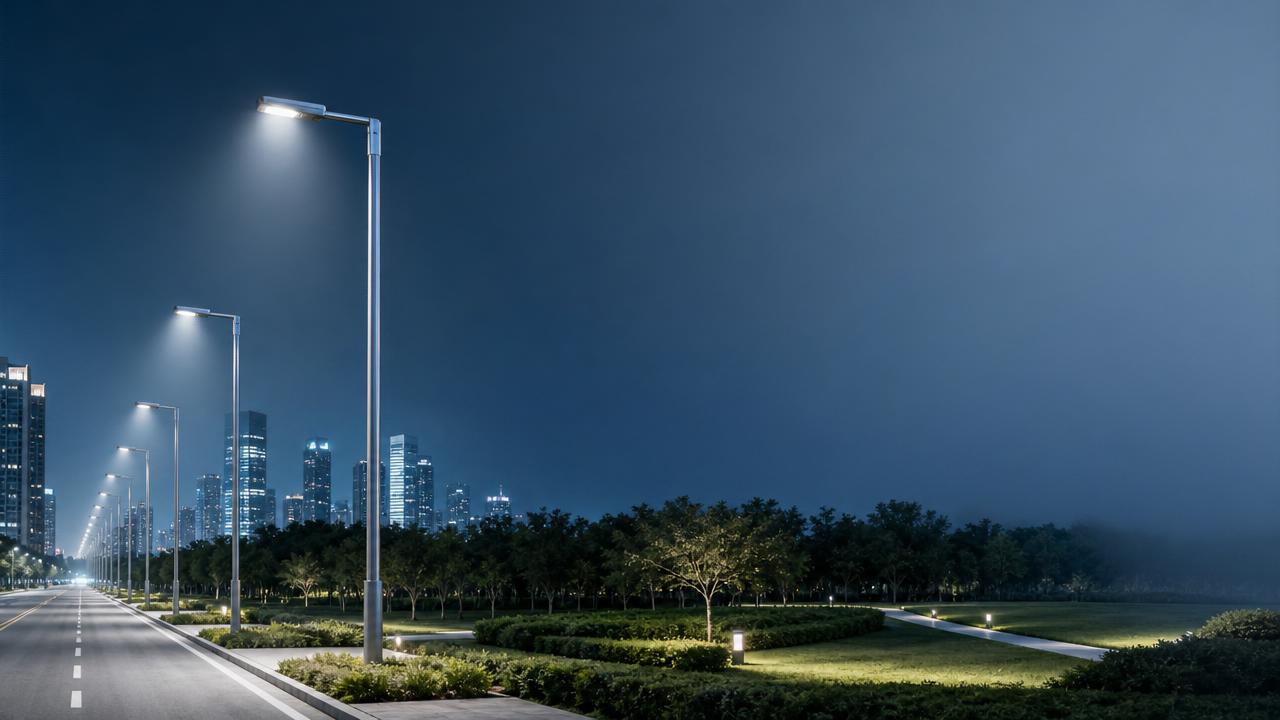
Modern Street Lighting is no longer defined by fixtures alone. With smart controls, systems like MSL-HC help decision-makers improve energy efficiency, simplify maintenance, and gain better visibility across large outdoor projects. For contractors and project owners, this shift creates measurable value in performance, reliability, and long-term project outcomes.
Why Smart Controls Matter in Modern Street Lighting Procurement
For enterprise decision-makers, outdoor lighting is now a system purchase rather than a simple hardware purchase. The real question is not only how bright the road will be, but how the network will perform over years of operation.
Modern Street Lighting projects often involve public roads, parks, industrial zones, urban corridors, and mixed-use districts. In these environments, poor visibility into operating status can create hidden costs, delayed maintenance, and unnecessary energy waste.
Smart controls address those issues by connecting luminaires, control points, and management logic. They make dimming schedules, fault alerts, asset monitoring, and operational reporting part of the lighting strategy from day one.
- They reduce manual inspection pressure across distributed sites.
- They support staged lighting based on traffic, time periods, or project zones.
- They improve budget control by linking energy use to real operating patterns.
- They help project owners make long-term decisions using actual performance data.
What Value Does Smart Control Add Beyond the Fixture?
Many buyers still compare outdoor lighting mainly by pole design, lumen output, or unit cost. Those factors matter, but they do not show how the installation will behave across years of service in a large-scale project.
A smart control layer changes the value equation. Instead of reacting after failures occur, operators can work with planned schedules, zone-based adjustments, and maintenance signals that reduce disruption and improve service continuity.
Core business benefits for project owners
- Lower operating expenditure through dimming and time-based control.
- Better maintenance planning through visible fault information.
- Improved consistency across roads, intersections, and public spaces.
- Stronger decision support for future expansion or retrofit phases.
Why this is especially important in large projects
The larger the project, the more expensive field coordination becomes. This is where integrated support matters. Lishida Smart Lighting works with contractors and project owners on product selection, smart control systems, and project-based solutions designed for complex outdoor environments.
That experience matters because large projects rarely fail on specification sheets alone. They fail when delivery, compatibility, durability, or system integration are not aligned early enough.
Traditional vs Smart Modern Street Lighting: What Changes in Practice?
The following comparison shows why many urban and infrastructure buyers now evaluate Modern Street Lighting on lifecycle performance instead of fixture cost alone.
This shift is why procurement teams increasingly treat smart controls as part of infrastructure resilience. The system becomes easier to manage, not just easier to install.
Which Technical Details Should Decision-Makers Review First?
When evaluating a solution, buyers should look at both lighting performance and structural durability. In outdoor lighting, these two sides affect safety, maintenance, and return on investment equally.
One example is Modern Street Lighting|MSL-HC, which combines a street-lighting application focus with smart-ready project value. The configuration includes an 8-14 m pole height range, 4-8 mm pole thickness, and Q235 Steel equivalent to ASTM A36 / EN S235JR.
For lighting performance, commonly requested specifications include 150-250W main light power, 3000K or 4000K color temperature, Ra≥70, luminous efficacy of at least 140 lm/W, and protection at IP67 level. For decision-makers, these numbers matter because they influence visibility, durability, and maintenance frequency.
The table below highlights practical parameters that should be checked before approval.
For large outdoor projects, a balanced specification usually outperforms an over-optimized single metric. High efficacy matters, but so do structural reliability, integration compatibility, and installation practicality.
How to Choose the Right Modern Street Lighting System for Different Scenarios
Roads and transport corridors
These projects typically prioritize consistent illumination, wind resistance, stable power performance, and easier maintenance planning. Smart scheduling can reduce energy use during lower-traffic hours without losing operational control.
Public spaces and urban districts
In plazas, pedestrian areas, and mixed-use zones, aesthetics and adaptability become more important. Buyers often need modern designs, coordinated color temperature choices, and tailored configurations that align with architectural intent.
Industrial or complex urban environments
These areas demand stronger integration discipline. Lighting must work with installation schedules, cable routing, access limitations, and long-term management requirements. Smart controls become especially useful when site teams cannot afford frequent manual inspection.
- Define the operating environment, including corrosion exposure, wind condition, and road hierarchy.
- Match power range and pole height to project geometry rather than using one standard for every zone.
- Confirm whether central management, dimming logic, and fault visibility are required from the start.
- Review whether the supplier can support integration, delivery planning, and project coordination.
What Procurement Risks Do Buyers Often Miss?
In Modern Street Lighting projects, the biggest risks are often not obvious during early quotation review. They appear later during installation, system commissioning, or the first maintenance cycle.
- Choosing by wattage alone without reviewing efficacy, beam suitability, or operating strategy.
- Ignoring pole durability, coating method, or wind resistance in challenging outdoor conditions.
- Treating smart controls as an optional afterthought instead of part of system design.
- Overlooking integration support, which can delay deployment in complex project environments.
This is where a project-oriented supplier adds value. Lishida Smart Lighting supports contractors and project owners with integrated products, smart control systems, and engineering-backed coordination that helps simplify delivery across large-scale outdoor lighting work.
FAQ: What Do Enterprise Buyers Usually Ask?
How should we evaluate cost in smart street lighting?
Do not compare only the initial fixture price. Review expected energy savings, maintenance labor reduction, replacement intervals, and the management value of remote visibility. Total project cost over time is usually the more useful benchmark.
Is smart control suitable only for large smart city projects?
No. It is especially valuable in large or multi-zone projects, but it can also support smaller installations where maintenance access is difficult or operating schedules vary by time and location.
What should we check for outdoor durability?
Focus on material grade, surface treatment, wind resistance, enclosure protection, and expected lifespan. For example, galvanized and powder-coated steel structures, IP67 protection, and robust wind resistance are practical indicators for long-term outdoor use.
Can configurations be adjusted for different project requirements?
Yes. Many projects need tailored configurations based on pole height, road width, power demand, aesthetic expectations, and control logic. That is why early technical confirmation is important before procurement is finalized.
Why Choose Us for Modern Street Lighting Projects?
Enterprise buyers need more than a product catalog. They need a partner that understands delivery pressure, technical coordination, and long-term system reliability in outdoor lighting. Lishida Smart Lighting supports that need with manufacturing capability, engineering expertise, and practical project experience across large-scale applications in China.
If you are reviewing Modern Street Lighting|MSL-HC or comparing smart-controlled street lighting options, you can discuss project parameters, product selection, delivery schedules, smart control integration, configuration customization, certification-related requirements, sample support, and quotation planning based on your actual site conditions.
For contractors and project owners, the right Modern Street Lighting solution is the one that performs reliably after installation, not just the one that looks acceptable on paper. A structured technical review now can prevent avoidable cost and coordination issues later.
◉ MESSAGE
Blog
- What Is an LED Beam Projector Used For in Architectural and Outdoor Lighting?
- LED Beam Projector Buying Guide: Beam Angle, Power, IP Rating, and Control Options
- How to Maintain an LED Beam Projector for Stable Outdoor Performance
- What Safety and Quality Checks Matter Most for LED Beam Projector Selection?
- Is an LED Beam Projector Worth the Investment for Premium Outdoor Lighting Projects?
- Modern Street Lighting | MSL-GH Selection Guide: Wattage, Optics, Pole Height, and Spacing
- Modern Street Lighting | MSL-GH vs Conventional Streetlights: What Changes in Performance?
Message