
How to estimate maintenance savings before switching to LED street light
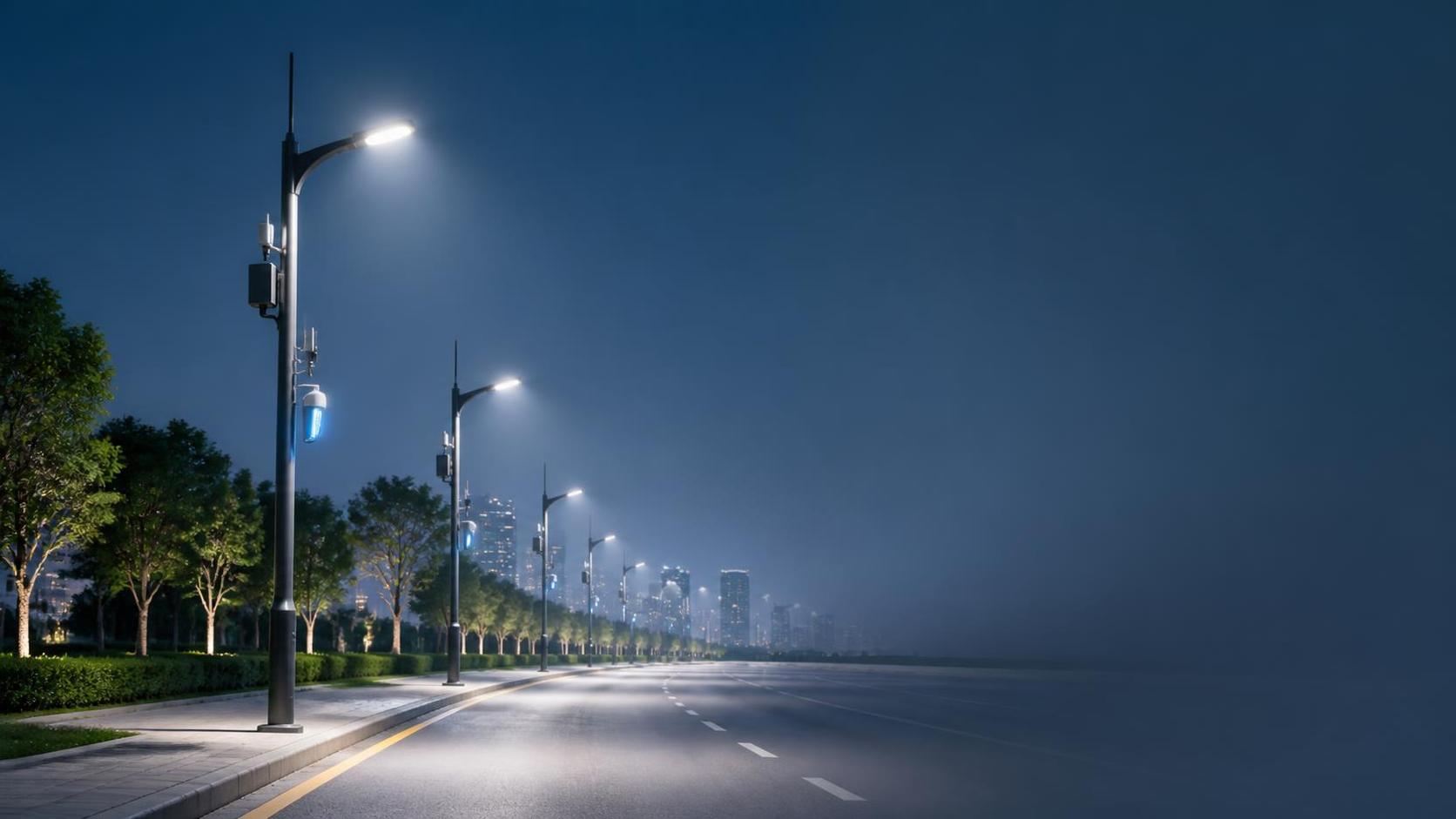
When a street lighting upgrade reaches the finance desk, the conversation often starts with capital cost. That is understandable. LED street light projects can involve a large upfront commitment, especially across roads, parks, municipal districts, and mixed urban spaces. But in practice, approval decisions become much clearer when maintenance savings are estimated with the same discipline as energy savings.
For finance approvers, this matters because maintenance is not a side expense. It is a long-tail operational cost that affects annual budgets, contractor callouts, service continuity, and even public complaints. A proper estimate should show how often fixtures fail, how expensive each intervention is, and how control systems change the cost of responding to faults. Once those elements are made visible, the economics of an upgrade look very different.
Why maintenance savings are often underestimated
Many procurement reviews still compare conventional lighting and LED street light options mainly on wattage and payback from electricity reduction. That approach leaves money on the table. Traditional street lighting systems usually generate recurring maintenance activity: lamp replacement cycles, ballast or driver failures, unplanned outages, nighttime inspections, traffic control arrangements, and repeated labor deployment.
Those costs are rarely concentrated in one budget line. Some sit under operations, some under public works, some under contractor service agreements, and some show up as indirect costs caused by delays or complaints. Because the expense is fragmented, it can appear smaller than it really is.
A better question is not simply, “How much does an LED fixture cost?” It is, “What maintenance events are likely to disappear, become less frequent, or become easier to manage after the upgrade?”
Start with the maintenance baseline you already have
Before estimating future savings, build a realistic picture of current maintenance activity. For a large-scale outdoor lighting project, finance teams should ask operations or contractors for the following information from the last 12 to 24 months:
- Number of lamp failures and replacements
- Frequency of driver, ballast, or control gear replacement
- Labor hours per intervention
- Cost of access equipment, vehicles, or lifting platforms
- Traffic management or road closure costs where applicable
- Patrol or inspection rounds used to identify outages
- Emergency callout costs for critical locations
- Average time from outage occurrence to repair completion
This baseline does two things. First, it prevents the savings estimate from becoming theoretical. Second, it reveals where maintenance cost really comes from. In many projects, the replacement part itself is not the main burden. Labor, access, and coordination often outweigh the hardware cost.
Focus on five categories of maintenance savings
For finance decision-makers, the cleanest way to model maintenance savings is by category rather than by a single lump-sum assumption.
1. Fewer routine replacements
The most obvious saving comes from longer service life. If existing light sources require regular lamp replacement while LED street light fixtures are designed for much longer operating hours, planned maintenance intervals can be extended significantly. The relevant question is not the advertised lifetime alone, but how that lifetime aligns with actual operating schedules in your project.
If lighting runs 4,000 to 4,500 hours per year, a fixture rated for 50,000 hours changes replacement timing materially. That does not mean zero maintenance, but it usually means fewer scheduled interventions over the asset cycle.
2. Lower failure-related labor cost
Every failure event triggers labor. A technician may need to travel, diagnose the issue, isolate the cause, arrange access, and return with parts. In dispersed municipal or roadway networks, those small visits accumulate quickly. Estimating savings here means calculating how many interventions can reasonably be avoided each year and multiplying that by the true cost per visit, not just the wage rate.
3. Reduced outage detection cost
Conventional systems often rely on manual reporting or periodic inspection. That sounds manageable until the network is large. Staff time spent searching for faults, verifying complaints, or checking remote roads is part of maintenance overhead. Smart monitoring can reduce this hidden cost by identifying outages or abnormal behavior earlier and more precisely.
4. Less collateral disruption
Some maintenance events create extra expense beyond the repair itself. A busy road may require lane management. A public square may need work scheduled at low-traffic hours. Sensitive urban areas may demand stricter coordination. Even when these are not recorded as lighting costs, they are still real project costs. LED upgrades can reduce the frequency of these disruptions if reliability improves.
5. Better asset planning and fewer reactive repairs
Reactive maintenance is expensive because it is unpredictable. When a system provides better visibility into operating status, teams can plan service visits more efficiently, combine work orders, and avoid repeated dispatches. Over time, that change improves maintenance productivity even if the component cost remains similar.
Do not evaluate fixture life in isolation
A common mistake is to use fixture lifetime as the only maintenance input. In reality, maintenance savings depend on system-level reliability. Finance teams should review not just the LED source, but also driver quality, ingress protection, temperature tolerance, and environmental suitability.
Outdoor conditions are unforgiving. Heat, moisture, dust, vibration, and wind exposure can shorten effective service life if products are mismatched to the application. For roads, public spaces, and urban infrastructure, technical details such as IP rating, operating temperature range, and structural durability directly affect maintenance cost later.
That is where product and system selection become part of financial risk control. For example, a solution such as Smart Street Lighting | SSL-CH reflects the kind of specification finance reviewers should look for in large outdoor projects: IP67 protection, service life of at least 50,000 hours, operation from -40℃ to +70℃, and real-time alert and remote control capabilities. Those features are not just technical selling points; they shape how often a maintenance team needs to be sent into the field.
How smart controls change the maintenance equation
If your estimate only compares old lamps to new luminaires, you may still be understating savings. Smart control systems can materially influence maintenance performance. Remote monitoring allows faults to be identified faster, grouped by location, and diagnosed before crews are dispatched. Real-time alerts reduce dependence on citizen complaints or visual patrols. Remote control can also help verify whether the issue is fixture-related, network-related, or power-related.
For finance stakeholders, this means maintenance savings should include process savings, not just hardware savings. The value lies in fewer unnecessary site visits, faster response prioritization, and less downtime in critical zones.
In complex city projects, integrated support is especially important. Lishida Smart Lighting works with contractors and project owners on large-scale outdoor lighting delivery, where product choice, control integration, and long-term reliability all affect final operating cost. That kind of project-based view is useful when estimating maintenance outcomes because isolated fixture pricing rarely tells the whole story.
A practical estimation method for procurement review
If you need a usable internal model, keep it simple and defensible. Estimate annual maintenance savings with this logic:
- Current annual maintenance events × current average cost per event
- Minus projected annual maintenance events after upgrade × projected average cost per event
- Plus annual savings from reduced patrols, inspections, and fault detection effort
- Plus avoided disruption-related costs where relevant
Then test the assumptions. Use a conservative case, an expected case, and a risk case. This is often more credible for approval than presenting one optimistic figure. If the project includes smart poles or connected controls, include a separate line showing how monitoring and remote management reduce field activity.
For large procurements, it is also wise to ask suppliers how they support fault diagnostics, parts consistency, and system integration over time. A technically strong fixture without stable project support can still create maintenance inefficiencies later.
Questions finance teams should ask before sign-off
Before approving an LED street light upgrade, a finance reviewer should be comfortable asking a few direct questions:
- What current maintenance costs are proven by records, and which are only assumed?
- How many site visits are expected to be avoided each year?
- Are smart monitoring functions included, optional, or absent?
- What environmental conditions could affect actual service life?
- Does the specification support long-term outdoor reliability, not just initial performance?
- Who is responsible for system integration if controls, poles, and luminaires are combined?
These questions help separate a low-purchase-price proposal from a genuinely lower-cost asset.
The real goal is budget predictability
In the end, maintenance savings are not only about spending less. They are also about reducing uncertainty. Finance teams prefer lighting assets that create fewer surprise interventions, fewer urgent repairs, and fewer recurring service claims. That is why the best LED street light evaluation goes beyond energy reduction and looks carefully at maintenance patterns over the life of the project.
When estimated properly, maintenance savings give procurement decisions a firmer foundation. They turn an upgrade from a product purchase into a long-term cost control strategy—something every finance approver can understand and defend.
◉ MESSAGE
Blog
- LED Street Luminaire Specifications That Matter for Roadway Projects
- What to Evaluate When Selecting a Smart Street Lamp Manufacturer
- How to Prepare a Compliant Solar Lighting Bid for Public Infrastructure Projects
- LED Street Lighting Solutions for Urban and Municipal Roads
- LED Street Light Installation Guide for Road Projects
- LED Street Light Lifespan: How Long Do LED Road Lights Last?
- LED Street Light IP Rating: What Should Buyers Choose?
Message