
What to Evaluate When Selecting a Smart Street Lamp Manufacturer
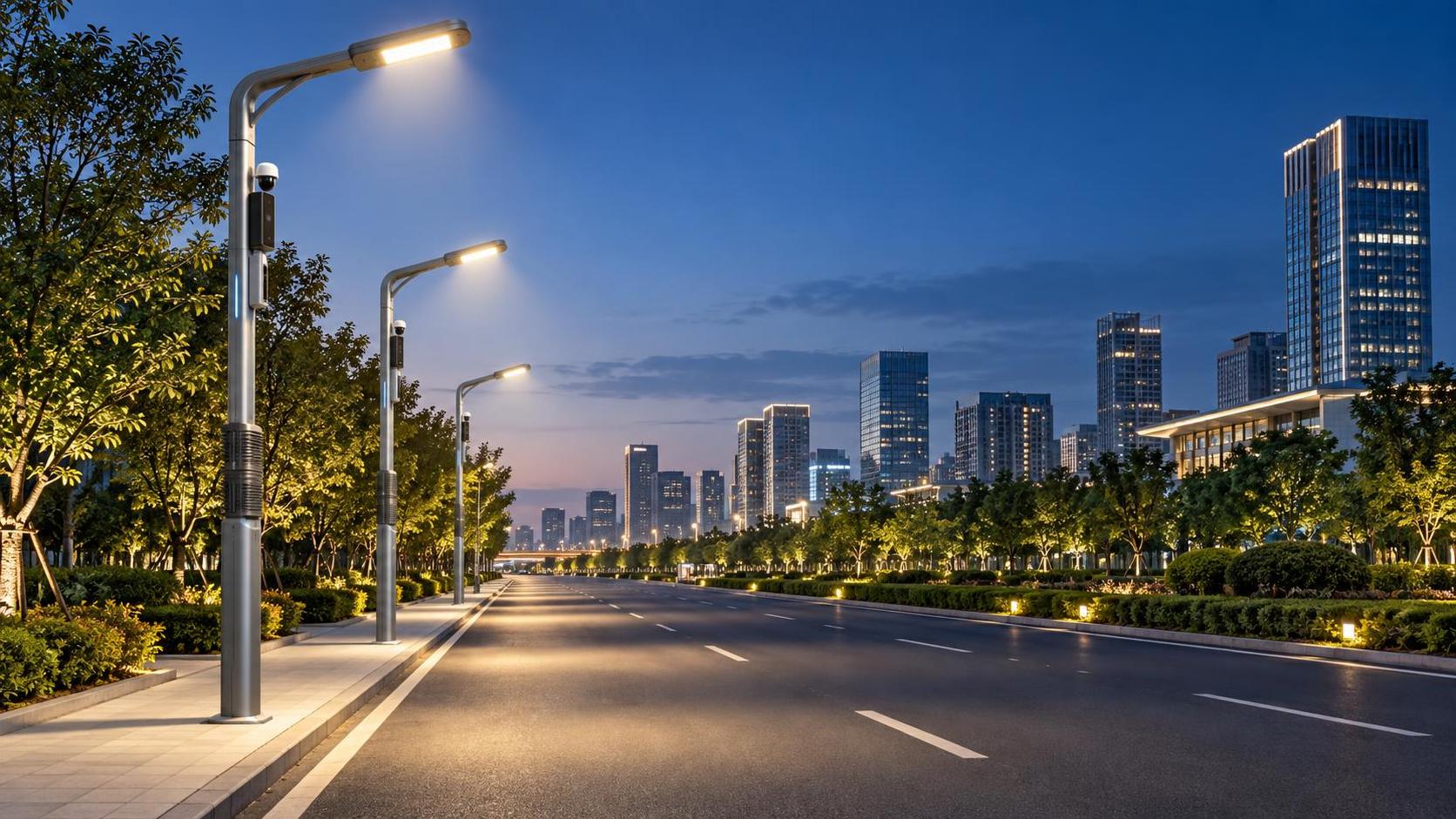
What to Evaluate When Selecting a Smart Street Lamp Manufacturer
Selecting a smart street lamp manufacturer is not simply a matter of comparing wattage, unit price, and delivery dates. For roads, parks, industrial corridors, and urban renewal projects, the lighting system must perform as a coordinated asset for years. A fixture that looks competitive on a quotation can become expensive when its control platform is difficult to commission, replacement parts are unavailable, or the optical distribution does not match the actual road geometry.
Procurement teams therefore need to assess the manufacturer behind the product as carefully as the product itself. The practical question is not “Can this supplier make a smart lamp?” Nearly every supplier will say yes. The better question is whether that supplier can support the particular project from design review through installation, system handover, and later maintenance.
Start with the Project Environment, Not the Catalogue
A reliable smart street lamp manufacturer should ask about the site before recommending a standard model. Road width, mounting height, pole spacing, traffic mix, nearby buildings, coastal exposure, ambient temperature, and local power conditions all affect the final configuration. The correct luminaire for a residential street may be a poor choice for a freight route, a port area, or a mountain road.
This is where procurement specifications can become misleading. A requirement such as “100W LED street light with remote control” leaves too much open to interpretation. It does not define the required illuminance, uniformity, glare control, dimming schedule, ingress protection needs, or communication method. Ask shortlisted suppliers to respond to the actual application rather than merely confirm a broad technical description.
For large projects, it is worth reviewing a proposed lighting layout and system architecture before placing an order. This can reveal issues that are difficult to correct later: unsuitable beam angles, excessive pole loading, weak communication coverage, or a control gateway placed where maintenance access is poor.
Assess Manufacturing Capability Beyond Factory Photos
Factory images and a long product list do not prove consistent production capability. Procurement should look for evidence of how the supplier controls the parts that most influence reliability: LED source selection, drivers, heat dissipation, surge protection, housings, lenses, seals, controllers, and wiring assemblies. A manufacturer does not need to produce every component internally, but it should be able to explain how key components are qualified and how substitutions are controlled.
Ask practical questions. Can the supplier maintain the same bill of materials through a phased project? What happens if an approved driver or communication module becomes unavailable? Are serial numbers or batch records available for traceability? How are incoming components inspected? The answers often tell you more than a polished brochure.
Capacity also matters in a different way: engineering capacity. A supplier may be able to ship thousands of luminaires but still struggle with pole drawings, custom brackets, control-node addressing, or packaging for mixed project deliveries. Companies supporting roads and complex public-space projects need coordination between production, engineering, and project teams, not just a fast assembly line.
Verify Lighting Performance in the Conditions That Matter
Smart control cannot compensate for poor photometric design. Before comparing offers, confirm the lumen output, efficacy, light distribution, colour temperature, colour rendering requirement, and expected depreciation assumptions used in the supplier’s proposal. For road lighting, the beam pattern should be selected around lane width, pole arrangement, mounting height, and overhang. Higher output alone may create spill light or uncomfortable glare rather than better visibility.
Thermal management deserves equal attention. Outdoor luminaires spend years exposed to heat, rain, dust, vibration, and voltage disturbances. A fixture may perform well during a short demonstration but lose output or suffer early driver failures if heat cannot be dissipated properly in the installed environment. This risk is especially relevant in enclosed housings, high-temperature regions, and sites with limited nighttime cooling.
Request the supporting technical documents needed for the project and check that they correspond to the offered configuration. If the project requires compliance with a local standard or approval process, confirm the exact requirement early. It is unwise to assume that documentation for one wattage, optic, or market version automatically applies to another.
Treat the Control System as a Core Procurement Item
The “smart” element is often where otherwise capable lighting suppliers diverge. A connected street-lighting system may include individual controllers, gateways, software, communication networks, sensors, and a central management platform. These components must work together in the field, including when connectivity is intermittent or maintenance teams need to replace a failed unit.
Ask whether the proposed platform supports the control method required by the project, how devices are commissioned, and whether the owner can retain operational access after handover. Clarify alarm functions, energy monitoring, group dimming, scheduling, asset identification, user permissions, and data export. A system that is easy to demonstrate can still be cumbersome for a municipal maintenance team if every change depends on the original supplier.
Compatibility should be discussed in plain terms. If the project includes third-party luminaires, existing cabinets, sensors, or a city management platform, obtain a written explanation of integration boundaries. “Compatible” can mean anything from basic on/off switching to full monitoring and fault reporting. Those are very different outcomes.
Evaluate Off-Grid and Hybrid Solutions Differently
Remote roads, island locations, mining areas, and sites where trenching is difficult require a different evaluation process. In these applications, the lamp is part of a power-generation and energy-storage system. Procurement should review solar resource, wind conditions, seasonal weather patterns, daily operating hours, battery autonomy, pole structure, and maintenance access as one package.
For example, a hybrid solution such as Wind-Solar Hybrid Street Lighting | SHL-007 combines LED lighting with solar panels, a wind turbine, lithium battery storage, and an MPPT hybrid controller. Its available LED range of 30W to 150W, solar-panel range of 100W to 300W, and wind-turbine range of 200W to 600W show why configuration must follow site conditions. The same setup should not be copied from a windy coastal road to an inland location with low wind and frequent shade.
Claims about no wiring or all-weather operation should always lead to more questions: What load profile is assumed? How is energy prioritized during prolonged low-sun periods? What is the battery replacement procedure? Does the pole and foundation account for turbine-related loads? A credible supplier will discuss the limitations as well as the advantages.
Look Closely at Quality Assurance and Acceptance Procedures
Quality assurance is most useful when it is visible in the project process. Rather than accepting a general statement that products are tested, define inspection points: sample approval, pre-production confirmation, in-process checks, functional testing, packaging inspection, and final shipment documentation. For smart luminaires, testing should include not only illumination but also controller response, communications, dimming behavior, and fault reporting where applicable.
A pre-shipment sample is particularly valuable for projects with custom finishes, brackets, poles, control modules, or mixed wattages. It allows the installer and owner to check physical interfaces before a large delivery reaches site. The cost of resolving a mismatch at this stage is usually far lower than modifying hundreds of installed units.
Measure Long-Term Support, Not Just Warranty Language
Warranty terms matter, but the operating reality matters more. Ask how faults are diagnosed, who supplies replacement drivers or controllers, how quickly technical questions are answered, and whether spare parts can be ordered after the initial project closes. Smart lighting maintenance often involves software settings and network diagnosis as well as replacing hardware.
Manufacturers with experience in large-scale outdoor projects tend to recognize the handover challenges: installers need clear wiring and commissioning guidance; owners need drawings, asset records, and operating instructions; maintenance teams need a workable route for identifying failures. Lishida Smart Lighting’s project-focused approach, combining lighting products, smart control systems, and engineering support, reflects the level of coordination buyers should expect when evaluating a long-term partner.
The strongest selection decision usually comes from comparing complete project risk, not the lowest fixture price. A manufacturer that can document the design basis, control system, production consistency, acceptance process, and after-sales responsibilities gives procurement teams a clearer path to reliable outdoor lighting after the installation crew has left the site.
◉ MESSAGE
Blog
- LED Street Luminaire Specifications That Matter for Roadway Projects
- What to Evaluate When Selecting a Smart Street Lamp Manufacturer
- How to Prepare a Compliant Solar Lighting Bid for Public Infrastructure Projects
- LED Street Lighting Solutions for Urban and Municipal Roads
- LED Street Light Installation Guide for Road Projects
- LED Street Light Lifespan: How Long Do LED Road Lights Last?
- LED Street Light IP Rating: What Should Buyers Choose?
Message