
When dimming makes sense for an LED street light retrofit project
For many retrofit teams, dimming sounds like an automatic upgrade once an LED street light project is on the table. In practice, that assumption needs more discipline. Dimming is valuable when it matches actual road use, operating hours, maintenance capacity, and control expectations. It becomes less useful when it is added simply because the technology is available, without a clear operating logic behind it.
For project managers and delivery teams, the real question is not whether dimming is modern. It is whether dimming will improve project performance enough to justify the added system requirements. That usually means looking beyond fixture efficiency and asking how the road is used at different times, how the owner wants to manage the network, and how much technical complexity the maintenance side can realistically absorb.
Where dimming creates real value
Dimming makes the most sense when lighting demand changes meaningfully over time. This is common on secondary roads, industrial park roads, municipal streets, public space connectors, and mixed-use urban areas where traffic drops late at night but lighting still needs to remain safe and consistent. In these cases, running full output all night often wastes energy and shortens the practical value of the system.
A well-planned dimming profile can reduce operating hours at maximum output, support energy targets, and create a more flexible lighting strategy for weekdays, weekends, seasonal periods, or special event conditions. It can also help owners respond to rising electricity costs without immediately changing the physical infrastructure again.
For large-scale outdoor projects, dimming may also support asset life in an indirect way. Lower thermal stress during reduced-output periods can help the system operate under less strain, although the result still depends on driver quality, thermal design, ambient conditions, and control compatibility. It should not be presented as a blanket guarantee of longer fixture life, but in the right design context it is a practical benefit.
Where dimming is often overestimated
Not every road or public lighting project benefits equally. On main arterial roads, high-risk traffic corridors, transport hubs, or locations with strict visibility requirements, the margin for reducing light output may be limited. If the lighting class, local specification, or safety expectation requires a stable nighttime lighting level, the dimming window may be narrow enough that the savings are less significant than expected.
Another common mistake is to treat dimming as a substitute for good lighting design. If the original layout has spacing issues, poor uniformity, or the wrong optics for the carriageway, adding controls will not solve the underlying problem. A retrofit should first confirm that pole arrangement, mounting height, wattage range, beam distribution, and visual comfort all support the application. Dimming only adds value after the base design is sound.
There is also a tendency to assume that any dimming-enabled LED street light will deliver a smooth project outcome. That is rarely true unless the control method, driver interface, surge environment, and commissioning process are aligned from the start. In retrofit work, the hidden risks often sit in integration rather than in the luminaire itself.
The decision should start with operating logic, not product features
Before selecting dimmable fixtures or smart controls, project teams should define how the lighting is actually expected to operate. That discussion is more important than the dimming percentage itself.
- What are the traffic and pedestrian patterns across the night?
- Are there specific time windows where reduced output is acceptable?
- Will dimming be based on a fixed schedule, centralized control, or adaptive inputs?
- Who will manage the control strategy after handover?
- How quickly can faults in the control layer be diagnosed on site?
If those questions are unanswered, dimming can easily become a specification item with no operational discipline behind it. The result is often one of two poor outcomes: the system is never properly used, or it is used in a way that causes complaints about visibility, inconsistency, or maintenance burden.
Three retrofit scenarios where dimming is usually justified
1. Roads with long nightly operating hours but variable demand
If the lights run from dusk to dawn and the late-night traffic load drops substantially, a scheduled dimming strategy is usually worth evaluating. This is one of the cleanest use cases because it does not require advanced sensing to produce a practical result. The energy case is easier to model, the control logic is simpler, and the owner can still maintain predictable lighting behavior.
2. Multi-zone municipal projects
In district-scale retrofits covering roads, side streets, public squares, and access roads, dimming allows different zones to operate according to their actual use rather than forcing one lighting profile across the whole network. This is especially relevant when public safety, budget pressure, and aesthetic expectations all need to be balanced in the same project.
3. Projects already planning a control layer
If the owner is already investing in monitoring, fault reporting, or centralized scheduling, dimming becomes more rational because the control foundation is already part of the project scope. In that case, dimming is not an isolated add-on. It is one function within a broader operating system.
What project teams should verify before committing
Dimming should be assessed as part of delivery risk, not only as an energy feature. A retrofit team should confirm four things early.
This is where many retrofit decisions become clearer. If the owner wants dimming but has no interest in managing a control platform, a simple scheduled solution may be appropriate. If the project expects adaptive behavior across many zones, then commissioning, training, and after-sales support become much more important than the dimming claim itself.
Hardware still matters more than the dimming narrative
Even in a control-led retrofit, the fixture and pole system still carry the long-term project outcome. For street applications, teams should keep attention on ingress protection, thermal reliability, optical consistency, wind resistance, corrosion protection, and service life expectations. A dimmable system installed in a demanding outdoor environment still fails if the physical platform is weak.
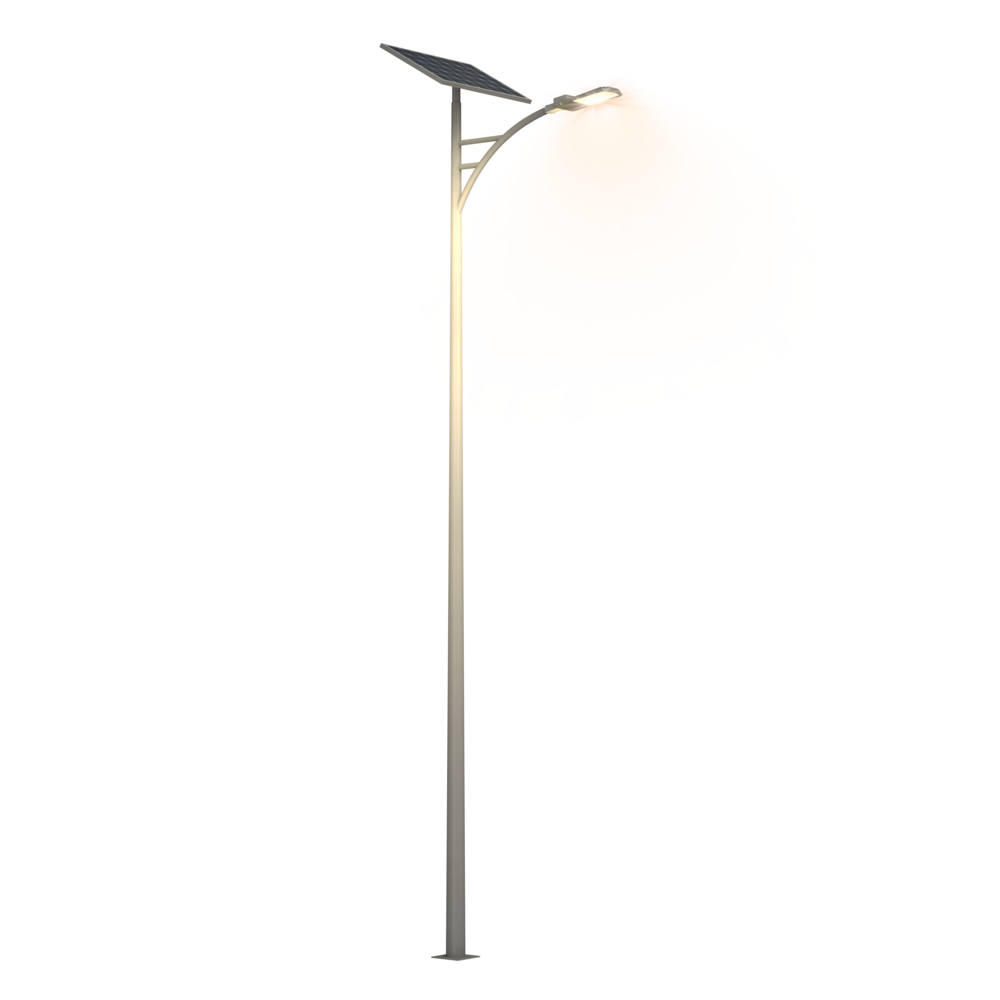
For example, a road lighting solution such as Modern Street Lighting|MSL-XY can make sense as a reference point in projects that need both structural durability and control flexibility. Its typical configuration range for street lighting, including 150-250W power options, IP67 protection, hot-dip galvanized plus powder-coated finish, and pole heights around 8-14 m, reflects the kind of baseline project data teams should compare during retrofit evaluation. The key point is not the model name. It is that dimming should sit on top of a reliable outdoor lighting platform, not compensate for a marginal one.
The lowest-risk dimming strategy is often the best one
In retrofit work, simpler usually performs better over time. A fixed multi-stage dimming schedule may deliver most of the practical value without creating a complicated field environment. By contrast, highly granular adaptive schemes can look attractive in specifications but become harder to commission, troubleshoot, and maintain across large installations.
That does not mean advanced controls are a bad choice. It means the control architecture should match the owner’s operating maturity. A project with strong engineering oversight and long-term digital asset management can justify more sophistication. A project focused on reliable turnover and low intervention may be better served by a straightforward dimming plan with limited variables.
How to judge whether dimming belongs in your retrofit scope
A useful internal test is to ask whether dimming improves at least two of the following without materially weakening the rest of the project: energy performance, operational flexibility, maintenance visibility, or lifecycle value. If the answer is yes, dimming deserves serious consideration. If the answer depends on optimistic assumptions about system use, software management, or future behavior that no one has committed to, it should be treated cautiously.
For project managers, this is usually the dividing line. Dimming is not inherently necessary in every LED street light retrofit, and it is not inherently risky either. It becomes a good decision when the road profile, control strategy, equipment quality, and handover plan are all aligned. That is what turns dimming from a feature on paper into a workable project solution in the field.
◉ MESSAGE
Blog
- LED Street Luminaire Specifications That Matter for Roadway Projects
- What to Evaluate When Selecting a Smart Street Lamp Manufacturer
- How to Prepare a Compliant Solar Lighting Bid for Public Infrastructure Projects
- LED Street Lighting Solutions for Urban and Municipal Roads
- LED Street Light Installation Guide for Road Projects
- LED Street Light Lifespan: How Long Do LED Road Lights Last?
- LED Street Light IP Rating: What Should Buyers Choose?
Message