
LED Street Light Installation Guide for Road Projects
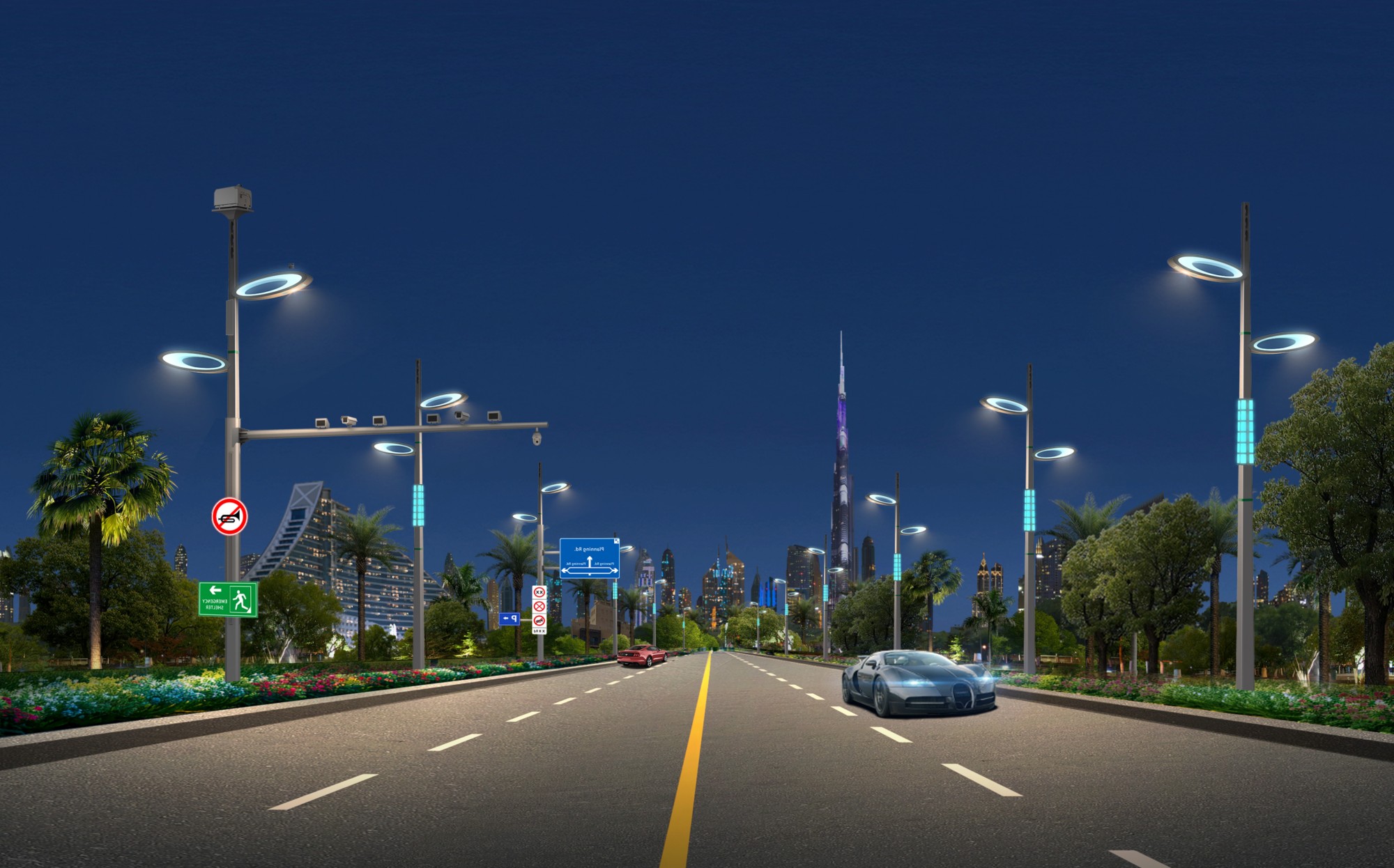
A well-planned LED Street Light Installation Guide is essential for road projects that demand safety, efficiency, and long-term performance. For contractors and project owners, successful installation goes beyond fixture placement. It depends on correct design inputs, reliable products, smart control compatibility, and disciplined execution from foundation work to commissioning.
For most road projects, the biggest installation risks are not the luminaires themselves. Problems usually come from poor pole layout, weak civil coordination, incorrect wiring details, inconsistent component quality, and limited attention to long-term maintenance. A practical installation strategy reduces these issues early and improves project delivery.
What Is the Core Goal of LED Street Light Installation for Road Projects?
The core goal is to deliver safe, uniform, and reliable road lighting that meets project standards while controlling installation time, maintenance effort, and lifecycle cost. For contractors, this means fewer delays and smoother site coordination. For project owners, it means dependable performance after handover.
An effective LED Street Light Installation Guide should therefore focus on more than assembly steps. It should help teams make better decisions on lighting layout, pole and foundation selection, cable routing, protection level, smart control integration, and future serviceability under real road conditions.
What Should Be Confirmed Before Installation Starts?
Pre-installation planning is where many road lighting projects either gain efficiency or create avoidable rework. Before materials arrive on site, teams should confirm road classification, lane width, pole spacing, mounting height, arm outreach, target illuminance, and uniformity requirements based on the relevant project standard.
It is equally important to verify underground utilities, foundation locations, soil conditions, wind load requirements, and access for lifting equipment. If these checks are rushed, even high-quality fixtures can end up poorly positioned, delayed by civil conflicts, or exposed to unnecessary structural risk.
Project teams should also review the full bill of materials together. This includes luminaires, poles, brackets, anchor bolts, cables, junction boxes, surge protection devices, controllers, and any smart lighting communication components. Installation errors often begin when one element is substituted without checking system compatibility.
How Do You Choose the Right Lighting Configuration?
Road projects rarely succeed with a one-size-fits-all approach. The correct LED street light configuration depends on traffic speed, road width, pedestrian activity, intersection density, and local environmental conditions. A main arterial road and a secondary access road may require very different optics and power levels.
In practical terms, contractors and owners should assess lumen output, luminous efficacy, beam distribution, color temperature, ingress protection, and operating temperature range before approving a product. These parameters affect visibility, energy use, weather resistance, and maintenance frequency across the whole service life.
For areas where grid extension is difficult or trenching costs are high, an off-grid option can also make financial sense. In such cases, Solar Street Lighting | SL-004 can fit remote or infrastructure-constrained road sections, especially where fast installation and low maintenance are priorities.
Its configuration supports off-grid lighting with no wiring and no trenching, which can reduce disruption during project execution. With power options from 30W to 100W, efficacy of at least 140 lm/W, IP65 protection, and LiFePO4 battery support, it is more relevant for selected project scenarios than for every road type.
What Are the Most Important Steps During On-Site Installation?
Once planning is complete, installation quality depends on sequence control. Foundation setting must match design coordinates and vertical tolerance. Anchor bolts need accurate positioning, and concrete curing time should not be shortened simply to accelerate pole erection, because this creates long-term structural risk.
When poles are installed, teams should check plumb alignment, bracket orientation, and tightening torque. Luminaire mounting angles must match the lighting design. Small angle deviations can produce poor uniformity, glare, or dark zones, especially on wider roads or at crossings where visibility is critical.
Electrical work should be treated with the same discipline as structural work. Cable terminations must be sealed correctly, grounding must be continuous, and surge protection should be installed according to system design. In road environments, moisture ingress and voltage surges are common sources of early failure.
If the project includes dimming or smart controls, each node, controller, or communication gateway should be installed and labeled consistently. Smart systems only deliver value when physical installation and digital commissioning are coordinated. Poor labeling and incomplete addressing can delay testing and complicate later maintenance.
How Can Smart Controls Improve Project Results?
For many project owners, the question is not whether LED lighting saves energy, but whether the installed system can be managed efficiently over time. Smart control capability improves that value by allowing dimming schedules, fault monitoring, energy reporting, and better operational visibility across the road network.
From a project execution perspective, smart lighting also changes installation requirements. Teams must plan controller placement, communication architecture, and commissioning procedures before site work begins. Retrofitting controls later is usually more expensive and more disruptive than integrating them from the start.
Lishida Smart Lighting supports this integrated approach by combining lighting products, smart control systems, and project-based engineering support. That matters in large-scale road projects, where equipment supply alone is rarely enough to solve coordination, compatibility, and long-term reliability concerns.
What Causes Premature Failure After Installation?
Most premature failures in road lighting systems come from a short list of preventable issues. These include water ingress, unstable power conditions, poor heat dissipation, inadequate surge protection, weak material quality, and installation mistakes that are not visible during initial energization.
Another common issue is selecting products based only on upfront price. A lower-cost luminaire may appear attractive during procurement, but if it leads to higher failure rates, inconsistent output, or difficult replacement cycles, total project cost rises quickly. Lifecycle value is more important than unit price alone.
For solar road lighting applications, battery performance, charging efficiency, and weather resilience become additional decision factors. A system with high photovoltaic conversion efficiency, smart MPPT charging, and stable battery life can reduce maintenance intervention and support more predictable field performance over time.
How Should Contractors and Owners Evaluate Installation Success?
Installation success should be measured by more than whether the lights turn on. A proper acceptance review checks lighting effect, pole alignment, electrical safety, control response, waterproof performance, and documentation completeness. Without this final discipline, hidden defects often pass into the operational phase.
Useful acceptance records include as-built layouts, cable test data, grounding test results, commissioning logs, controller addressing records, and maintenance guidance. These documents help owners operate the system confidently and help contractors close projects with fewer disputes over later performance questions.
Where project conditions require fast deployment in off-grid zones, the second relevant option may again be Solar Street Lighting | SL-004. Its 6m pole configuration, wind resistance of at least 150 km/h, operating range from -40 degrees Celsius to +70 degrees Celsius, and claimed lifespan of over 30 years align with durability-focused evaluations.
What Makes a Reliable Installation Partner Different?
A reliable partner does more than deliver fixtures. The real value comes from helping teams reduce uncertainty across specification, manufacturing, logistics, installation coordination, and long-term system performance. This is especially important in urban and infrastructure projects where multiple contractors and approval layers are involved.
With experience in large-scale outdoor lighting projects, Lishida Smart Lighting understands the practical execution issues that affect delivery. That includes product selection, system integration, and support for real project environments where schedule pressure, technical variation, and reliability expectations all need to be managed together.
Conclusion
A strong LED Street Light Installation Guide helps road project teams avoid the most expensive mistakes before they happen. The best results come from careful planning, correct product selection, disciplined installation, and proper control system integration rather than from focusing only on fixture placement.
For contractors and project owners, the key judgment is simple. Choose lighting solutions and technical support that improve installation efficiency, reduce lifecycle risk, and fit the actual road environment. That approach delivers safer roads, smoother project execution, and more dependable long-term lighting performance.
◉ MESSAGE
Blog
- LED Street Luminaire Specifications That Matter for Roadway Projects
- What to Evaluate When Selecting a Smart Street Lamp Manufacturer
- How to Prepare a Compliant Solar Lighting Bid for Public Infrastructure Projects
- LED Street Lighting Solutions for Urban and Municipal Roads
- LED Street Light Installation Guide for Road Projects
- LED Street Light Lifespan: How Long Do LED Road Lights Last?
- LED Street Light IP Rating: What Should Buyers Choose?
Message