
LED Street Lighting Solutions for Urban and Municipal Roads
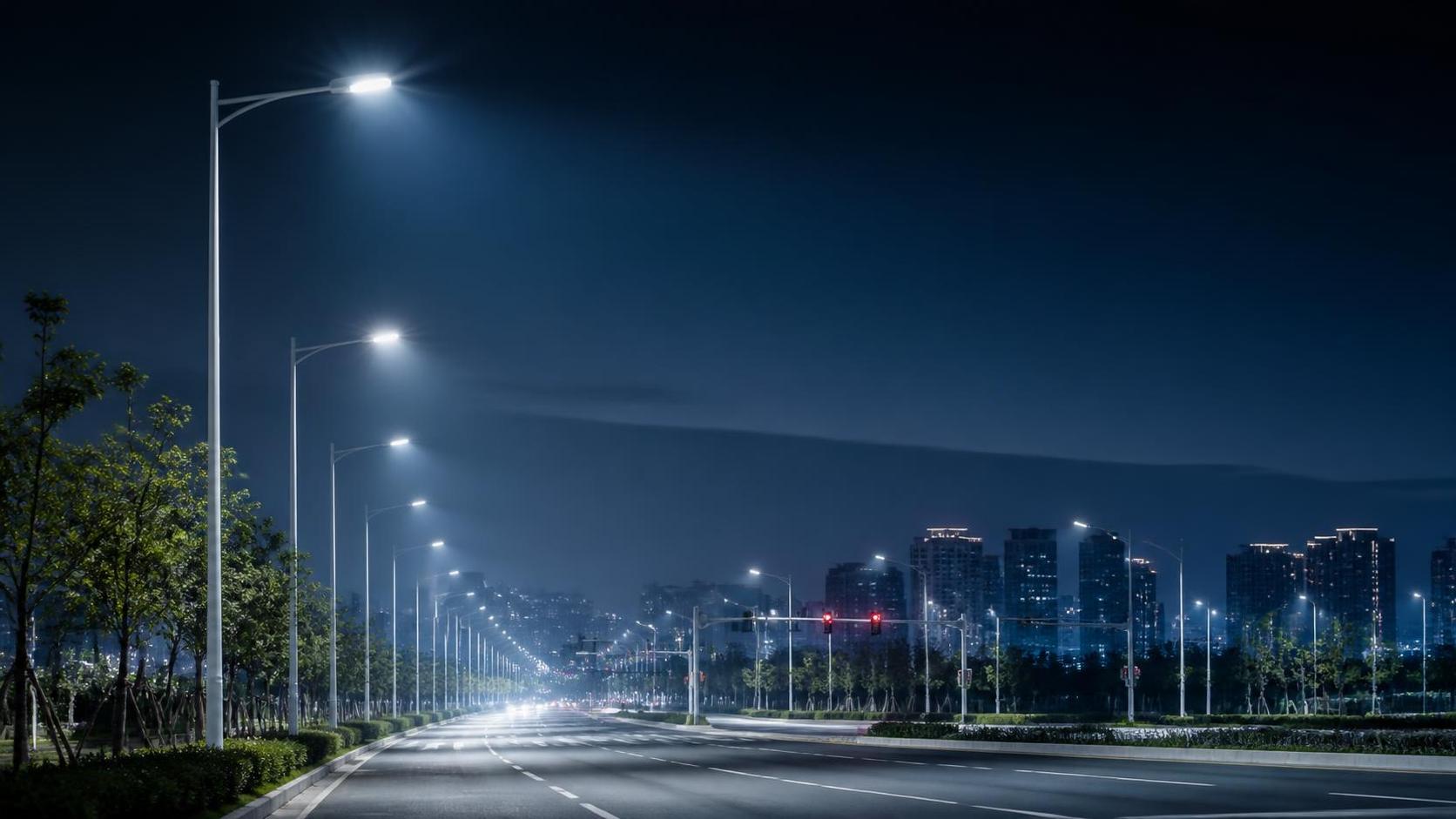
LED street lighting is no longer just a replacement for conventional road luminaires. In urban and municipal road projects, it has become part of a broader infrastructure decision that affects energy budgets, public safety, maintenance planning, traffic visibility, and increasingly, digital city management. For contractors, developers, municipal project owners, and sourcing teams, the real question is not whether LED is the right direction. It is how to build a street lighting solution that performs reliably over time, under local road conditions, procurement constraints, and operating expectations.
That distinction matters because many road lighting projects still underperform after installation. The failure is rarely about LED as a technology. More often, it comes from mismatched specifications, weak system integration, poor environmental adaptation, or an overly narrow focus on fixture price instead of lifecycle performance.
Why urban road lighting decisions have become more complex
Municipal lighting used to be judged mainly on illumination levels and initial capex. That model is changing. Cities now expect road lighting systems to support multiple objectives at once: lower electricity consumption, more stable nighttime visibility, reduced maintenance intervention, better appearance in urban districts, and compatibility with smart control platforms.
At the same time, the operating environment is getting tougher. Main roads, secondary roads, bridges, intersections, and mixed-use urban corridors impose very different requirements on pole structure, optical distribution, ingress protection, surge resilience, and maintenance access. A design suitable for a low-density suburban road may not hold up in a coastal city, a wind-prone arterial route, or a central district where aesthetics and uniformity matter as much as efficiency.
This is why procurement teams and project engineers increasingly evaluate LED street lighting solutions as a system, not as a standalone luminaire purchase.
What project owners usually get wrong in street lighting selection
One common mistake is to compare wattage without understanding actual delivered performance. Lower wattage sounds attractive, but road lighting decisions should be tied to photometric outcomes, spacing design, mounting height, road width, and uniformity targets. A lamp with strong nominal efficacy may still perform poorly if the beam distribution does not match the road geometry.
Another frequent issue is assuming that all IP-rated products are equally suitable for outdoor municipal use. In practice, enclosure protection is only one part of durability. Heat management, driver quality, corrosion resistance, coating process, pole structure, and resistance to vibration or wind loading all influence service life in the field.
A third problem appears during bidding and value engineering. In an effort to reduce upfront cost, some projects downgrade structural materials, smart control compatibility, or maintenance accessibility. The result may be acceptable at handover but costly over five to ten years, especially where road closures, traffic management, or elevated installations make maintenance expensive.
The metrics that matter more than headline price
For municipal roads, lifecycle thinking usually produces better outcomes than lowest-unit pricing. The key evaluation dimensions are more practical than promotional:
- Energy performance under real operating schedules, not just laboratory efficacy
- Optical design suited to lane layout, pedestrian interfaces, and intersection visibility
- Mechanical reliability in wind, rain, dust, and temperature variation
- Corrosion protection for long outdoor exposure
- Driver and control system compatibility
- Ease of maintenance and spare parts consistency
- Supply stability for phased or city-wide deployment
When these factors are overlooked, the apparent savings in procurement often reappear later as higher failure rates, uneven light distribution, or expensive replacement cycles.
Why smart control is becoming part of standard road lighting design
Smart street lighting is often discussed as a future-facing upgrade, but in many municipal projects it is already a practical management tool. Dimming profiles, fault monitoring, switching schedules, and energy reporting are especially useful where operators manage large lighting networks across different road classes.
The value of controls depends on project scale and management maturity. On smaller or budget-constrained projects, advanced control layers may not produce immediate payback. On larger urban road networks, however, centralized monitoring can reduce inspection workload, improve outage response, and support staged energy optimization.
The key is to avoid treating “smart” as a checkbox. A control-ready lighting system is only useful if communication architecture, installation conditions, maintenance responsibilities, and software access are clear from the start. Otherwise, municipalities end up owning connected hardware with limited operational benefit.
Structural reliability is often underestimated
In road lighting, structural performance is as important as luminous performance. Poles and mounting systems must withstand local wind conditions, foundation quality, and long-term corrosion exposure. This is particularly relevant in open roads, elevated roads, coastal districts, and areas with severe weather fluctuations.
For example, solutions such as Modern Street Lighting|MSL-XM reflect the kind of specification logic many project teams now prioritize: Q235 steel construction, hot-dip galvanizing plus powder coating, pole height options in the 8–14 m range, and wind resistance of at least 150 km/h. These parameters are not marketing details. They directly affect whether a lighting installation remains safe, visually consistent, and economically maintainable over a long service period.
On the luminaire side, efficacy of at least 140 lm/W, IP67 protection, and a rated lifespan of at least 50,000 hours are usually aligned with the expectations of current municipal upgrades. But those figures should still be checked against actual thermal design, driver reliability, and local maintenance conditions rather than accepted at face value.
Aesthetics now influence procurement more than before
Urban and municipal roads are not purely technical spaces. In many cities, roads are also part of public image, tourism corridors, mixed-use commercial zones, and urban renewal programs. This means the appearance of poles, finishes, and fixture form factors increasingly affects approval and selection.
That does not mean decorative design should override engineering judgment. It means good solutions now need to balance both. A road lighting system that reduces energy cost but creates visual inconsistency, excessive glare, or poor streetscape integration may face pushback from planning authorities or the public, especially in visible urban areas.
This is one reason customized or semi-customized configurations are gaining traction. Project owners want standardized technical performance, but they also want enough flexibility to fit the road hierarchy and design language of a specific district.
How contractors and buyers should assess supplier capability
In large-scale outdoor lighting projects, supplier assessment should go beyond catalog breadth. The real test is whether the supplier can support project execution under practical constraints: design coordination, specification adjustment, documentation, delivery scheduling, system integration, and after-sales responsiveness.
For overseas buyers and cross-border sourcing teams, this becomes even more important. A technically acceptable product is not enough if the supplier cannot maintain consistency across batches, provide reliable engineering communication, or support integration between poles, luminaires, and controls.
Manufacturing capability matters here because municipal projects often involve phased delivery and site-specific adaptation. Engineering support matters because road lighting rarely fits a one-size-fits-all model. The stronger suppliers are usually those that understand not just the product, but the project sequence—from lighting design review to installation conditions and long-term operation.
What to watch in the next phase of municipal LED street lighting
The market direction is relatively clear. Urban road lighting will continue moving toward higher efficiency, more connected management, and stronger emphasis on long-term reliability. What is less settled is how cities will balance budget pressure with rising expectations for digital control, appearance, and resilience.
For decision-makers, the most useful approach is to separate essential performance from optional complexity. Not every road project needs the most advanced smart system. Not every city requires decorative pole design. But every municipal project does need a credible answer to four questions: Will the lighting meet road-use needs? Will it remain reliable in the local environment? Can it be maintained without excessive operational burden? And does the supplier have the capacity to deliver consistently at project scale?
Those questions are more valuable than chasing the lowest wattage or the lowest bid. In practice, successful LED street lighting solutions are usually the result of disciplined specification, realistic lifecycle thinking, and coordination between lighting products, structural design, and control systems. That is where experienced project support becomes decisive—and where integrated outdoor lighting providers can create real value beyond the hardware itself.
For urban and municipal roads, the shift to LED is already established. The competitive advantage now lies in selecting systems that are not only efficient on paper, but dependable in the conditions where cities actually operate.
◉ MESSAGE
Blog
- LED Street Luminaire Specifications That Matter for Roadway Projects
- What to Evaluate When Selecting a Smart Street Lamp Manufacturer
- How to Prepare a Compliant Solar Lighting Bid for Public Infrastructure Projects
- LED Street Lighting Solutions for Urban and Municipal Roads
- LED Street Light Installation Guide for Road Projects
- LED Street Light Lifespan: How Long Do LED Road Lights Last?
- LED Street Light IP Rating: What Should Buyers Choose?
Message