
Why your solar wall light stops working before the night is over
Why your solar wall light stops working before the night is over
A solar wall light that fades or switches off halfway through the night can leave your entrance, patio, or garden dark when you still need visibility. Before replacing it, check what may be cutting its runtime: limited sunlight, a dirty panel, an aging battery, or settings that consume more energy than the day’s charge can support. Seasonal weather can also expose limitations that were easy to miss during summer.
The useful question is not simply, “Does it charge?” It is, “Does it store enough usable energy to run the selected lighting mode until morning?” A light can charge normally and still fall short.
Notice how it stops before changing anything
Different shutdown patterns point toward different checks. Watch the light on an evening when you can note when it starts and when its behavior changes.
- It gradually dims: stored energy may be running low, although some models deliberately reduce brightness to extend runtime.
- It switches off at almost the same interval after dusk: check for a programmed timer before assuming battery failure.
- It goes dark but brightens when you approach: it may be operating correctly in motion-only or dim-to-bright mode.
- It stops when another light comes on: nearby illumination may be reaching its dusk sensor.
- It becomes unreliable after rain: inspect for moisture or corrosion rather than treating this only as a charging problem.
An abrupt shutdown can also occur when a battery protection circuit reaches its low-voltage threshold. That alone does not tell you whether the battery is worn out or simply undercharged.
A bright wall is not necessarily a good charging location
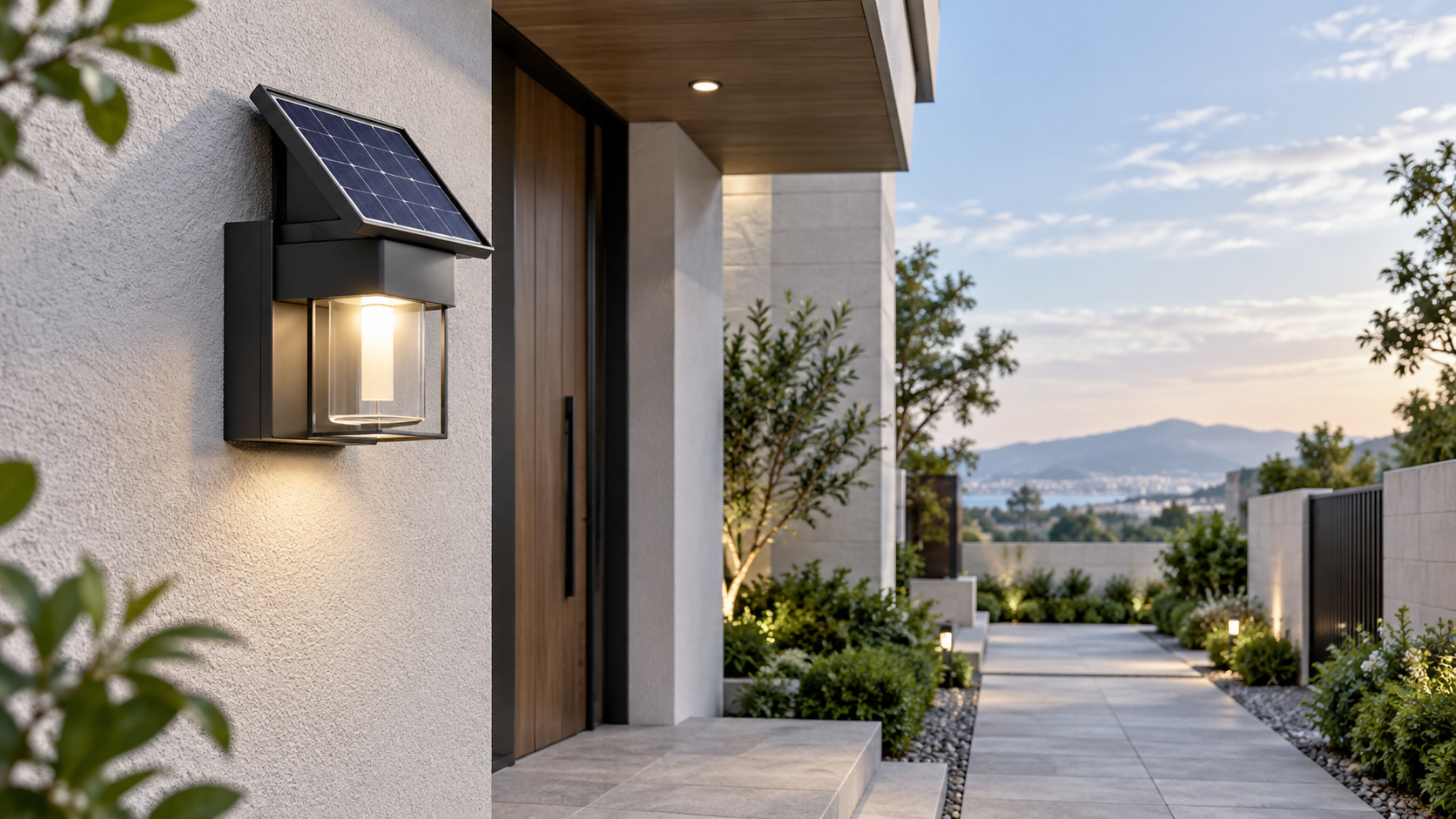
A fitting beside a front door may receive plenty of daylight but very little direct sun. Roof overhangs, porch ceilings, trees, and neighboring buildings can shade the panel during the most useful charging hours. Reflected light may let the panel produce some electricity without delivering enough energy for overnight operation.
Check the actual panel at several points through the day, not just the surrounding wall. A position that catches late-afternoon sun in summer may remain shaded in winter, when the sun sits lower and nights last longer. In the Northern Hemisphere, an unobstructed south-facing position is often favorable; in the Southern Hemisphere, north-facing is generally preferable. Local shading still matters more than a compass direction alone.
Clean the panel gently with a soft cloth and water, following the manufacturer’s instructions. Bird droppings, pollen, and accumulated dust deserve attention. Avoid abrasive pads, solvents, and pressure washing, which can damage surfaces or seals.
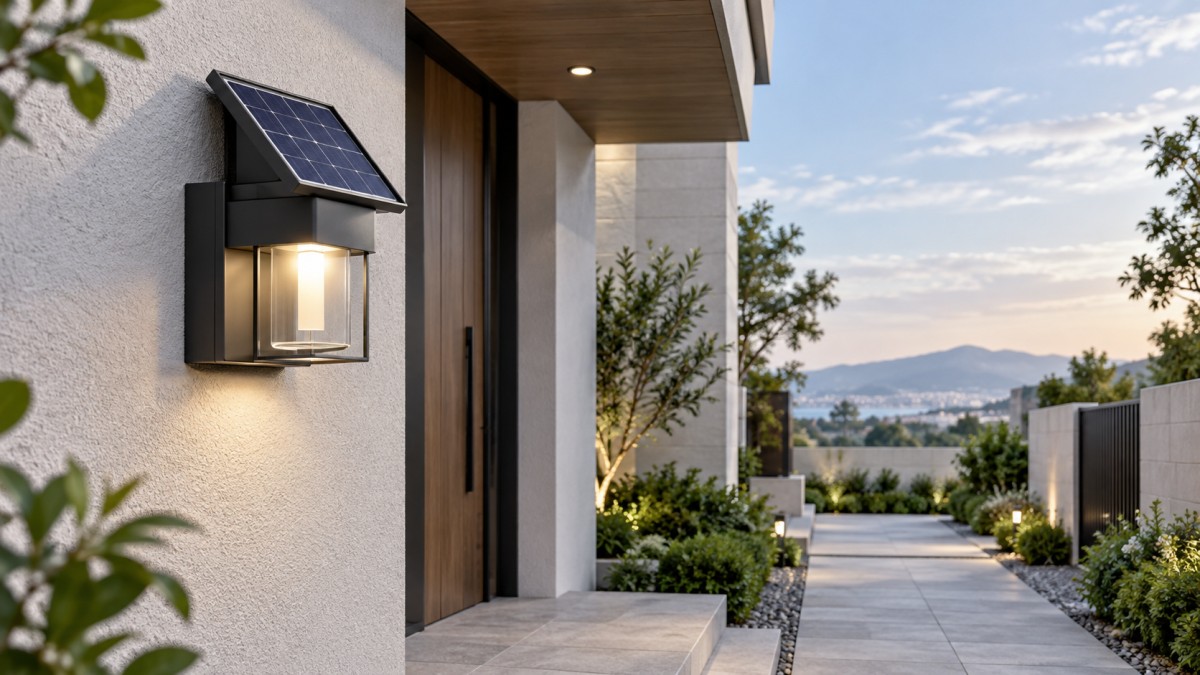
If possible, temporarily test the fitting in a sunnier, secure location. For models with a separate panel, repositioning just the panel may solve the problem without moving the light away from the doorway. Keep connectors weather-protected and use only manufacturer-approved extension cables.
Your lighting mode may be spending the charge too quickly
Continuous high brightness is demanding for a compact solar fitting. A small panel and battery cannot necessarily support the brightest setting through a long winter night, even if the packaging advertises extended runtime. Check which mode and charging conditions that claim assumes.
Motion activation usually reduces consumption, but only when the light spends enough time at low output or off. Beside a busy pavement, repeated triggers can keep it bright for much of the evening. Depending on the sensor type, moving vegetation or other activity may also cause unwanted activation.
Try a lower steady output, a shorter motion hold time, or reduced sensitivity if those adjustments are available. Change one setting at a time. If runtime improves substantially under comparable charging conditions, the original setting was likely too demanding for the available energy.
There is a practical trade-off: motion-only lighting can suit an occasional trip to the bins, but may not provide the continuous visibility you want on entrance steps.
Check the battery—but do not replace it blindly
Rechargeable batteries lose usable capacity with age and cycling. A light that previously lasted until dawn but now stops early, despite similar sunshine and unchanged settings, gives you a reasonable reason to investigate the battery. Cold weather can also temporarily reduce available capacity; lithium battery charging may be restricted at low temperatures by the product’s protection system.
Before opening the housing, check whether the battery is user-replaceable and whether doing so affects the warranty or weather seal. A replacement must match the specified chemistry, nominal voltage, dimensions, connector, and protection requirements. A physically similar battery is not necessarily compatible. Never substitute a disposable battery for a rechargeable one.
Stop using the fitting if you find swelling, leakage, unusual heat, or a burnt smell. Do not attempt to recharge a damaged battery. Arrange disposal through an appropriate local battery collection service.
Use a controlled check before buying parts
After cleaning and checking settings, follow the manufacturer’s full-charge procedure. Some models charge while switched off; others require a particular switch position. Test on a reasonably sunny day, note the selected mode, and record the runtime. Repeat under similar conditions if possible. One cloudy day is not a useful verdict on battery health.
Briefly covering the panel or light sensor can help confirm that dusk activation works, depending on the design. It does not measure battery capacity or prove that the light will last overnight.
When a different lighting solution makes more sense
If the wall stays shaded and you need dependable illumination every night, another compact solar wall light may repeat the same problem. Consider a remote-panel model with documented runtime for your chosen mode, or professionally installed mains-powered lighting where wiring is practical. Critical steps and access routes should not depend on an unverified overnight-runtime claim.
Lishida Smart Lighting’s work supporting large outdoor projects across China combines lighting products, controls, and project-based engineering. The same selection principle applies at home: start with the hours and visibility needed, then check whether the power supply can support them.
For a larger garden rather than a wall-mounted replacement, LED Garden&Lawn Lighting | GLL-FQ illustrates a different category: a 3.5–5 m landscape fitting rated at 40–60 W with AC220V±20% input. It is not solar-powered or a direct substitute for a porch light; it requires suitable electrical infrastructure and professional installation.
Before spending money, make one useful comparison: test your existing light after a proper charge at a lower output. If it lasts noticeably longer, focus on sunlight and settings. If it still cuts out early under comparable conditions, battery condition or an internal fault deserves closer attention.
◉ MESSAGE

Blog
- How to avoid vendor lock-in in a government smart lighting project
- Sizing the communications power budget for smart city solar street lights
- How energy-saving mode affects solar bollard light operating time
- Comparing lead times from LED street light luminaire suppliers in Europe
- What spare parts support should a smart street light exporter offer?
- Where to place a solar garden light in a partially shaded garden
- Which battery alerts matter in remotely monitored solar street lighting?
Message