
Which Modern Street Lighting Features Help Reduce Long-Term Maintenance Costs?
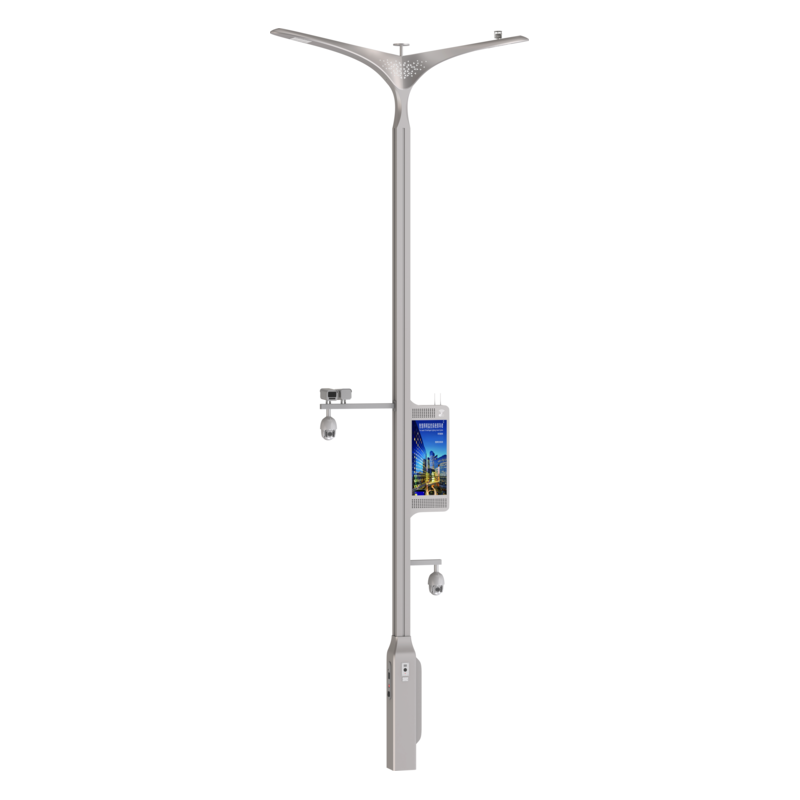
Start with the features that actually drive maintenance cost
For procurement teams buying Modern Street Lighting for roads, public spaces, or dense urban sites, the real cost problem usually shows up after handover. A lower purchase price can disappear fast if crews are replacing failed drivers, dealing with water ingress, repainting corroded poles, or sending technicians out just to find which luminaires are offline. The better buying question is simple: which features reduce truck rolls, part replacement, and service disruption over the next several years?
That changes how you compare offers. Instead of treating every fixture as a commodity, check the parts and system details that affect failure rate, access time, and replacement cycles. Some of these are visible in a datasheet. Others only become clear when you ask for the right drawings, component lists, and maintenance method.
Check the housing and pole first, because corrosion is expensive to fix
If the pole and external finish do not hold up, maintenance cost rises even when the LED module is fine. In outdoor lighting, especially on long road sections, surface protection matters more than many buyers expect.
- Check the pole material and thickness against the project environment. For example, a Q235 steel pole in the 8-14 m range with 4-8 mm thickness may suit many street lighting applications, but the useful judgment is whether the structural specification matches wind load, installation height, and exposure conditions.
- Look for hot-dip galvanizing plus powder coating where long service life is a priority. That combination reduces the repainting and corrosion repair work that often gets ignored in early budgeting.
- Review the base flange and anchor-bolt installation details. Slotted holes can make alignment easier on site, which cuts installation rework and future replacement time if a pole is damaged.
This is where buyers sometimes make a quiet mistake: they compare lighting head performance closely but accept vague wording on pole finishing. Over time, that can be the more expensive half of the package.
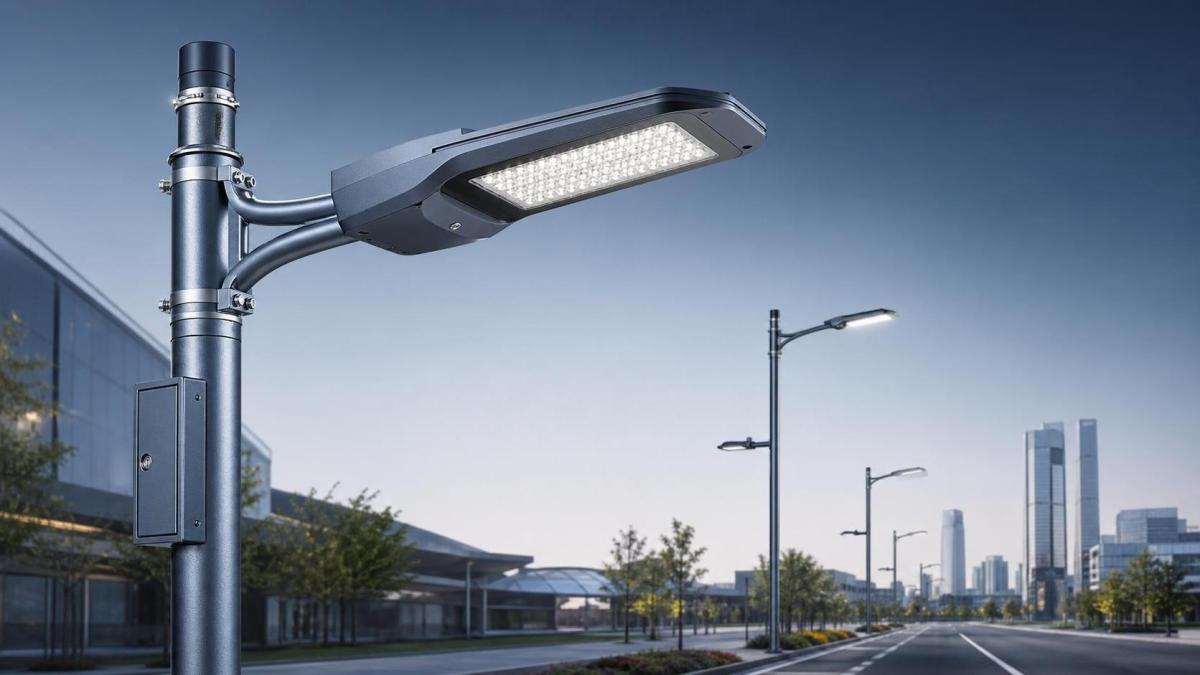
Do not separate lumen efficiency from maintenance planning
High luminous efficacy is usually discussed as an energy issue, but it also affects maintenance economics. When a luminaire delivers strong output per watt, you may avoid overdriving the system just to hit lighting targets. Lower electrical stress can support longer operating stability, especially in projects with long nightly operating hours.
As a screening point, buyers should compare:
For instance, a street lighting configuration offering at least 140 lm/W, mainstream chip options such as CREE or OSRAM, and a rated lifetime of 50,000 hours or more deserves attention because those figures directly connect to service interval planning, not just electricity bills.
Ingress protection is not a small detail
One failed seal can trigger a chain of costs: moisture, driver failure, optical degradation, callout labor, lane control, and replacement stock. In street projects, IP rating should be read as a maintenance control feature.
An IP67 luminaire is a strong indicator for demanding outdoor conditions, but buyers should still check where that protection applies. Ask whether the complete luminaire carries the rating, not only a subcomponent. Also review cable entry points and access-cover sealing, because water problems often start there rather than in the visible housing.
Smart controls only save maintenance money when they simplify fault handling
A control system is not automatically a cost saver. Buyers should focus on whether it helps the maintenance team identify failures faster and manage lighting assets without sending people into the field for routine checks.
Good questions during procurement include whether the system can isolate faults by pole or circuit, whether dimming schedules are centrally adjustable, and whether component status can be tracked in a practical way. If the controls add complexity without improving visibility, the maintenance burden can actually go up. In large urban environments, the value is not the word “smart.” It is the reduction in manual inspection and troubleshooting time.
Match power and color settings to the site, not to a generic catalog favorite
Over-specification creates hidden cost. If the road class, spacing, pole height, and urban context do not need the highest wattage option, buying it anyway raises energy use and can increase thermal load over time. The same goes for color temperature. A 3000K or 4000K option may both be valid, but the right choice depends on the application, visual comfort goals, and surrounding environment.
For procurement review, do not approve wattage in isolation. Check it against pole height, layout, and lighting design output. A 150-250W range may be appropriate across different street conditions, but the maintenance-friendly decision is the one that meets the target without oversizing the luminaire fleet.
Wind resistance and structural life affect service budgets more than expected
In coastal, open-road, or storm-exposed areas, structural failure is not a rare-event line item; it is a procurement risk. If the pole assembly is rated for wind resistance of at least 150 km/h and the pole service life is designed for 30 years or more, that changes the long-term maintenance picture. Fewer structural interventions mean fewer emergency repairs, fewer shutdowns, and less unplanned replacement stock.
This is one reason some buyers look beyond fixture-only sourcing and consider integrated packages such as Modern Street Lighting|MSL-HC, where the luminaire, pole specification, and outdoor durability details can be evaluated together instead of as disconnected items.
Ask how replacements will actually happen on site
This is the practical checkpoint many tenders miss. A lighting system may look solid on paper, but maintenance cost depends heavily on how fast parts can be accessed and changed.
- Ask which components are considered field-replaceable.
- Check whether the supplier provides a clear component list for future spare planning.
- Review whether the configuration is standardized across the project or heavily mixed by area.
Too many variants across one project create their own maintenance cost. Spare holding becomes messy, technician familiarity drops, and replacement lead time becomes harder to manage.
Use a short buying sequence to avoid the usual cost traps
A workable review order is this: start with environment and structural exposure, then confirm corrosion protection, then verify luminaire sealing, then compare efficacy and lifetime, and only after that look at smart control functions and aesthetic options. That order keeps maintenance risk ahead of catalog appeal.
If two offers are close in purchase price, the one that usually performs better over time is the one with stronger ingress protection, durable surface treatment, realistic power matching, stable component quality, and a maintenance method that is easy to execute in the field. For procurement teams, that is where long-term savings in Modern Street Lighting are usually won or lost.
◉ MESSAGE
Blog
- LED Street Luminaire Specifications That Matter for Roadway Projects
- What to Evaluate When Selecting a Smart Street Lamp Manufacturer
- How to Prepare a Compliant Solar Lighting Bid for Public Infrastructure Projects
- LED Street Lighting Solutions for Urban and Municipal Roads
- LED Street Light Installation Guide for Road Projects
- LED Street Light Lifespan: How Long Do LED Road Lights Last?
- LED Street Light IP Rating: What Should Buyers Choose?
Message