
Modern Street Lighting for Residential Roads: How to Balance Safety and Budget
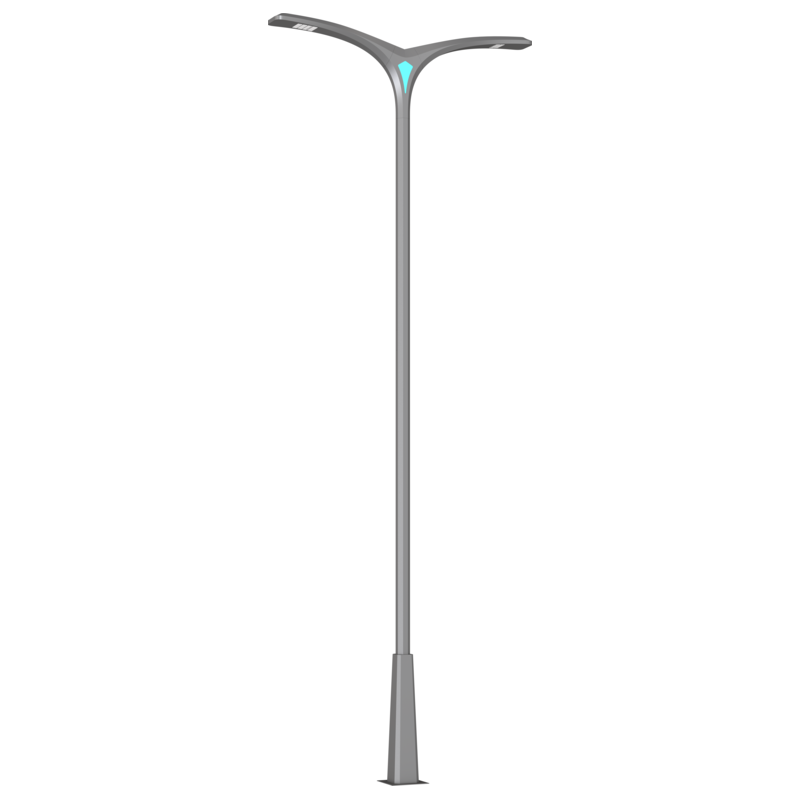
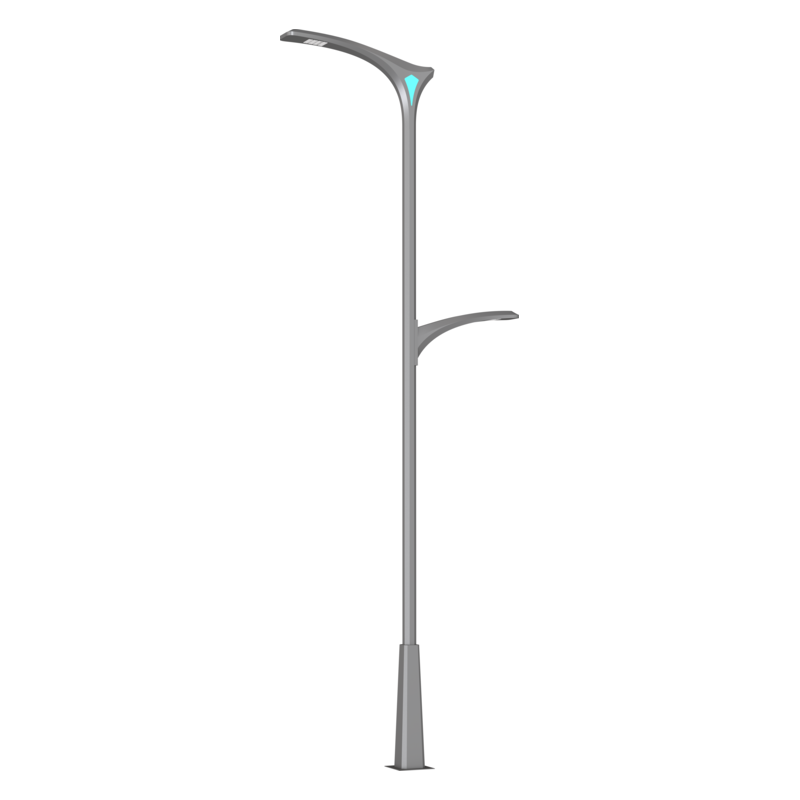
Where Residential Road Lighting Usually Goes Wrong
Balancing safety, performance, and cost is a common challenge when upgrading residential roads with Modern Street Lighting. For procurement teams, the right solution must deliver reliable illumination, long-term durability, and efficient project value without exceeding budget limits. In this guide, we explore how MSL-HC and other practical lighting strategies can help create safer neighborhood streets while supporting smarter purchasing decisions.
On residential roads, the problem is rarely “not enough light” in a simple sense. More often, the issue is uneven light, poor vertical visibility at intersections, excessive brightness spilling into windows, or fixtures that look acceptable at handover but become expensive after two rainy seasons and a few maintenance cycles. This is why Modern Street Lighting decisions on neighborhood roads should not begin with wattage alone. Pole spacing, road width, tree cover, driveway frequency, pedestrian activity, and the expected maintenance response time all affect what is actually a cost-effective design.
In newer residential districts, road geometry is usually cleaner, but there may be stricter expectations around appearance, glare control, and smart control integration. In older neighborhoods, the constraints are less forgiving: mixed pole heights, narrow verges, overhead branches, irregular building setbacks, and patchwork underground utilities often shape the lighting scheme more than any ideal calculation does. Lishida Smart Lighting has worked on large-scale outdoor lighting projects across China, and one recurring lesson is that the best budget outcome often comes from reducing correction work later, not simply buying the lowest-cost fixture at the start.
Safety Is About Visibility, Not Just Brightness
Residential roads ask for a different judgment than arterial roads. Drivers move more slowly, but the visual environment is more complicated. Parked cars, cyclists entering from side lanes, children near crossings, delivery stops, and pedestrians walking close to the carriageway create short-distance conflict points. Under these conditions, uniformity matters almost as much as average illuminance. A bright patch under the pole followed by a dim gap may satisfy a rough visual impression from a distance, yet it performs poorly where people actually need to identify movement at the edge of the road.
This is where MSL-HC can be a useful direction if the project needs a modern system approach rather than a one-for-one fixture replacement. A higher-value solution is not necessarily the one with the highest output. It is usually the one that maintains stable visual conditions across bends, parking edges, and crossing points while keeping power use and maintenance exposure under control. In procurement terms, that means asking a more practical question: how much light is usable on the road surface and pedestrian edge, and how much is being wasted into facades, landscaping, or the night sky?
A common budget mistake is over-lighting straight sections to compensate for weak visibility at corners or intersections. That usually raises energy use without solving the real hazard. It is often better to keep the base road lighting disciplined and treat conflict points carefully with optics, mounting position, or selective supplementary lighting.
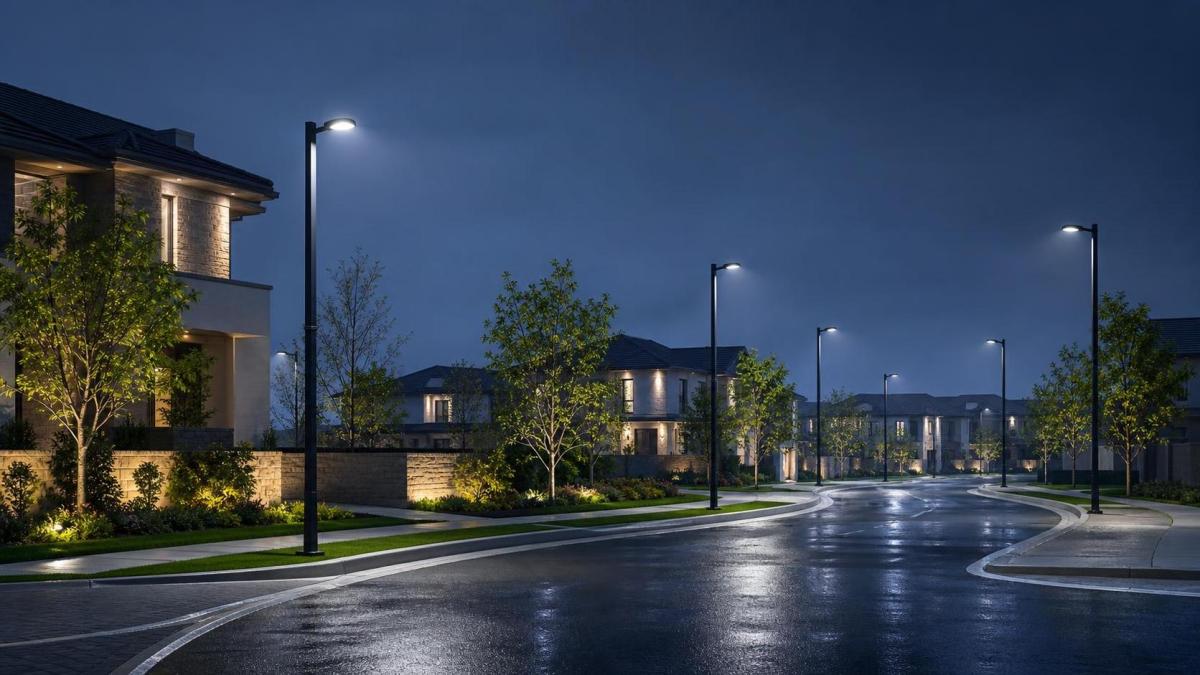
The Street Is Only Part of the Scene
Residential lighting projects become more complex when roads are tied to plazas, entrance landscapes, shared courtyards, or small recreation areas. These spaces are not roadways, but they influence how safe the road feels and how residents use it after dark. If the transition between the carriageway and adjacent public space is too harsh, the eye keeps re-adapting, and both drivers and pedestrians lose visual comfort.
That is one reason some projects combine road fixtures with targeted accent or area lighting instead of pushing all tasks onto the street pole. In plaza edges, landscaped entrances, or small gathering areas beside residential roads, a compact solution such as LED Floodlight may be integrated where directional control is needed. The TGD-031 model, for example, is intended for plazas, stadiums, and landscapes rather than as a street luminaire, but its narrow-to-wide beam options, IP66 protection, and long service life can make it useful in supporting roles around entry nodes or feature edges where standard roadway distribution is not the right tool. That kind of selective use can reduce the pressure to oversize the main road lighting layout.
What Budget Control Really Looks Like on Site
For project owners, “budget lighting” often sounds simple until installation starts. The visible fixture price is only one layer. Residential road upgrades are heavily affected by pole reuse, bracket compatibility, trenching limits, control cabinet modifications, and whether the neighborhood can tolerate lane closures or repeated night work. On constrained sites, labor and coordination can erase any savings from a cheaper fitting.
That is why integrated support matters. Contractors usually need more than a luminaire schedule. They need help matching products to actual mounting conditions, confirming electrical compatibility, and avoiding late-stage substitutions that create uneven color appearance or mismatched control behavior. Lishida Smart Lighting positions its work around this execution layer: products, smart controls, and project-based support delivered together. In large projects, that combination often determines whether the installed system behaves consistently across different road segments.
When budgets are tight, three checks tend to be more useful than chasing the lowest upfront number:
- Whether the layout can maintain acceptable spacing without creating dark pockets near crossings or parking bays.
- Whether the fixture and control strategy will reduce maintenance visits, especially in neighborhoods where access is disruptive.
- Whether the supplier can support product consistency over the full project timeline, including later expansion or replacement needs.
Smart Control Helps, but Only When the Road Pattern Supports It
Smart dimming is often discussed as an easy cost-saving layer, but residential roads are not all equally suitable for aggressive dimming schedules. A quiet internal road with predictable late-night traffic may benefit from time-based or adaptive reduction. A mixed-use residential edge road with convenience stores, visitor parking, and intermittent pedestrian movement may not. The wrong dimming profile can save energy on paper while creating resident complaints and perceived insecurity on the ground.
MSL-HC makes more sense when controls are aligned with actual use patterns. That requires some honesty at design stage. If the road serves delivery traffic well into the evening, if the neighborhood has frequent side-lane movement, or if CCTV performance depends on stable nighttime visibility, then a flatter dimming curve may be the better answer. Smart control is valuable, but only when it respects the way the street is used after dark.
A Practical Way to Judge the Right Scheme
The most reliable residential road lighting schemes are usually the least dramatic ones. They do not chase maximum output. They aim for readable road edges, restrained glare, stable performance in wet weather, and maintenance routines the property side can realistically sustain. Where public space and landscape elements connect to the road, selective supporting fixtures can improve orientation without forcing the street system to do every job.
If a project team is comparing options, it helps to walk the site at night and judge the road in segments rather than as a single average condition: straight runs, junction approaches, building-front zones, parking edges, and shared-use transitions. That is usually where the decision becomes clearer. Modern Street Lighting works best on residential roads when safety and budget are treated as a layout problem, a control problem, and a maintenance problem at the same time, not just a fixture purchase.
◉ MESSAGE
Blog
- LED Street Luminaire Specifications That Matter for Roadway Projects
- What to Evaluate When Selecting a Smart Street Lamp Manufacturer
- How to Prepare a Compliant Solar Lighting Bid for Public Infrastructure Projects
- LED Street Lighting Solutions for Urban and Municipal Roads
- LED Street Light Installation Guide for Road Projects
- LED Street Light Lifespan: How Long Do LED Road Lights Last?
- LED Street Light IP Rating: What Should Buyers Choose?
Message