
When a High Power LED Floodlight Makes Sense for Port and Yard Lighting
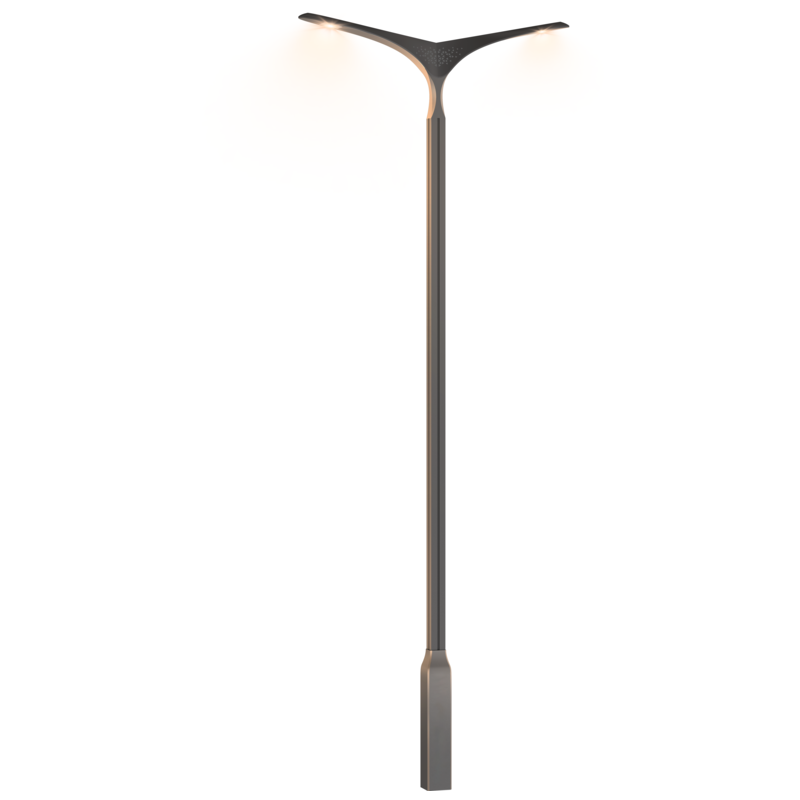
For ports, container yards, and other demanding outdoor environments, choosing the right lighting is a strategic decision that affects safety, efficiency, and long-term operating costs. A high power LED floodlight makes sense when large areas require strong, uniform illumination, reliable performance, and easier system integration. For contractors and project owners, understanding when this solution fits best can help reduce project risk and support more consistent results across complex lighting applications.
In practice, the decision is rarely about brightness alone. Port and yard operators are usually balancing several pressures at once: higher safety expectations, tighter energy targets, more automated operations, and less tolerance for maintenance-related disruption. In that context, a high power LED floodlight becomes a practical solution only when it solves a real site problem better than lower-power fixtures, mast lighting alternatives, or a broader distributed lighting layout.
Where high-power floodlighting is justified
The strongest case appears in wide, open working zones where equipment movement, cargo handling, and vehicle circulation happen continuously over large distances. Container stacking areas, bulk cargo yards, quay-side loading zones, intermodal transfer spaces, and logistics aprons often need light to reach far beyond the footprint of a conventional roadway luminaire.
These sites share a few characteristics. Mounting heights are often substantial. Obstructions change over time as containers, equipment, or materials move. Operations may continue overnight, in bad weather, or during seasonal peaks when visibility errors become expensive. Under these conditions, more fixtures with lower output do not always deliver the best result. Sometimes they increase pole quantity, cabling complexity, maintenance points, and glare conflicts without solving the core coverage problem.
A high power LED floodlight is most reasonable when the project needs long throw, broad area coverage, and controlled high-output performance from a limited number of mounting positions. That can be particularly important in retrofit projects where pole locations are fixed and civil work is costly or operational shutdowns are difficult to arrange.
What decision-makers should evaluate beyond wattage
One common mistake is treating high power as a shorthand for better lighting. For port and yard applications, that is too simplistic. Decision quality depends more on delivered illumination, uniformity, glare control, reliability in harsh environments, and total lifecycle cost than on rated power alone.
Decision-makers should ask several practical questions:
- Is the site trying to illuminate a large task area or simply compensate for a weak layout?
- Will higher-output fixtures reduce pole count and installation complexity, or create over-lighting and wasted energy?
- Can the optical distribution match the actual geometry of the yard, lane, berth, or loading zone?
- Will the system support inspection visibility and operator comfort, not just minimum light levels?
- How difficult is maintenance access once the installation is in service?
These questions matter because poor lighting decisions in industrial outdoor environments usually do not fail immediately. They fail gradually through driver complaints, uneven visibility, excessive spill light, accelerated corrosion, repeated driver replacement, or energy bills that do not match the original business case.
Ports and yards are harder on luminaires than many buyers expect
Marine and heavy logistics environments expose luminaires to conditions that look manageable on paper but become severe over time. Salt spray, vibration, dust, wind, humidity, temperature swings, and unstable power conditions can all affect performance. In container terminals and bulk handling zones, impact risk and airborne particulates are also relevant.
This is why fixture selection should not stop at lumen output and efficacy. Housing durability, thermal management, ingress protection, corrosion resistance, surge protection, and component quality often determine whether the investment performs for years or becomes a maintenance burden much earlier than expected.
High-output lighting also generates more thermal stress. If heat dissipation is poorly handled, lumen depreciation and driver failure can undermine the expected savings from LED conversion. For decision-makers reviewing proposals, this is where vendor engineering credibility matters. A technically impressive specification sheet is not enough if the product has not been designed for long operating cycles in exposed industrial conditions.
Uniformity and glare are often the real operational issue
In many yard projects, the problem is not insufficient maximum brightness. It is uneven visibility. Forklift operators, crane teams, truck drivers, and inspection staff work more safely when lighting reduces shadow-heavy zones, harsh contrast, and visual fatigue.
High-power floodlights can improve this, but only if optics are properly selected. A poorly aimed high-output luminaire may create bright hotspots and dark peripheral areas, making the site feel illuminated while still leaving operational hazards. Glare is especially important around reflective surfaces, wet pavement, container stacks, and waterfront areas. Strong light in the wrong direction can reduce, not improve, usable visibility.
For this reason, the right project approach is photometric-first, not wattage-first. Buyers should expect a layout based on actual mounting height, spacing, target lux levels, task type, and site reflectance conditions. That is a more reliable basis for procurement than comparing headline power ratings across bids.
When the business case is strong
From a management perspective, the most convincing use case for a high power LED floodlight is when it improves operational control while lowering lifecycle complexity. That usually happens in one or more of the following situations:
- Existing high-intensity discharge systems are consuming too much power and creating frequent maintenance interruptions.
- The site needs better visibility to support 24/7 operations, CCTV performance, or stricter safety procedures.
- Pole infrastructure is limited, making fewer high-output fixtures more practical than a dense low-power layout.
- Expansion or retrofit work must be completed with minimal disruption to ongoing port or yard activity.
- The owner wants lighting to connect with broader control, monitoring, or smart infrastructure plans.
That last point is increasingly relevant. Large outdoor sites no longer evaluate lighting only as an energy-consuming asset. They are also considering fault monitoring, dimming schedules, remote diagnostics, and integration with wider digital management platforms. In mixed-use logistics and municipal-adjacent environments, decision-makers may also compare floodlighting with connected infrastructure such as Smart Street Lighting | SSL-CC, especially where perimeter roads, access routes, and smart-city interfaces overlap with industrial lighting requirements. The logic is not that one product replaces the other, but that project value increasingly comes from system compatibility rather than isolated fixture performance.
Retrofit and new-build projects require different judgments
In retrofit work, high-power LED floodlighting often makes sense because it can upgrade performance without redesigning the entire site. Existing mast locations, power routes, and maintenance access plans may already constrain the project. In these cases, a stronger floodlight with better optics can be a financially efficient way to improve coverage and reduce energy consumption.
New-build projects allow more flexibility, which means the decision should be more critical, not less. If the site layout can be optimized from the beginning, the best answer may be a combination of mast floodlighting, area lighting, roadway luminaires, and smart controls rather than relying too heavily on very high-power fixtures. Overconcentration of output can create later issues in glare, redundancy, and maintenance planning.
That distinction matters for budgeting. A product that looks cost-effective in a retrofit may not be the most efficient design choice in a new terminal or yard expansion.
Procurement risk usually sits in execution details
For contractors and project owners, the technical concept is only part of the decision. Delivery reliability, support during layout verification, consistency in component quality, and responsiveness during commissioning often determine whether the project stays on schedule.
In large-scale outdoor lighting, procurement risk tends to appear in familiar ways: inconsistent batches, unclear optical options, weak documentation, under-specified drivers, or limited after-sales technical support. These are manageable issues when identified early, but expensive when discovered after installation. That is why experienced buyers look beyond unit price and ask whether the supplier can support project delivery, not just product shipment.
In some projects, especially where lighting is tied to remote control or operational monitoring, connected infrastructure experience also becomes relevant. Solutions like Smart Street Lighting | SSL-CC reflect how outdoor lighting is moving toward integrated control, real-time alerts, and remote management. Even where a port yard mainly requires floodlighting, the broader lesson is that future-ready projects should account for communication architecture, environmental durability, and maintenance visibility from the start.
What a sensible decision looks like
A high power LED floodlight makes sense for port and yard lighting when the site genuinely needs high-output, long-range illumination from limited mounting points and when the fixture can deliver that performance with acceptable uniformity, durability, and control. It is a strong solution for large operational spaces, but not a shortcut for poor lighting design.
The best decisions usually come from matching lighting strategy to operational reality: how the site moves, where visibility matters most, what maintenance access looks like, and how the owner plans to manage the asset over time. In heavy-duty outdoor environments, that disciplined approach matters more than choosing the highest wattage on the quotation sheet.
For decision-makers, the question is not whether high-power floodlighting is advanced enough. It is whether it reduces operational risk and lifecycle cost in the specific conditions of the project. When the answer is yes, it is often one of the most defensible lighting investments a port or yard operator can make.
◉ MESSAGE
Blog
- LED Street Luminaire Specifications That Matter for Roadway Projects
- What to Evaluate When Selecting a Smart Street Lamp Manufacturer
- How to Prepare a Compliant Solar Lighting Bid for Public Infrastructure Projects
- LED Street Lighting Solutions for Urban and Municipal Roads
- LED Street Light Installation Guide for Road Projects
- LED Street Light Lifespan: How Long Do LED Road Lights Last?
- LED Street Light IP Rating: What Should Buyers Choose?
Message