
What to ask a solar powered street lighting manufacturer about spare parts
One of the most frustrating moments in outdoor lighting maintenance is not a major system failure. It is the smaller, slower problem that shows up months later: a driver stops working, a battery enclosure needs replacement, a controller is no longer available, or a mounting part has changed without notice. The light itself may look simple, but once spare parts are unclear, a routine repair can turn into repeated site visits, delayed restoration, and unnecessary guessing.
This comes up often when teams evaluate a solar powered street lighting manufacturer. Product sheets usually cover lumen output, battery type, panel size, and autonomy. Those details matter, but they do not answer the questions that become urgent during maintenance: can parts be reordered years later, which components are interchangeable, and what happens if one item is discontinued? If you are trying to avoid downtime rather than just compare initial specifications, those are the questions worth asking before procurement.
Where spare-parts problems usually start
A common mistake is assuming that “replaceable” means “easy to replace.” In practice, those are different things. A luminaire may technically allow driver replacement, but if the housing uses a specific internal bracket, custom connector, or a revised wiring layout, the replacement job becomes slower and more uncertain. The same applies to batteries, charge controllers, remote communication modules, surge devices, and even pole-access hardware.
Another issue is that many maintenance problems do not come from one failed part alone. They come from poor information. If part numbers are inconsistent between batches, if documentation does not match actual delivered components, or if the manufacturer cannot clearly define compatible alternatives, your team ends up troubleshooting both the product and the supply chain at the same time.
That is why spare-parts discussions should not be saved for after-sales service. They belong in the selection stage.
Questions that reveal whether support will be practical later
Start with the simplest one: which parts are expected to be field-replaceable, and which are factory-service items? This sounds obvious, but it quickly separates products designed for maintenance from products designed mainly for shipment. Ask for a direct list. Drivers, LED modules, controllers, batteries, fuses, connectors, gaskets, lens covers, fasteners, and mounting accessories should not be left as assumptions.
Then ask: are spare parts identified by stable part numbers? If the manufacturer changes suppliers or updates a component, your team needs to know whether the new part is backward-compatible, partially compatible, or only suitable for new production. Without this, a replacement part may arrive and still not fit the installed unit.
The next useful question is: what is the planned support period for each critical component? Maintenance planning becomes difficult when the luminaire body may last for years but electronics are only available for a much shorter period. You are not looking for a sales promise. You are looking for a realistic statement on stocking policy, replacement strategy, and whether substitute parts are pre-approved.
Ask for detail on lead times for common failure items versus uncommon structural items. A controller, battery, or SPD often matters more in day-to-day service than a decorative casting or pole base cover. If lead times differ significantly, that affects what your team should hold locally.
Compatibility matters more than most buyers expect
Many outdoor projects include phased delivery, design updates, or later expansion. That means installed products may not all be from one exact production run. For that reason, ask a solar powered street lighting manufacturer to explain compatibility across batches. Can a later controller work with earlier firmware? Will a battery replacement need a changed charger setting? If a light engine is updated, does the thermal path remain the same? Even small changes can create hidden maintenance friction.
It also helps to ask whether connectors are standardized or proprietary. Proprietary parts are not always bad, but they should be documented clearly. If a replacement depends on a unique plug, adapter cable, or crimp pattern, your team needs that information before the first repair is needed, not after.
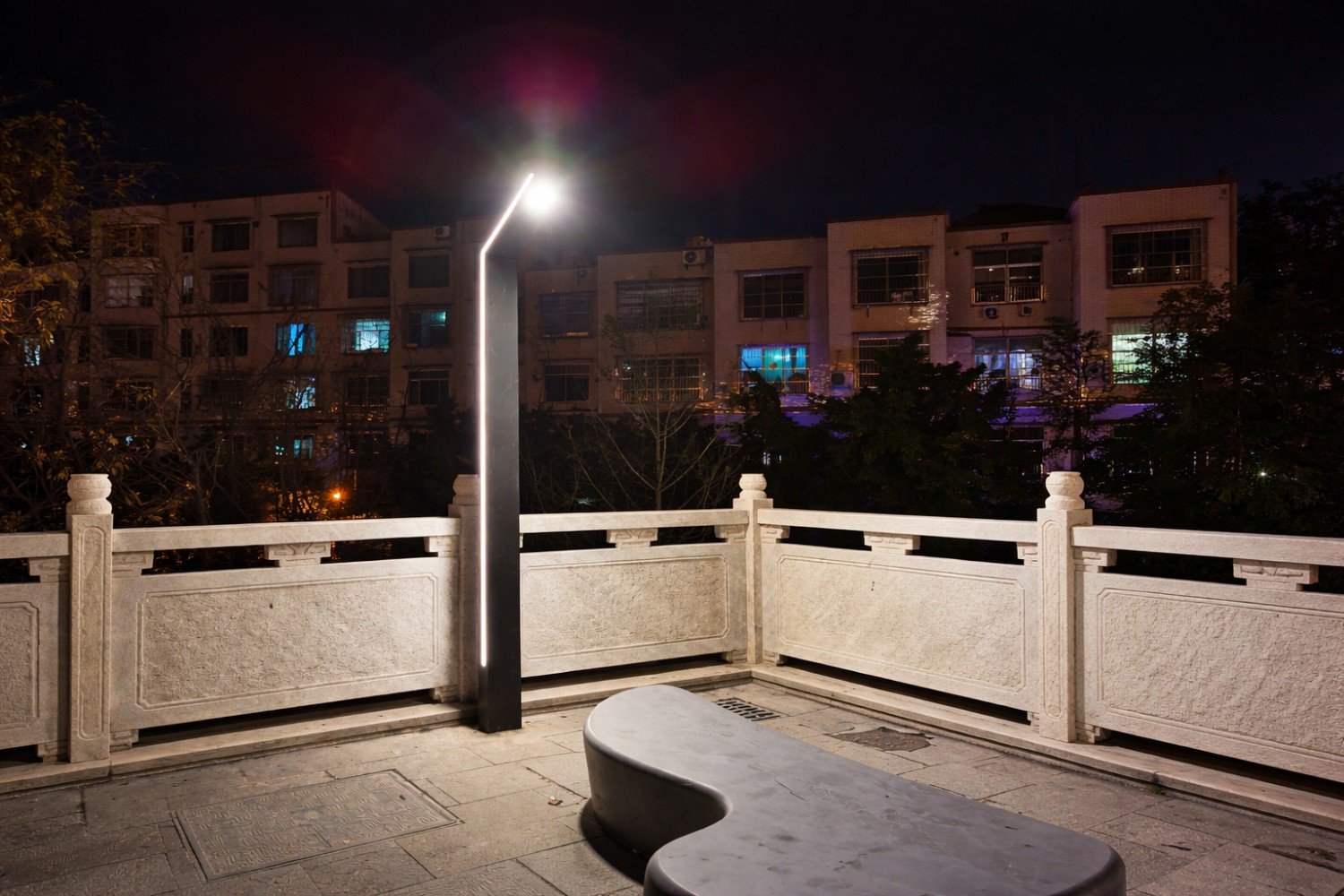
For poles and decorative fixtures, structural compatibility matters too. In some landscape or public-space applications, the light source is only one part of the maintenance picture. Base plates, anchor bolt spacing, access doors, internal cable routes, and corrosion-protection finishes also affect repair work. For example, if you are reviewing integrated site lighting options alongside solar products, a fixture such as LED Garden&Lawn Lighting | GLL-FQ shows the kind of details worth checking in any outdoor lighting line: whether the base plate shape supports straightforward anchor bolt installation, whether materials such as Q235 and die-casting aluminum are specified, and whether environmental protection like IP67 is clearly stated. Those details do not replace solar-specific questions, but they help reveal how seriously maintainability is treated across the product range.
Do not stop at “available” — ask in what form
Manufacturers often say spare parts are available, but that answer is incomplete. Available as a single unit? Available only in batch quantities? Available as a subassembly rather than a loose component? Available with wiring pre-terminated, or requiring field modification? These differences affect labor time, tool needs, and installation risk.
It is also worth asking whether replacement requires recalibration, firmware pairing, or configuration changes. This is especially important if the solar lighting system includes dimming profiles, motion control, remote monitoring, or grouped control logic. A part that physically fits but needs software matching can still create service delays if that process is undocumented.
Another practical point: ask what is included with the spare part. A replacement controller may need fresh seals, screws, glands, or a harness. A battery pack may require updated brackets or insulation accessories. If those small items are missing, the repair may stall on site even though the “main” part has arrived.
Documentation is part of the spare-parts package
One reliable way to assess long-term support is to ask for sample maintenance documentation before ordering. Not polished marketing drawings, but real service information: exploded views, wiring diagrams, replacement procedures, torque notes, and troubleshooting logic. If a supplier can provide clear documents tied to actual part numbers, future repairs are usually easier to organize.
You should also ask whether serial numbers or production batch records can be traced back to the correct bill of materials. That matters when a project spans multiple deliveries or when a later replacement request needs exact matching. Without traceability, teams often spend too much time opening fixtures just to identify what was originally installed.
If the manufacturer offers recommended spare-parts packages, ask how those packages were defined. A good answer should reflect real maintenance logic: critical electrical parts, environmental seals, externally exposed hardware, and items most likely to delay restoration if unavailable. A weak answer usually sounds generic and does not distinguish between urgent failure items and low-risk accessories.
Questions about environment and aging are not optional
Outdoor lighting failures are shaped by temperature swings, moisture, dust, vibration, corrosion, and installation conditions. So when discussing parts, ask whether replacements are matched to the same operating conditions as the original system. If your projects face high wind, coastal exposure, or very low or high temperatures, spare parts should not be treated as generic equivalents.
This is especially relevant for seals, coatings, cable glands, lens materials, and battery-related components. A part that fits dimensionally but has weaker environmental resistance can shorten the interval before the next service call. Similar thinking applies to non-solar landscape fixtures as well. In products like LED Garden&Lawn Lighting | GLL-FQ, specifications such as operating temperature range, wind resistance, coating treatment, and service life help indicate whether replacement decisions are being considered in the context of outdoor exposure rather than just initial assembly.
What to clarify before final selection
Before making a purchasing decision, it helps to move the spare-parts discussion into a few direct confirmations. Ask who approves substitutions. Ask whether there is a revision notice process when parts change. Ask if the same part can be used across multiple wattages or fixture families. Ask what information must be provided when ordering a replacement: model code, batch number, photos, controller version, or internal label details.
Also ask about packaging and transport for sensitive components. Batteries, drivers, and optical parts may each have different shipping constraints. If replacement parts are likely to cross long distances, transit handling becomes part of maintenance planning.
The goal is not to predict every failure. It is to reduce uncertainty. A dependable solar powered street lighting manufacturer should be able to explain not only what the system does when new, but how it can be kept running when individual parts age, change, or need replacement under field conditions.
In the end, spare-parts questions are less about procurement paperwork and more about future repair time. If the answers are clear early on, maintenance becomes more controlled, site visits become more purposeful, and product selection is based on real service needs rather than assumptions made from a datasheet.
◉ MESSAGE
Blog
- LED Street Luminaire Specifications That Matter for Roadway Projects
- What to Evaluate When Selecting a Smart Street Lamp Manufacturer
- How to Prepare a Compliant Solar Lighting Bid for Public Infrastructure Projects
- LED Street Lighting Solutions for Urban and Municipal Roads
- LED Street Light Installation Guide for Road Projects
- LED Street Light Lifespan: How Long Do LED Road Lights Last?
- LED Street Light IP Rating: What Should Buyers Choose?
Message