
How many watts should an LED street light use for local roads
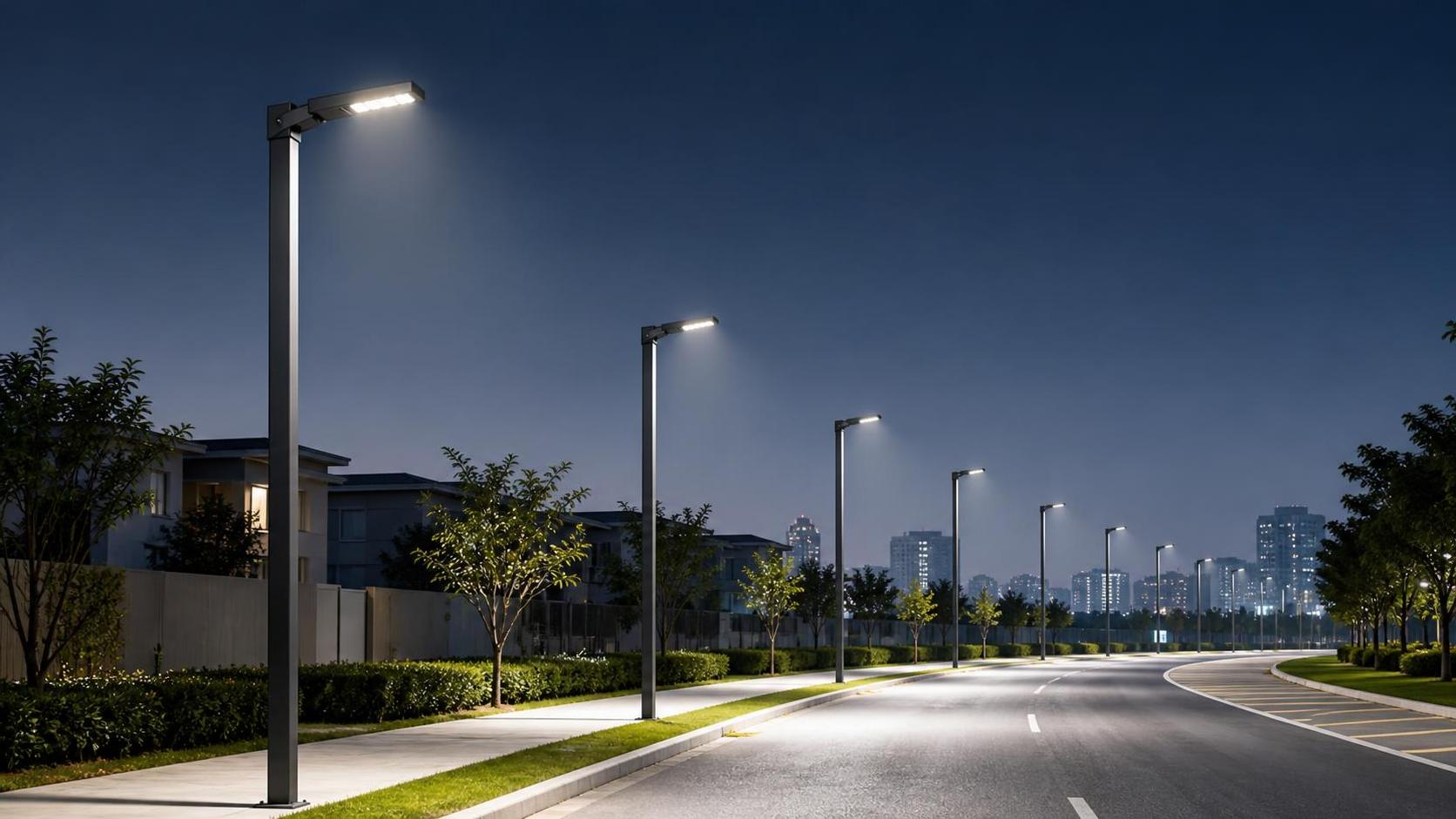
Choosing the right wattage for an LED street light on local roads is not just about brightness—it affects compliance, energy use, maintenance, and long-term project value. For technical evaluators, the ideal solution depends on road width, pole spacing, mounting height, traffic conditions, and required illumination standards. This guide explains how to determine the most suitable wattage range for local road applications with practical engineering considerations.
In practice, the question “how many watts should an LED street light use for local roads” is usually asked too early in the selection process. Wattage is not the design target. Required illuminance or luminance is the target; wattage is only the result of optics, mounting geometry, efficacy, uniformity requirements, and environmental conditions.
That distinction matters because two 80W luminaires can produce very different on-road results. One may have better optical control, higher real system efficacy, and less light spill. Another may look powerful on paper but fail spacing or uniformity requirements once installed. For local road applications, technical evaluation should start with road classification and lighting criteria, then move toward power range.
Why local roads rarely need a single “standard wattage”
Local roads vary more than many specification sheets suggest. A narrow residential access road with low traffic, short poles, and close spacing may perform well with 30W to 60W LED street light fixtures. A wider urban local road with sidewalks, parking lanes, mixed traffic, and 8-10 meter poles may need 70W to 120W. Once the road becomes wider, pole spacing increases, or higher vertical illumination is needed for pedestrian visibility, the power requirement can move further upward.
So the correct engineering question is not “What wattage is used for local roads?” but “What wattage range can meet the lighting class under this exact layout?”
The variables that actually determine wattage
1. Pole height
Mounting height has a direct impact on required lumen package. A luminaire installed at 6 meters can often use lower wattage than one installed at 10 meters for the same local road width, because the light has a shorter throw distance. As height increases, more output and tighter optical control are usually needed to maintain average illumination and uniformity.
2. Pole spacing
Spacing is often the hidden driver of wattage creep. If a project tries to reduce pole quantity by extending spacing too far, each fixture must compensate with more output. This can push a local road from a 60W-80W solution into a 100W-150W solution, even when the road itself has not changed much.
3. Road width and lane arrangement
A two-lane local road without a median is very different from a broader collector-like street that is still labeled “local” in a municipal package. Parking lanes, bicycle lanes, service lanes, and sidewalks all influence the required optical distribution and total light level.
4. Lighting class and local standards
Different projects follow different standards, such as EN 13201, local municipal specifications, or owner-defined criteria. Some prioritize average horizontal illuminance; others emphasize luminance, threshold increment, surround ratio, or minimum uniformity. Without confirming the applicable standard, any wattage recommendation is only a rough estimate.
5. Optical efficiency and beam distribution
A well-matched Type II, Type III, or equivalent road optic may reduce required wattage compared with a poorly matched distribution. This is why technical reviews should examine photometric files, not only nominal power.
6. Luminaire efficacy and system losses
The difference between 110 lm/W and 140+ lm/W at the luminaire level can materially change the selected wattage. Driver efficiency, thermal management, and optical losses all affect actual delivered performance.
Typical wattage ranges seen on local roads
For preliminary evaluation, the following ranges are commonly reasonable, though they should never replace lighting calculations:
- 30W-50W: narrow residential roads, low traffic streets, short pole heights, close spacing, limited carriageway width
- 50W-80W: standard neighborhood roads, internal community roads, many low-speed urban local roads
- 80W-120W: wider local roads, roads with sidewalks and parking lanes, higher mounting heights, larger spacing, or stricter uniformity requirements
- 120W-150W+: edge cases where the road is classified locally but geometrically behaves more like a collector road, or where pole spacing and mounting height are both relatively large
These ranges are useful for early budgeting and model screening, but technical approval should still rely on Dialux, AGi32, or equivalent photometric simulation.
Where technical evaluations often go wrong
One common mistake is translating old HID wattages directly into LED wattages using simple percentage reduction. Replacing a 150W HPS fixture with a 60W LED street light may work in one street geometry and fail in another. Legacy systems often had poor uniformity but were tolerated; modern projects are usually judged against clearer performance criteria.
Another frequent problem is selecting wattage from lumen output alone. High lumen packages can still underperform if glare is excessive or if light is thrown outside the useful road area. Local roads with pedestrian activity are especially sensitive to visual comfort and vertical visibility, not just pavement brightness.
There is also a procurement-driven error: standardizing one wattage across an entire package for convenience. This may simplify purchasing, but it often produces overlighting on smaller streets and underlighting on wider sections. In large municipal or development projects, two or three wattage bands are usually more defensible than a single universal model.
How to make a defensible wattage decision
A practical review process usually starts with five checks:
- Confirm the road classification and target lighting standard
- Verify pole height, outreach, spacing, and arrangement
- Review road width, lane count, sidewalks, and adjacent activity zones
- Check the luminaire photometric distribution and actual efficacy
- Run lighting calculations before locking the power rating
If these inputs are available, wattage selection becomes much more reliable. If they are not, any answer is just a planning assumption.
For example, on a typical local road with 7-9 meter poles, moderate spacing, and ordinary urban traffic, many projects land in the 60W-100W range. But if the spacing extends, or if the owner requires stronger uniformity and better pedestrian visibility, the design may move closer to 100W-120W. If the geometry is tighter and the road is truly residential, 40W-60W may be fully adequate.
Why fixture quality matters as much as wattage
Technical evaluators should be cautious about low-cost proposals that compete mainly on nominal power. A lower-watt fixture is not necessarily more efficient in the field if lumen maintenance, driver reliability, or ingress protection is weak. Outdoor road lighting operates under heat, moisture, dust, vibration, and grid instability; long-term performance matters more than catalog numbers.
That is why, in many project reviews, the better question becomes: can the fixture maintain required lighting levels over time without forcing excessive initial wattage? A luminaire with strong thermal design, stable optical performance, and credible protection ratings may allow a more balanced design margin.
In applications where local roads are part of a broader urban package, integrated solutions such as Modern Street Lighting|MSL-HC are often considered not because of headline wattage alone, but because factors like 8-14 meter pole compatibility, IP67 protection, ≥140 lm/W efficacy, and long service life support more predictable system planning. For technical teams, those details can be more important than a simple “best wattage” answer.
Color temperature and visibility on local roads
Wattage should also be reviewed together with color temperature. Many local road projects now favor 3000K or 4000K depending on municipal preference, environmental sensitivity, and visual comfort goals. A cooler CCT is not automatically better. In residential or mixed-use districts, 3000K is often selected to reduce harshness and community complaints, while 4000K may still be preferred where visibility priorities are higher. The wattage impact is usually secondary, but optical and visual outcomes can affect final acceptance.
When higher wattage is justified
Using a higher-power LED street light on local roads is justified when geometry or operational conditions demand it, not because the project wants “extra brightness.” Situations that may support higher wattage include:
- Wide road cross-sections with multiple side-use areas
- Large pole spacing due to civil constraints
- Higher mounting heights required by urban design
- Areas with mixed vehicle and pedestrian conflict points
- Projects requiring smart dimming, where higher installed power is offset by adaptive nighttime control
This last point is increasingly relevant. In smart lighting deployments, some owners accept a somewhat higher installed wattage if control strategies can reduce output during off-peak hours. From a lifecycle perspective, that can still be efficient if the design improves compliance and operational flexibility.
What a technical evaluator should conclude
For local roads, there is no single correct wattage for an LED street light. Most real projects fall somewhere between 40W and 120W, with some wider or more demanding cases going beyond that. The right number depends on the road layout, lighting class, pole configuration, optical distribution, and performance margin over time.
If a supplier gives a wattage recommendation without asking for pole height, spacing, road width, and target standard, the recommendation is not yet engineering-grade. A defensible choice comes from photometric matching, not from generic catalog positioning.
In other words, wattage should be treated as an outcome of design, not the starting point. That is the most reliable way to select street lighting for local roads that is compliant, energy-conscious, and durable in long-term operation.
◉ MESSAGE
Blog
- LED Street Luminaire Specifications That Matter for Roadway Projects
- What to Evaluate When Selecting a Smart Street Lamp Manufacturer
- How to Prepare a Compliant Solar Lighting Bid for Public Infrastructure Projects
- LED Street Lighting Solutions for Urban and Municipal Roads
- LED Street Light Installation Guide for Road Projects
- LED Street Light Lifespan: How Long Do LED Road Lights Last?
- LED Street Light IP Rating: What Should Buyers Choose?
Message