
How to tell if an LED street light housing can handle high heat
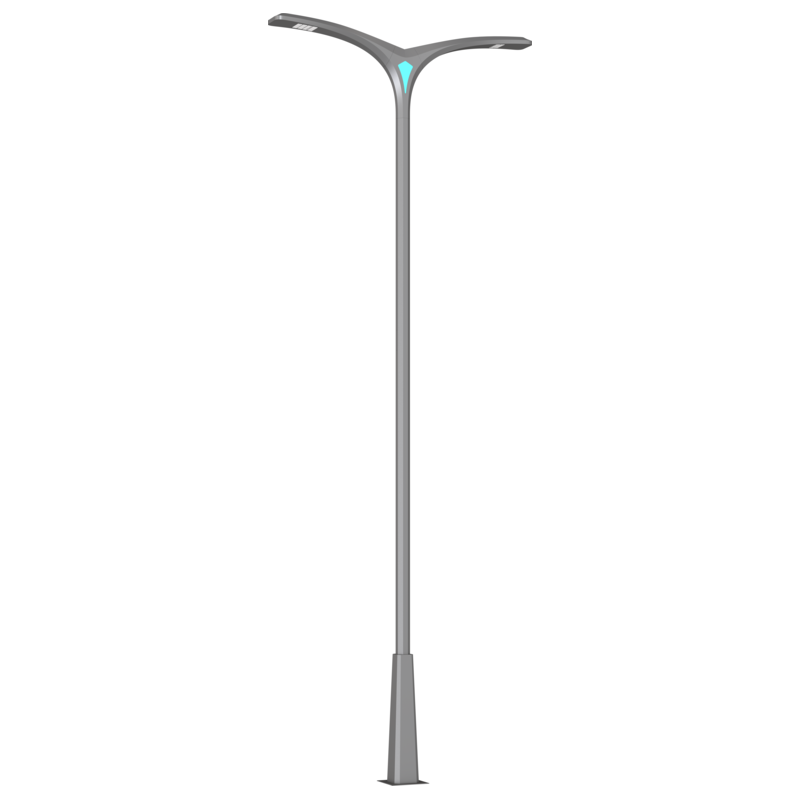
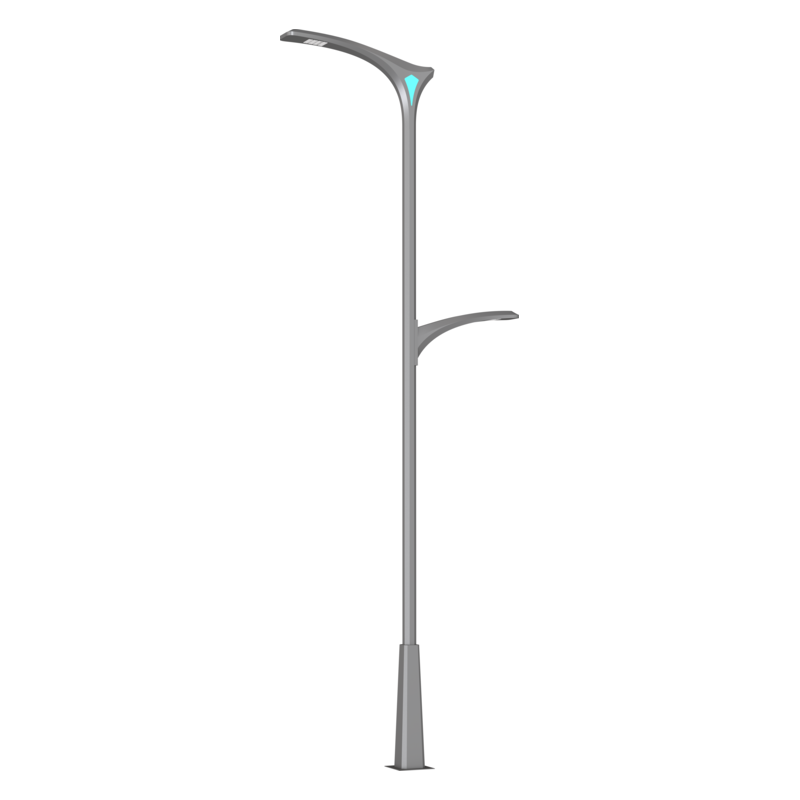
When evaluating an LED street light for demanding outdoor projects, one critical question is whether the housing can withstand high heat without compromising safety, performance, or lifespan. For quality control and safety managers, understanding heat resistance is essential to preventing premature failure and ensuring reliable operation in roads, public spaces, and dense urban environments. This article explains the key signs, materials, and design factors that indicate a housing is built for high-temperature conditions.
In practice, “high heat” is rarely just about ambient temperature. A street light housing must deal with several heat sources at the same time: heat generated by the LED module and driver, solar gain on dark external surfaces, poor airflow in compact urban layouts, and seasonal temperature peaks that push already stressed components beyond their safe operating range. A housing that looks solid from the outside can still fail as a thermal system.
Why housing heat resistance matters more than many specifications suggest
For outdoor lighting, overheating usually does not begin with a dramatic failure. It starts with lumen depreciation, driver instability, gasket hardening, discoloration of coatings, warping around sealing points, or repeated thermal cycling that weakens joints and fasteners. By the time visible failure appears, the product has often been operating outside its ideal thermal condition for months.
This is why quality and safety review should not stop at IP rating or advertised lifespan. An IP66 enclosure can still run too hot internally if the heat path from the LED board to the housing is poorly designed. Likewise, a claimed lifespan of 50,000 hours only has practical meaning if it is tied to a verified thermal environment rather than to ideal laboratory assumptions.
The first thing to check: housing material, not just wall thickness
A common purchasing mistake is to equate a heavy housing with a heat-resistant housing. Weight alone says little. The more relevant issue is thermal conductivity, structural stability at elevated temperature, and long-term resistance to corrosion and deformation.
In most modern LED street light designs, die-cast aluminum is the preferred housing material because it balances thermal conductivity, mechanical strength, and outdoor durability. It can transfer heat away from the LED board far more effectively than low-grade cast alloys or steel-heavy structures that trap heat near the source. The exact alloy specification is not always disclosed in sales documents, so this is an area where factory data or material certificates may need to be requested.
Warning signs include:
- Unclear alloy description such as “metal housing” without grade information
- Visible casting defects, porosity, or inconsistent wall structure
- Thin sections around high-load mounting points
- Excessive reliance on decorative covers that obstruct heat dissipation
Good heat performance comes from a housing designed as a thermal component, not as a shell wrapped around electronics.
Heat sink design tells you more than the brochure does
A housing that can handle high heat will usually show intentional heat management in its geometry. Look for fins with adequate spacing, direct thermal mass behind the LED mounting area, and an external profile that encourages natural convection. Closely packed fins may look advanced, but if the spacing is too narrow, dust accumulation and stagnant air can reduce real-world cooling performance.
In road and highway applications, the orientation of the luminaire also matters. Heat sinks designed for one mounting angle may not perform the same way at another. This is especially relevant in retrofit projects where pole arm angles vary. A robust thermal design should tolerate realistic installation variation without causing hotspot formation.
One useful evaluation question is simple: does the product show a clear thermal path from the LED package to ambient air? If that path is interrupted by poor interface materials, uneven mounting pressure, or unnecessary internal barriers, the housing may not cope well under sustained heat.
Internal component separation is a major indicator of thermal discipline
Not all heat-sensitive parts age at the same rate. LEDs, drivers, surge protection components, wiring insulation, seals, and lenses each respond differently to heat. A well-designed housing does not just dissipate heat outward; it also manages where heat accumulates internally.
Pay attention to whether the driver chamber is separated from the LED chamber, or whether both are packed into a shared cavity with limited airflow. Integrated compactness is not always a benefit. In hot climates, driver temperature often becomes the limiting factor in system reliability, even when the LED board remains within an acceptable range.
For example, a road-grade unit such as the LED Street Light Luminaire in the 50-350W range may appear suitable on paper because of its IP66 enclosure and rated lifespan of ≥50000 hours, but the real quality question is whether those performance claims are supported by sound thermal separation and verified temperature rise data under load.
Ask for thermal test evidence, not only product certificates
Many buyers focus on electrical safety certificates and ingress protection reports. Those are necessary, but they do not by themselves prove strong high-temperature performance. For heat evaluation, more useful documents include:
- Temperature rise test reports
- LED board and driver operating temperature records
- Ambient temperature test conditions
- Thermal simulation or design validation data
- LM-80, TM-21, or related lumen maintenance references where applicable
These documents should be reviewed carefully. A thermal test at moderate ambient conditions may not reflect actual summer exposure in urban roads or high-solar public spaces. If the manufacturer reports stable performance at 25°C ambient only, that is not enough for a high-heat risk judgment. For projects in harsh environments, test conditions closer to field reality are more meaningful. Exact acceptable thresholds can vary by design and component class, so if operating temperature limits are not clearly stated, that information remains 【待核实】.
Surface coating and color are not cosmetic details
Housing coatings affect both corrosion resistance and heat behavior. Poor coating systems can chalk, crack, or lose adhesion after repeated heating and cooling cycles. Once that happens, the metal surface becomes more vulnerable to corrosion, especially in coastal or polluted urban zones.
Color also matters. Darker housings can absorb more solar radiation, increasing enclosure temperature during daylight hours before the light even turns on. This does not automatically rule out dark finishes, but it does mean thermal margin should be stronger in regions with intense sun exposure. For safety managers, that is a lifecycle issue, not a styling issue.
Seals, lenses, and fasteners often fail before the housing body does
When people ask whether a housing can “handle high heat,” they often think only about the main metal body. In reality, many failures come from associated materials. Silicone gaskets can harden if poorly specified. Plastic lens retainers can deform. Fasteners with inadequate corrosion treatment can loosen after repeated thermal expansion and contraction.
This is why visual inspection during incoming quality control should include more than casting quality. Check for:
- Uniform gasket compression without pinch points
- Lens material suitability for outdoor UV and temperature exposure
- Secure fastening around the LED and driver compartments
- No signs of stress whitening, brittleness, or edge deformation on polymer parts
If one weak material sits inside an otherwise good aluminum housing, the full luminaire can still become a field failure risk.
Field conditions can invalidate a lab-stable design
A housing that performs well in standard testing can still struggle on site. High dust areas reduce fin efficiency. Bird nesting or debris can block airflow. Voltage fluctuations may increase driver stress. Enclosed urban canyons can trap heat at night. Pole-top installations above reflective paving can experience additional heat load.
For that reason, thermal suitability should be assessed by application class. Roads, highways, and smart city corridors do not all expose luminaires to the same thermal pattern. A unit built for broad outdoor use should be reviewed in the context of local climate, mounting height, pole spacing, control strategy, and maintenance interval.
In some projects, smart dimming functions such as PWM, PLC, or 0-10V are useful not only for energy saving but also for thermal risk reduction during peak stress periods. That does not replace sound housing design, but it can improve operating margin when combined with a properly engineered luminaire.
What a quality team should treat as red flags
Several recurring issues deserve closer scrutiny during supplier qualification or batch inspection:
- Large power range offered in one identical housing with no clear thermal differentiation
- No Tc point identification for driver or LED module
- Marketing emphasis on brightness, with little data on heat dissipation
- High claimed efficacy but no explanation of thermal conditions behind the figure
- Inconsistent fit between housing parts, suggesting assembly tolerance problems
That first point is especially important. If the same housing is used from 50W to 350W, quality teams should verify whether all wattages truly share the same thermal safety margin. A scalable product family can be legitimate, but not every housing size handles every power level equally well.
A reliable judgment comes from system thinking
An LED street light housing is heat-capable when the material, structure, sealing, component layout, and test evidence all point in the same direction. No single claim proves it. Not IP66 alone, not lifespan alone, not a die-cast aluminum label alone.
For quality control and safety review, the most dependable approach is to treat thermal performance as a system verification task. Check the housing material, inspect the heat sink logic, review chamber separation, ask for temperature rise data, and examine the non-metal parts that age under heat. If those elements are consistent, the lighting product is far more likely to deliver stable long-term operation in real outdoor service.
That is the difference between a housing that merely encloses an LED street light and one that genuinely protects its performance under heat.
◉ MESSAGE
Blog
- LED Street Luminaire Specifications That Matter for Roadway Projects
- What to Evaluate When Selecting a Smart Street Lamp Manufacturer
- How to Prepare a Compliant Solar Lighting Bid for Public Infrastructure Projects
- LED Street Lighting Solutions for Urban and Municipal Roads
- LED Street Light Installation Guide for Road Projects
- LED Street Light Lifespan: How Long Do LED Road Lights Last?
- LED Street Light IP Rating: What Should Buyers Choose?
Message