
What IP Rating Does a High Power LED Floodlight Need for Coastal Use
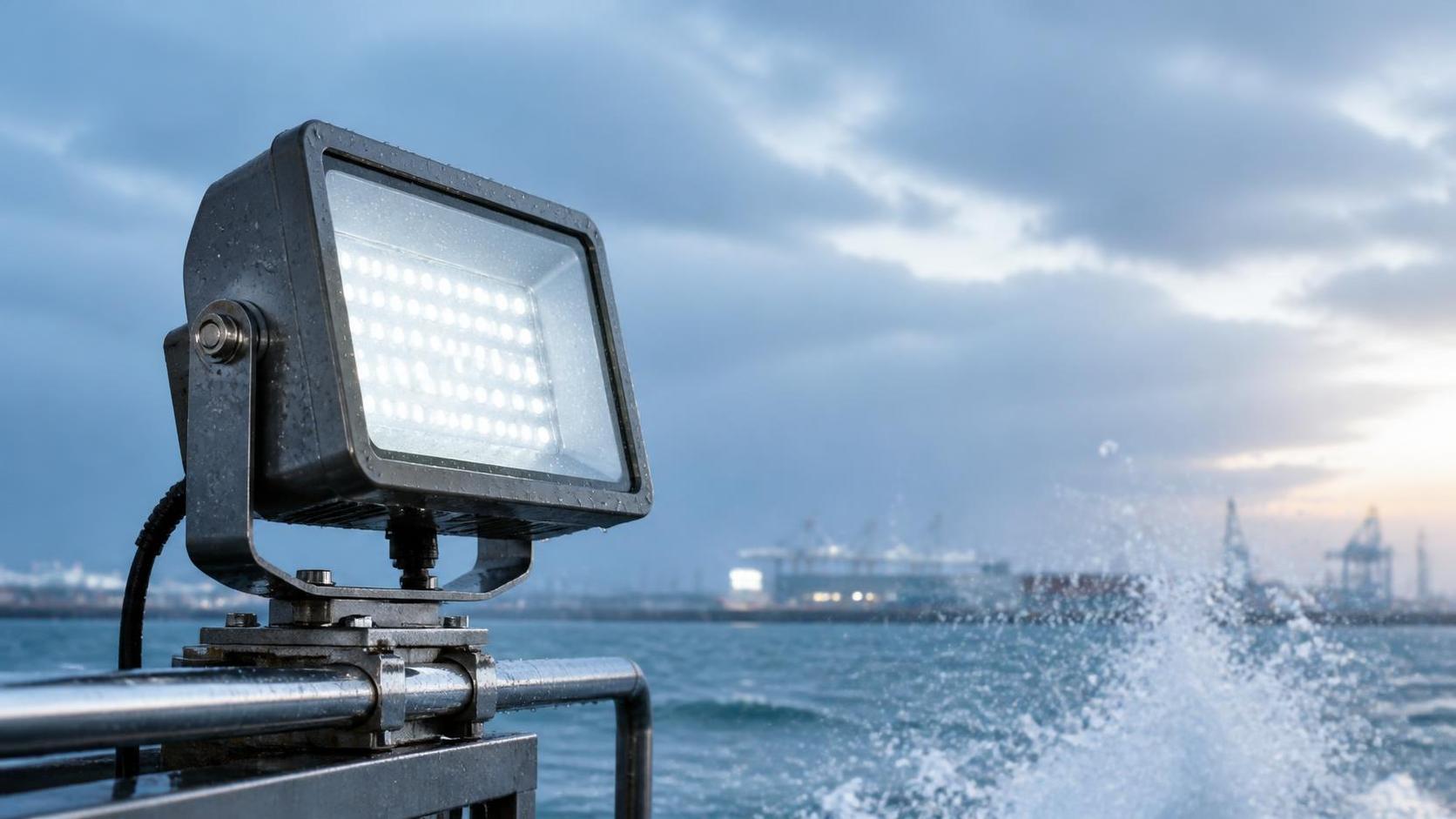
For coastal projects, the short answer is this: a high power LED floodlight should typically be at least IP66, and in many cases IP67 is the safer choice. For quality control and safety managers, the goal is not to chase the highest number blindly, but to match the fixture protection level to real exposure conditions such as salt spray, heavy rain, airborne moisture, and maintenance access. In coastal environments, insufficient ingress protection usually leads to corrosion, water entry, unstable performance, and early failure.
That is why the IP rating should be assessed together with housing material, sealing quality, coating performance, cable entry protection, and long-term reliability under marine exposure. A floodlight marked with a high IP rating on paper may still become a project risk if the overall construction is weak. For inspection teams and safety managers, the practical question is not only “what IP rating is listed,” but “what level of protection will still hold after years of coastal service.”
What IP Rating Is Usually Needed for Coastal Use?
For most coastal roads, ports, public spaces, and industrial perimeter areas, IP66 is the practical minimum standard for a high power LED floodlight. IP66 means the fixture is fully protected against dust ingress and can resist powerful water jets. This level is widely accepted for outdoor applications exposed to wind-driven rain and harsh weather.
However, many coastal projects should consider IP67 instead of stopping at IP66. IP67 adds protection against temporary immersion in water, which creates a stronger margin of safety when fixtures face extreme storms, drainage issues, wave splash, or installation in areas with repeated standing water. For sites with severe marine exposure, that extra protection can make a meaningful difference in service life.
IP65 may be acceptable only in lighter outdoor conditions, such as partially sheltered building facades or locations with limited direct exposure. For open coastal environments, it is usually not the best long-term choice. The difference in initial procurement cost is often small compared with the cost of maintenance access, replacement work, and safety incidents caused by premature fixture failure.
Why IP66 Is Often the Baseline for a High Power LED Floodlight
Quality control teams often need a clear baseline when reviewing specifications. In coastal use, IP66 has become that baseline because the environment is not defined by occasional rain alone. Wind can force moisture into weak sealing points, and airborne salt can accelerate degradation around joints, screws, cable glands, and driver compartments.
A high power LED floodlight installed near the sea is usually exposed to a combination of water, salt, heat, and pressure changes. This combination puts continuous stress on gaskets and enclosure seals. IP66 helps reduce the likelihood that water will penetrate under severe rain conditions, especially when luminaires are mounted in open areas with no structural shielding.
For safety managers, this matters because water ingress does not always cause immediate blackout. It may first appear as flickering, reduced insulation performance, internal condensation, or driver instability. These failures are harder to detect early and may create operational and safety risks before complete breakdown occurs.
When Is IP67 the Better Decision?
IP67 is worth prioritizing when project conditions are more aggressive than standard roadside exposure. This includes sea walls, docks, island infrastructure, low-mounted floodlights near splash zones, tunnels or underpasses with drainage risk, and industrial yards where pressure washing is frequent. In these environments, the extra protection is not excessive; it is a practical risk-control measure.
Another reason to move toward IP67 is maintenance difficulty. If replacing failed fixtures requires traffic closure, lift equipment, marine access, or restricted work permits, then a more protected luminaire can reduce operational disruption. For many project owners, fewer interventions are just as important as energy efficiency.
There is also a compliance value. Quality and safety personnel are often judged not only on whether a product works on day one, but on whether it continues to meet project expectations over time. Choosing IP67 for exposed coastal applications can provide a stronger justification during technical review, supplier evaluation, and long-term asset management.
Why IP Rating Alone Is Not Enough
One of the most common mistakes in procurement is treating the IP code as the full measure of outdoor durability. In reality, coastal performance depends on more than ingress protection. A floodlight may have IP66 or IP67 certification, but still fail early if the housing material, anti-corrosion treatment, or assembly quality is poor.
For marine or coastal applications, look closely at the body material, coating process, stainless steel fasteners, lens sealing, and cable gland design. Aluminum housing quality matters, but so does the coating system that protects it from salt-laden air. If the coating breaks down, corrosion may begin around edges, mounting points, and hardware even before internal water ingress becomes visible.
Driver compartment design is another critical point. In many failed outdoor luminaires, the weak point is not the LED module itself but the driver seal, wire entry, or connector interface. From a quality control perspective, supplier validation should include these details rather than relying only on a catalog specification table.
What Quality and Safety Managers Should Check Before Approval
When reviewing a high power LED floodlight for coastal use, start with the IP rating, but move quickly into verification. Ask whether the reported IP level applies to the complete assembled fixture, not just the enclosure design. Confirm whether testing was performed by a credible third party and whether the test condition matches the delivered product version.
Next, inspect sealing components and assembly consistency. Gasket material, compression quality, screw torque control, and cable gland selection all affect real-world protection. A strong design can still fail in production if assembly control is weak. This is especially important for large-scale projects where batch consistency matters more than a single approved sample.
Corrosion resistance should also be reviewed together with ingress protection. Salt spray resistance, housing finish quality, and fastener grade all influence long-term reliability. In coastal projects, it is useful to request environmental test records or case references from similar applications rather than accepting generic outdoor claims.
Finally, review maintenance implications. A fixture that is technically compliant but difficult to reseal after driver replacement can become a weak link later. Safety managers should consider whether field servicing may compromise the original IP protection and whether the supplier has a design that supports reliable maintenance procedures.
How Exposure Level Changes the Right Choice
Not every coastal site faces the same risk, so the required protection level should reflect actual exposure. A floodlight installed several kilometers inland in a humid coastal city may face less aggressive conditions than one mounted directly along a harbor edge. Both are “coastal,” but their protection demands are different.
For moderate exposure, such as urban roads, plazas, and building perimeters in coastal regions, IP66 is usually a sound requirement when paired with good corrosion protection. For direct shoreline exposure, open industrial sites, island roads, and wave-influenced zones, IP67 is often the stronger and more defensible specification.
This same logic also applies to integrated off-grid infrastructure. In remote coastal roads and island projects, products such as Wind-Solar Hybrid Street Lighting | SHL-007 are often evaluated not only for energy independence, but for all-weather operational reliability. In such applications, enclosure protection and resistance to marine conditions directly affect whether the lighting system can remain dependable with limited maintenance access.
How to Balance Protection, Cost, and Long-Term Risk
From a purchasing standpoint, teams sometimes hesitate to specify a higher protection class because of budget pressure. But for coastal use, the relevant comparison is not only fixture price. It is total project cost over time, including inspection frequency, replacement labor, lift access, downtime, and reputational risk if lighting performance drops in public or safety-critical areas.
A lower-grade floodlight may appear competitive during tender review, yet become expensive after one or two storm seasons. This is particularly true for large projects where even a small percentage of premature failures creates major maintenance workload. For quality and safety managers, a slightly higher upfront cost can be justified if it materially reduces field failure risk.
In remote or hard-to-access projects, this principle becomes even stronger. Systems designed for continuous outdoor service, including hybrid solutions like Wind-Solar Hybrid Street Lighting | SHL-007, are typically valued because they support stable operation in demanding environments. The same decision logic should be applied to any high power LED floodlight under coastal exposure: lower intervention risk often delivers better lifecycle value than minimal initial savings.
Final Recommendation for Coastal Projects
If the application is genuinely coastal, IP66 should be treated as the minimum practical requirement for a high power LED floodlight. If the fixture will face direct marine exposure, severe storms, splash risk, standing water, or difficult maintenance conditions, IP67 is usually the more reliable choice. For many quality and safety teams, that is the more defensible standard.
At the same time, the best decision cannot rely on IP rating alone. Coastal durability depends on the full construction of the luminaire, including corrosion resistance, sealing integrity, hardware quality, and manufacturing consistency. The safest specification is one that combines the right IP level with proven material performance and verified project suitability.
In short, when evaluating coastal lighting, think beyond brightness and basic compliance. The right high power LED floodlight is the one that can maintain safe, stable performance after long exposure to salt, moisture, and harsh weather. For most projects, that means choosing at least IP66, and in more demanding marine environments, moving confidently to IP67.
◉ MESSAGE
Blog
- LED Street Luminaire Specifications That Matter for Roadway Projects
- What to Evaluate When Selecting a Smart Street Lamp Manufacturer
- How to Prepare a Compliant Solar Lighting Bid for Public Infrastructure Projects
- LED Street Lighting Solutions for Urban and Municipal Roads
- LED Street Light Installation Guide for Road Projects
- LED Street Light Lifespan: How Long Do LED Road Lights Last?
- LED Street Light IP Rating: What Should Buyers Choose?
Message