
What Color Temperature Works Best for Outdoor LED Lighting Applications
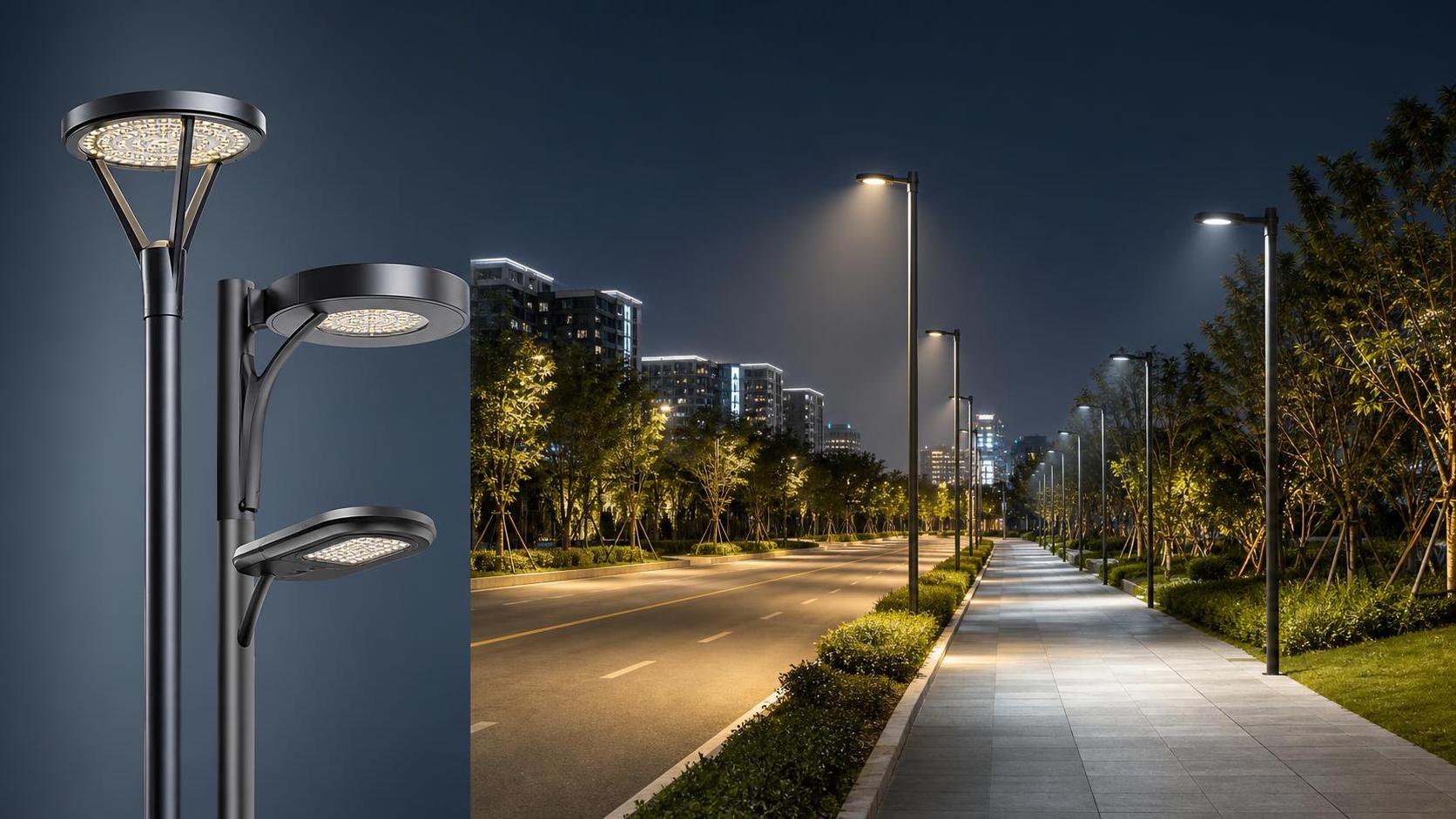
Choosing the right color temperature for outdoor LED lighting affects more than visual style. It shapes roadway visibility, user comfort, glare control, and long-term project suitability in different outdoor environments.
For technical evaluators, the best answer is usually not one universal Kelvin value. In most outdoor LED lighting projects, 3000K and 4000K are the most practical options, with the better choice depending on application priorities.
Warm white 3000K often works better where visual comfort, reduced harshness, and a more welcoming nighttime environment matter. Neutral white 4000K is often preferred where clarity, task visibility, and balanced performance are more important.
What Technical Evaluators Are Really Deciding
When people search for the best color temperature for outdoor LED lighting, they are rarely asking a purely aesthetic question. They are usually trying to determine which specification will perform best in real operating conditions.
That means evaluating how color temperature influences contrast, recognition distance, glare perception, ambient character, and consistency across the site. It also means checking whether the chosen option supports project standards and long-term maintenance goals.
In roads, public spaces, and urban infrastructure, the wrong choice can create unnecessary complaints, visual discomfort, or a mismatch between lighting performance and the intended use of the area.
Why 3000K and 4000K Are the Main Choices for Outdoor LED Lighting
For most professional outdoor LED lighting applications, the decision is centered on 3000K versus 4000K. Both are widely accepted because they balance efficiency, usability, and real-world adaptability better than extreme warm or cool settings.
At 3000K, light appears warmer and softer. It can make streetscapes, pedestrian areas, parks, and mixed-use public zones feel more comfortable while helping reduce the stark visual impression sometimes associated with cooler white light.
At 4000K, light appears cleaner and more neutral. It often supports stronger visual clarity for roads, intersections, circulation routes, and areas where users need quick recognition of objects, edges, and movement.
Higher color temperatures such as 5000K or above may still be used in some specialized environments. However, in many urban and public-facing projects, they can introduce a harsher nighttime appearance and increase concerns around glare and user acceptance.
When 3000K Is the Better Choice
3000K is often preferred in outdoor spaces where comfort, atmosphere, and reduced visual harshness are important. This includes pedestrian streets, residential-adjacent areas, plazas, waterfronts, campuses, and landscaped urban zones.
In these environments, the goal is not only to provide adequate illumination but also to create a nighttime setting that feels stable and usable. A warmer tone can support that objective without making the space feel overexposed.
Technical evaluators may also favor 3000K when local stakeholders are sensitive to nighttime ambience or when projects aim to align lighting with architectural materials, greenery, or public realm design strategies.
Another practical reason is perception. Even when illumination levels meet specification, cooler light can sometimes be described by users as glaring or overly sharp. A 3000K solution may help reduce those reactions in people-centered spaces.
When 4000K Is the Better Choice
4000K is typically the stronger choice when visual precision and balanced roadway performance are the main priorities. It is commonly selected for urban roads, traffic corridors, municipal streets, industrial access routes, and logistics-related environments.
In these applications, evaluators usually care about recognition speed, surface visibility, obstacle detection, and overall uniformity. A neutral white output often supports those needs without becoming as visually aggressive as higher Kelvin options.
4000K can also work well in complex urban environments where vehicles, cyclists, and pedestrians share space. It provides a crisp but still broadly acceptable appearance for multifunctional public infrastructure.
For many project teams, 4000K represents the most versatile middle ground. It offers a modern visual effect, good practical visibility, and compatibility with a wide range of outdoor LED lighting system designs.
How Color Temperature Affects Safety and Usability
Color temperature should never be assessed alone, but it does influence how users experience an outdoor lighting installation. The relationship between light color and visibility is tied to contrast, adaptation, and surrounding site conditions.
For roads, evaluators should focus on whether drivers and pedestrians can identify lane edges, vertical elements, crossing areas, and moving objects quickly and consistently. Neutral white light often supports these recognition tasks effectively.
For public spaces, user comfort matters just as much as visibility. If the lighting feels too cold or intense, the space may become visually tiring even when measured light levels are compliant.
This is why the best color temperature for outdoor LED lighting is the one that supports the actual activity of the site, not simply the one that looks brightest on paper.
What Other Specifications Must Be Evaluated Together
Technical evaluation becomes more reliable when color temperature is reviewed alongside efficacy, color rendering, ingress protection, service life, optical distribution, and structural durability. Kelvin value alone does not define project performance.
For example, a street lighting system with 3000K or 4000K output still needs sufficient luminous efficacy, dependable optical control, and weather resistance to meet operational expectations over time.
A relevant example is Modern Street Lighting|MSL-HC, which is designed for street lighting applications and offers both 3000K and 4000K options. Its configuration includes 150-250W main light power, efficacy of at least 140 lm/W, Ra≥70, IP67 protection, and LED chips from CREE or OSRAM.
For evaluators working on exposed road infrastructure, structural factors also matter. Pole height options of 8-14 meters, hot-dip galvanized plus powder-coated surfaces, and wind resistance of at least 150 km/h all contribute to long-term project suitability.
How to Choose the Right Color Temperature by Application
A practical selection method starts with the primary use of the site. If the space is vehicle-dominant and clarity-led, 4000K will often be the more appropriate baseline for comparison and testing.
If the space is pedestrian-oriented, residential-adjacent, or intended to feel comfortable over long evening use, 3000K is often the more suitable starting point. It can improve acceptance without sacrificing professional lighting performance.
In mixed-use urban environments, the decision may depend on hierarchy. Main carriageways may benefit from 4000K, while adjacent pedestrian zones, plazas, or landscape edges may perform better at 3000K.
Evaluators should also review local standards, stakeholder preferences, maintenance strategy, and visual continuity with nearby installations. A technically acceptable color temperature can still be the wrong project choice if it creates inconsistency across the wider environment.
Avoiding Common Evaluation Mistakes
One common mistake is assuming that cooler light always means better visibility. In reality, glare, discomfort, and context all influence whether users actually experience the lighting as clearer and safer.
Another mistake is treating color temperature as an isolated product feature. Outdoor LED lighting performance depends on the full system, including luminaire optics, mounting height, spacing, control strategy, and environmental exposure.
It is also risky to evaluate lighting only from product data sheets without considering real application conditions. Pilot sections, mockups, or reference projects often reveal differences in perception that specification tables alone cannot show.
Where long-term project reliability matters, product durability should remain part of the discussion. Systems such as Modern Street Lighting|MSL-HC are relevant because they combine color temperature options with practical structural and environmental performance for outdoor use.
Final Recommendation for Technical Evaluators
For most outdoor LED lighting projects, the most effective answer is straightforward. Choose 3000K when comfort, public acceptance, and a softer nighttime environment are more important. Choose 4000K when clarity, roadway visibility, and multi-use urban performance take priority.
Neither option is automatically best in every setting. The right specification depends on how the space is used, who uses it, and what performance outcomes the project must deliver over time.
Technical evaluators should therefore judge color temperature as part of a complete application decision. When that decision is tied to actual site function, system durability, and visual experience, outdoor lighting results are usually more reliable and more successful.
◉ MESSAGE
Blog
- LED Street Luminaire Specifications That Matter for Roadway Projects
- What to Evaluate When Selecting a Smart Street Lamp Manufacturer
- How to Prepare a Compliant Solar Lighting Bid for Public Infrastructure Projects
- LED Street Lighting Solutions for Urban and Municipal Roads
- LED Street Light Installation Guide for Road Projects
- LED Street Light Lifespan: How Long Do LED Road Lights Last?
- LED Street Light IP Rating: What Should Buyers Choose?
Message