
Urban Furniture Lighting for Tourist Attractions: Balancing Ambience and Durability
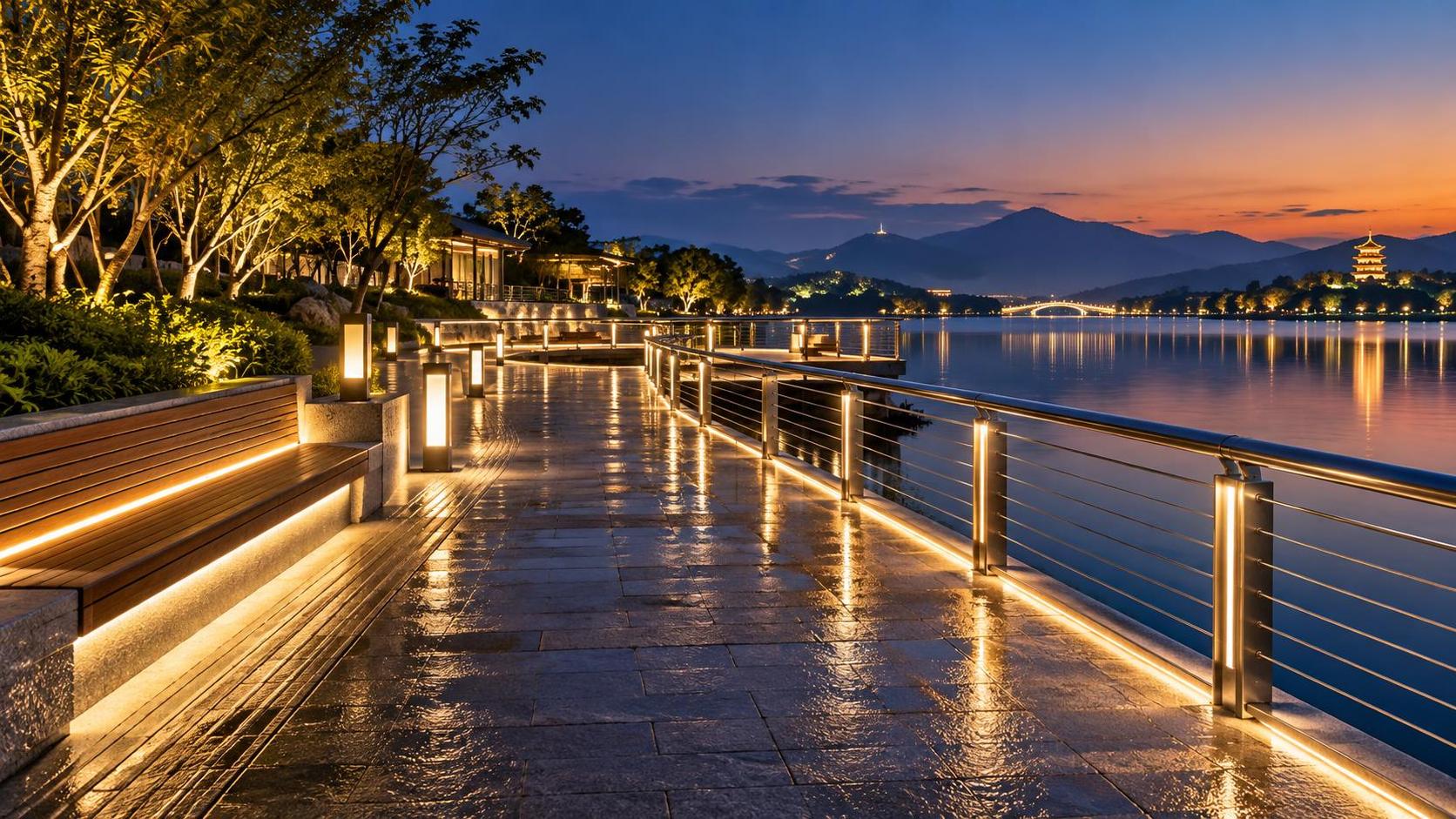
Tourist attractions need more from outdoor lighting than a pleasant evening appearance. Paths, seating areas, waterfront edges, viewing decks, queues, and gathering spaces must remain legible when visitor numbers rise, weather changes, and maintenance access becomes difficult. LED urban furniture lighting for tourist attractions can help create a coherent nighttime environment, but only when the lighting is treated as part of the site infrastructure rather than as decorative add-on equipment.
For project managers, the early decision is rarely whether to add illuminated furniture. It is whether the proposed combination of benches, bollards, railings, planters, and wayfinding elements will still perform after repeated public use, cleaning, impact, moisture exposure, and seasonal operation. A visually impressive concept can become a maintenance burden if the luminaire, structure, wiring, controls, and replacement strategy have not been considered together.
Use furniture lighting to support movement, not compete with the attraction
Lighting integrated into urban furniture works best when it gives visitors useful visual information. A low-level illuminated bench can define a rest zone. A continuous rail light can clarify the boundary of a bridge or elevated walk. Bollards can make a route understandable without filling the landscape with tall poles. In these applications, the fixture has a job beyond decoration: it helps people orient themselves and move safely.
This is particularly useful in attractions where conventional poles would obstruct views, conflict with heritage-sensitive surroundings, or create visual clutter along narrow pedestrian routes. Low-mounted light can preserve sightlines and provide a more intimate nighttime character. Yet low mounting height also creates a constraint: the light must be carefully aimed and shielded. A bright point source near eye level can cause glare, especially on wet paving, beside water, or where visitors pause to take photographs.
Ambient lighting should therefore be layered. Furniture lighting can establish the immediate pedestrian zone, while other luminaires address wider routes, steps, crossings, entrances, or vertical landmarks. Asking an illuminated bench or bollard to provide all required circulation lighting often leads to excessive brightness, uncomfortable glare, and uneven illumination between furniture locations.
Start with the visitor journey after dark
Rather than placing illuminated furniture wherever it appears attractive on a daytime plan, map the evening journey. Identify arrival points, ticketing and queue areas, route choices, rest points, level changes, accessible paths, viewpoints, and departure routes. Each location calls for a different lighting response.
- At entrances and transition points, lighting should make the next route obvious without overwhelming signage or architecture.
- Along long paths, consistent rhythm matters more than isolated visual highlights. Gaps between illuminated elements should not create uncertain dark sections.
- At seating areas, light should support social use and basic visibility without shining directly into seated visitors' eyes.
- Near steps, ramps, and edge conditions, contrast and direction are more important than decorative color effects.
- At scenic viewpoints, fixtures should remain visually quiet and avoid casting distracting reflections or spill toward the view.
Color temperature should follow the character of the attraction and the surface materials, but warm light is not automatically the correct answer. A warmer tone may suit timber, stone, hospitality zones, and historic settings; a more neutral tone may improve visual clarity in active circulation or contemporary public spaces. The more important requirement is consistency across connected areas. A mixture of unrelated color temperatures makes a large site feel pieced together, even when each individual fixture looks acceptable.
Durability begins with the structure around the light source
LED modules can have long rated operating lives, but an integrated furniture assembly fails for many other reasons first. Water entering a driver compartment, corrosion beneath a coating, loosened fixings, cracked diffuser material, cable damage, or a poorly sealed joint can take a unit out of service long before the LED itself reaches end of life.
Tourist attractions expose furniture to conditions that indoor-style decorative products are not designed to manage. Visitors may sit, stand, lean, climb, drag luggage, or strike furniture with bicycles and service equipment. Cleaning teams may use pressurized water. Coastal, lakeside, mountain, and landscaped sites introduce different combinations of salt, humidity, UV exposure, leaf debris, mud, freeze-thaw cycles, and insects. The right specification needs to reflect the actual site environment rather than rely on a generic “outdoor” label.
For exposed electrical sections, appropriate ingress protection and robust cable entry design are fundamental. The stated IP rating matters, but it should not be assessed in isolation. A rated enclosure can still fail in service if its joints are repeatedly stressed, if drainage is poor, or if maintenance workers must disturb seals to access components. Details such as gasket compression, hidden drainage paths, corrosion-resistant fasteners, tamper-resistant access panels, and separation between water channels and electrical cavities deserve attention during design review.
The supporting structure also needs a credible corrosion and impact strategy. Powder coating may provide the desired finish, but it does not compensate for unsuitable base material preparation, vulnerable cut edges, or water trapped inside hollow sections. Where furniture includes steel posts or frames, project teams should examine wall thickness, galvanizing approach where applicable, weld treatment, anchoring method, and how the structure handles local wind loads or crowd pressure. Durability is a system property, not a luminaire data-sheet line.
Maintenance access is a design requirement
Integrated lighting is often chosen because it produces a clean visual result. That benefit can disappear quickly when a failed driver requires dismantling an entire bench, removing paving, or taking a route out of service. Before approving a design, the project team should ask a simple operational question: how will a technician identify, isolate, open, replace, reseal, and test each serviceable component?
Replaceable elements should be accessible without damaging the furniture finish or disturbing structural anchors. Electrical isolation should be clear. Spare modules, drivers, diffusers, and proprietary connectors should be defined early, especially for attractions that expect phased construction or long operating periods. A fixture that is easy to install but difficult to repair can impose disproportionate lifecycle costs on a public site.
Control architecture also affects maintenance. Grouping all furniture lighting onto a single circuit may simplify initial commissioning, but it reduces flexibility when zones need different operating hours. Separating entrance routes, leisure areas, waterfront edges, and secondary paths enables more appropriate schedules and makes faults easier to locate. Dimming and timed operation can reduce unnecessary overnight output, provided that safety-critical routes retain the required visibility.
Smart controls are useful when they solve an operating problem, such as remote fault reporting, seasonal schedules, or different modes for events and normal evenings. They are less useful when they add a communication dependency without a clear maintenance owner. The control platform, gateway position, power supply, handover documentation, and responsibility for future adjustments should be established alongside the physical lighting package.
Where off-grid lighting can support the wider scheme
Urban furniture lighting generally depends on distributed low-voltage wiring or nearby electrical infrastructure. Some attraction sites, however, include peripheral trails, temporary visitor routes, remote parking edges, or landscape areas where trenching would disrupt paving, planting, archaeology, drainage, or daily operations. In those locations, standalone solar street lighting can complement the furniture-based scheme instead of forcing a costly cable route.
A solution such as Solar Street Lighting | SL-008 is relevant where off-grid installation is practical and solar access has been properly assessed. Its configuration can avoid trenching and provide lighting for routes beyond the reach of the main electrical network. For exposed locations, structural considerations remain important: the listed 6 m pole, hot-dip galvanized and powder-coated finish, IP-rated components, and wind-resistance specification should be evaluated against the site layout and local engineering requirements.
Solar lighting should not be selected simply because it removes cables. Tree canopy, adjacent buildings, seasonal sunlight, shading from terrain, battery autonomy expectations, cleaning access, and the required lighting schedule all affect whether it will deliver a dependable result. It is often most effective as a targeted solution for isolated routes, while wired furniture lighting serves high-use visitor areas where precise control and a tightly integrated appearance are priorities.
A practical review before procurement
Procurement documents should ask suppliers to demonstrate how the proposed furniture-lighting assembly works as a complete installed object. Renderings and individual product samples are useful, but they do not reveal cable routing, drainage, access clearances, mounting tolerances, or the visual effect of repeated units along a real route.
- Review a full-scale mock-up in the intended mounting condition where possible, including the finish, diffuser, fixings, and access panel.
- Check nighttime glare from the perspective of walkers, seated visitors, wheelchair users, and people approaching from both directions.
- Confirm how lighting equipment is protected from cleaning operations, vandalism, impact, and site-specific weather exposure.
- Define component replacement procedures, spare-part availability, warranty boundaries, and commissioning responsibilities before handover.
- Coordinate furniture foundations, drainage, electrical containment, and controls with civil, landscape, and accessibility teams rather than leaving those interfaces to installation stage.
The strongest schemes use illuminated urban furniture selectively. They make routes easier to read, give public spaces a deliberate nighttime identity, and avoid unnecessary hardware in sensitive views. Their long-term success depends less on decorative intensity than on disciplined integration: appropriate light distribution, resilient construction, maintainable components, and a layout that still makes sense when the attraction is busy, wet, dark, and operating years after opening.
◉ MESSAGE

Blog
- How to avoid vendor lock-in in a government smart lighting project
- Sizing the communications power budget for smart city solar street lights
- How energy-saving mode affects solar bollard light operating time
- Comparing lead times from LED street light luminaire suppliers in Europe
- What spare parts support should a smart street light exporter offer?
- Where to place a solar garden light in a partially shaded garden
- Which battery alerts matter in remotely monitored solar street lighting?
Message