
Evaluating MSL-HC Modern Street Lighting From Chinese Manufacturers
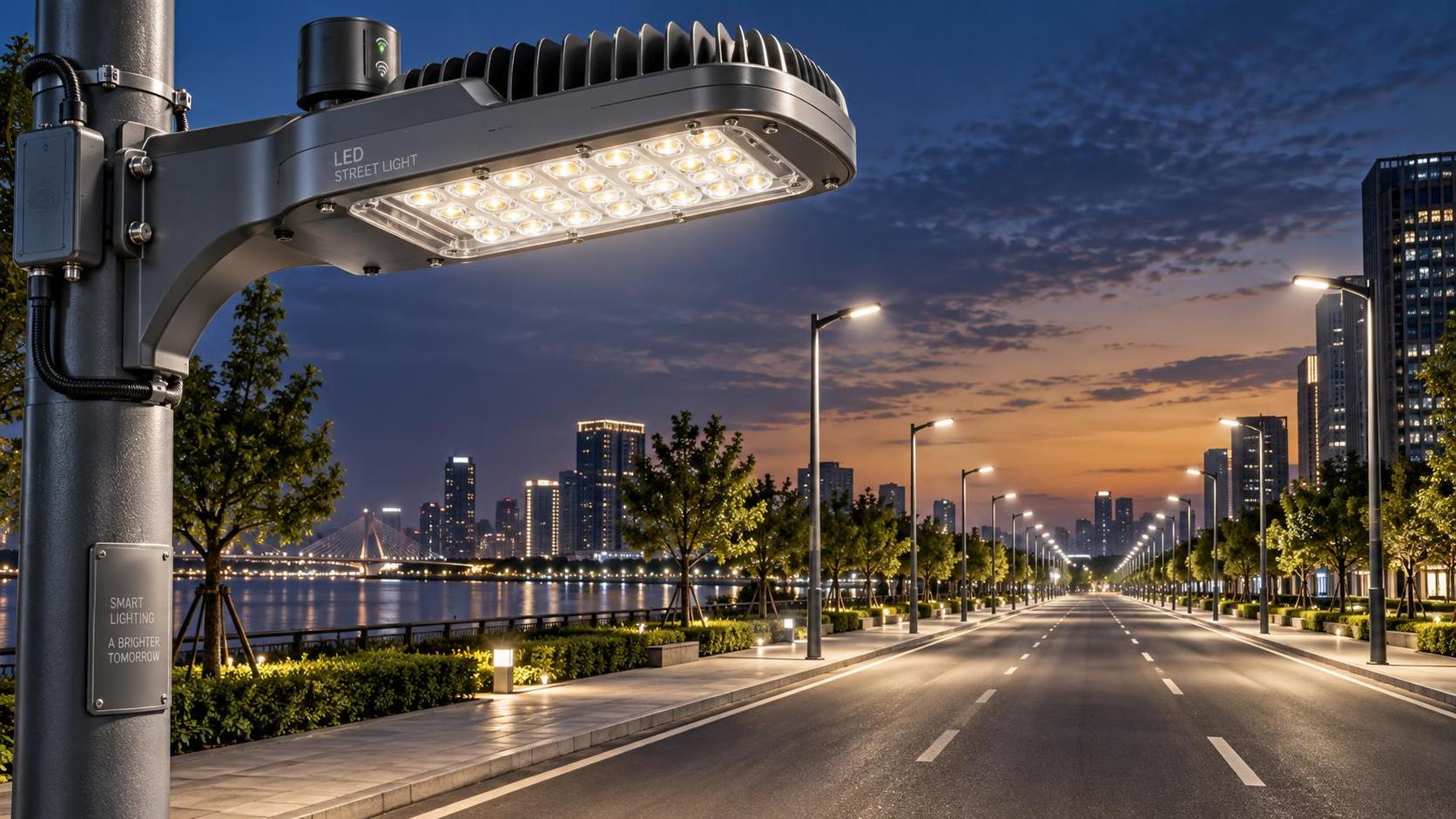
For a procurement team, evaluating MSL-HC modern street lighting from a Chinese manufacturer should begin with a project question: can the proposed system maintain the required road or public-space lighting performance after installation, commissioning, and several years of exposure? A competitive unit price is relevant, but it is rarely the deciding measure of project value. The larger risks sit in optical suitability, component consistency, control-system integration, structural durability, documentation, and the supplier's ability to support delivery when requirements change.
Chinese manufacturers can be a strong sourcing option for large-scale outdoor lighting projects when they can demonstrate engineering control rather than simply offer a broad catalog. The most suitable supplier is usually not the one offering the highest nominal wattage or the most feature-heavy specification sheet. It is the one that can translate the lighting design, installation conditions, and operational requirements into a repeatable product configuration.
Start with the lighting task, not the luminaire catalog
“Modern street lighting” can cover very different applications: arterial roads, local streets, pedestrian areas, industrial parks, municipal squares, parking zones, bridges, and mixed-use urban developments. These locations impose different requirements for mounting height, pole spacing, glare limitation, uniformity, visual comfort, maintenance access, and control strategy. A fixture that performs acceptably on a wide roadway may be poorly suited to a narrow residential street or a pedestrian route.
Before asking an MSL-HC manufacturer China for a quotation, buyers should provide the information that determines whether the proposed fixture is appropriate:
- Road or site layout, including carriageway width, lane count, pedestrian areas, curves, junctions, and nearby obstructions.
- Pole height, outreach arm geometry, mounting arrangement, and spacing between poles.
- Required operating hours and whether dimming schedules or remote control will be used.
- Environmental conditions such as coastal air, dust, rainfall, heat, low winter temperatures, vibration, or strong wind.
- Local electrical requirements, public-project specifications, and any approval or documentation obligations.
This information allows the supplier to propose an optical distribution and power range that fit the installation. Without it, quotations often default to a standard configuration. That may make early price comparisons easy, while moving uncertainty into the design approval and installation stages.
Buyers should also be cautious when comparing fixtures only by lumen output. High output does not automatically produce better lighting. Beam distribution, mounting height, glare control, spacing, and maintenance factor affect the usable result. Ask for photometric files and a lighting calculation based on the actual layout, then check whether the assumptions in the calculation match the proposed pole arrangement. A calculation prepared for different mounting heights or spacing is not useful evidence for the project under review.
Assess the production build behind the specification
Street luminaires operate outdoors for long periods with limited maintenance access. For that reason, procurement should examine the construction and serviceability of the complete assembly rather than treat LEDs, drivers, housings, and surge protection as disconnected line items.
Start with the enclosure. Its material, heat-dissipation design, sealing arrangement, cable-entry protection, corrosion resistance, and fastening details all influence long-term operation. A stated IP rating is important, yet it does not answer whether the housing will remain well sealed after repeated temperature changes, field wiring, vibration, or years of outdoor exposure. Ask how the manufacturer controls gasket installation, cable glands, door or cover fitment, and final assembly inspection.
The same discipline applies to the electrical system. LED brand names alone are not enough for an informed decision. Buyers should request the proposed LED configuration, driver make and model, input-voltage range, dimming interface, surge-protection arrangement, and replacement policy for serviceable components. If the project includes an intelligent lighting platform, confirm whether the driver and controller support the required protocol and whether the control architecture has been tested as a complete system.
There is also a practical distinction between a fixture designed for a controlled production run and one designed for stable repeat supply. Large projects may be delivered in phases, and replacement units may be required later. The supplier should be able to identify the approved bill of materials, preserve configuration records, and explain how changes to LEDs, drivers, lenses, or controllers are managed. An unannounced substitution can change light distribution, dimming behavior, color consistency, or maintenance requirements even when the exterior of the product looks unchanged.
Questions that expose weak specification control
- Which component changes require customer approval after a sample has been accepted?
- Can the manufacturer provide a serial-number or batch traceability method for delivered luminaires?
- What incoming, in-process, and final inspections apply to the driver, LED board, sealing system, and finished product?
- How are photometric performance and electrical safety verified for the exact configuration being supplied?
- Can the supplier provide spare drivers, controllers, and other replaceable parts for the anticipated maintenance period?
These questions are more revealing than a generic statement that a factory performs quality control. A capable supplier should answer them with project-specific documents, defined procedures, and clear responsibility rather than broad assurances.
Do not separate smart controls from the luminaire decision
Modern street lighting is often procured with dimming, scheduling, fault reporting, or central management in mind. Problems arise when the luminaire, controller, gateway, and software are sourced as separate items without agreeing where compatibility is proven. A fixture may technically accept a controller, yet still create installation or commissioning problems because of wiring interfaces, control-node fit, power consumption, firmware settings, or communication coverage.
For projects using smart control, the procurement package should define the operating model before purchase. Clarify whether control is required at the individual luminaire, cabinet, group, or circuit level. Define the expected response to communication loss, power interruption, sensor failure, and manual override. Confirm who supplies the control devices, who configures the platform, and who is responsible for site commissioning.
It is also useful to distinguish between functions required on day one and capabilities that may be added later. Remote dimming may have immediate value where operating profiles vary by time or traffic conditions. More advanced monitoring may require additional communications infrastructure, maintenance processes, and data management that are not justified for every road project. Buying a “smart-ready” luminaire can be sensible, but only when the physical interface and future upgrade path are specified clearly enough to avoid replacing the fixture later.
Compare project cost on an installed and maintained basis
The least expensive streetlight quotation can become expensive when it creates rework, trenching, incompatible controls, premature component replacement, or inconsistent supply across project phases. Procurement comparisons should include the equipment supplied, mounting hardware, control accessories, packaging, spare parts, testing, technical documentation, shipping terms, installation support, and warranty process.
Off-grid locations show why this broader view matters. In areas where grid extension and civil works are substantial, solar lighting can be evaluated alongside conventional mains-powered street lighting rather than treated as a separate product category. A system such as Solar Street Lighting | SL-004 illustrates the questions buyers should ask: whether local solar conditions support the operating profile, whether battery autonomy aligns with expected weather conditions, whether the pole is suitable for wind exposure, and whether batteries and controllers can be maintained or replaced without disproportionate site work.
For solar solutions, a stated panel conversion efficiency or charging time does not by itself establish suitability. Seasonal irradiation, shading, battery capacity, dimming schedule, installation orientation, and the required number of operating nights all need to be considered together. The advantage of avoiding trenching can be substantial, but it should be weighed against the need for a sound structural design, theft protection where relevant, and an accessible maintenance plan for the energy-storage components.
Use samples and documentation as decision gates
For a meaningful procurement decision, samples should be treated as approval gates rather than display items. The sample should reflect the intended production configuration, including optics, driver, surge protection, finish, mounting arrangement, controller interface, and labeling. If a supplier provides a sample with premium components but quotes a different mass-production configuration, the approval process has little value.
Documentation should support both technical review and downstream project execution. Depending on the project requirements, this may include dimensional drawings, wiring diagrams, photometric data, product test records, installation instructions, maintenance guidance, packing details, spare-parts lists, and control-system information. Review these materials early. Gaps that seem administrative during quotation can become costly when consultants, contractors, or local authorities request approval documents close to the delivery deadline.
The final selection should therefore reflect the supplier's ability to deliver a defined lighting outcome, not simply a fixture at a stated price. A well-qualified manufacturer can explain the limits of a proposed configuration, provide evidence for the components and performance being offered, preserve consistency through production, and support the control and maintenance requirements after shipment. That is the standard procurement teams should apply when evaluating MSL-HC modern street lighting for infrastructure work.
◉ MESSAGE

Blog
- How to avoid vendor lock-in in a government smart lighting project
- Sizing the communications power budget for smart city solar street lights
- How energy-saving mode affects solar bollard light operating time
- Comparing lead times from LED street light luminaire suppliers in Europe
- What spare parts support should a smart street light exporter offer?
- Where to place a solar garden light in a partially shaded garden
- Which battery alerts matter in remotely monitored solar street lighting?
Message