
Comparing Solar Street Light Costs: Upfront Price vs. 10-Year Ownership
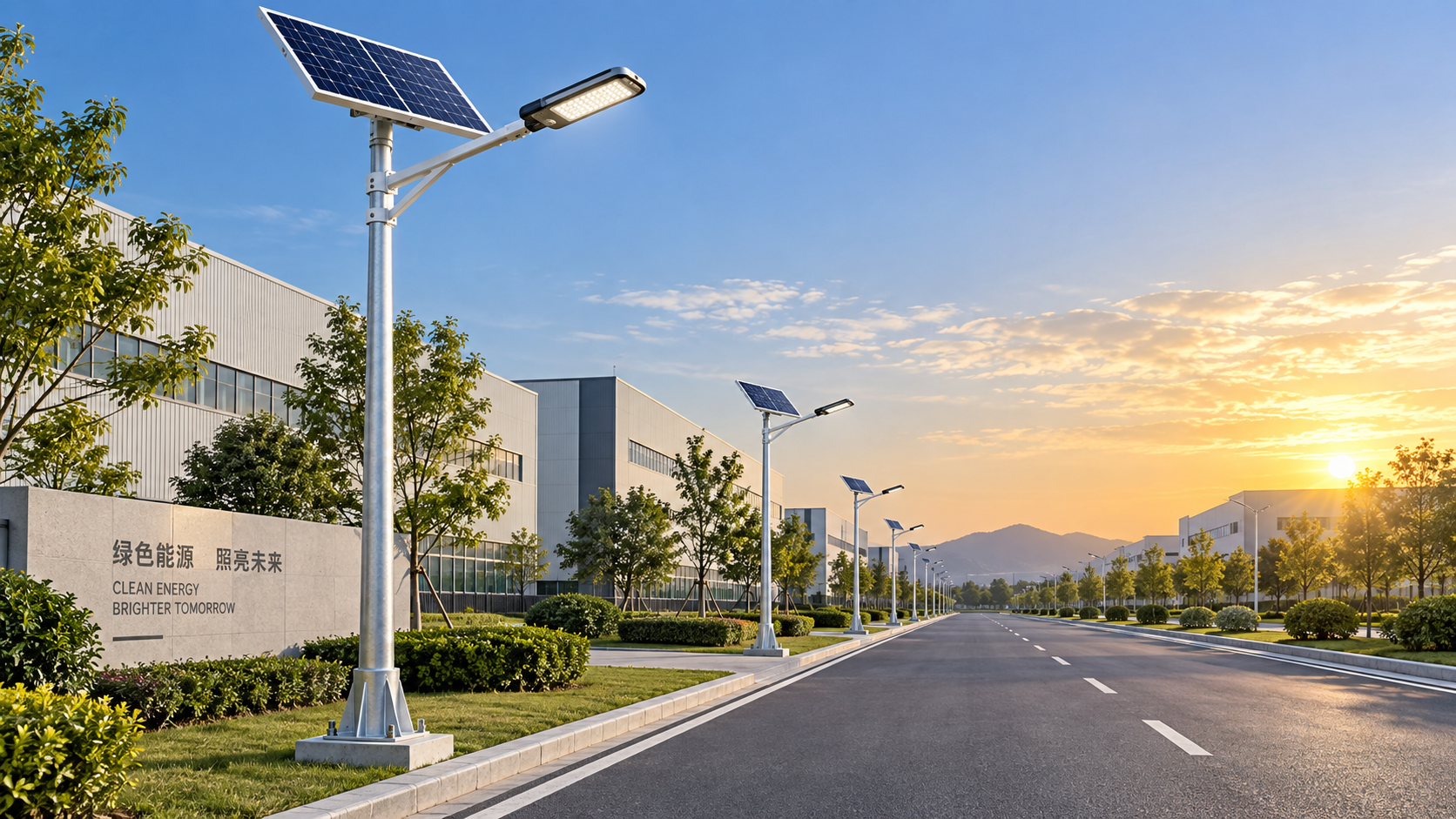
A competitive Solar Street Light Price can be appealing, especially when a tender budget is under pressure or a project timeline leaves little room for redesign. Yet for contractors and project owners, the purchase order is only the opening chapter of the investment. The more meaningful question is: what will this lighting system cost to own, operate, repair, and keep reliable over the next 10 years?
For roads, public spaces, industrial perimeters, and remote developments, solar lighting can remove the need for grid extensions, trenching, cable protection, and ongoing electricity bills. Those advantages are real—but they depend on choosing a configuration that matches the site, local solar conditions, lighting duty cycle, and maintenance capability. A low initial quote may become expensive when battery capacity is insufficient, components are difficult to replace, or poles and controls were not engineered for the environment.
Why the Solar Street Light Price Is Not the Whole Budget
Procurement teams often compare unit prices first. That is understandable: luminaire wattage, pole height, solar panel size, battery type, and installation scope can all be placed into a spreadsheet quickly. The problem is that two systems with similar-looking specifications may create very different downstream costs.
A 10-year ownership review should separate the project into five cost areas:
- Equipment acquisition: the light, photovoltaic panel, battery, controller, pole, brackets, foundations, and accessories.
- Installation: transport, lifting, civil works, foundations, labor, commissioning, and site access.
- Energy and infrastructure: utility power, cabling, trenching, switchgear, and meter-related costs where grid lighting is considered as an alternative.
- Maintenance and replacement: cleaning, inspections, fault response, battery replacement, driver or controller replacement, and labor for elevated work.
- Operational risk: lighting outages, inconsistent illumination, difficult spare-parts sourcing, and disruption to public or commercial activity.
Solar lighting usually shifts spending forward: more of the cost is embedded in the equipment at the start, while electrical infrastructure and recurring energy charges are reduced or eliminated. That trade-off can be favorable, but only when the product design supports the intended service life.
A Practical 10-Year Cost Comparison
The table below is not a universal price schedule; local labor, civil conditions, energy tariffs, shipping, and project standards vary widely. It is a decision framework for comparing a lower-priced solar proposal with a more robust solar solution and conventional grid-connected lighting.
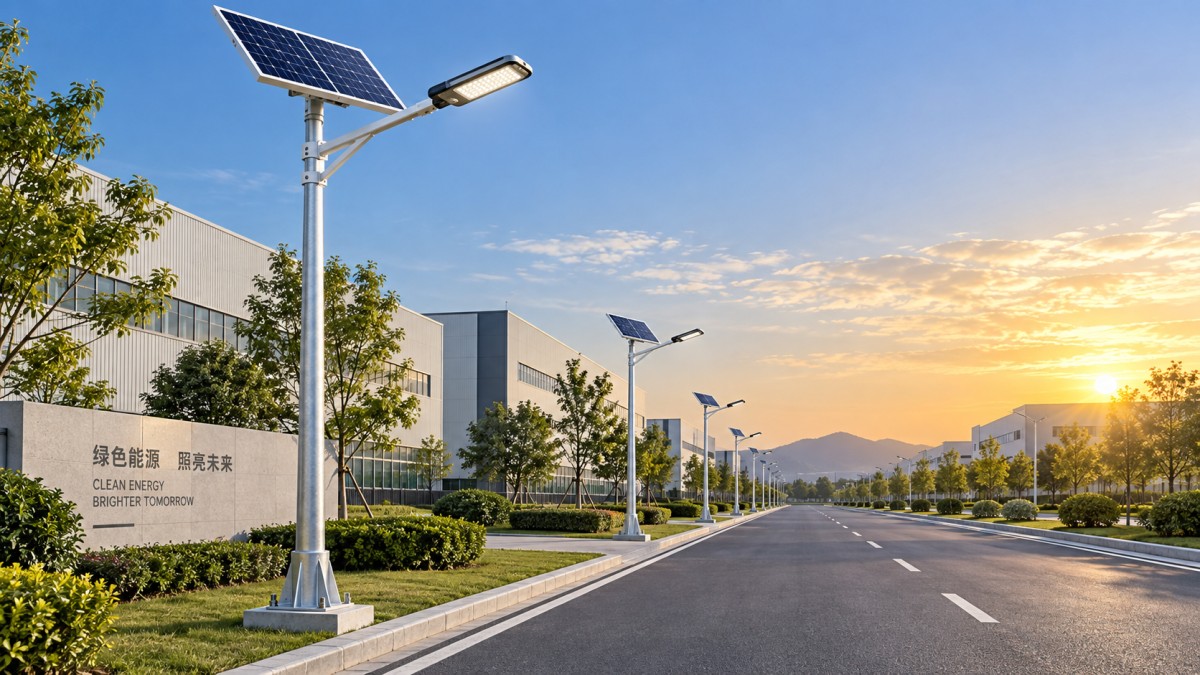
The key distinction is not simply “solar versus grid.” It is whether the lighting system has been engineered around real operating conditions. A project in a hot urban environment, a coastal corridor, or a high-wind open site should not be priced as though it were a mild-climate car park with easy maintenance access.
The Cost Items Most Frequently Missed in Early Procurement
Battery replacement is a planning issue, not a surprise expense
The battery is central to solar-light performance because it carries the system through the night and through periods of weak solar charging. Buyers should ask about battery chemistry, usable capacity, temperature behavior, charging strategy, and whether replacement can be performed without replacing the complete luminaire.
LiFePO4 battery technology is commonly selected for its stability and cycle-life characteristics, but the label alone is not enough. The battery must be correctly matched to the load profile and solar resource. A light that performs well during commissioning may still disappoint later if its energy reserve was calculated too tightly.
Installation savings depend on the site—not just the product brochure
“No wiring” and “no trenching” are compelling benefits of off-grid lighting, particularly for remote roads, new developments, parks, and locations with difficult ground conditions. However, poles still need foundations, lifting access, spacing verification, and safe installation procedures. In dense urban sites, traffic management and underground-utility constraints may remain significant even when power cables are removed from the scope.
That said, avoiding excavation can change the economics of a project dramatically. It can reduce disruption to finished pavements, landscaping, drainage, and existing services. For phased developments, it can also allow lighting to be installed independently of the utility connection schedule.
Cheap structural choices can create expensive field work
Lighting heads often receive the most attention, while poles, coatings, brackets, and foundations are treated as secondary line items. Over 10 years, that is a risky approach. Corrosion, wind loading, poor galvanizing, or inadequate wall thickness can turn a minor saving into a difficult corrective works package.
For example, the Solar Street Lighting | SL-008 configuration is designed for off-grid applications with a 6 m pole option, Q235 steel construction, hot-dip galvanizing and powder coating, and wind resistance rated at or above 150 km/h. These details should be assessed against the site’s own structural and environmental requirements rather than accepted as generic specifications.
What a Decision-Maker Should Request Before Comparing Quotes
A meaningful comparison requires more than a wattage figure and a Solar Street Light Price. Ask each supplier to provide a clear technical basis for the quote:
- Lighting design assumptions: mounting height, pole spacing, target illumination, uniformity expectations, and operating hours.
- Energy-balance information: panel output assumptions, battery capacity, controller efficiency, local solar data, and autonomy during low-sun periods.
- Component-level specification: LED efficacy, battery chemistry, controller protection, panel type, ingress protection, and operating-temperature range.
- Mechanical documentation: pole dimensions, coating process, wind-load design, foundation guidance, and corrosion considerations.
- Maintenance pathway: recommended inspection intervals, replaceable components, spare-parts availability, and fault-diagnosis support.
- Control compatibility: dimming schedules, motion sensing where appropriate, remote monitoring, and integration with wider smart-city or asset-management systems.
For larger portfolios, smart control deserves particular attention. Dimming during low-traffic hours may reduce energy demand and preserve battery reserve, while remote status information can help maintenance teams prioritize site visits. The value is not merely technological; it is fewer unnecessary inspections and faster response when an asset requires attention.
How Technical Specification Protects Long-Term Value
Performance figures should be read together, not in isolation. A luminaire rated at at least 140 lm/W may support efficient light output, but fixture efficacy does not guarantee overnight reliability if the solar panel and battery are undersized. Similarly, IP65 or IP66 protection helps address dust and water ingress, but it should be considered alongside cable routing, connector quality, thermal management, and installation workmanship.
A system with MPPT charging can improve how available solar energy is harvested, particularly where sunlight changes throughout the day. In a project-oriented solution, the controller, battery, and charging logic should be selected as one energy system rather than as separate catalogue items. This is especially important for lighting loads in the 30–100 W range, where runtime expectations and seasonal solar conditions can materially affect sizing.
Decision-makers should also distinguish between component lifespan claims and project life. An LED source may be rated for 50,000 hours or more, while a pole may be designed for decades; neither statement removes the need to plan for the battery and electronics over the operating period. A credible proposal makes those responsibilities visible.
A Better Way to Reach the Final Procurement Decision
Instead of selecting the lowest price immediately, score each proposal against a 10-year ownership model. Assign value to installation avoidance, expected maintenance access, replacement strategy, control capability, structural durability, and the cost of an outage in that location. A pathway lighting failure may be inconvenient; a failure on an access road, logistics site, or public corridor may carry greater safety and operational consequences.
For contractors, the strongest option is often the one that reduces uncertainty during delivery: fewer trenching dependencies, clearer foundation requirements, coordinated product support, and components that are practical to commission and maintain. Project owners, meanwhile, should favor solutions that remain understandable after handover—not systems that only the original installer can diagnose.
The right Solar Street Light Price is therefore not the lowest number on a quotation. It is the cost of a lighting system that can be installed with confidence, deliver the required nighttime performance, and remain manageable through its first decade of service. When solar design, structural engineering, controls, and long-term support are evaluated together, the purchasing decision becomes far more defensible.
◉ MESSAGE

Blog
- How to avoid vendor lock-in in a government smart lighting project
- Sizing the communications power budget for smart city solar street lights
- How energy-saving mode affects solar bollard light operating time
- Comparing lead times from LED street light luminaire suppliers in Europe
- What spare parts support should a smart street light exporter offer?
- Where to place a solar garden light in a partially shaded garden
- Which battery alerts matter in remotely monitored solar street lighting?
Message