
Smart Street Lighting EPC: Managing Scope, Controls, and Lifecycle Risk
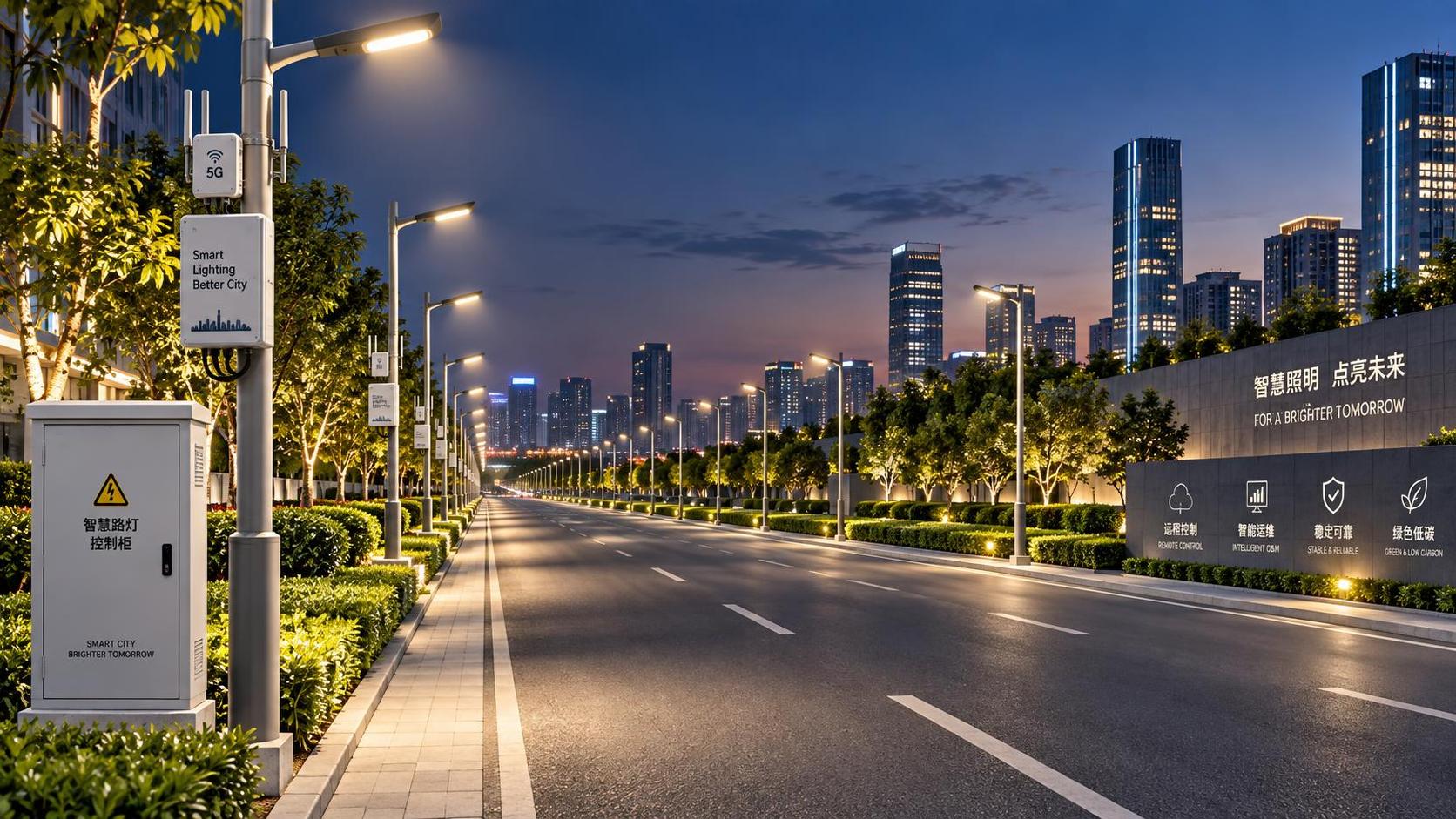
At the start of a city lighting project, the brief often sounds straightforward: replace conventional streetlights, add remote control, reduce energy use, and improve the nighttime environment. The reality becomes more complicated once civil works, electrical distribution, control platforms, network coverage, commissioning responsibilities, and future maintenance enter the same schedule.
A successful smart street lighting EPC project is not defined by the luminaire alone. It is defined by whether the entire delivery chain works as one coordinated system—from the approved lighting layout through to a fault alarm that reaches the right maintenance team years after handover. For project managers, the central task is to control uncertainty before it turns into change orders, delayed commissioning, or an asset that is difficult to operate.
Begin with an operational scope, not just a lighting scope
Many EPC specifications describe pole spacing, wattage, illuminance targets, and cabinet quantities in detail, but leave operating logic vague. Phrases such as “intelligent control,” “central management,” or “remote dimming” can conceal very different expectations. Is the owner expecting scheduled switching only? Individual lamp monitoring? Adaptive dimming based on traffic? Integration with an existing municipal platform? These are not minor technical choices; they change the architecture, installation method, communications requirement, and long-term service model.
Before equipment procurement begins, translate the project brief into an operational scope matrix. This should identify what is controlled, who controls it, how frequently data is reported, and what happens when communication is lost. It should also separate base requirements from optional functions. A district may need group dimming for residential roads, while a transport corridor may require individual point control and faster fault reporting. Treating both areas as identical can create unnecessary cost in one zone and insufficient capability in another.
The scope matrix should cover more than luminaires and controllers. Include feeder cabinets, gateways, SIM or network arrangements where applicable, pole access conditions, surge protection, cable interfaces, software licenses, user accounts, training, data ownership, and acceptance criteria. If an item is not assigned to a responsible party, it tends to surface late—usually when the project team is already under pressure to energize the system.
Control architecture should match the site, not the sales brochure
Smart street lighting controls are often presented as a choice between “wired” and “wireless,” but project decisions require a more practical view. Existing ducts, roadway excavation restrictions, pole distances, building density, electromagnetic interference, local network policy, and maintenance access all influence what will work reliably on site.
A robust controls strategy normally answers four questions:
- What is the control level? Cabinet, circuit, group, or individual luminaire.
- What communications path is available? Powerline, cellular, RF mesh, fiber, or a hybrid arrangement.
- What happens during a network interruption? Local schedules and safe fallback behavior should continue without relying on the cloud.
- How will the platform exchange information? Open protocols, documented interfaces, and exportable data reduce future lock-in risk.
For a large-scale deployment, interoperability deserves early attention. A platform may technically display equipment from different suppliers while still making commissioning or future replacement difficult. Project teams should request clarity on controller-to-luminaire interfaces, gateway compatibility, software access rights, firmware management, and the procedure for adding new assets after practical completion.
It is also wise to distinguish between monitoring and actionable maintenance. A dashboard full of status icons is not automatically useful. The system should help operators identify whether a reported failure is likely to be a luminaire, driver, controller, circuit, communication issue, or power-supply problem. Clear alarm priorities prevent maintenance teams from chasing low-value alerts while genuine safety issues wait in the queue.
Procurement decisions that protect the installation schedule
Street lighting packages often fail to align with the actual construction sequence. Civil works may release road sections in phases; poles may be installed before network infrastructure is active; or energization may depend on utility approvals outside the lighting contractor’s control. A smart lighting package must be planned around these realities.
For each delivery batch, define the physical and digital dependencies. The luminaire may be ready for installation, but does it need a preconfigured node? Does the controller require a site-specific address? Can commissioning be completed section by section, or must the full gateway network be online first? These questions influence factory configuration, labeling, warehouse handling, and field labor.
Factory acceptance should verify more than appearance and electrical operation. Review dimming response, control-device pairing, communication stability, power consumption behavior, surge-protection arrangements, ingress protection, and identification records. A sample-based test plan is useful, but it should reflect risk: a small issue repeated across thousands of points becomes a major site problem.
For mixed urban schemes, road lighting may be only one visible part of the nightscape. Pedestrian areas, bridges, landscaped corridors, and building edges can require a separate lighting language while still being coordinated under the project’s broader control philosophy. In such cases, an LED Linear Light can be considered for facade or landscape detailing where continuous, uniform lines of light are needed. The XTD-015 configuration, for example, supports white-light and RGB/RGBW options, IP66 protection, and a stated lifespan of at least 50,000 hours. That does not make it a substitute for roadway luminaires; it means the project team can specify complementary equipment without losing sight of maintenance, circuit separation, and visual comfort.
Commissioning is a project phase, not a final-day event
One of the most common smart street lighting EPC risks is leaving system commissioning until all hardware is installed. By then, a minor addressing error or communications gap can affect an entire zone, while the construction team is already moving off site.
A better approach is staged commissioning. Start with a pilot area that represents real conditions: a mix of pole distances, electrical circuits, control groups, and any challenging network locations. Confirm that installed assets appear correctly on the platform, schedules execute as intended, dimming levels correspond to field behavior, and outage reporting is meaningful. The pilot should also test what operators will actually do—override a schedule, isolate a fault, replace a luminaire, restore a controller, and retrieve operating history.
Documentation matters here. The handover set should include accurate pole and circuit references, device IDs, gateway locations, wiring diagrams, control logic, fallback schedules, password and account-management procedures, warranty responsibilities, and spare-parts recommendations. A platform without reliable asset records can become harder to manage than a conventional lighting system.
Lifecycle risk starts with choices made before award
The most expensive problems in outdoor lighting are rarely visible during installation. Water ingress may emerge after seasonal weather changes. A communication module may become obsolete. A proprietary platform may require an unexpected service arrangement. A driver replacement may be simple in theory but difficult because the original component is unavailable or the pole is inaccessible during traffic hours.
Lifecycle planning should therefore be part of technical evaluation, not an afterthought. Ask suppliers and integrators how replacement components are managed, how firmware updates are controlled, whether the system can operate locally if a remote service changes, and what information the owner retains at handover. Check the maintainability of luminaires as well: driver accessibility, standardized connection methods, corrosion resistance appropriate to the local environment, surge protection strategy, and realistic cleaning or inspection needs.
For public-space and urban projects, visual consistency is also a lifecycle issue. A replacement luminaire that produces a different color appearance, optical distribution, or dimming response can disrupt a road corridor or landscape composition even when it is electrically functional. Establish approved substitution rules before the project enters its maintenance period.
A practical decision framework for project leaders
When reviewing a smart street lighting EPC proposal, project managers do not need to become control-system specialists. They do need enough structure to challenge unclear assumptions. A useful review asks whether the scope is measurable, whether the control design fits the site, whether commissioning can be performed in stages, and whether the owner can operate and maintain the system without depending on undocumented knowledge.
Reliable delivery comes from making those decisions early, when they are still inexpensive to change. Lishida Smart Lighting supports contractors and project owners with integrated outdoor lighting products, smart control systems, and project-based engineering coordination. For large road networks and complex urban environments, the value of that support lies in connecting product selection to real execution conditions—so the lighting scheme installed today remains manageable long after the construction team has left the site.
◉ MESSAGE

Blog
- How to avoid vendor lock-in in a government smart lighting project
- Sizing the communications power budget for smart city solar street lights
- How energy-saving mode affects solar bollard light operating time
- Comparing lead times from LED street light luminaire suppliers in Europe
- What spare parts support should a smart street light exporter offer?
- Where to place a solar garden light in a partially shaded garden
- Which battery alerts matter in remotely monitored solar street lighting?
Message