
Selecting GLL-FQ Solar Garden Lighting for Parks, Lawns, and Walkways
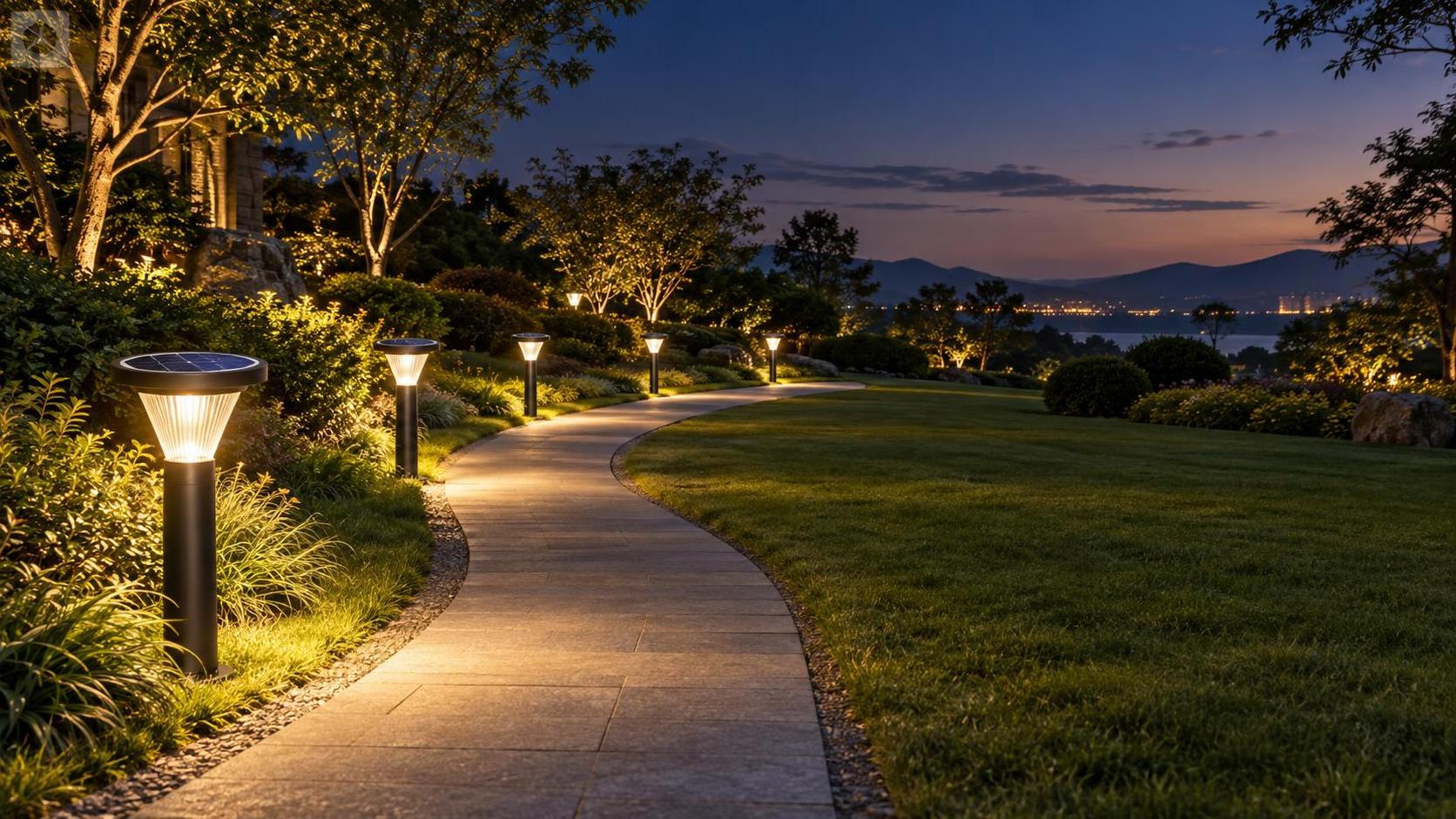
For a project manager, garden and lawn lighting is rarely just a decorative line item. In a park, community landscape, campus, or public green space, the lighting plan affects how safely people move after dark, how the site feels at night, and how much attention the system will demand after handover. The wrong solar fixture can create uneven paths, dark transition zones, difficult maintenance access, or disappointing battery performance during poor-weather periods.
LED Garden&Lawn Lighting GLL-FQ with solar panel is best evaluated as part of the whole landscape lighting system rather than as an isolated product choice. Before approving a configuration, project teams should look beyond fixture appearance and rated wattage. Solar access, mounting position, lighting distribution, control strategy, structural durability, and future maintenance all determine whether the installation performs as intended over time.
Start with the Space, Not the Fixture
Parks, lawns, and pedestrian walkways have different lighting needs, even when they sit within the same project boundary. A winding pedestrian path needs continuous visual guidance and clear edge definition. An open lawn may need only subtle orientation lighting so that the landscape remains calm rather than overlit. Seating areas, playground approaches, gates, and intersections need more deliberate visibility because people pause, change direction, or share space with cyclists and service vehicles.
This is why a single spacing rule is often unreliable. Instead, divide the site into functional zones:
- Primary walkways: prioritize consistent illumination and reduced dark gaps between fixtures.
- Secondary paths: use lower-output lighting where traffic is lighter, while preserving route continuity.
- Lawn edges and planting areas: use restrained light levels that support wayfinding without washing out the landscape.
- Entrances and activity nodes: consider brighter or more closely spaced points where users need better recognition of faces, signs, steps, and changes in surface level.
- Remote zones: assess whether solar lighting reduces the cost and disruption of trenching for grid power.
For LED Garden&Lawn Lighting GLL-FQ with solar panel, the most useful question is not “How many units fit the budget?” It is “Which locations require reliable night-time guidance, and what mounting layout will deliver it without creating glare or visual clutter?”
Check Solar Conditions Before Finalizing the Layout
Solar lighting simplifies installation by removing the need for cable trenches, but it shifts the engineering focus toward daylight availability. A fixture may look ideally located beside a walkway while its panel is partly shaded by mature trees, pavilion roofs, adjacent buildings, signs, or seasonal foliage. In public landscapes, this issue is common because the very trees and structures that create a pleasant daytime environment can limit charging capacity.
Review the site at the planning stage with a practical solar exposure survey. Identify areas of prolonged shade, likely future tree growth, dust-prone surroundings, and positions where leaves or bird debris may collect on the panel. Panels should remain accessible for cleaning, particularly in parks near roads, construction activity, or coastal environments where surface contamination can accumulate.
Battery autonomy also deserves attention. A project should not be assessed only under ideal summer conditions. The selection needs to account for local winter daylight, rainy periods, operating hours, dimming profiles, and the expected illumination demand after several consecutive days of reduced solar charging. A balanced configuration often performs better than choosing a higher-output light that drains its stored energy too aggressively.
Match Light Output to Human Movement
In landscape projects, more brightness is not automatically better. Excessive output may flatten the nighttime character of lawns, disturb nearby residents, and make darker areas feel even less comfortable by contrast. It can also introduce glare for walkers and reduce visual comfort near reflective paving, wet surfaces, or light-colored walls.
Project teams should ask suppliers for photometric information that shows how light is distributed, not simply the total lumen figure. A broad, controlled distribution may be more suitable for a low-level walkway fixture than a concentrated beam. The aim is to make the route legible: people should see where to walk, notice path edges and level changes, and feel that the next illuminated point is within a comfortable visual reach.
Color temperature should follow the atmosphere and function of the site. Warmer light is often preferred in gardens, heritage-style parks, and relaxation areas because it feels less harsh against planting and natural materials. Neutral or cooler tones may be considered where clearer task visibility is required. The final decision should also align with municipal requirements, neighboring architecture, and the project’s wider nighttime masterplan.
Evaluate the Hardware as a Long-Term Outdoor Asset
A landscape light may be installed in a relatively gentle setting, but it still faces rain, irrigation overspray, soil moisture, fertilizer residue, accidental impact, wind, temperature changes, and public use. The housing, pole or bollard structure, seals, fasteners, panel mount, and battery compartment should therefore be reviewed as a complete outdoor assembly.
For GLL-FQ selection, verify the ingress protection rating needed for the site and inspect how the enclosure manages water rather than relying on a rating alone. Look for sensible drainage, robust gaskets, corrosion-resistant materials, protected cable routing where applicable, and a serviceable arrangement for the battery and controller. In coastal, high-humidity, or heavily irrigated locations, corrosion protection becomes especially important.
Structural details matter as much as electrical ones. A slender decorative fixture may suit a sheltered courtyard but be less appropriate for an exposed promenade. Consider local wind conditions, foundation design, soil quality, vandal resistance, and the risk of equipment being struck by maintenance vehicles. If the project includes poles, confirm the required mounting method early; late foundation changes can affect both the schedule and finished landscape.
Think Through Controls and Operating Profiles
Solar garden lighting should not be expected to operate at full output in the same way throughout the night unless the energy model supports it. Smart scheduling can protect battery capacity while maintaining a comfortable experience for users. For example, a walkway may operate at its intended level during evening peak hours, then reduce output later at night, with optional sensor-based brightening where appropriate.
The control approach should fit the site’s real use. A park that closes at a fixed time has different needs from a residential greenway used by dog walkers and commuters before dawn. Avoid adding complex controls simply because they are available; the system should be understandable to the operator and appropriate for the maintenance resources available after project completion.
Where a larger development includes remote access roads, parking approaches, or perimeter routes, it may be practical to coordinate garden-scale fixtures with taller off-grid lighting. For these areas, Solar Street Lighting | SL-008 offers a reference point for a solar solution with configurations from 30–100W, IP65 lighting protection, an IP66-rated solar component, LiFePO4 battery options, and no-trenching installation. It is not a replacement for low-level garden lighting, but it can complement the GLL-FQ approach where vehicle circulation or wider access routes require a different mounting height and distribution.
A Practical Approval Checklist for Project Teams
Before releasing the purchase order, bring the landscape designer, electrical contractor, civil team, and operator into the same review. Many solar lighting issues arise because one party assumes another has addressed the interface between planting, foundations, orientation, and future service access.
- Confirm each proposed panel position has adequate unobstructed daylight across the relevant season.
- Review fixture spacing against actual path width, bends, crossings, ramps, steps, and gathering points.
- Request lighting distribution data and confirm that glare is controlled from normal pedestrian viewpoints.
- Check battery type, charging logic, expected operating profile, and replacement procedure.
- Confirm IP protection, corrosion treatment, wind considerations, and foundation requirements for the local environment.
- Plan access for cleaning panels and replacing components without damaging planting or paving.
- Clarify whether the supplier can support tailored configurations, samples, technical coordination, and commissioning guidance.
Choosing for Delivery, Not Just for Installation Day
The appeal of solar garden lighting is clear: fewer cables, less excavation, faster deployment, and greater flexibility in remote landscaped areas. Yet the value is only realized when the system continues to provide dependable guidance after trees grow, weather changes, and maintenance teams inherit the site.
Lishida Smart Lighting supports contractors and project owners with integrated outdoor lighting considerations, from product selection to smart control and project-based coordination. For parks, lawns, and walkways, selecting LED Garden&Lawn Lighting GLL-FQ with solar panel should be a disciplined decision based on the site’s light needs, solar realities, structural conditions, and lifecycle expectations. When these factors are resolved before installation, the finished space is more likely to feel safe, composed, and easy to manage long after the project opens.
◉ MESSAGE

Blog
- How to avoid vendor lock-in in a government smart lighting project
- Sizing the communications power budget for smart city solar street lights
- How energy-saving mode affects solar bollard light operating time
- Comparing lead times from LED street light luminaire suppliers in Europe
- What spare parts support should a smart street light exporter offer?
- Where to place a solar garden light in a partially shaded garden
- Which battery alerts matter in remotely monitored solar street lighting?
Message