
Building the Business Case for a Government Lighting Upgrade Program
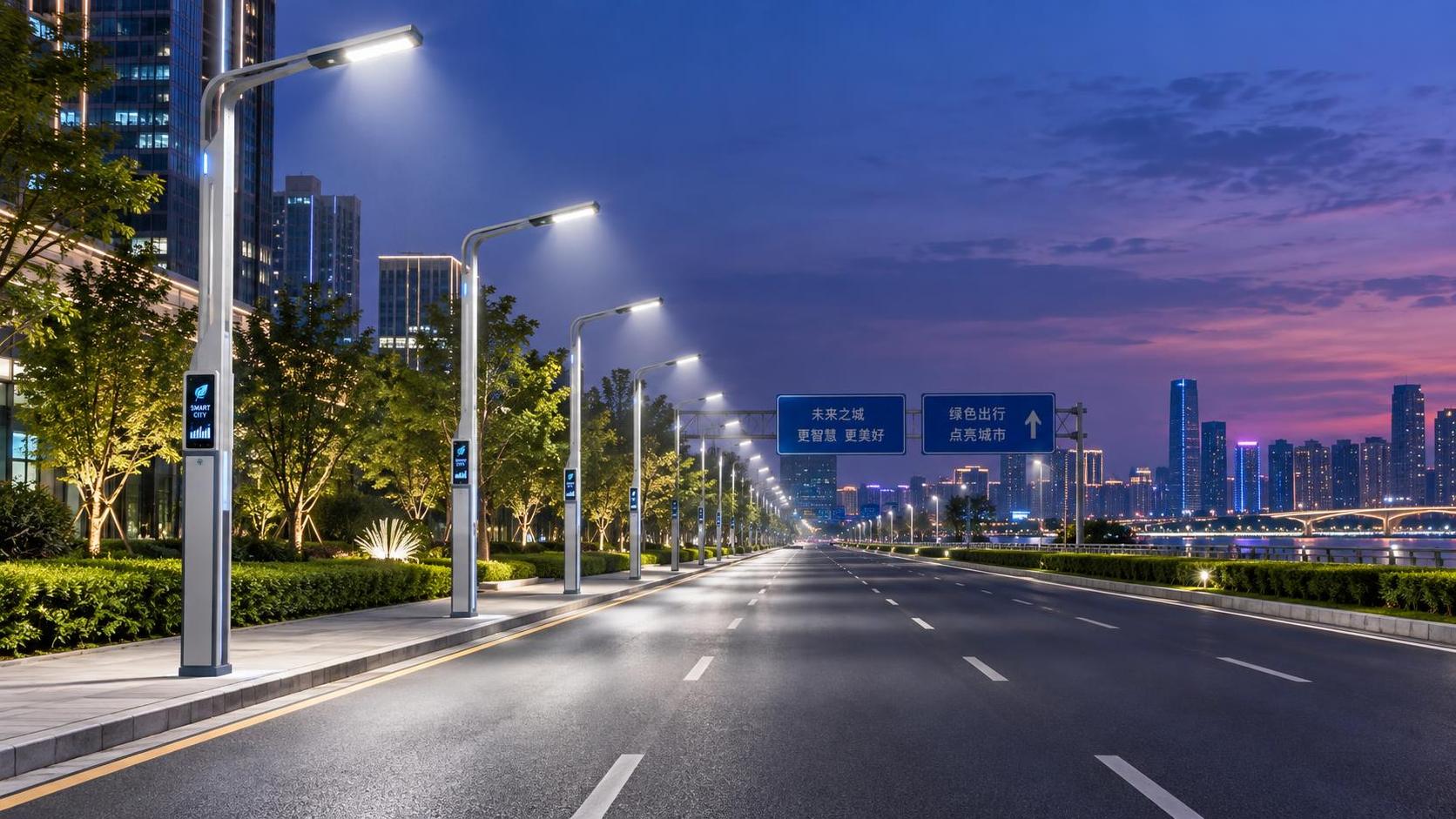
A government lighting upgrade is more than an infrastructure expense. It is a long-term investment in public safety, energy efficiency, maintenance reduction, and measurable budget performance.
For financial approvers, the strongest proposal connects capital costs with lifecycle savings, operational reliability, risk control, and scalable smart-control capabilities across the entire asset portfolio.
What Financial Approvers Need to Validate First
The core search intent behind a government lighting upgrade is usually practical: decision-makers need evidence that modernization will produce defensible financial and operational results.
Approvers are rarely evaluating luminaires alone. They are reviewing budget exposure, procurement risk, expected savings, maintenance implications, public-service outcomes, and the credibility of projected returns.
A compelling business case therefore begins with a clear baseline. Document current electricity consumption, fixture age, failure frequency, maintenance labor, replacement costs, and resident safety concerns.
Without a baseline, projected benefits remain theoretical. With reliable operating data, finance teams can compare the cost of retaining legacy infrastructure against modernization over ten or twenty years.
The most useful approval documents translate engineering inputs into financial language. They show annual operating cost, avoided maintenance expense, capital timing, payback period, and sensitivity to energy prices.
They should also distinguish between savings that are likely and savings that are conditional. For example, LED efficiency is measurable, while future repair reductions depend on product quality.
Calculate Lifecycle Value Instead of Comparing Purchase Prices
Lowest initial cost is often a weak procurement metric for outdoor public assets. Street and area lighting must perform reliably through weather, traffic exposure, and continuous service demands.
A government lighting upgrade should be assessed through total cost of ownership. This includes equipment, installation, civil works, energy, communications, inspections, repairs, replacements, and disposal.
Financial models should compare at least two scenarios: continued maintenance of existing assets and replacement with a modern LED and control-enabled lighting system.
For each scenario, estimate yearly costs rather than relying only on aggregate totals. Annual cash-flow visibility helps reviewers understand when savings will begin and how budgets change.
Energy savings usually form the largest recurring benefit. Lower-wattage LED fixtures can reduce consumption substantially when they replace older sodium, mercury vapor, or inefficient metal-halide equipment.
However, energy calculations must use actual operating hours, local electricity tariffs, fixture wattage, and expected dimming profiles. Generic percentage claims are insufficient for public budget approval.
Maintenance savings also deserve careful treatment. Longer-rated LED service life can reduce lamp-change cycles, bucket-truck use, traffic management requirements, and emergency repair callouts.
Yet rated lifetime should not be confused with guaranteed field performance. Require evidence of thermal design, surge protection, ingress protection, driver quality, and warranty responsibilities.
Turn Public-Service Benefits Into Defensible Decision Criteria
Financial approval does not mean ignoring public outcomes. Better outdoor lighting can support safer roads, more usable public spaces, clearer wayfinding, and greater confidence in municipal services.
These benefits should be described honestly. A lighting project should not claim to eliminate crime or accidents, but it can improve visibility where lighting conditions are inadequate.
For roads, financial reviewers should request photometric plans showing compliance with applicable road classifications, uniformity targets, glare control, and illumination levels at critical intersections.
For parks, plazas, transit areas, and public facilities, the evaluation should consider pedestrian movement, accessibility, operating schedules, neighborhood concerns, and after-hours visibility requirements.
Service reliability has direct financial value as well. Repeated failures create public complaints, increase administrative workload, disrupt contractors, and weaken confidence in infrastructure investment decisions.
A successful program should define service-level expectations, including fault-reporting processes, response times, spare-parts availability, remote diagnostics, and responsibility during the warranty period.
Use Smart Controls Where They Improve the Investment Case
Smart controls are valuable when they solve a defined operational problem. They should not be added simply because connected lighting appears more advanced than conventional systems.
For many government lighting upgrade programs, controls improve value through scheduled dimming, asset monitoring, energy reporting, fault alerts, and more targeted maintenance dispatch.
The strongest business case identifies which locations need which functions. Major roads may require adaptive schedules, while low-traffic paths may benefit from time-based dimming and fault monitoring.
Approvers should ask whether the proposed system can expand over time. Open integration options, manageable software costs, cybersecurity practices, and data ownership all influence long-term value.
A control platform can also improve budget governance. Accurate consumption and fault data allow departments to verify claimed savings and identify assets requiring earlier intervention.
Do not assume every lighting point needs identical connectivity. A phased architecture may provide better financial discipline by prioritizing high-energy, high-maintenance, or safety-sensitive areas first.
Manage Project Risk Before It Becomes a Budget Problem
Large public lighting projects commonly fail financially through underestimated site conditions, unclear specifications, poor product consistency, weak installation controls, or inadequate after-sales support.
Financial approvers should require a risk register that identifies assumptions, assigns owners, estimates cost consequences, and explains how the project team will reduce each exposure.
Installation risks may include pole condition, underground cabling, traffic control, permit timing, utility coordination, heritage restrictions, and difficult access in dense urban environments.
Product risks include incompatible components, inconsistent batches, unavailable replacement parts, insufficient surge protection, battery degradation, and control-system failures after commissioning.
Procurement documents should define acceptance criteria clearly. These may include photometric performance, environmental ratings, corrosion resistance, commissioning requirements, documentation, training, and warranty service procedures.
It is also prudent to test representative products before full deployment. Pilot installations can validate light quality, installation effort, wireless coverage, control behavior, and local stakeholder acceptance.
Evaluate Off-Grid Lighting for Locations With Expensive Grid Connections
Off-grid lighting deserves separate consideration where trenching, utility extension, or cable maintenance would materially increase project cost and delivery risk.
Remote roads, island facilities, industrial areas, mountain corridors, and temporary development zones may justify hybrid energy systems when conventional grid access is impractical.
For these applications, the analysis must include local solar availability, wind conditions, seasonal weather, battery autonomy, load profile, installation access, and long-term maintenance arrangements.
Wind-Solar Hybrid Street Lighting | SHL-003 can be considered for projects requiring tailored off-grid configurations, combining LED loads with solar panels, wind turbines, lithium batteries, and MPPT hybrid control.
Its potential value is not simply avoiding electricity bills. It may reduce cabling requirements, shorten deployment in isolated locations, and maintain supply during low-sun conditions when properly engineered.
Financial teams should still validate the energy model carefully. Hybrid systems require realistic resource assumptions, correctly sized storage, lifecycle replacement planning, and clear accountability for system performance.
Build an Approval Framework That Supports Accountability
A strong approval framework presents the project as a managed investment rather than a product purchase. It should include objectives, baseline data, options, costs, risks, and measurable outcomes.
Start with the service problem: aging infrastructure, excessive energy use, poor visibility, rising maintenance demand, unreliable assets, or limited coverage in priority public areas.
Then compare alternatives using consistent assumptions. Include a do-nothing option, a minimum-compliance replacement option, and a preferred modernization approach with clearly stated benefits.
The preferred option should show capital expenditure by phase, anticipated annual savings, maintenance changes, projected payback, funding source, procurement strategy, and contingency allowance.
Include sensitivity analysis for variables that can materially affect results. Electricity tariffs, operating hours, installation complexity, financing terms, and maintenance assumptions should all be tested.
Decision-makers should also establish performance indicators before approval. Useful measures include kilowatt-hours consumed, outage rates, maintenance tickets, response times, lighting compliance, and verified annual savings.
Make the Government Lighting Upgrade Case Clear and Auditable
The best government lighting upgrade proposals make a simple argument: invest now to reduce predictable operating costs, improve asset reliability, and deliver safer, more effective public infrastructure.
That argument becomes credible when it is supported by site data, lifecycle analysis, realistic engineering assumptions, procurement safeguards, and measurable post-installation performance targets.
For financial approvers, the decision should not rest on fixture price or headline energy claims. It should rest on whether the program delivers durable value across its full operating life.
When project owners, contractors, manufacturers, and finance teams align around verified requirements, lighting modernization becomes a controllable infrastructure investment with visible public and budget benefits.
◉ MESSAGE

Blog
- How to avoid vendor lock-in in a government smart lighting project
- Sizing the communications power budget for smart city solar street lights
- How energy-saving mode affects solar bollard light operating time
- Comparing lead times from LED street light luminaire suppliers in Europe
- What spare parts support should a smart street light exporter offer?
- Where to place a solar garden light in a partially shaded garden
- Which battery alerts matter in remotely monitored solar street lighting?
Message