
Planning Artistic Lighting Projects That Meet Government Procurement Rules
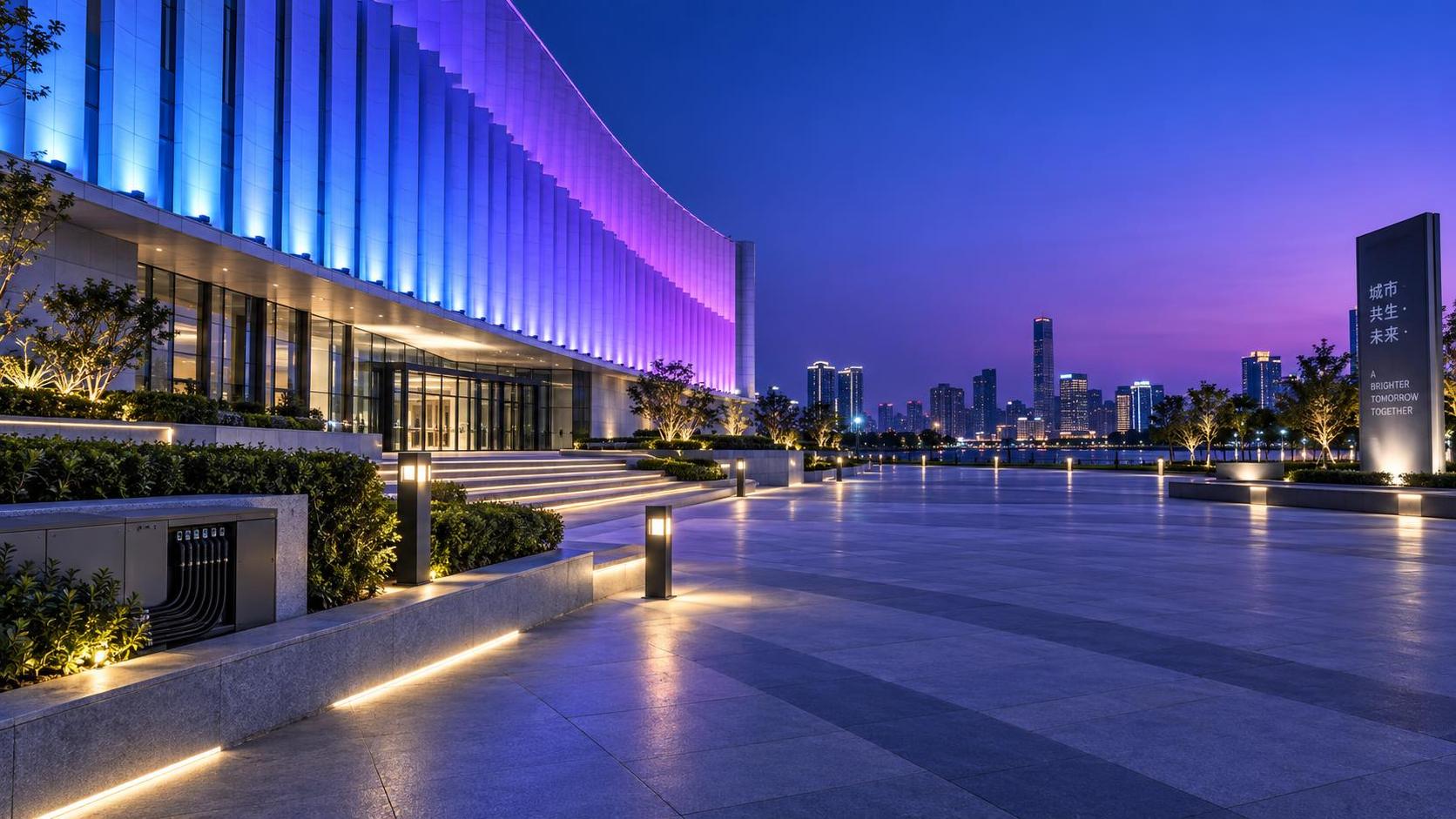
A government artistic lighting project succeeds when its visual concept can survive procurement scrutiny, installation constraints, and years of public operation. A dramatic rendering may help secure design approval, but it will not resolve unclear performance requirements, mismatched control interfaces, incomplete maintenance responsibilities, or a tender specification that unintentionally limits competition.
For project managers, the planning task is to translate an artistic intent into a procurement-ready system. That requires treating illumination, electrical infrastructure, structural safety, controls, and lifecycle service as one coordinated scope. The earlier those links are defined, the less likely the project is to face redesigns after bidding or disputes between civil, electrical, and lighting contractors.
Start with the public outcome, then define measurable lighting functions
Public-sector artistic lighting is often asked to do several jobs at once: strengthen a landmark's nighttime identity, improve the experience of a plaza or waterfront, support events, maintain safe circulation, and avoid disturbing nearby residents or road users. These objectives should be separated before fixture types or visual effects are selected.
A useful brief identifies what must remain consistent every night and what may change for festivals, seasons, or special events. Permanent architectural wash lighting, pedestrian wayfinding, decorative media effects, and event scenes do not need the same equipment, operating hours, or maintenance response. Combining them into one vague requirement such as “dynamic urban lighting” creates room for interpretation during tendering and later makes acceptance difficult.
Performance criteria should be written in terms that can be inspected. Depending on the site, this may include target illuminated areas, permitted glare conditions, color consistency expectations, scene-switching capability, operating schedules, dimming requirements, and acceptable visibility of cables and equipment. The design team can retain creative freedom while the procurement documents establish a clear minimum result.
It also helps to establish a hierarchy. Safety lighting and essential circulation routes should continue to operate if decorative scenes are unavailable. A gateway feature may justify sophisticated programming; a long pedestrian route may benefit more from reliable, restrained illumination and simple control. Giving every location the same visual intensity usually increases both budget pressure and operating risk without improving the public space.
Write specifications that protect quality without narrowing the bid unfairly
The procurement specification is where many artistic lighting projects become fragile. A document that names a particular product configuration without explaining the required outcome can restrict qualified alternatives. A document that is too generic can attract bids that technically appear compliant but cannot deliver the intended visual quality or withstand the environment.
For a government artistic lighting project, requirements are strongest when they combine functional performance with evidence that bidders must submit. Rather than prescribing a fixture solely by appearance or brand-specific language, specify the application conditions and verification materials:
- Photometric files and lighting calculations for the proposed mounting positions and aiming angles.
- Ingress protection, corrosion protection, operating temperature range, and mechanical suitability for the local environment.
- Control protocol compatibility, controller architecture, scene capacity, and recovery behavior after a power interruption.
- Structural information for poles, brackets, anchors, and mounting interfaces, especially in exposed or high-wind locations.
- Component data for drivers, surge protection, connectors, batteries where applicable, and replaceable parts.
- Warranty boundaries, spare-parts commitments, commissioning support, and maintenance documentation.
“Equivalent or better” language is only useful when the criteria for equivalence are visible. If luminaires are required to match an approved concept, the tender should state whether the priority is beam distribution, output, color performance, housing finish, control compatibility, or physical dimensions. Without that distinction, evaluators may compare products on a single headline rating while overlooking the feature that actually determines the nighttime effect.
Sample review deserves a defined place in the process. A mock-up section, pilot zone, or controlled nighttime demonstration can reveal glare, color mismatch, reflected light, and visual clutter that drawings cannot show. It should be assessed against documented acceptance points, not against an undefined impression after installation has begun.
Design the control system as public infrastructure
Artistic lighting frequently fails operationally before it fails optically. The issue is often a control system that was treated as an accessory rather than a managed public asset. Project managers should decide early who can change scenes, who approves changes, what happens when communications fail, and how the system records faults and energy use.
A central platform may be appropriate for complex city districts, but a large software scope is not automatically a better solution. The control architecture should match the number of zones, the expected frequency of scene changes, the available maintenance capability, and the authority's cybersecurity and network policies. A simpler system with clear local override and reliable scheduling can be more practical than an advanced platform that no operations team is prepared to manage.
Interoperability should be tested before final acceptance. This includes field controllers, gateways, luminaires, timing devices, sensors, and the management platform. Contractors should demonstrate normal scheduling, manual override, fault notification, loss-of-communication behavior, restoration after power cycling, and the process for replacing a failed device. These tests are particularly important where lighting is integrated with smart-city networks or municipal asset-management systems.
Scene design also needs operating discipline. Decorative color changes and animated sequences can be compelling in a civic square, but they may be inappropriate near residential facades, traffic corridors, heritage structures, or sensitive ecological areas. A commissioning schedule should define normal-night scenes, curfew dimming, event scenes, and authorized exceptions. That prevents a project from relying on informal operator decisions once it is handed over.
Address infrastructure gaps before they become variation orders
Artistic lighting is commonly added to sites with incomplete drawings, congested underground services, aging power distribution, or limited access for future maintenance. These conditions should influence the lighting concept from the start. A low-profile effect that needs extensive trenching, new cabinets, and frequent access equipment may be harder to justify than a design using fewer, better-positioned luminaires.
Off-grid lighting can be relevant for peripheral walkways, park edges, temporary public-use areas, and locations where extending utility power would create major civil work. It should be assessed as an infrastructure decision rather than simply a fixture substitution. Solar availability, seasonal operating requirements, battery autonomy, shading, pole loading, and the relationship between decorative and safety functions all need review.
For example, a solar street-lighting option such as Solar Street Lighting | SL-008 may suit a route where avoiding cable trenching is valuable. Its 6 m pole configuration, IP-rated components, LiFePO4 battery option, and smart MPPT charging arrangement illustrate the sort of details that should be reviewed alongside wind resistance, luminance needs, and access for maintenance. It would not automatically replace a mains-powered architectural lighting system with high overnight load or complex synchronized scenes.
Installation interfaces require the same attention. Pole foundations, concealed cable routes, equipment cabinet locations, drainage, access hatches, and aiming brackets should be coordinated with landscape, paving, drainage, heritage, and civil packages. A visually clean scheme often depends on this coordination more than on the decorative appearance of the luminaire itself.
Evaluate lifecycle value before awarding on installed cost
Government buyers face pressure to control capital expenditure, yet the lowest installed price can create a more expensive asset when drivers fail early, fixtures cannot be accessed safely, proprietary controllers cannot be supported, or replacement parts are unavailable. Artistic schemes amplify this problem because a few failed luminaires can visibly disrupt a facade, bridge, or public landmark.
Bid evaluation should therefore distinguish between initial supply cost and operational exposure. Useful questions include whether the luminaire can be serviced without dismantling surrounding finishes, whether the control system permits component-level diagnosis, whether replacement units can maintain the original color and beam appearance, and whether the contractor has allowed for commissioning after adjacent works are complete.
The handover package should be treated as a contract deliverable, not an administrative afterthought. It needs final aiming records, circuit and addressing schedules, control-system credentials under the authority's control, as-built drawings, spare-part lists, maintenance procedures, and training for the receiving team. Where programmed scenes are part of the public design, the authority should also receive editable project files and a clear record of the installed software and controller configuration.
A well-planned artistic lighting project does not reduce creativity to a checklist. It gives the creative concept a durable delivery path: measurable performance, defensible procurement language, coordinated infrastructure, tested controls, and a handover that the operating team can use. That is the standard that allows a public lighting installation to remain an asset after the opening event has passed.
◉ MESSAGE

Blog
- How to avoid vendor lock-in in a government smart lighting project
- Sizing the communications power budget for smart city solar street lights
- How energy-saving mode affects solar bollard light operating time
- Comparing lead times from LED street light luminaire suppliers in Europe
- What spare parts support should a smart street light exporter offer?
- Where to place a solar garden light in a partially shaded garden
- Which battery alerts matter in remotely monitored solar street lighting?
Message