
Remote Monitoring Features That Improve Solar Street Lighting Uptime
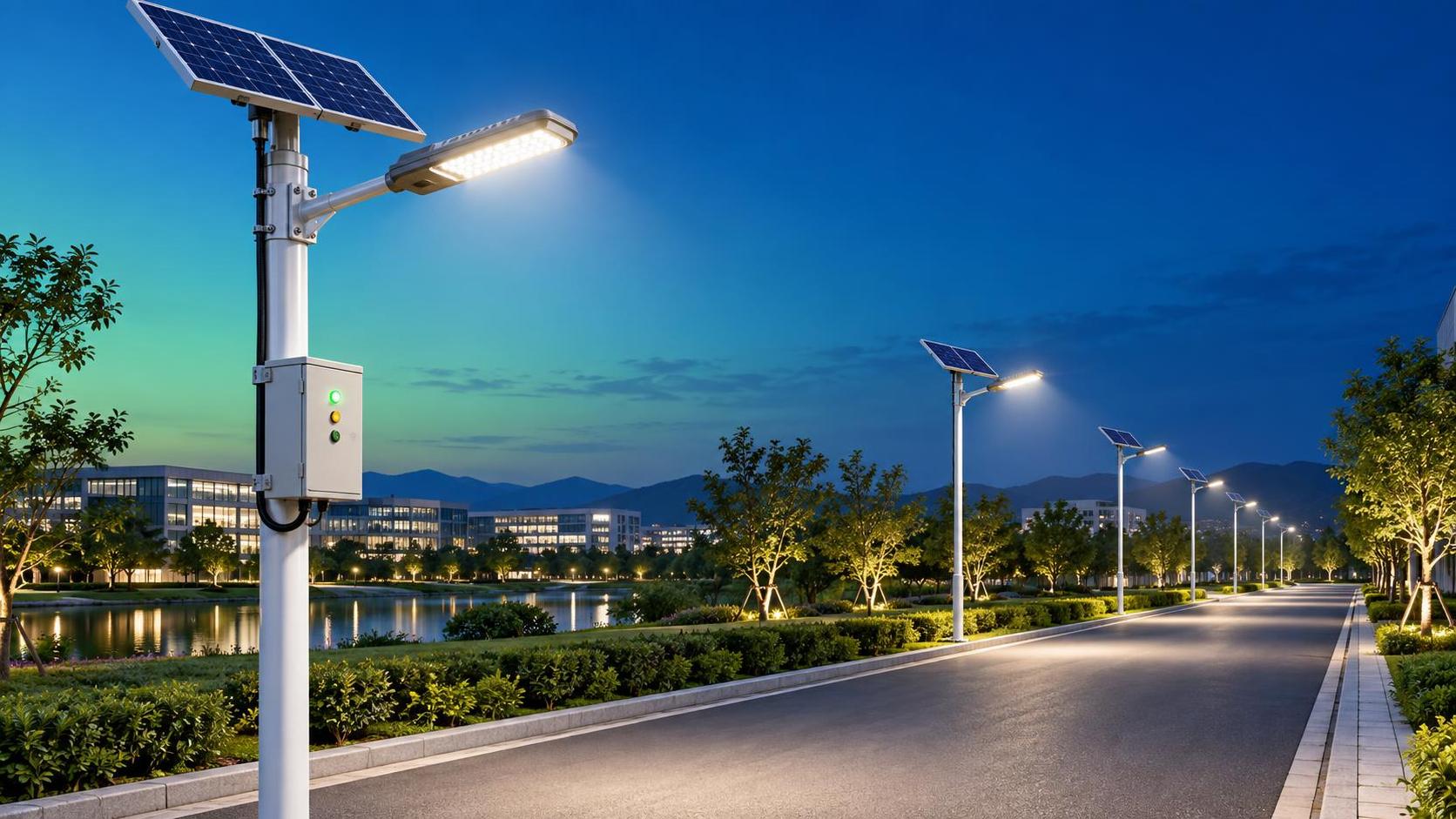
A lighting outage rarely begins with a visible dark road. It often starts as a battery that is not fully recharging, a controller that has entered protection mode, a solar panel producing less energy than expected, or a luminaire drawing more power than its programmed profile allows. By the time a patrol team notices the failed point at night, maintenance may already involve site access, traffic control, fault finding, and an avoidable service visit.
For project managers, the most useful remote monitoring features are those that turn these early signals into practical maintenance decisions. Solar powered street lighting with remote monitoring improves uptime when the system can report energy condition, operating status, communication health, and faults clearly enough for teams to distinguish a temporary event from an issue requiring field intervention. The goal is not simply to collect data; it is to prevent a single abnormal condition from becoming a prolonged lighting failure.
Battery visibility is usually the first uptime safeguard
The battery is the energy reserve that carries the lighting point through nights, cloudy periods, and seasonal variation. A light may still operate normally while its stored energy margin is shrinking. Without remote data, that gradual decline can remain unnoticed until the unit begins switching off early or misses its required operating period.
A useful monitoring platform should show battery voltage, state of charge, charging and discharging status, and abnormal protection events. These readings need to be viewed as a pattern rather than as isolated numbers. For example, a battery that repeatedly reaches a low state of charge before the scheduled dimming period may point to insufficient solar harvest, excessive night-time load, battery degradation, shading, or an unsuitable control schedule.
Project teams should set warning thresholds based on the required lighting duty and local operating conditions. A low-battery alert that appears only after the controller has shut down offers limited value. Earlier alerts allow the team to compare nearby units, review recent weather exposure, check whether the lighting profile was changed, and decide whether the issue is isolated or systemic.
Know whether the lamp failed, dimmed, or was intentionally switched
“Light off” is not a complete fault diagnosis. In a managed system, an apparently dark luminaire may be following a scheduled off period, responding to a low-energy protection rule, operating at a reduced dimming level, or experiencing a true lamp or driver failure. Remote monitoring should make these conditions distinguishable.
At minimum, teams benefit from status feedback that identifies:
- current lamp on/off state and commanded dimming level;
- actual output or load current where the controller supports it;
- driver, LED, or controller fault codes;
- unexpected switching events and restart attempts;
- runtime history against the programmed lighting schedule.
This distinction changes the maintenance response. A repeated controller restart can indicate an electrical protection issue. A lamp that remains commanded on but shows no expected electrical load needs a different inspection from a lamp intentionally reduced by an energy-saving program. Where a road or public-space route has different operating zones, remote grouping also helps managers confirm that the correct profile is applied to each section rather than assuming every fitting should behave identically.
Solar generation data helps identify problems before the battery is depleted
Battery alarms tell the team that stored energy is under pressure. Solar generation data helps explain why. Monitoring charge current, panel voltage, daily charging duration, and generation trends makes it easier to spot a panel, wiring, controller, or environmental issue before it produces repeated night-time outages.
One low-generation day does not necessarily indicate a fault. Weather, dust, temporary obstructions, and seasonal sun angles all affect collection. The more useful question is whether a lighting point performs differently from comparable units in the same area over several charging cycles. When one unit consistently reports weak charging while adjacent units remain stable, a targeted field inspection becomes justified.
During that inspection, crews can check for soiling, new shade from vegetation or structures, loose connectors, damaged cables, incorrect panel orientation, and signs of physical impact. Remote data does not replace this work; it prevents crews from inspecting every pole with the same urgency. It directs attention to the locations where a physical check is most likely to find the cause.
Communication health deserves its own alarm logic
A controller can only support proactive maintenance when it continues to communicate. A missing data point is not always a lighting failure, but it should not be ignored. Communication loss can result from a local network issue, damaged antenna or cable, power interruption, configuration error, or a controller that has stopped reporting.
It is helpful to separate “device offline” alerts from actual lighting-fault alerts. Otherwise, a temporary communications interruption may trigger unnecessary dispatches, while a genuine lamp fault may be buried among network notifications. The platform should retain the last known operating status and timestamp, allowing managers to see whether the light was functioning normally before reporting stopped.
For large deployments, alerts also need escalation rules. A single offline point may wait for the next planned route inspection if its last condition was normal. Several adjacent units going offline at once may indicate a shared gateway, network, or power-related issue and should be reviewed sooner. Alert priority should reflect operational risk, not merely the number of notifications generated.
Use fault categories that lead to a clear field action
Remote monitoring becomes less useful when every abnormal condition is labelled simply as “fault.” Maintenance crews need enough information to arrive with an appropriate first response. Project managers should ask whether the system can classify alarms in a way that supports a practical work order.
Alarm histories are especially valuable after repair. If the same alert returns shortly after a site visit, the team can determine whether the original action addressed the root cause or only restored operation temporarily. This record also helps identify recurring weaknesses in installation practice, component matching, or operating profiles.
Remote configuration can protect uptime, but it needs control
Remote adjustment of dimming schedules, switching times, and operating modes can preserve energy during extended low-sun periods or adapt lighting to changing site requirements. It can also create widespread problems if changes are made without a controlled process. A profile that seems efficient in one location may leave insufficient battery reserve in another area with different shading, usage hours, or seasonal solar availability.
Use grouped configuration carefully. Confirm which devices belong to a group, record the previous settings, apply changes to a limited set where possible, and review the next operating cycles before wider deployment. Access permissions matter as well: staff who need to review alarms do not necessarily need authority to alter operating schedules.
Remote control should complement sound physical design. Pole height, luminaire output, wind exposure, mounting details, and protection level all influence long-term availability. In street-lighting installations where a conventional or hybrid arrangement is part of the wider design, equipment such as Modern Street Lighting|MSL-XY can be considered where its 150–250W light-power range, IP67 protection level, and 8–14 m mounting height options fit the project’s engineering requirements. Monitoring can reveal operational issues, but it cannot compensate for an unsuitable lighting layout or poorly matched energy system.
Build the dashboard around decisions, not device counts
A map filled with hundreds of green and red icons may look informative while still slowing down maintenance. The most effective view prioritizes exceptions: units approaching energy risk, lights not meeting their expected runtime, repeated communication losses, and faults affecting critical routes or public areas. Managers also need a way to compare one unit against nearby assets with similar exposure and settings.
Before handover, verify that every asset has a unique identifier tied to its physical location, controller, battery, panel, and luminaire configuration. Confirm that time settings, dimming programs, alarm thresholds, and reporting intervals match the approved operating plan. A remote system with incomplete asset records often produces data that is difficult to act on after the installation team has left site.
Reliable uptime comes from connecting remote evidence to a disciplined response: detect an abnormal trend early, classify the likely cause, dispatch only when a site visit is warranted, and use the repair outcome to refine alarm rules. When that loop is in place, monitoring stops being an optional add-on and becomes a practical tool for keeping solar street lighting available when the site needs it most.
◉ MESSAGE

Blog
- How to avoid vendor lock-in in a government smart lighting project
- Sizing the communications power budget for smart city solar street lights
- How energy-saving mode affects solar bollard light operating time
- Comparing lead times from LED street light luminaire suppliers in Europe
- What spare parts support should a smart street light exporter offer?
- Where to place a solar garden light in a partially shaded garden
- Which battery alerts matter in remotely monitored solar street lighting?
Message