
LED Street Light Manufacturer: From Design to Mass Production
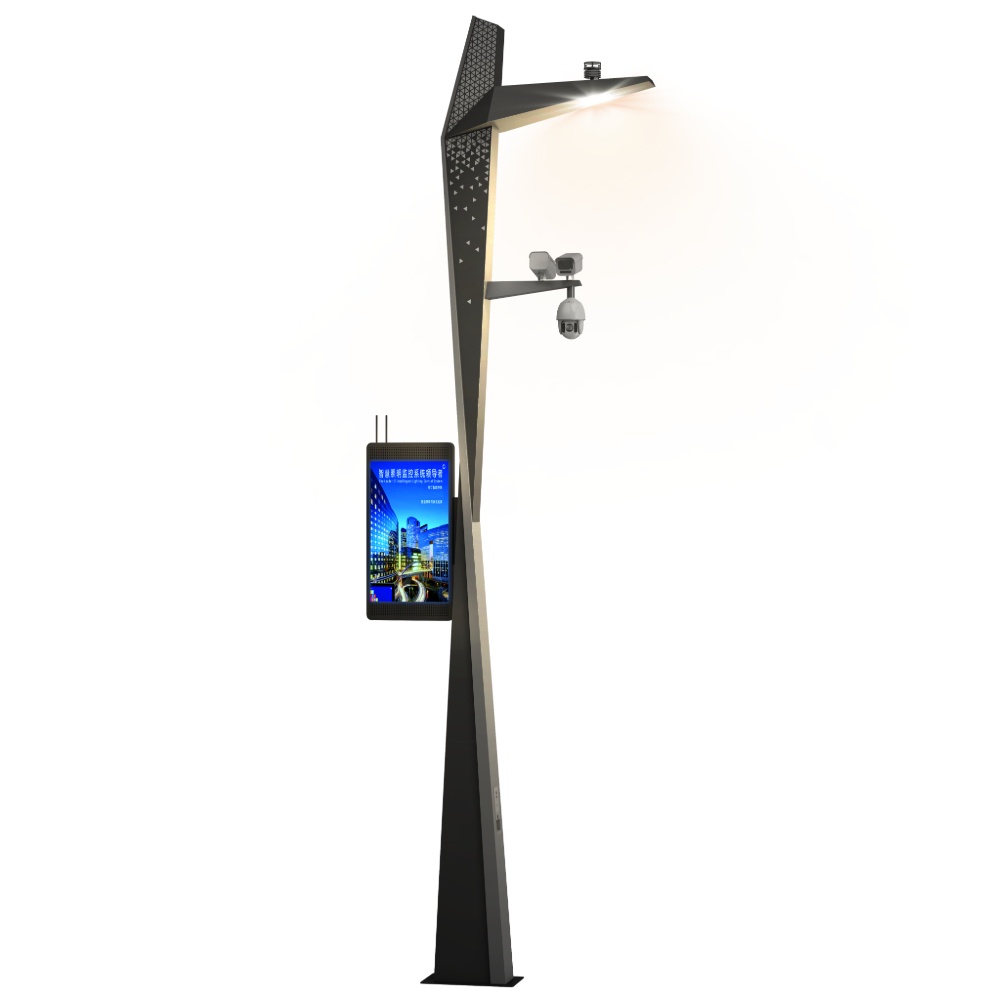
Selecting an LED street light manufacturer shapes far more than fixture appearance. It affects pole stability, optical consistency, corrosion resistance, delivery rhythm, installation tolerance, and the ease of future maintenance. In large outdoor projects, problems usually do not begin with a lamp turning off; they start earlier, when design assumptions, material choices, and production controls do not match the site conditions.
The design stage is where many later failures can be prevented. Road width, pole height, arm outreach, mounting angle, pavement reflectance, and surrounding buildings all influence the lighting layout. A manufacturer that only responds to wattage requests may deliver hardware that looks acceptable on paper but performs poorly on site. Beam distribution has to match the application. A wide urban road, a secondary street, and a public square rarely need the same optics, even if the installed power is similar. The housing also needs enough thermal capacity for the local climate; an enclosed design with weak heat dissipation may shorten LED life or push driver components outside their stable operating range.
Engineering Before Production
Once the photometric concept is defined, structural engineering becomes just as important as the light source. Outdoor lighting is exposed to wind load, vibration, moisture, dust, and repeated thermal cycling. Pole material, wall thickness, flange design, weld quality, and galvanizing treatment should be reviewed together rather than as separate line items. A steel pole that looks robust in a catalog can still create installation trouble if anchor bolt alignment, base plate slotting, or door opening placement has not been coordinated with civil drawings.
This is also the stage where overly simplified specifications create avoidable risk. For example, asking only for “high-efficiency LED street lights” leaves too much undefined. Efficiency should be considered together with color temperature, glare control, ingress protection, surge tolerance if required by the project, and the maintenance approach for drivers and modules. Lower initial power consumption does not automatically mean better project performance when access roads are difficult, replacement windows are limited, or the site has aggressive corrosion conditions.
A practical reference point can be seen in a product such as Modern Street Lighting | MSL-GH, where the specification combines Q235 steel, 4-8 mm pole thickness, hot-dip galvanizing, IP67 protection, and wind resistance rated at not less than 150 km/h. Details like flange shape with slotted holes may seem minor, yet they can reduce installation friction when anchor positioning on site is not perfectly uniform.
Material and Component Control
Mass production quality depends heavily on how materials are selected and controlled before assembly starts. In street lighting, the visible parts and the hidden parts matter equally. The LED chip brand may attract attention, but the thermal interface material, gasket quality, driver compartment sealing, cable gland reliability, and coating thickness often decide whether the fixture survives real outdoor exposure. If the housing tolerances are inconsistent, water ingress can become a field issue even when the nominal protection grade looks adequate.
Poles deserve the same scrutiny. Q235 steel or equivalent structural steel can be suitable for many street lighting applications, but suitability depends on fabrication quality and finishing process. Hot-dip galvanizing is widely used because it protects internal and external steel surfaces more effectively than paint alone in many environments. Still, the project team should clarify whether additional finishing layers are needed for coastal zones, industrial areas, or visually sensitive urban districts. Appearance and durability should be discussed together, since decorative finishes sometimes complicate later repair if coating systems are not matched correctly.
Prototype Review and Production Readiness
Moving directly from drawing approval to full production is a common mistake. A prototype or pre-production sample helps expose issues that drawings may hide: uneven door fit, cable routing conflicts, insufficient space for driver replacement, sharp internal edges, or impractical lifting points during installation. For integrated smart lighting systems, this review is even more important because sensors, controllers, and communication nodes add wiring complexity and extra sealing points.
Production readiness is not only about whether the factory can make the product once. It concerns whether the same dimensions, finish, output, and assembly quality can be repeated across the full project batch. Consistency in LED binning, optical components, pole straightness, galvanizing finish, and hardware packaging matters because field crews are affected by small deviations. A slight mismatch in bracket drilling or base plate geometry can slow an entire installation sequence.
- Optical samples should be checked against the intended road classification, not just viewed in a warehouse test area.
- Pole fabrication drawings need confirmation of door orientation, arm direction, base plate dimensions, and anchor bolt pattern before batch welding begins.
- Packaging should protect lenses, painted or galvanized surfaces, and protruding connections during loading and unloading, especially for long-distance transport.
Where Mass Production Usually Goes Wrong
Large-scale orders introduce pressures that smaller jobs do not. Lead time compression can push substitutions in drivers, LEDs, fasteners, or cable accessories unless those components are frozen clearly in the approved documentation. Another issue is partial alignment between pole production and luminaire production. If one line finishes early and the other slips, storage conditions start to matter. Poor outdoor storage before shipment can damage seals, coatings, or electrical accessories before installation even begins.
Documentation errors are another overlooked risk. Marking, packing lists, wiring labels, and installation instructions need to match the delivered configuration. This becomes more sensitive when the project includes different wattages, multiple mounting heights, or mixed color temperatures. A fixture family using 150-250W main light power and 140-210W auxiliary light power, combined with options such as 3000K or 4000K for the main light and 6000K for the auxiliary section, requires disciplined identification through production and site delivery. Without that discipline, the problem may only appear when luminaires are already being lifted into place.
Smart Control Integration Changes the Manufacturing Scope
When street lighting includes dimming, remote monitoring, or adaptive control, the manufacturer is no longer delivering only poles and luminaires. The output wiring, control interfaces, enclosure space, node mounting positions, and maintenance access all need to be resolved during production. A smart-ready luminaire that requires awkward field modification is not truly ready. The same applies to poles: access doors, internal compartments, and cable separation should support the control architecture rather than force improvised changes on site.
Integration also affects testing. Electrical checks should cover not only basic power-on performance but also control response, communication stability where applicable, and failure behavior after repeated switching or dimming cycles. In outdoor projects, intermittent faults are especially costly because locating them later may require traffic management, access equipment, or repeated nighttime inspections.
Logistics, Installation, and Long-Term Serviceability
Street lighting projects often fail in the handoff between factory and site. Transport length limits, unloading equipment, stacking method, and protection of flange faces all influence whether poles arrive ready to install. Long poles and assembled arms can suffer deformation if unsupported improperly in transit. Luminaires with exposed connectors or poorly secured accessories may pass final inspection yet arrive with hidden damage.
Installation efficiency depends on dimensional discipline. A 12 m pole with a square or round flange and slotted holes may give useful adjustment tolerance, but only if the anchor bolt pattern, template, and foundation layout were controlled earlier. At the luminaire level, crews benefit from straightforward terminal access, secure but serviceable driver compartments, and mounting hardware that can be tightened reliably at height. These details reduce rework and shorten road closure time.
Long-term serviceability should not be treated as a separate afterthought. Rated LED life, such as 50,000 hours or more, does not remove the need for access planning. Drivers may age differently from LED modules, and harsh environments may accelerate seal wear or corrosion at external fixings. If replacement parts, driver specifications, or control interfaces are not standardized early, maintenance later becomes inconsistent and expensive.
A capable LED street light manufacturer is judged not by a single datasheet figure, but by how well design, fabrication, finishing, assembly, and delivery stay aligned with actual site conditions. When those links hold, the result is not merely a finished product line; it is an outdoor lighting system that can be installed with fewer surprises and maintained with fewer compromises.
◉ MESSAGE
Blog
- LED Street Luminaire Specifications That Matter for Roadway Projects
- What to Evaluate When Selecting a Smart Street Lamp Manufacturer
- How to Prepare a Compliant Solar Lighting Bid for Public Infrastructure Projects
- LED Street Lighting Solutions for Urban and Municipal Roads
- LED Street Light Installation Guide for Road Projects
- LED Street Light Lifespan: How Long Do LED Road Lights Last?
- LED Street Light IP Rating: What Should Buyers Choose?
Message