
LED Street Light Manufacturer: Complete Buyer’s Guide
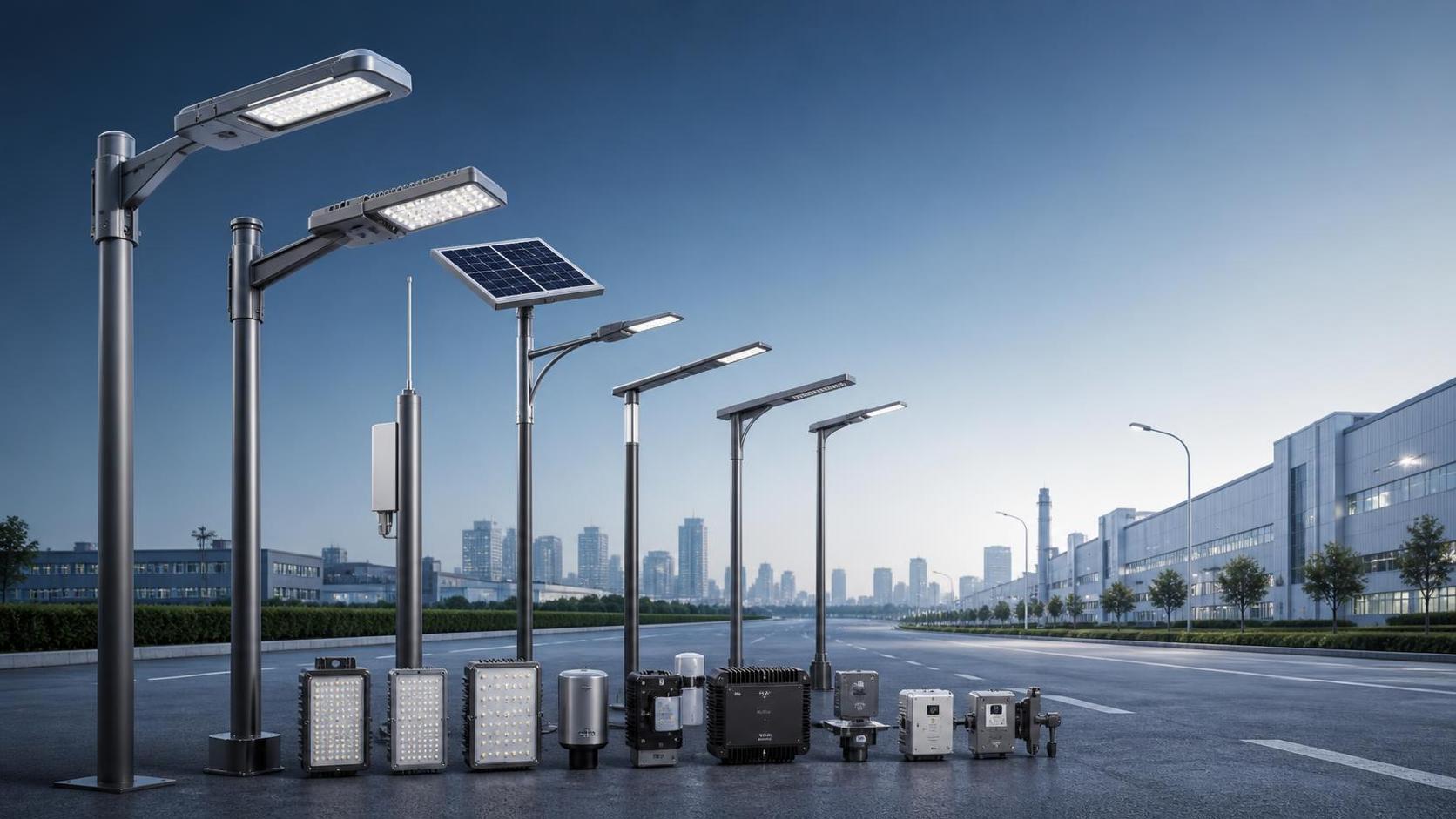
Choosing an LED street light manufacturer is rarely just about comparing wattage or unit price. In real projects, the decision affects installation schedules, lighting performance, energy savings, system compatibility, and how much maintenance the site team will be dealing with years later. For contractors, developers, and public infrastructure owners, a good supplier is not simply a factory that ships fixtures. It is a partner that understands how outdoor lighting performs in the field, under weather stress, grid limitations, and project deadlines.
The outdoor lighting market is crowded, and many manufacturers appear similar at first glance. Product catalogs often highlight lumen output, housing design, and efficiency figures, but buyers usually need deeper answers. Can the manufacturer support large-scale deployment? Are the optics suitable for actual road classes and public spaces? Is there engineering support for smart controls? What happens when the site conditions are more complex than expected?
Those are the questions that matter when selecting a street lighting supplier for roads, public areas, and urban environments.
What a Reliable LED Street Light Manufacturer Should Really Offer
A dependable manufacturer does more than produce luminaires. It should be able to support the full chain of project delivery: lighting design input, product matching, production consistency, smart system integration, documentation, and after-sales coordination. This becomes especially important in municipal roads, industrial parks, residential developments, and public infrastructure where one poor product decision can create long-term operational problems.
For large projects, manufacturing capability is often underestimated. Buyers may focus on a sample unit that looks acceptable, but scale changes everything. A street light manufacturer should be able to maintain stable quality across batches, manage delivery timelines, and ensure that product specifications remain consistent from testing to installation. If the first 50 units perform differently from the next 500, the hidden cost quickly shows up in claims, delays, and site adjustments.
Key Criteria to Evaluate Before You Shortlist a Supplier
1. Product Reliability in Real Outdoor Conditions
Street lighting lives outdoors without mercy. Heat, dust, rain, vibration, salt exposure, and voltage variation all test the product over time. A manufacturer should be prepared to discuss housing protection, thermal management, driver quality, optical stability, and long-term lumen maintenance in practical terms, not only in brochure language.
Look for a supplier that can explain how its fixtures are selected for different environments such as arterial roads, secondary streets, pedestrian zones, and mixed-use public spaces. A well-designed LED street light is not just bright; it distributes light properly, reduces dark spots, and supports safety without creating unnecessary glare.
2. Engineering Support, Not Just Sales Support
Many buyers do not need another catalog. They need someone who can help align lighting products with road width, mounting height, pole spacing, local standards, and control requirements. This is where engineering capability makes a difference. A manufacturer with project experience can help avoid over-lighting, under-lighting, incompatible accessories, or systems that become difficult to maintain once handed over.
Lishida Smart Lighting, for example, works with contractors and project owners on integrated outdoor lighting solutions for large-scale projects. That matters because product selection is only one part of project success. Smart control systems, field coordination, and long-term reliability all need to connect logically from the start.
3. Smart Lighting Compatibility
Modern street lighting projects increasingly involve dimming, remote monitoring, scheduling, fault alerts, and energy management. If your project includes smart city infrastructure or future upgrade potential, the manufacturer should be ready for that conversation early. A fixture that performs well as a standalone unit may still cause problems if it does not integrate cleanly with the control architecture.
Ask whether the supplier can support project-based smart lighting solutions rather than only offer isolated components. Good system thinking reduces future retrofits and makes expansion far easier.
4. Manufacturing Consistency and Project Delivery Capacity
For public tenders and commercial developments, timing is rarely flexible. The manufacturer should be able to communicate realistic lead times, production planning, and quality control processes. This does not need to sound theatrical. In fact, the most trustworthy suppliers are usually the ones that speak clearly about what they can deliver, how they inspect it, and what documentation will accompany the shipment.
Questions Buyers Should Ask Before Making a Final Decision
One of the simplest ways to identify a capable LED street light manufacturer is to ask better questions. Instead of only requesting a quotation, ask:
- How do you recommend fixture configurations for different road classes or public spaces?
- What support do you provide for smart lighting integration?
- How do you manage quality consistency across large production runs?
- What outdoor conditions have your products been designed to handle?
- How do you support project teams after delivery if technical adjustments are needed?
The quality of the answers often tells you more than the price sheet. A factory that understands project realities will usually respond with context, trade-offs, and practical suggestions rather than generic claims.
Do Not Ignore Off-Grid and Hybrid Project Needs
Not every street lighting project is grid-friendly. In remote roads, temporary infrastructure, developing zones, and areas where trenching is expensive or impractical, solar street lighting can be the more efficient option. This is where buyers should think beyond conventional LED street lights and evaluate whether the manufacturer can provide both grid-based and off-grid solutions under one project strategy.
For example, Solar Street Lighting | SL-004 is designed for off-grid lighting where wiring and trenching may create unnecessary cost and complexity. With a 6m pole, 30–100W power range, luminous efficacy of at least 140 lm/W, IP65 protection, and operating temperature from -40℃ to +70℃, it reflects the kind of specification buyers should look for when reliability matters as much as installation speed. Features such as LiFePO4 battery options, smart MPPT efficiency up to 95%, charging time of 4–6 hours, and wind resistance of at least 150 km/h are not just technical details; they directly affect project resilience and maintenance planning.
In the right scenario, a solar solution can also reduce total project cost significantly by removing cable laying and simplifying deployment. That does not mean solar is always the answer, but it does mean a capable manufacturer should help you judge where it fits, rather than push a one-size-fits-all product.
Common Mistakes When Comparing Manufacturers
One frequent mistake is treating all LED street lights as interchangeable. They are not. Similar wattage does not guarantee similar road performance, optical control, component quality, or service life. Another mistake is selecting solely on initial price, then discovering later that failures, inconsistent output, or difficult control integration cancel out any short-term savings.
Buyers also sometimes separate the luminaire decision from the wider project system. In practice, poles, brackets, control nodes, installation conditions, and maintenance access all interact. A manufacturer with real outdoor project experience will usually spot these coordination points early.
There is also a human factor in procurement. Under deadline pressure, teams may choose the supplier that answers fastest rather than the one that understands the application best. Fast replies are useful, but clarity, technical depth, and execution support usually matter more once the project leaves the tender stage and enters the real world.
Why Project Experience Matters More Than a Broad Catalog
A large catalog can be helpful, but experience in real project execution is often more valuable. Manufacturers that have supported complex urban environments tend to understand practical constraints better: mixed lighting objectives, changing site conditions, integration with control systems, and the importance of long-term stability. That perspective is especially useful for contractors who need fewer surprises during installation and commissioning.
Lishida Smart Lighting focuses on supporting large-scale outdoor lighting projects with integrated products, smart controls, and project-based solutions. That kind of support is relevant for buyers who are not just purchasing fixtures, but trying to deliver a complete and reliable result on site.
How to Make a Confident Final Choice
If you are evaluating an LED street light manufacturer, narrow your decision around three practical priorities: product reliability, engineering alignment, and project support. A supplier should be able to explain why a lighting solution fits your application, how it will perform over time, and how it connects with the wider system requirements of the job.
The best purchasing decisions usually come from a combination of technical review and realistic project thinking. Look beyond the brochure. Consider the environment, installation method, controls, maintenance burden, and the manufacturer’s ability to stay useful after delivery. That is how buyers reduce risk and select outdoor lighting solutions that perform well not only at handover, but throughout the life of the project.
◉ MESSAGE
Blog
- LED Street Luminaire Specifications That Matter for Roadway Projects
- What to Evaluate When Selecting a Smart Street Lamp Manufacturer
- How to Prepare a Compliant Solar Lighting Bid for Public Infrastructure Projects
- LED Street Lighting Solutions for Urban and Municipal Roads
- LED Street Light Installation Guide for Road Projects
- LED Street Light Lifespan: How Long Do LED Road Lights Last?
- LED Street Light IP Rating: What Should Buyers Choose?
Message