
Common Failures to Discuss with Your LED Street Light Supplier Before Installation
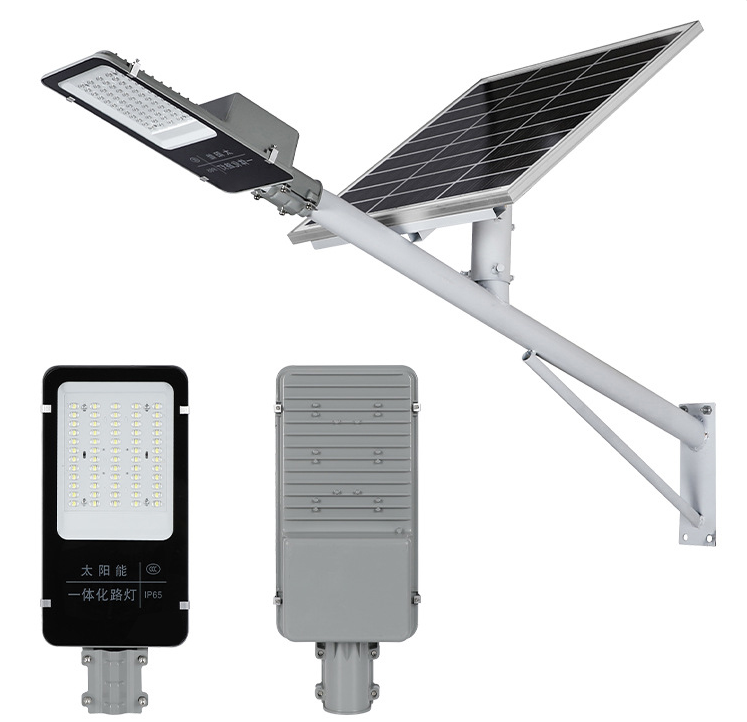
Before installation starts, after-sales maintenance teams need more than a product datasheet. They need a clear discussion with the LED street light supplier about which failures are most likely, how those failures will be diagnosed, and what support will be available once the system is operating in the field.
The core search intent behind this topic is practical risk prevention. Readers are not looking for general explanations of LED street lighting. They want to know which failure points should be clarified before installation so that later maintenance becomes faster, cheaper, and more predictable.
For after-sales maintenance personnel, the main concerns are usually straightforward: recurring faults, hard-to-replace components, poor spare-parts availability, unclear warranty boundaries, and control-system issues that create repeated service calls. The most useful content, therefore, is a failure-focused checklist tied to real maintenance work rather than broad promotional claims.
The discussion should center on the failures that most affect long-term serviceability: driver failure, water ingress, surge damage, overheating, optical degradation, control communication faults, and structural or installation-related issues. More general content about LED efficiency or urban lighting trends should stay secondary because it does not help maintenance teams make field decisions.
Common Failures to Discuss with Your LED Street Light Supplier Before Installation
For maintenance teams, the most important pre-installation question is simple: what will fail first, and how easy will it be to fix? A reliable project is not only about initial brightness or energy savings. It is about whether the lighting system can remain stable over years of exposure to heat, rain, dust, vibration, voltage fluctuation, and control-network issues.
That is why the conversation with an LED street light supplier should go beyond catalog specifications. Ask the supplier to identify the most common failure modes seen in similar outdoor projects, the root causes behind them, and the maintenance actions typically required. A supplier with real project experience should be able to answer these questions with specifics, not generic assurances.
Driver Failure Is Usually the First Major Maintenance Problem
LED drivers are among the most common failure points in street lighting systems. Even when the LED chips remain functional, driver breakdown can cause complete outage, flickering, unstable output, or partial lighting failure. For maintenance personnel, this matters because driver issues often create the highest frequency of early service calls.
Before installation, ask the LED street light supplier which driver brands are used, what their surge tolerance is, and whether the driver can be replaced on site without removing the full luminaire. Also confirm how driver failure is identified. If diagnostics are vague, maintenance teams will spend more time isolating faults at the pole.
It is also worth confirming whether the driver compartment is designed for quick access. A luminaire may perform well in laboratory conditions, but if opening the housing is complicated, every replacement becomes slower and more expensive. Serviceability should be treated as part of reliability, not as a separate issue.
Water Ingress Can Turn a Small Design Weakness Into Repeated Field Failures
Water ingress is one of the most expensive long-term problems in outdoor lighting because it does not always appear immediately after commissioning. Moisture can gradually damage drivers, connectors, LED boards, and control nodes. By the time symptoms appear, internal corrosion may already be advanced.
Maintenance teams should ask how the housing, seals, cable entries, and connector interfaces are protected against water and dust. An IP rating is useful, but it is not enough by itself. The supplier should explain how that protection is maintained under actual installation conditions, including repeated temperature changes and long outdoor exposure.
If the project includes coastal roads, heavy rainfall zones, or areas with large day-night temperature swings, the risk becomes even higher. In those cases, maintenance personnel should also discuss condensation control, gasket aging, and whether failure analysis from previous similar projects is available for review.
Surge Damage Should Be Discussed as a System Risk, Not Just a Component Feature
Many street light failures are caused by unstable power conditions rather than by defects in the luminaire itself. Lightning activity, switching surges, and poor grid quality can damage drivers and control devices long before the expected service life is reached. This is especially important in large municipal or roadway projects where fault patterns may repeat across many poles.
Ask the LED street light supplier what level of surge protection is built into the luminaire and whether external surge protection is also recommended. The right question is not only “Does it have surge protection?” but “What protection strategy matches this site?” That distinction matters because local conditions vary widely.
Maintenance teams should also clarify how surge-damaged units are identified in the field. If a failed driver, a damaged control node, and a wiring issue all produce similar symptoms, repair crews may replace the wrong parts. Good supplier support should include a practical fault-identification method, not only a specification sheet.
Control System Faults Can Create More Downtime Than Lighting Hardware Failures
In smart outdoor lighting projects, the luminaire is only part of the maintenance picture. Dimming modules, communication nodes, gateways, and software platforms can all become failure points. Sometimes the light source is healthy, but the system appears faulty because the control layer is unstable or poorly integrated.
Before installation, maintenance personnel should confirm how the control system behaves during communication loss, power interruption, or node failure. Does the luminaire default to full output, stay at the last command, or switch off? These behaviors directly affect safety, troubleshooting speed, and public response.
Lishida Smart Lighting works on integrated project-based solutions, so this is an area where supplier capability matters. If products and controls are treated separately, field diagnosis becomes fragmented. Maintenance teams should request a clear escalation path for software faults, hardware faults, and communication failures before handover.
Thermal Management Affects More Than Lifespan Claims
Heat is a long-term reliability issue that often receives too little attention during procurement. Poor thermal management may not cause immediate failure, but it can accelerate lumen depreciation, reduce driver life, and increase color shift over time. For maintenance teams, this means more complaints even when the fixtures are technically still operating.
Ask the supplier how the luminaire manages heat under real ambient conditions, not only under standard test assumptions. Road environments with high summer temperatures, enclosed urban heat zones, or long nightly operating hours can create conditions far harsher than nominal laboratory settings.
When reviewing a product such as Modern Street Lighting|MSL-HC, maintenance personnel should look beyond efficacy figures and note protection level, component access, and expected life under outdoor exposure. Specifications such as IP67 protection, 150-250W configuration options, and LED chip sources like CREE or OSRAM are useful, but they should be tied back to maintenance planning.
Optical Degradation and Color Shift Should Be Addressed Early
Not all failures are complete outages. In many projects, the first visible problem is degraded lighting quality: lower brightness, uneven distribution, lens yellowing, or noticeable color inconsistency between fixtures. These issues may trigger service requests even when the luminaires are still electrically functional.
That is why after-sales teams should ask what performance changes are expected over time and what threshold defines acceptable degradation. Without a shared standard, disputes can arise between project owners, contractors, and the LED street light supplier about whether a fixture has actually failed.
This is also the point where realistic product positioning matters. If the project requires long-term visual consistency in roads or public spaces, maintenance teams should compare claimed lumen maintenance with actual replacement strategy. It is often better to plan grouped replacement rules than to respond one fixture at a time.
Structural and Installation-Related Failures Also Need Supplier Input
Some of the most avoidable future maintenance issues begin with installation details. Poor cable termination, incompatible mounting interfaces, loose fasteners, incorrect tilt angles, and inadequate pole or bracket coordination can all create recurring faults later. Maintenance teams should not treat these as installer-only concerns.
For example, in a system using poles from 8 to 14 meters with wind resistance requirements of at least 150 km/h, structural compatibility becomes part of long-term reliability. A product line like Modern Street Lighting|MSL-HC may offer durable pole materials such as Q235 steel, hot-dip galvanizing, and powder coating, but maintenance staff still need to confirm access, mounting accuracy, and corrosion-sensitive points in the installed environment.
It is also useful to ask the supplier for installation mistakes they see most often in the field. Experienced suppliers usually know which errors lead to premature failure. That insight can help maintenance teams create a better acceptance checklist before the system goes live.
Spare Parts, Warranty Scope, and Fault Response Must Be Clarified Before Handover
Many maintenance difficulties are not caused by technical failure alone but by weak after-sales preparation. If spare drivers, control nodes, seals, or optical components are unavailable, even minor faults can lead to long outages. This becomes especially serious in large-scale projects where repeated failures may appear across multiple zones.
Ask the supplier which spare parts should be stocked locally, what the recommended quantity is, and whether components are standardized across the project. Also clarify warranty exclusions, response times, and what evidence is required for claims. These details directly affect maintenance efficiency.
A strong LED street light supplier should be able to support not just product delivery but fault management across the project lifecycle. For maintenance teams, that means clear documentation, replaceable components, traceable parts, and technical support that matches actual field conditions.
A Better Pre-Installation Conversation Leads to Easier Long-Term Maintenance
For after-sales maintenance personnel, the value of these discussions is practical. When the likely failures are identified before installation, teams can prepare spare parts, define inspection routines, shorten troubleshooting time, and reduce repeated site visits. That leads to lower operating cost and more stable lighting performance over the life of the project.
The key point is that reliability is not only designed into the fixture. It is also created through better coordination between project teams and the LED street light supplier before the first pole is energized. Maintenance teams that ask the right questions early usually face fewer surprises later.
In large outdoor lighting projects, the best supplier conversations are specific, failure-focused, and tied to service reality. If driver access, ingress protection, surge strategy, control behavior, thermal design, structural fit, and spare-parts support are all clarified in advance, long-term maintenance becomes far more manageable and predictable.
◉ MESSAGE
Blog
- LED Street Luminaire Specifications That Matter for Roadway Projects
- What to Evaluate When Selecting a Smart Street Lamp Manufacturer
- How to Prepare a Compliant Solar Lighting Bid for Public Infrastructure Projects
- LED Street Lighting Solutions for Urban and Municipal Roads
- LED Street Light Installation Guide for Road Projects
- LED Street Light Lifespan: How Long Do LED Road Lights Last?
- LED Street Light IP Rating: What Should Buyers Choose?
Message