
LED Street Light Beam Angle Guide for Road Lighting
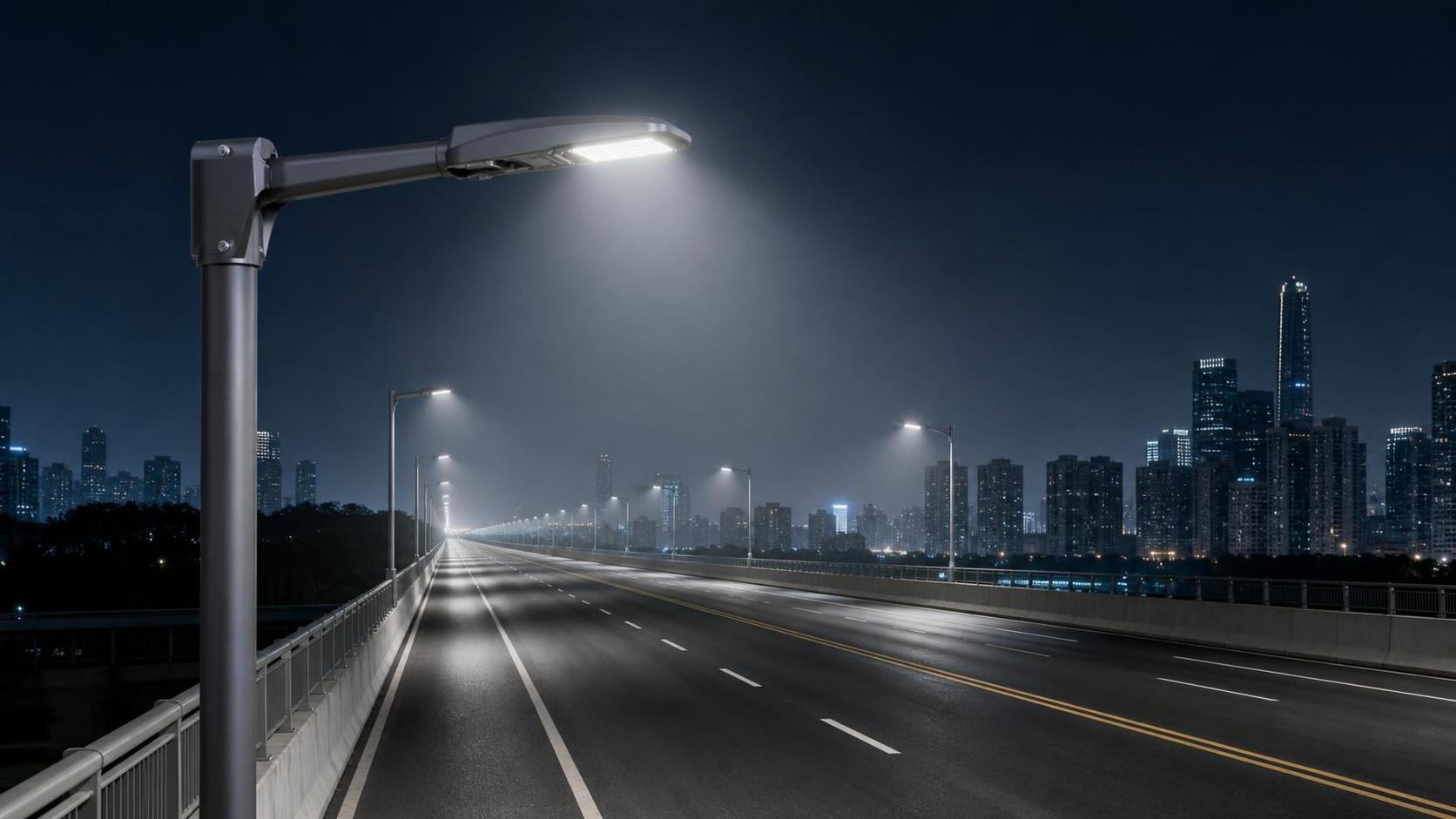
Choosing the right LED street light beam angle is one of the most important decisions in road lighting design. It directly affects road brightness, uniformity, glare control, pole spacing, and long-term project cost. For contractors, project owners, and lighting planners, the best beam angle is not simply the widest or narrowest option. It is the one that matches the road width, pole layout, mounting height, and lighting target.
In practical outdoor lighting projects, poor beam angle selection often leads to dark gaps, excessive overlap, wasted energy, or visibility problems for drivers and pedestrians. In this guide, Lishida Smart Lighting explains how beam angle works in LED street lighting, how to evaluate it for different road conditions, and what to consider when planning reliable large-scale road lighting systems.
Why Beam Angle Matters More Than Many Buyers Expect
When people compare LED street lights, they often focus first on wattage, luminous efficiency, or IP rating. Those factors matter, but beam angle has a direct impact on how usable the light actually is on the road surface.
A street light can have high lumen output and still perform poorly if the light distribution does not fit the road geometry. Too narrow a beam may create bright spots under each pole and leave darker areas between poles. Too wide a beam may spill light beyond the road, reduce effective illuminance, and increase glare.
That is why beam angle should always be evaluated as part of the full road lighting layout. It is not just an optical detail. It is a design factor that affects safety, compliance, installation quantity, operating efficiency, and maintenance expectations over time.
What Is LED Street Light Beam Angle?
Beam angle refers to how widely light is distributed from the luminaire. In general terms, a narrow beam concentrates light into a tighter area, while a wide beam spreads it across a broader surface.
For road lighting, beam angle is rarely discussed only as a simple round number such as 60 degrees or 120 degrees. Street lighting optics are usually designed with directional distribution patterns because roads are long and narrow, not square open spaces.
In many projects, what matters most is not only the overall beam width but also how light is pushed forward, sideways, and across lanes. This is why professional street light design often uses asymmetric optics that place light where vehicles, cyclists, and pedestrians actually need it.
How Beam Angle Affects Road Lighting Performance
The first impact is road visibility. A suitable beam angle helps create even illumination along the driving path. This supports driver reaction time, lane recognition, obstacle detection, and pedestrian visibility.
The second impact is pole spacing. If the beam distribution is optimized, each luminaire can cover the intended area more effectively. This can reduce the number of poles or fixtures needed in some layouts, improving project economics without sacrificing lighting quality.
The third impact is uniformity. Road lighting should not create harsh transitions between bright and dark zones. Better uniformity improves visual comfort and reduces the sense of patchy lighting, which is especially important on urban roads, intersections, and public streets with mixed traffic.
The fourth impact is glare and spill light. Excessively broad or poorly controlled optics may send light into drivers’ eyes, nearby buildings, or unused roadside areas. Good beam control improves lighting efficiency while helping projects meet environmental and community expectations.
How to Choose the Right Beam Angle for Different Road Types
There is no universal beam angle for every street. The correct choice depends on the lighting class, road width, pole height, arm length, setback, and whether the poles are installed on one side, both sides, or in the median.
For narrow residential roads, the goal is usually balanced coverage with controlled glare and moderate brightness. A distribution that spreads light across the carriageway without excessive spill is often more effective than using a very powerful fixture with a broad uncontrolled beam.
For wider urban roads with multiple lanes, the optical system must push light farther across the roadway. This usually calls for a more engineered distribution pattern, especially where pole spacing is large or where mounting positions are offset from the main traffic lanes.
At intersections and junctions, beam angle selection becomes more complex. These areas need better facial recognition, conflict-area visibility, and directional clarity. In many cases, lighting designers use different optics here than on standard straight road sections.
For highways or major arterial roads, forward throw and lane coverage are critical. The aim is to maintain consistent visibility at higher travel speeds while avoiding wasted output beyond the target surface. This is where professional photometric planning becomes essential.
What Project Owners and Contractors Should Check Before Selecting a Fixture
Before confirming a street light model, buyers should ask several practical questions. What is the exact road width? What is the pole height? How far apart are the poles? Is the arrangement single-sided, staggered, or opposite? What illumination or uniformity target must the project achieve?
It is also important to review the luminaire’s photometric data rather than relying only on general product descriptions. Two LED street lights with similar wattage and lumen output can deliver very different on-road results because their optics are different.
In large-scale projects, this evaluation should include not only first-stage lighting performance but also long-term consistency. A product that fits the design well can help avoid later complaints about dark zones, over-lighting, energy waste, or uneven road appearance.
Environmental conditions matter too. Wind load, operating temperature, ingress protection, and system reliability all influence whether the selected lighting solution will perform well over time in real outdoor conditions.
Why Beam Angle Should Be Considered Together With Smart Control
Modern road lighting projects increasingly combine optical design with smart control strategy. Beam angle determines where the light goes, while smart control helps determine when and how much light is used.
For example, a well-distributed luminaire paired with remote dimming, fault alerts, and centralized management can improve energy performance without weakening road visibility. This is especially useful in cities that want better operational control across different traffic periods and road categories.
In this context, integrated systems such as Smart Street Lighting | SSL-CC can support project teams that need more than basic illumination. With remote control, real-time alerts, and connectivity options such as 4G, 5G, and NB-IoT, smart street lighting can make road lighting networks easier to manage at scale.
For planners working on municipal or smart city projects, combining suitable beam distribution with system-level control often leads to better lifecycle results than focusing on fixture power alone.
Common Mistakes in LED Street Light Beam Angle Selection
One common mistake is choosing the widest beam angle in the hope of covering more area. In reality, wider is not always better. If the light spreads beyond the useful road surface, effective illumination may decrease where it is actually needed.
Another mistake is using the same optical distribution across every road type in a project. Urban roads, side streets, bridges, and intersections often have different lighting needs. A single standard configuration can simplify purchasing, but it may reduce performance.
A third mistake is evaluating fixtures only by wattage. Wattage tells you energy consumption, not how well the light will be delivered onto the target surface. Optical design and beam distribution are what determine whether those watts are used effectively.
Some projects also underestimate maintenance and system integration. A street lighting product should not only provide the right beam pattern but also support durability, communication compatibility, and reliable service life under real operating conditions.
A Practical Approach to Better Road Lighting Decisions
The best approach is to start with the application, not the fixture. Define the road category, lighting objective, installation constraints, and control strategy first. Then select optics and product specifications that fit those conditions.
For many municipal and contractor-led projects, this means working with suppliers that understand project-based delivery rather than only product sales. Road lighting decisions usually involve coordination between performance targets, installation reality, and long-term operating expectations.
Lishida Smart Lighting supports this process with outdoor lighting products, smart control systems, and project-focused engineering support. For projects that require durable poles, connected management, and reliable lighting performance, solutions like Smart Street Lighting | SSL-CC can be aligned to different project requirements, including public roads and smart city environments.
Its configuration includes a 6 m pole, stainless steel construction, IP67 protection, luminous efficiency of at least 140 lm/W, and service life of at least 50,000 hours, which reflects the kind of durability and operational focus large outdoor projects often require.
Conclusion
LED street light beam angle is not a minor specification. It is a key factor in road safety, lighting uniformity, energy efficiency, and project value. The right choice depends on how well the optical distribution matches the actual road layout and performance goal.
For contractors, project owners, and lighting planners, the most effective decision is usually based on application-specific analysis rather than generic product comparison. When beam angle, fixture quality, pole arrangement, and smart control are considered together, road lighting projects are more likely to deliver reliable results over the long term.
In short, better beam angle decisions lead to better road lighting outcomes. That means safer roads, more efficient installations, and fewer performance problems after the project is delivered.
◉ MESSAGE
Blog
- LED Street Luminaire Specifications That Matter for Roadway Projects
- What to Evaluate When Selecting a Smart Street Lamp Manufacturer
- How to Prepare a Compliant Solar Lighting Bid for Public Infrastructure Projects
- LED Street Lighting Solutions for Urban and Municipal Roads
- LED Street Light Installation Guide for Road Projects
- LED Street Light Lifespan: How Long Do LED Road Lights Last?
- LED Street Light IP Rating: What Should Buyers Choose?
Message